


Table of Contents
- Why No-Drill Kitchen Sink Storage Matters
- Under Sink Cabinet Organizers Without Drilling
- Minimalist Kitchen Sink Organization Ideas for Small Spaces
- Renter-Friendly Under Sink Storage Solutions
- Surface Compatibility and Weight Capacity Guide
- Organizing Cleaning Supplies and Sink Accessories
- Damage-Free Removal and Maintenance
- Conclusion
Last Updated: August 19, 2026
Why No-Drill Kitchen Sink Storage Matters
Your sink area is prime real estate in a small kitchen, yet most people treat it as a dumping ground for sponges, soap bottles, and cleaning supplies. Traditional storage solutions require drilling into cabinets, which isn't an option if you rent, own a home with plumbing complications, or prefer to avoid permanent damage. No-drill kitchen sink storage solutions solve this by offering organization without commitment.
Whether you're renting, dealing with awkward plumbing angles, or simply prefer not to modify your kitchen, these systems work around your existing setup and install in minutes with nothing but your hands. At SinkElle, we've seen how the right no-drill approach transforms cluttered sink areas into functional, elegant spaces.
The challenge is choosing between options that actually work versus those that promise more than they deliver. Some adhesive systems fail within weeks. Tension rods slip. Suction cups lose grip on wet surfaces. This guide breaks down the no-drill kitchen sink storage solutions that genuinely hold up, explains the surfaces they work on, and shows you exactly how to install and maintain them.
Under Sink Cabinet Organizers Without Drilling
The space directly under your sink is either a goldmine or a nightmare. If you have garbage disposal, plumbing angles, or standing water, it's often unusable. But if you have even a bit of flat surface, pull-out organizers and modular shelving can transform that dark cavity into accessible storage.
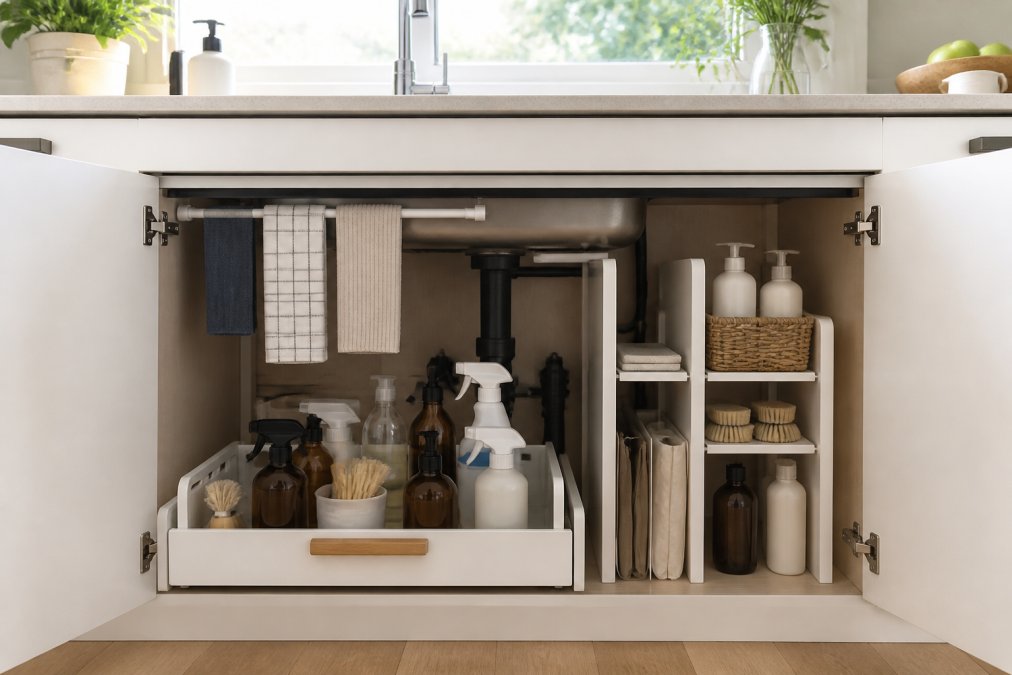
Pull-out drawer systems sit on the cabinet floor and slide out when you need them, letting you access items at the back without reaching into the depths. Tension rod storage hacks add another layer by creating horizontal bars where you can hang cloths, spray bottles, or small baskets. Layer solutions: a base pull-out system for heavier items, tension rods for lighter supplies, and adhesive shelf liners to prevent sliding.
Weight capacity matters. A flimsy pull-out organizer rated for five pounds will sag when loaded with cleaning products. Look for systems rated for at least fifteen to twenty pounds. The Sinkelle Sink Organization Bundle combines a pull-out organizer with complementary storage solutions designed to work together without drilling, maximizing under-sink space efficiently.

Tension Rod Storage Hacks
Tension rods are deceptively simple. You twist them to expand, wedge them between cabinet walls, and suddenly you have horizontal bars for hanging items. They work best for lightweight storage: dishcloths, spray bottles, small baskets, or pot lids.
Tension rods require no tools and leave zero marks. Renters love this method, when you move, you untwist and remove it. The cabinet looks untouched. For homeowners, it's equally appealing because you can adjust or remove rods whenever storage needs change.
The catch: tension rods only work on non-porous, smooth surfaces. Textured cabinet interiors can make gripping difficult. If your cabinet walls are uneven or have raised panels, the rod won't sit flush and may slip. Test the fit before loading anything heavy, starting with lighter items to confirm the rod holds.
Adhesive Shelf Systems
Adhesive shelving sticks directly to cabinet walls using industrial-strength backing. No drilling, no hardware, no marks when removed properly. These systems are ideal for creating extra layers of storage in tight spaces.
Premium adhesive systems use materials rated for moisture exposure and temperature swings. Before installing, clean the cabinet surface thoroughly with rubbing alcohol and let it dry completely. Any dust, residue, or moisture reduces adhesion dramatically.
Weight capacity on adhesive shelves is typically five to ten pounds per shelf, which works fine for organizing cleaning supplies, small containers, and lightweight kitchen essentials. Don't overload them. If the shelf starts to sag or peel at the edges, remove it immediately.
Minimalist Kitchen Sink Organization Ideas for Small Spaces
Small kitchens demand a different philosophy. Every item stored around your sink should earn its place through function or beauty.
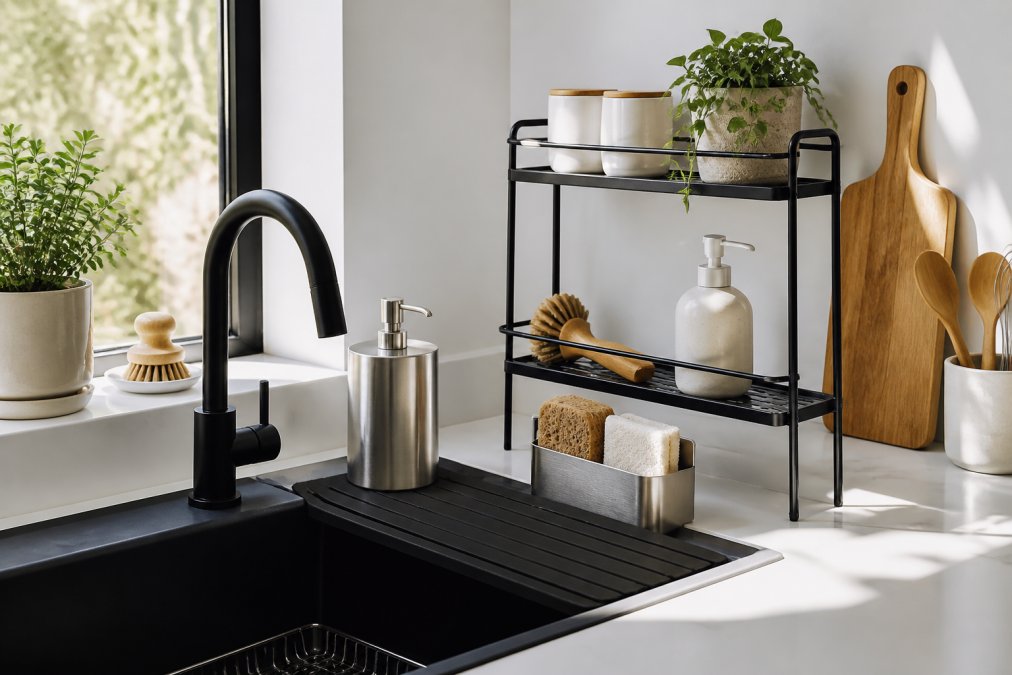
The minimalist approach starts with reduction. Before buying any organizer, remove everything from your sink area and ask: do I use this weekly? If not, it doesn't belong on display. Keep only active items within reach.
For what remains, choose storage solutions that match your aesthetic. Scandinavian-inspired design with clean lines, natural materials, and neutral colors works particularly well in small spaces because it doesn't compete visually with your kitchen. A simple two-tier shelf in brushed metal holds more than it appears to. A single splash mat in matte black protects your countertop while looking intentional.
The Sinkelle CounterRise 2-Tier Shelf exemplifies this approach: it's compact enough for tight spaces, durable enough to handle daily water exposure, and designed to look like a deliberate design choice. Vertical organization is critical in small kitchens. Instead of spreading items horizontally across limited counter space, stack them up.

Renter-Friendly Under Sink Storage Solutions
Renting creates unique constraints. You need organization without permanent modifications. Your landlord's lease probably prohibits drilling, and you'll lose your security deposit if you leave holes behind.
No-drill solutions are specifically designed for this situation. Tension rods, adhesive systems, and freestanding pull-out organizers solve the storage problem while keeping your deposit safe. The best renter-friendly approach combines multiple lightweight solutions rather than relying on one system.
Start with a freestanding pull-out organizer that sits on the cabinet floor. It requires zero installation. Next, add tension rods if your cabinet dimensions allow them. Finally, use adhesive shelf liners or small adhesive shelves for lightweight items. When you move, removal is straightforward: tension rods unscrew and lift out, adhesive-backed items peel off cleanly, and freestanding organizers simply slide out. The Sinkelle Sink Organization Bundle includes renter-friendly components that work together to create comprehensive organization without any permanent installation.
Surface Compatibility and Weight Capacity Guide
Not every no-drill solution works on every surface. Understanding what sticks, what grips, and what holds weight prevents frustration and wasted money.
Adhesive systems work best on smooth, non-porous surfaces like laminate, metal, and sealed wood. Clean the surface thoroughly before applying adhesive; any dust or residue creates a weak bond. Temperature and humidity matter too. Adhesive performs better in stable environments.
Tension rods require parallel surfaces that are relatively smooth. They work on cabinet walls, between shelves, and across sink dividers. They struggle with textured surfaces or uneven walls. The tighter the fit, the more stable the rod.
Suction cup organizers cling to non-porous, smooth surfaces: tile, glass, stainless steel, sealed stone. They fail on textured or porous surfaces. Moisture is the enemy. In an under-sink cabinet with high humidity, expect them to fail within weeks.
Weight capacity varies dramatically. Adhesive shelves typically hold five to ten pounds. Tension rods hold ten to twenty pounds depending on quality and cabinet width. Pull-out organizers hold twenty to forty pounds. Match the solution to your actual storage load.
| Surface Type | Adhesive | Tension Rod | Suction Cup | Best For |
|---|---|---|---|---|
| Smooth laminate | Excellent | Good | Good | Most adhesive systems |
| Metal cabinet walls | Good | Excellent | Excellent | Tension rods and suction cups |
| Textured cabinet walls | Poor | Poor | Poor | Freestanding solutions only |
| Sealed wood | Good | Good | Fair | Adhesive or tension rods |
| Stainless steel | Excellent | Fair | Excellent | Adhesive or suction cups |
| Tile or glass | Good | Poor | Excellent | Adhesive or suction cups |
Organizing Cleaning Supplies and Sink Accessories
Cleaning supplies are the main culprit in cluttered sink areas. Spray bottles, sponges, scrubbers, soap dispensers, and brushes multiply quickly without a system.
Start by consolidating. If you have three half-empty bottles of the same cleaner, combine them into one. Discard dried-up sponges and broken brushes. Keep only what you actually use.
Next, group items by function. Keep dish soap and sponges together near the sink edge. Store heavier cleaning supplies lower in the cabinet. Hang frequently used items where you can grab them without digging. The Sinkelle FlowRack Pro organizer addresses the soggy sponge problem, sponges sitting in puddles stay wet and smell. The FlowRack Pro lifts everything off the surface with an angled drain tray that sends water back into the sink.

For small bottles and containers, use drawer dividers or small baskets within a pull-out organizer. Label containers if you're storing decanted products. The Sinkelle DryFlow Splash Mat solves another common problem: water splashing around the faucet and pooling on the counter. By directing water back into the sink, it keeps the area around your supplies dry and hygienic.
Damage-Free Removal and Maintenance
No-drill systems are only truly no-drill if you can remove them without leaving marks. Poor removal technique can damage walls, cabinets, or finishes.
Adhesive removal requires patience. Peel slowly at a shallow angle, working your way around the entire piece. If the adhesive is stubborn, apply heat with a hair dryer to soften it, then peel again. For residue that remains, use rubbing alcohol on a soft cloth. Never use scrapers or abrasive tools on finished surfaces.
Tension rods are the easiest to remove. Simply unscrew the end caps to release tension, then lift the rod out.
Suction cups release by pressing the release tab if the organizer has one, or by gently prying the edge with a plastic tool to break the seal.
Maintenance keeps no-drill systems working longer. Wipe down organizers weekly to prevent soap buildup and mold. In humid environments, dry surfaces thoroughly after use. Check adhesive-backed items monthly for peeling edges and press them back down if needed. Tension rods occasionally need re-tightening if they slip.
For Sinkelle products, the stainless steel construction resists rust and corrosion, but minerals from hard water can build up. A quick wipe with a microfiber cloth and mild soap keeps them looking new.
Conclusion
No-drill kitchen sink storage isn't a compromise, it's a smarter approach. You get organization without permanent damage, flexibility to adjust as your needs change, and the ability to take your system with you if you move. The key is matching the right solution to your specific situation: your cabinet layout, your storage load, your surface type, and whether you're renting or own.
Start by assessing what you actually need to store, then choose one integrated system rather than scattered pieces. The Sinkelle Sink Organization Bundle combines proven no-drill components, pull-out organizers, splash protection, and coordinated accessories into a unified approach that transforms your sink area in minutes. With proper installation and basic maintenance, these solutions deliver years of reliable organization without a single hole drilled.
Frequently Asked Questions
How can I organize under my kitchen sink without drilling?
Use tension rods to create dividers, install adhesive-backed shelves, or place pull-out organizers on the cabinet floor. Tension rods fit between cabinet walls and hold spray bottles upright. Adhesive shelves attach to cabinet sides without tools. These methods work around plumbing and require no permanent modifications, making them ideal for renters and homeowners alike.
What's the best way to maximize vertical space in a small kitchen sink area?
Install a two-tier shelf organizer above the counter or use over-faucet hanging racks to store frequently used items. Vertical storage multiplies usable space without expanding your footprint. The Sinkelle CounterRise 2-Tier Shelf ($34.99) maximizes cabinet depth while keeping essentials accessible. Hanging organizers like the CabinetFlow ($44.99) use dead space under cabinets.
Are no-drill storage solutions really waterproof and mold-resistant?
Quality no-drill systems use waterproof silicone, stainless steel, or treated metal to resist moisture. Adhesive-backed organizers should sit on non-porous surfaces to prevent water seepage. The Sinkelle DryFlow Splash Mat ($19.99) features premium waterproof silicone designed for wet environments. Ensure proper drainage by angling shelves slightly and wiping down organizers weekly to prevent mold.
How much weight can adhesive and tension rod storage actually hold?
Standard adhesive shelves hold 10-15 pounds per shelf on smooth, clean surfaces. Tension rods typically support 20-30 pounds depending on cabinet width and material. Always test weight capacity before loading heavy items like full cleaning supply bottles. For heavier loads, use pull-out drawer systems or the Sinkelle CabinetFlow Hanging Organizer, which supports up to 25 pounds with secure metal construction.
This article was written using GrandRanker