


Table of Contents
- Why Small Apartment Kitchen Sink Storage Matters
- How to Maximize Kitchen Counter Space Around Your Sink
- Under Sink Organization Ideas That Work Around Plumbing
- Vertical Space Optimization Above and Beside Your Sink
- Rental-Friendly Kitchen Storage Without Damage
- Cabinet Door Storage and Hanging Rail Solutions
- Keeping Your Sink Area Clutter-Free: Maintenance and Inventory Systems
- Conclusion
Last Updated: August 18, 2026
Why Small Apartment Kitchen Sink Storage Matters
Small apartment kitchens force you to make hard choices about what stays and what goes. Your sink area becomes the command center: it's where you wash dishes, prep food, and manage cleaning supplies. Yet most apartments squeeze the sink between cabinets, pipes, and appliances with barely enough room to breathe. When you're working with 10 square feet instead of 50, every inch counts.
The real problem isn't that small spaces are limiting, it's that most people treat sink storage like an afterthought. They shove things under the sink until the cabinet door barely closes, or they pile organizers on the counter until the area looks cluttered instead of functional. Small apartment kitchen sink storage requires intentional planning. You need solutions that work around your plumbing, not against it. You need systems that maximize vertical space without eating into your already-precious counter real estate.
At SinkElle, we've designed our organization systems specifically for this challenge. Our minimalist Scandinavian-inspired approach transforms cramped sink areas into efficient, beautiful spaces. The difference between a chaotic sink zone and an organized one often comes down to choosing the right storage strategy, and actually implementing it.
How to Maximize Kitchen Counter Space Around Your Sink
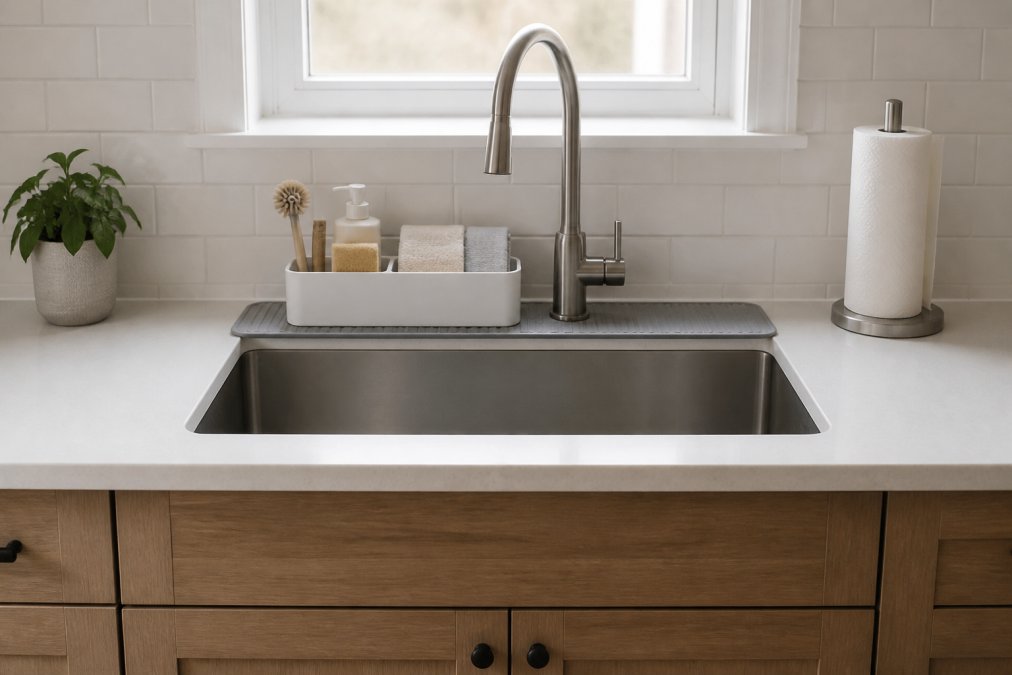
The counter directly around your sink is premium real estate. Every item sitting there is one less square inch available for food prep, setting down a hot pan, or simply creating visual breathing room. Maximizing this space means being ruthless about what lives on the counter versus what belongs elsewhere.
Start by identifying what actually needs to live near your sink. A dish brush, sponge, and maybe soap, that's the core. Everything else can migrate. Drying racks that sit on the counter eat up valuable space; consider wall-mounted alternatives or collapsible versions that tuck away after use. Soap dispensers should be single, not multiple bottles competing for real estate.
The SinkElle FlowRack Pro keeps sponges dry and contained in a compact footprint, preventing the soggy mess that forces you to set wet items directly on your counter. A splash mat like the Sinkelle DryFlow Splash Mat protects your counter from water damage while defining the sink zone visually, making the area feel more intentional and organized.

Consider what you're storing under the sink versus on the counter. If you're keeping cleaning supplies, sponges, or dish towels on the counter, ask yourself: could these live in a cabinet or on a wall instead? The answer is almost always yes. Use adhesive hooks on the inside of cabinet doors or on the wall beside your sink to hang dish towels, creating vertical storage that doesn't consume counter space.
Under Sink Organization Ideas That Work Around Plumbing
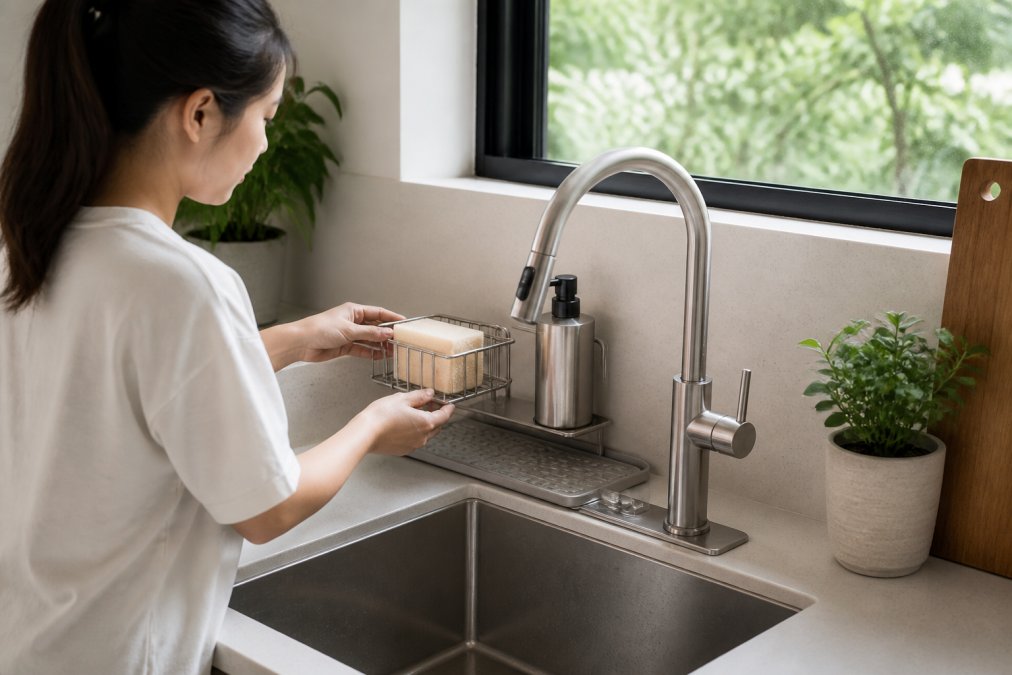
The space under your sink is deceptively difficult to use. You've got pipes running in unexpected directions, a P-trap taking up valuable real estate, and maybe a garbage disposal complicating things further. Most under-sink cabinets end up as dead zones where things get shoved and forgotten.
The key is working with your plumbing, not against it. Measure your cabinet carefully, note where pipes are located, how much clearance you have, and what the actual usable space looks like. Standard tiered shelving won't work if your pipes run diagonally or if your P-trap juts into the cabinet at an odd angle.
Working Around Garbage Disposals and Pipes
Garbage disposals and complex plumbing layouts are the enemy of standard storage solutions. You can't just slide a shelf across, it'll hit the disposal housing or the pipes. Instead, use modular bins that fit around obstacles. Shallow, rectangular bins work better than deep square ones because they conform to the actual shape of your available space.
Position bins strategically: place them on either side of the P-trap, or use a single bin in the section that's actually accessible. Leave the area directly under the drain clear, this prevents water from pooling if there's ever a leak, and it keeps your supplies away from potential moisture.
The SinkElle Sink Organization Bundle includes modular components designed to work in tight spaces. Its flexible configuration lets you build around your specific plumbing layout rather than forcing everything into a one-size-fits-all system.

Tiered Shelving and Modular Bins
Tiered shelving maximizes vertical space in a way flat shelves can't. A two-tier setup in an under-sink cabinet can double your usable storage compared to a single shelf. The key is ensuring the bottom tier is elevated enough to clear your P-trap and any other piping.
Modular bins let you customize your layout. Use smaller bins for frequently accessed items like sponges or dish soap, and larger bins for bulk supplies like trash bags or cleaning cloths. Label everything clearly, when you can't see what's inside a closed cabinet, things get forgotten and replaced unnecessarily.
Choose waterproof or water-resistant bins. Under-sink cabinets are inherently damp environments. Moisture accumulates from humidity, splashes, and occasional leaks. Standard plastic bins can warp or develop mold. Materials that resist moisture, like the waterproof designs SinkElle uses, maintain their integrity and keep your supplies dry.
Vertical Space Optimization Above and Beside Your Sink
Vertical space is your secret weapon in a small apartment kitchen. While your counter is cramped, the wall above and beside your sink is often completely unused. This is where you can dramatically expand your storage capacity without sacrificing counter real estate.
Tension rods installed horizontally inside or above your sink cabinet can hold dish towels, cleaning cloths, or even small bags. They're invisible when the cabinet door is closed but provide surprising storage capacity. Install them at varying heights to maximize the space.
Adhesive hooks on the wall beside your sink work for hanging dish brushes, small cloths, or even a small hanging organizer. Because they're adhesive, they're renter-friendly and won't damage walls (assuming you use damage-free adhesive strips). The SinkElle AquaShield Faucet Guard can be positioned to protect your wall from splash damage while creating a defined, organized appearance.

Consider a narrow, wall-mounted shelf directly above the sink. This works best if your window or backsplash is above the sink, you can install a small shelf below the window for items you use daily. Avoid blocking light or creating a cluttered appearance. A single shelf holding a small plant, a bar of soap, and a hand towel looks intentional; the same shelf crammed with ten items looks chaotic.
Rental-Friendly Kitchen Storage Without Damage
Renters face a unique challenge: you need to organize your space without losing your security deposit. This means no drilling, no permanent installations, and no damage to walls or cabinets. Yet you still need functional storage that actually works.
Adhesive-based solutions are your foundation. Damage-free adhesive strips can hold lightweight organizers, hooks, and small shelves. The key is using the right adhesive for your wall type, command strips work on most painted drywall, but textured walls require different solutions. Test your adhesive on a small, inconspicuous area first.
Tension rods don't require any installation, they wedge between cabinet walls using spring tension. They're completely removable and leave no marks. Freestanding tiered shelving that sits inside your cabinet doesn't need fastening; gravity holds everything in place.
Over-the-door organizers hang on your cabinet door without any adhesive or drilling. They're perfect for storing frequently used items like cleaning gloves, sponges, or small bottles. When you move out, you simply remove them, no damage, no questions.
The SinkElle product line emphasizes tool-free installation because we understand that many homeowners either rent or prefer not to drill into their cabinets. Our systems use waterproof materials and minimalist design to work in tight spaces without requiring permanent modifications.
Cabinet Door Storage and Hanging Rail Solutions
Your cabinet door is real estate you're probably not using. The inside of the door under your sink is perfect for storing items you access regularly but don't need on the counter.
Adhesive hooks mounted on the inside of the cabinet door can hold cleaning cloths, small brushes, or a lightweight hanging organizer. Tension rods installed horizontally can hold dish towels or cloths. Small adhesive shelves can hold bottles of soap or cleaning products.
Hanging rails installed on the inside of the cabinet door create a system for hanging small baskets or hooks. They're visible when the door opens but completely hidden when it closes. This works particularly well if you use your under-sink storage for cleaning supplies that you want accessible but out of sight.
The advantage of door storage is that it's out of the way but immediately accessible. You open the cabinet, grab what you need, and close the door. Nothing sits on your counter, and everything has a designated home. For small apartment kitchen sink storage, this approach often provides more usable space than trying to cram everything into the cabinet itself.
Keeping Your Sink Area Clutter-Free: Maintenance and Inventory Systems
Organization is temporary unless you maintain it. A beautifully organized sink area will gradually deteriorate if you don't have a system for keeping it that way. The difference between a space that stays organized and one that reverts to chaos is usually a simple inventory and maintenance routine.
Create a mental or written inventory of what lives in your sink area and under-sink storage. Know what you have, where it lives, and how much you actually use. This prevents the common problem of buying duplicate items because you forgot what was already stored away.
Set a weekly maintenance routine, just five minutes. Wipe down your counter around the sink, ensure everything is back in its designated spot, and check for any moisture or damage. This prevents small problems from becoming big ones. If you notice water pooling under the sink, address it immediately rather than letting it damage your supplies or storage system.
Adopt a "one in, one out" rule for items stored under your sink. If you buy a new cleaning product, remove an old one. This prevents the gradual accumulation that eventually forces you to reorganize everything. It also helps you actually use the products you have instead of letting them expire in the back of a cabinet.
For small apartment kitchen sink storage, the goal isn't perfection, it's sustainability. A system you can maintain is infinitely better than a beautiful system that collapses after two weeks. SinkElle's modular, minimalist approach makes maintenance simple because there's less to manage and everything has a clear purpose.
| Storage Method | Best For | Installation | Maintenance |
|---|---|---|---|
| Tiered shelving | Maximizing under-sink space | 10-15 minutes | Monthly checks for moisture |
| Adhesive hooks | Hanging items on walls/doors | 2-3 minutes per hook | Visual inspection as needed |
| Tension rods | Hanging cloths or small items | 5 minutes | Ensure tension is maintained |
| Modular bins | Organizing and containing items | 5-10 minutes | Wipe down monthly |
| Splash mats | Protecting counter from water | 1 minute | Rinse and dry weekly |
Small apartment living doesn't mean accepting clutter around your sink. The challenge is real, but the solutions are straightforward: maximize vertical space, work around your plumbing, and choose systems you can actually maintain. SinkElle's waterproof, tool-free organization solutions are designed specifically for tight spaces and rental situations. The SinkElle Sink Organization Bundle combines everything you need to transform your sink area into a functional, beautiful space, without drilling, without permanent damage, and without the frustration of systems that don't fit your actual layout. Start with one area of your sink storage, implement a system that works for your specific space, and build from there. Within a week, you'll notice the difference a truly organized sink area makes in your daily kitchen workflow.
Frequently Asked Questions
How do you organize a small kitchen sink area with no counter space?
Focus on vertical storage and under-sink organization. Install adhesive hooks on cabinet doors for hanging cloths, use wall-mounted tension rods for hanging spray bottles, and add tiered shelving under the sink to maximize capacity. The Sinkelle Sink Organization Bundle ($43.99) combines multiple storage solutions designed specifically for tight sink areas, giving you organized storage without eating into your limited counter space.
What are the best storage solutions for rental kitchens?
Choose non-permanent, damage-free options: adhesive hooks, tension rods, and over-the-door organizers require no drilling or wall damage. Modular bins and drawer dividers work inside existing cabinets without modification. The Sinkelle FlowRack Pro ($34.99) uses no tools and sits on your counter, keeping sponges and dishcloths dry and organized. Check your lease before installing anything, but these solutions are designed to leave no marks when removed.
How can I keep my kitchen sink area looking minimalist and clean?
Reduce visible clutter by storing items in closed containers and bins rather than leaving them on the counter. Use a splash mat like the Sinkelle DryFlow Splash Mat ($19.99) to contain water and prevent rings. Implement a simple inventory system: assign specific homes for cleaning supplies, sponges, and dishcloths in your under-sink cabinet or on hanging rails. Return items to their designated spots daily to maintain the clean, organized aesthetic.
Can storage solutions work around garbage disposals and plumbing pipes?
Yes, with planning. Measure your under-sink space carefully, noting pipe locations and disposal placement. Use tiered or adjustable shelving that fits around these fixtures rather than against them. Modular bins can be arranged to avoid pipes entirely. Before purchasing, sketch your under-sink layout with measurements. Most plumbing layouts have usable space on one side or above the pipes where bins and organizers can fit without interfering with the disposal or water lines.
This article was written using GrandRanker