


Table of Contents
- Measure Your Cabinet Space and Plan Your Layout
- Assess Plumbing Obstacles and Work Around Them
- Best Kitchen Sink Organizers for Small Spaces
- How to Declutter Kitchen Counters Around Your Sink
- Under Sink Storage Ideas That Actually Fit
- Maintain Your Organized Sink Area Long-Term
- Conclusion
Last Updated: August 12, 2026
Measure Your Cabinet Space and Plan Your Layout
Before you buy a single organizer, measure your under-sink cabinet precisely. Most people skip this step and end up with solutions that don't fit, which defeats the purpose entirely. Take a tape measure and record three measurements: the width of the cabinet opening, the depth from front to back, and the height from the floor to the underside of the sink basin. Write these down, you'll need them to evaluate whether any how to organize small kitchen sink area solution will actually work in your space.
Next, identify what's already taking up room. Look at the cabinet floor and note any permanent fixtures: the drain pipe, the water supply lines, the shutoff valve, any garbage disposal unit. These aren't moving, so your storage plan has to work around them, not against them. Sketch a simple top-down view of your cabinet on paper. Mark where the plumbing lives. This becomes your constraint map, the boundaries that define what's possible.
Plan your layout in zones. The area directly under the sink bowl is typically reserved for the trap and drain assembly. The sides and back of the cabinet are usually more flexible. If you have a garbage disposal, that takes up significant vertical space on one side. Assign specific storage zones: one for cleaning supplies, one for dish soap and sponges, one for trash or recycling if you're keeping those under the sink. This mental organization prevents the chaotic pile-up that happens when everything just gets shoved in.
Assess Plumbing Obstacles and Work Around Them
Plumbing is the real constraint in how to organize small kitchen sink area spaces. The drain trap, water supply lines, and shutoff valve create a physical puzzle that most generic organizers ignore. Understanding what you're working with makes the difference between a setup that functions and one that creates constant frustration.
The P-trap under your sink is the curved section of pipe that sits directly below the drain opening. It's typically 4 to 6 inches tall and takes up valuable floor space in the center of the cabinet. You cannot store anything on top of it or directly against it, water needs to flow freely through it, and you need access to it if it ever clogs. This means your storage solutions need to route around it, not over it.
Water supply lines run from the wall to the faucet, usually along the back or sides of the cabinet. These are flexible but take up space, and they're under pressure. Don't compress them or store heavy items against them. If your cabinet has angled supply lines that jut out into the space, work with that geometry rather than against it. Some organizers have cutouts specifically designed for this, they're worth seeking out if your setup matches.
The shutoff valve is critical. You need to be able to reach it and turn it in an emergency. Never, ever block access to it with storage. If your shutoff is in an awkward spot, consider it a permanent "do not use" zone. Plan your storage to leave a clear path to that valve.
Garbage disposals create a different challenge. They're bulky, they get hot, and they need clearance above them. If you have one, that entire side of the cabinet is essentially off-limits for storage. Work with what you have on the other side.
Best Kitchen Sink Organizers for Small Spaces
The best kitchen sink organizers for small spaces work with plumbing constraints rather than ignoring them. They're compact, modular, and designed to maximize vertical space without adding bulk to your counter.
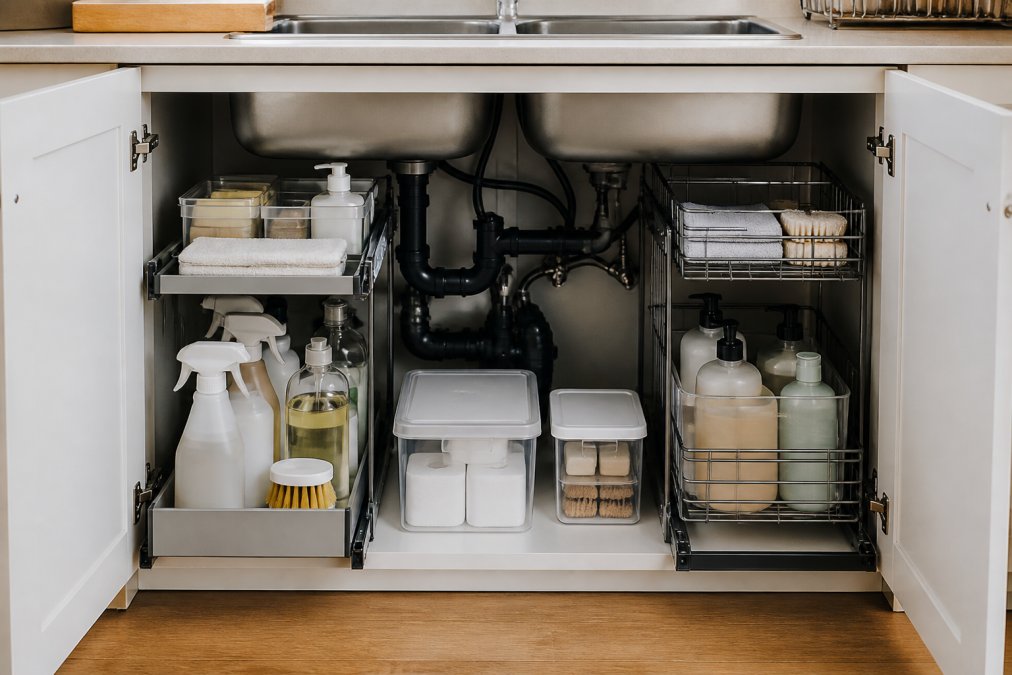
Pull-out drawer systems are the gold standard for under-sink organization. These are shallow, sliding trays that fit between the cabinet floor and the pipes above. They let you access items in the back without reaching through everything in front. For a small space, a single pull-out drawer that slides out fully gives you far better usability than fixed shelves. The trade-off is cost, quality pull-out systems are more expensive than basic shelving.

Shelf dividers and risers are simpler and cheaper. They're vertical separators that create compartments within your cabinet, and risers lift items off the floor to create a second level. This approach works well if your plumbing allows for some vertical stacking. Tension rods mounted horizontally can also serve as dividers, keeping bottles upright and separated.
Tiered shelf organizers stack items vertically without taking up more floor space. They're especially useful for cleaning supplies, which are often oddly shaped and don't stack neatly. A three-tier riser lets you fit three times as many items in the same footprint.
Door-mounted racks use the inside of the cabinet door, which most people ignore. Adhesive-backed organizers or tension rod systems on the door can hold spray bottles, cloths, or lightweight items. This is valuable real estate that costs nothing in terms of floor space.
Lazy Susans or turntables solve the "reaching into the back" problem without requiring full-depth pull-out systems. Spin the turntable and everything rotates into reach. They're cheap and work surprisingly well for bottles and containers, though they take up more floor space than a pull-out drawer.
SinkElle's Sink Organization Bundle combines several of these approaches in one system. It includes modular organizers designed specifically for under-sink spaces, with cutouts for plumbing and a waterproof design that handles the inevitable splashes and moisture. The bundle costs $43.99 and requires no tools to install, everything snaps together. For someone starting from scratch in a small space, buying a matched system beats mixing and matching individual pieces that may not work together.
How to Declutter Kitchen Counters Around Your Sink
Your counter is the first place clutter accumulates around the sink. Soap bottles, sponges, dish brushes, and various bottles create visual chaos and make the space feel smaller than it is. The solution is moving what you can under the sink and being ruthless about what stays on top.
Start by removing everything from your counter around the sink. Lay it all out on the kitchen table. Now sort it into three piles: things that must stay on the counter, things that can move under the sink, and things you don't actually use and should discard.
Things that must stay: your primary dish soap (one bottle, not three), a single sponge holder, maybe a brush for scrubbing pans. That's it. Everything else can go under the sink or in a cabinet.
Things that can move: backup bottles of soap, extra sponges, cleaning sprays, dish towels, trash bags, recycling bags. These all belong under the sink if you have room. If you don't have room, they belong in a cabinet elsewhere, not on your counter.
Things to discard: dried-out sponges, cracked soap dispensers, bottles of cleaner you never use, broken brushes. Be honest about what you actually reach for. If you haven't used it in three months, it's taking up space for no reason.
Once you've sorted, commit to keeping your counter to just three items maximum: dish soap, a sponge holder, and maybe a small brush caddy. This single decision transforms how your sink area feels. The space looks larger, cleaning is faster because you're not navigating around clutter, and your kitchen immediately feels more intentional.
Under Sink Storage Ideas That Actually Fit
Under-sink storage only works if it actually fits around your plumbing. The most common mistake is buying organizers that look good in a showroom but don't account for the reality of drain pipes, supply lines, and shutoff valves.
Start with the floor. Use the usable floor space for your heaviest items: large bottles of cleaning solution, trash bags, recycling bags. These are stable on the floor and don't need to be accessed frequently. If your floor space is limited by plumbing, accept that limitation and don't try to cram things in anyway.
Next, assess your vertical space. Measure from the floor to the underside of the sink basin. This is your maximum height for any organizer. Most under-sink cabinets give you 18 to 24 inches of vertical space. A tiered shelf organizer that's 12 inches tall leaves room for bottles or containers on top.
Protect Surfaces and Manage Moisture
Under-sink cabinets are damp environments. Moisture from the sink, splashes during cleaning, and condensation from pipes create conditions that damage unprotected wood and encourage mold. Protecting your cabinet surfaces is essential, not optional.
Line the floor with a waterproof mat or shelf liner. This prevents moisture from soaking into the wood and creates a barrier between wet items and the cabinet bottom. A simple rubber mat costs ten dollars and extends your cabinet's life significantly. Replace it when it gets grimy, usually every six months to a year.
For the walls, consider adhesive-backed waterproof panels or simply wipe down the interior walls with a damp cloth monthly to prevent mold buildup. If you notice mold spots, spray with a 1:1 vinegar and water solution and let it dry completely.
Sinkelle's DryFlow Splash Mat ($19.99) is designed specifically for this, it sits on your counter next to the sink and absorbs splashes before they reach your cabinet. It's a simple preventative that keeps moisture from getting into your under-sink storage in the first place.

Organize Cleaning Supplies and Trash
Cleaning supplies are bulky, oddly shaped, and easy to lose track of. Create a dedicated zone for them so you know what you have and where it is.
Group similar items together. All-purpose cleaners in one area, glass cleaners in another, disinfectants in a third. Use a small caddy or container to keep spray bottles upright and prevent them from tipping over when you pull something else out. A tension rod mounted horizontally can hold spray bottles by their triggers, keeping them organized and easy to access.
For trash and recycling, consider a slim pull-out system designed for under-sink cabinets. These typically hold two bags (trash and recycling) in a compact footprint. If you don't want to invest in a system, use small bins or bags that fit your available space. The key is containing everything so it doesn't spill out when you open the cabinet.
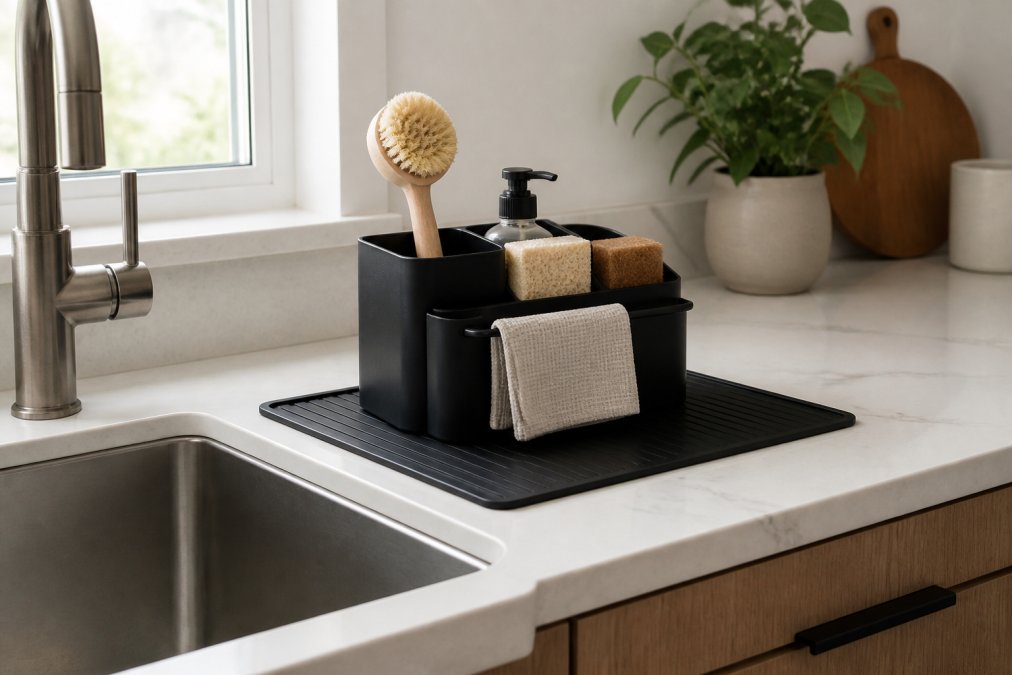
Sinkelle's FlowRack Pro ($34.99) solves the sponge problem specifically. It keeps sponges and dishcloths elevated and dry, preventing the soggy mess that happens when they sit in standing water. It's designed for small spaces and requires no installation.

Maintain Your Organized Sink Area Long-Term
Organization only works if you maintain it. Most people organize their under-sink cabinet, feel great for a month, and then watch it slowly descend into chaos again. The difference between a system that lasts and one that fails is maintenance.
Set a monthly check-in. Once a month, open your cabinet and spend five minutes tidying. Move items back to their zones, discard anything empty, wipe down surfaces if they're damp. This takes almost no time and prevents the slow creep of disorder.
Establish a rule: one item in, one item out. When you buy a new cleaning product, remove an old one. This prevents accumulation without requiring you to think about it.
Clean the cabinet quarterly. Remove everything, wipe down the interior with a damp cloth, check for mold or moisture issues, and replace the floor liner if needed. This takes 15 minutes and prevents problems from festering.
Keep a small inventory list on a sticky note inside the cabinet door. Write down what's stored where. This sounds excessive, but it prevents duplicate purchases and helps you remember what you actually have. Update it monthly.
The final rule: if something isn't being used, remove it. Every six months, go through your under-sink cabinet and be honest about what you actually reach for. If a cleaning product has been there for six months untouched, it doesn't belong there. Donate it or discard it. Your space is too valuable to waste on things you don't use.
Conclusion
Organizing a small kitchen sink area isn't about buying the fanciest organizers, it's about understanding your constraints and working within them. Measure your space, map your plumbing, declutter your counter, and choose organizers designed for tight spaces. SinkElle's organization solutions are built for this exact challenge, with waterproof materials, tool-free installation, and designs that account for real plumbing obstacles. The Sink Organization Bundle gives you everything you need to transform your under-sink space in minutes, creating a functional, beautiful area that actually stays organized. Start with a clear plan, maintain it monthly, and your sink area will remain efficient and clutter-free.
Frequently Asked Questions
How do I organize a small kitchen sink area with limited counter space?
Start by measuring your available space, then remove everything from your sink cabinet. Assess what you actually use daily versus what can be stored elsewhere. Use vertical space with shelf dividers and pull-out organizers. Keep frequently used items like dish soap and sponges on the counter in a compact organizer. Store cleaning supplies in clear containers under the sink, working around plumbing. The key is compartmentalizing items and using every inch of vertical space without overcrowding.
What are the best kitchen sink organizers for tight spaces with plumbing obstacles?
Pull-out drawer systems and adjustable shelf dividers work best because they fit around drain pipes and water shut-off valves. Tension rods can hold spray bottles vertically. Door-mounted racks maximize unused space on cabinet doors. For your countertop, a compact organizer like the Sinkelle FlowRack Pro keeps sponges and cleaning cloths dry and accessible. Choose organizers with flexible configurations so you can customize them to your specific plumbing layout.
How can I keep my under sink storage area dry and prevent mold?
Moisture is the biggest challenge in under-sink spaces. Use a moisture-absorbing mat or splash guard to protect cabinet surfaces from water drips. The Sinkelle DryFlow Splash Mat prevents water from accumulating on your countertop. Store items in waterproof containers or on elevated shelves so they don't sit directly on wet surfaces. Ensure good air circulation by not overstuffing the cabinet. Check regularly for leaks from your plumbing and address them immediately to prevent mold growth.
What items should I keep near my kitchen sink versus storing elsewhere?
Keep only items you use daily or multiple times per week near your sink: dish soap, sponges, dish brushes, and cleaning cloths. Store infrequently used items like specialty cleaners, spare sponges, and seasonal supplies in a cabinet or pantry away from the sink. Keep trash and recycling containers accessible but not taking up prime real estate. This approach reduces clutter, makes your workflow efficient, and prevents your sink area from becoming a catch-all for everything.
This article was written using GrandRanker