


Table of Contents
- Why Minimalist Kitchen Sink Organization Matters
- 1. Pull-Out Drawer Systems and Sliding Shelves for Vertical Storage
- 2. Clear Container Storage Systems and Inventory Management
- 3. Under Sink Storage Solutions That Work Around Plumbing
- 4. Small Kitchen Organization Hacks for Tight Spaces
- 5. Decluttering Kitchen Cabinets and Creating a Cleaning Station
- 6. Sustainable Minimalist Materials and Maintenance for Leak Prevention
- Conclusion
Last Updated: August 14, 2026
Why Minimalist Kitchen Sink Organization Matters
Clutter around your sink doesn't just look messy, it wastes time, creates inefficiency, and makes daily routines harder than they need to be. A thoughtfully organized sink area transforms how you move through your kitchen. When cleaning supplies, sponges, and tools have designated homes, you spend less time searching and more time actually doing. This is where minimalist kitchen sink organization ideas become essential for anyone serious about functional living spaces.

The philosophy behind minimalist organization isn't about owning less for its own sake. It's about intentional design: every item serves a purpose, everything has a place, and your space works for you instead of against you. A well-organized sink area reduces daily friction, prevents water damage from pooling under supplies, and creates the calm, efficient kitchen that modern homeowners want.
The challenge is that most under-sink spaces weren't designed with modern organization in mind. You're working with P-trap plumbing, limited cabinet depth, and awkward angles that make standard storage solutions fail. This guide covers practical solutions that actually work in real kitchens, not just in magazine photos.
1. Pull-Out Drawer Systems and Sliding Shelves for Vertical Storage
The best way to maximize an under-sink cabinet is to stop thinking horizontally. Pull-out drawer systems and sliding shelves let you use vertical space efficiently while keeping everything accessible. Instead of reaching to the back of a deep cabinet and knocking things over, you pull out a drawer and grab what you need in seconds.
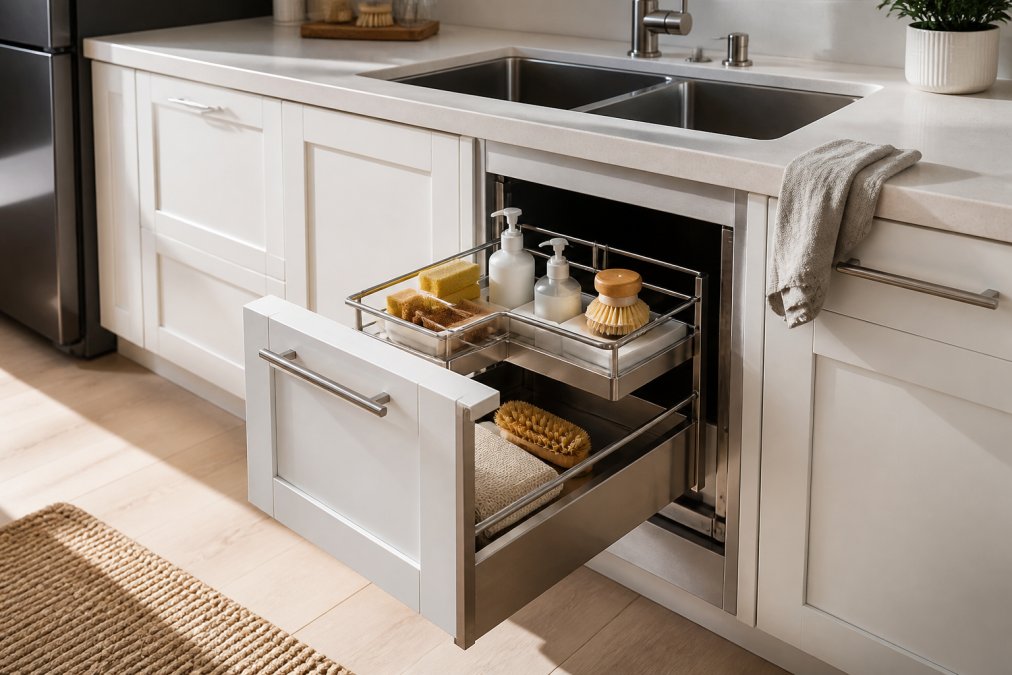
Pull-out systems work because they solve a real problem: deep cabinets force you to reach far back, items get lost, and organization breaks down quickly. A quality pull-out drawer gives you a contained space where everything stays visible and within arm's reach. The best systems use smooth ball-bearing slides that handle repeated use without sagging or jamming.
When choosing a pull-out system, measure your cabinet opening carefully. Most standard kitchen cabinets are 36 inches wide, but depth varies. A pull-out that's too deep won't close properly; one that's too shallow wastes space. Look for systems that accommodate the P-trap without forcing you to work around awkward angles.
Tiered shelving inside the pull-out maximizes storage capacity. One shelf holds sponges and brushes, another holds cleaning spray bottles, a third holds dish towels. This vertical stacking approach lets you store more in less footprint than traditional flat storage. The Sinkelle Sink Organization Bundle includes thoughtfully designed components that work together to create this layered storage system, eliminating the guesswork of mixing and matching pieces.
The key advantage of pull-out systems over fixed shelves is flexibility. As your needs change, you can rearrange what goes where without permanent modifications. For renters or anyone who wants to avoid drilling into cabinets, this matters significantly.
2. Clear Container Storage Systems and Inventory Management
Clear containers transform how you interact with stored items. When you can see what's inside without opening the container, you grab what you need and know when supplies are running low. This visibility prevents the common problem of buying duplicate items because you forgot what you already had.
The minimalist approach to clear containers means choosing a consistent set in 2-3 sizes rather than a chaotic mix of different brands and shapes. Uniformity makes the space look intentional and calm. Square or rectangular containers stack more efficiently than round ones and create cleaner lines that align with minimalist design.
Container height matters in under-sink spaces. Tall containers waste horizontal space; short, wide ones maximize what you can fit. Measure your cabinet height from floor to the underside of the sink basin, then choose containers that leave at least an inch of clearance when stacked. This prevents containers from jamming when you slide them in and out.
Inventory management with clear containers means you can see at a glance what needs restocking. A container that's half-empty signals it's time to buy more, not when you run out completely. This prevents the frustration of discovering mid-cleaning that you're out of sponges or dish soap.
Label your containers clearly, even though they're transparent. Labels serve two purposes: they help family members find what they need, and they make it obvious when items get misplaced. Use a label maker for a clean, professional look that complements the minimalist aesthetic.
3. Under Sink Storage Solutions That Work Around Plumbing
The P-trap is the reality of every under-sink cabinet, and pretending it doesn't exist leads to wasted space and poor organization. The best under sink storage solutions work with your plumbing, not around it in ways that create awkward gaps.
Start by measuring your P-trap location precisely. Mark its position on the cabinet floor with tape. This becomes your no-storage zone. Everything you place in the cabinet must account for this obstruction. Many people waste money on organizers that don't fit because they ignored this fundamental constraint.
Wire baskets designed specifically for under-sink spaces are engineered to accommodate plumbing. They sit lower and wider than standard shelving, leaving clearance for pipes. The open-wire construction also allows water to drain if there's ever a minor leak, rather than pooling under items.
Tiered shelving that adjusts vertically gives you options. Place a shelf above the P-trap to store items that don't need frequent access. Use the space beside the pipes for frequently grabbed supplies. A shelf below the P-trap (if clearance allows) maximizes every inch.
Maintenance routines for leak prevention start with organization. A cluttered under-sink space makes it impossible to spot slow leaks until damage occurs. When everything has a designated place, you notice immediately if water appears. Regular visual inspection, even just once a month, catches problems before they become expensive.
Keep cleaning supplies away from direct contact with pipes. Bottles leaning against pipes can accelerate corrosion, and acidic cleaners can damage metal over time. Use wire baskets or containers as buffers between supplies and plumbing.
4. Small Kitchen Organization Hacks for Tight Spaces
Tight kitchens demand creative thinking. When you have minimal square footage, every inch of sink area becomes precious real estate. The difference between a functional tight kitchen and a chaotic one is intentional organization.
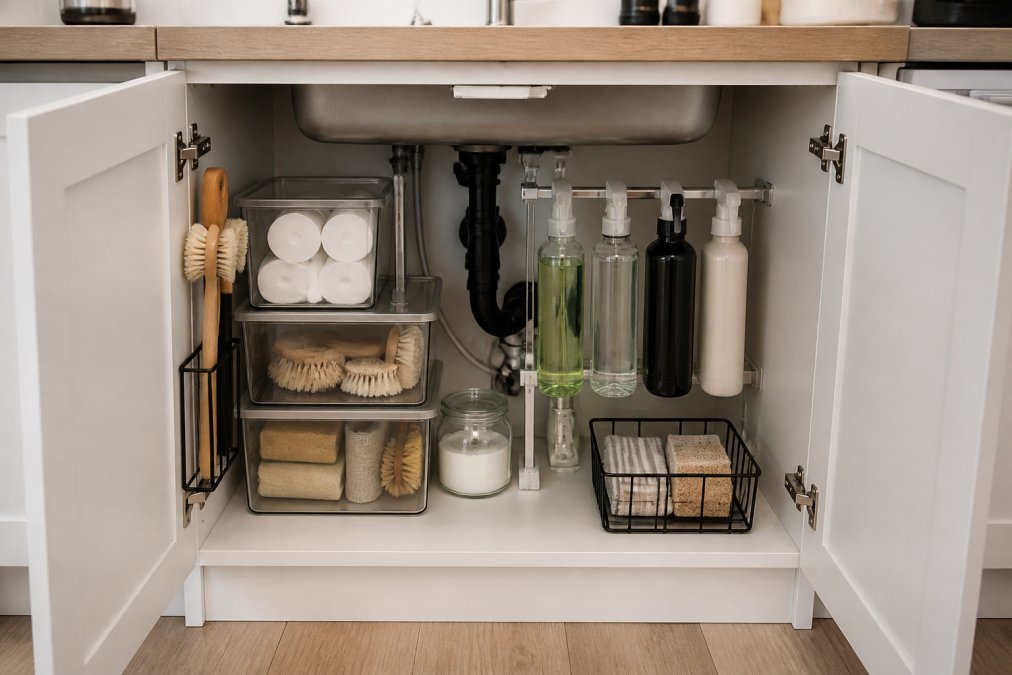
Tension rods are underrated organization tools for small spaces. Mounted horizontally inside the cabinet, they create hanging space for spray bottles, dish towels, or cleaning cloths. This vertical hanging approach frees up shelf space for other items. A single tension rod can hold 4-6 spray bottles, turning wasted vertical space into functional storage.
Lazy Susan organizers work well in corner cabinets where reaching the back is difficult. You spin the carousel to bring items to the front instead of reaching blindly. For under-sink spaces, a small lazy Susan holds frequently used items like sponges, brushes, and soap dispensers.
Caddy organizers with handles let you pull out an entire category of supplies at once. A cleaning caddy holds all your under-sink cleaning products in one portable container. Instead of rummaging through the cabinet, you grab the caddy, use what you need, and put it back. This approach works especially well in small kitchens where the sink area doubles as your cleaning station.
Drawer dividers inside cabinet drawers prevent items from shifting and getting lost. Even in small cabinets, a single pull-out drawer with dividers holds more organized items than a shelf without organization.
Cabinet footprint optimization means measuring twice and choosing storage that fits your exact space. A system that works in a standard 36-inch cabinet might be too wide for a 30-inch cabinet. Custom or adjustable solutions beat one-size-fits-all options in tight spaces.
5. Decluttering Kitchen Cabinets and Creating a Cleaning Station
Before you organize, you need to declutter. This step separates people who organize once and stay organized from those who organize repeatedly. Decluttering kitchen cabinets means evaluating every item honestly: Does this get used regularly? Is it effective? Does it earn its space?
Start by removing everything from under your sink. Yes, everything. Lay it all out on your counter. This forces you to see exactly what you have and makes it harder to slip old items back in without thinking.
Sort items into three categories: keep, donate, and discard. Keep items you use at least monthly. Donate duplicate items or products you bought but never used. Discard dried-out sponges, expired products, and anything broken beyond repair.
A cleaning station concept brings organization to your entire cleaning supply ecosystem. Instead of scattering cleaning supplies throughout your home, consolidate them in one designated area, typically under the sink. Your cleaning station should include:
- All-purpose cleaning spray
- Dish soap and hand soap
- Sponges and brushes
- Dish towels and cleaning cloths
- Paper towels (if stored there)
- Rubber gloves
Keeping these items together means you grab one container and have everything you need for most cleaning tasks. This efficiency matters in small kitchens where you don't have space for scattered supplies.
The Sinkelle FlowRack Pro organizer exemplifies this cleaning station approach. It holds sponges, brushes, dish soap, and a towel bar in one compact unit that sits right at your sink. Everything you need for dishwashing is instantly accessible, and the angled drain design keeps sponges from sitting in water puddles.

Maintenance of your organized system requires a simple rule: one new item in means one old item out. When you buy a new sponge, the old one gets discarded. When you get a new cleaning product, you finish the old one first. This prevents the slow creep of clutter that derails organization systems.
6. Sustainable Minimalist Materials and Maintenance for Leak Prevention
The materials you choose for your sink organization directly impact durability, environmental impact, and how long your system actually lasts. Minimalist design favors quality materials that age well and require minimal replacement.
Stainless steel is the gold standard for under-sink organization. It resists rust, handles water exposure without degrading, and looks clean and modern. Unlike plastic that yellows and warps over time, stainless steel maintains its appearance for years. The higher upfront cost pays for itself through longevity.
Waterproof silicone products like mats and splash guards represent sustainable minimalism. They last years instead of months, handle repeated wet exposure without deteriorating, and are fully recyclable. The Sinkelle DryFlow Splash Mat uses premium waterproof silicone that channels water back into the sink rather than letting it pool on your counter, preventing water damage before it starts.

Natural materials like bamboo and untreated wood have aesthetic appeal but require careful maintenance in wet environments. If you choose wood organizers for under-sink storage, ensure they're sealed and positioned away from direct water contact. The trade-off between aesthetics and durability is real.
Maintenance for leak prevention starts with regular inspection. Once monthly, look under your sink for water droplets, staining, or soft spots in cabinet materials. Early detection prevents expensive water damage. If you spot a slow leak, address it immediately rather than hoping it resolves.
Keep your sink area dry by wiping up spills promptly. Water pooling under containers creates conditions for mold and mildew. A quick wipe-down after washing dishes takes seconds and prevents problems. The Sinkelle DryStone Quick-Dry Kitchen Mat absorbs excess moisture quickly, preventing the wet environment that leads to deterioration.
Proper ventilation under your sink matters more than most people realize. If your cabinet has a back panel, drill small ventilation holes to allow air circulation. This prevents moisture buildup that accelerates rust and mold growth. Ensure your cabinet isn't sealed completely, air needs to move through the space.
Organizing your sink area is one of the highest-impact changes you can make in a small kitchen. When you work with your plumbing instead of against it, choose materials built for wet environments, and commit to a simple maintenance routine, your organized system stays functional for years. The Sinkelle Sink Organization Bundle combines pull-out storage, waterproof components, and thoughtful design to transform your sink area in minutes without tools or permanent installation. A clutter-free, efficient sink area isn't just about aesthetics, it's about reclaiming time and creating a kitchen that actually works the way you need it to.
Frequently Asked Questions
How do I organize my kitchen sink area without damaging plumbing?
Work around the P-trap and supply lines by using tiered shelving, pull-out baskets, and tension rods positioned above these fixtures. Measure your cabinet depth and plumbing angles before installing any system. Products like the Sinkelle Sink Organization Bundle ($43.99) are designed to fit standard sink configurations while leaving plumbing accessible for maintenance and leak prevention.
What are the best small kitchen organization hacks for minimalist aesthetics?
Use vertical storage with tension rods to maximize cabinet height, clear containers for inventory visibility, and wire baskets that reduce visual clutter. Keep only essential cleaning supplies visible on countertops using a dedicated caddy or organizer. The Sinkelle FlowRack Pro ($34.99) combines sponge storage, dishcloth hanging, and drainage in one minimal footprint, keeping countertops clean and functional.
How do I prevent mold and maintain an organized under-sink cabinet?
Inspect under-sink areas monthly for leaks, use waterproof materials that resist moisture, and ensure proper drainage by keeping the P-trap clear. Wipe down shelves and containers regularly to prevent mildew. Position items to allow air circulation, and consider using a quick-dry mat like the Sinkelle DryStone ($14.99) to absorb excess moisture before it accumulates.
What's the difference between minimalist sink organization and just buying cheap plastic bins?
Minimalist organization combines smart design with durable materials to create lasting functionality. Premium systems like the Sinkelle DryFlow Splash Mat ($19.99) use waterproof silicone that won't warp, rust-resistant stainless steel that lasts years, and thoughtful drainage that prevents the water damage cheap bins experience. You invest once in quality, not repeatedly in replacements.
This article was written using GrandRanker