


Table of Contents
- What Makes a Great Minimalist Kitchen Sink Organizer?
-
Top Kitchen Sink Organizers for a Clutter-Free Counter
- SinkElle FlowRack Pro - Best Sponge and Scrub Brush Holder ($34.99)
- SinkElle DryFlow Dish Rack - Best Full Drainage System ($61.99)
- SinkElle Sink Organization Bundle - Best Complete Setup ($43.99)
- SinkElle DryFlow Splash Mat - Best Countertop Splash Guard ($19.99)
- SinkElle DryStone Quick-Dry Kitchen Mat - Best for Wet Countertops ($14.99)
- Quick Comparison: SinkElle Sink Organizer Products
- Under Sink Storage Ideas for Small and Awkward Spaces
- How to Organize Under the Kitchen Sink for Long-Term Results
- Space-Saving Design Tips for a Minimalist Aesthetic
- Conclusion
Last Updated: August 8, 2026
What Makes a Great Minimalist Kitchen Sink Organizer?
The best minimalist kitchen sink organizers solve a functional problem without creating a visual one. A soggy sponge holder that looks cluttered defeats the purpose. At SinkElle, we've designed our product line around the idea that sink organization should disappear into your kitchen aesthetic, not fight against it.

A truly great kitchen sink organizer meets three criteria: it handles water without trapping it, installs without tools or drilling, and looks intentional rather than improvised.
Materials That Last: Stainless Steel, Silicone, and Diatomite
Stainless steel resists rust and tolerates constant moisture exposure while maintaining its appearance with minimal upkeep. A rust-resistant stainless steel frame will outlast plastic alternatives by years in high-humidity sink environments.
Silicone is ideal for countertop items. It's water-repellent, non-slip at the base, and flexible enough to conform to irregular surfaces. Quality silicone feels dense and firm, not thin and flimsy.
Diatomite is a naturally porous stone that absorbs moisture on contact and releases it through evaporation, keeping surfaces dry rather than pooling water. It's naturally hygienic because it doesn't harbor bacterial growth like soaked fabric mats do.
According to NSF International's kitchen hygiene guidelines, moisture-prone surfaces near sinks are among the highest-risk areas for bacterial contamination in home kitchens.
Installation Methods: Suction Cup, Over-the-Sink, and Freestanding
Suction cup mounting works on smooth, non-porous surfaces like ceramic and polished tile. It leaves no marks but loses grip on textured surfaces or damp walls.
Over-the-sink designs span the basin opening using sink edges as support. They work for single-bay and double-basin sinks, though you'll want to confirm the product's span matches your sink width.
Freestanding organizers sit on the countertop with a non-slip base. They're the most flexible option for tight corners and kitchens where the sink is positioned against a wall.
Top Kitchen Sink Organizers for a Clutter-Free Counter
A clutter-free counter starts with choosing products that earn their place. Every item below has a specific job with no overlap.
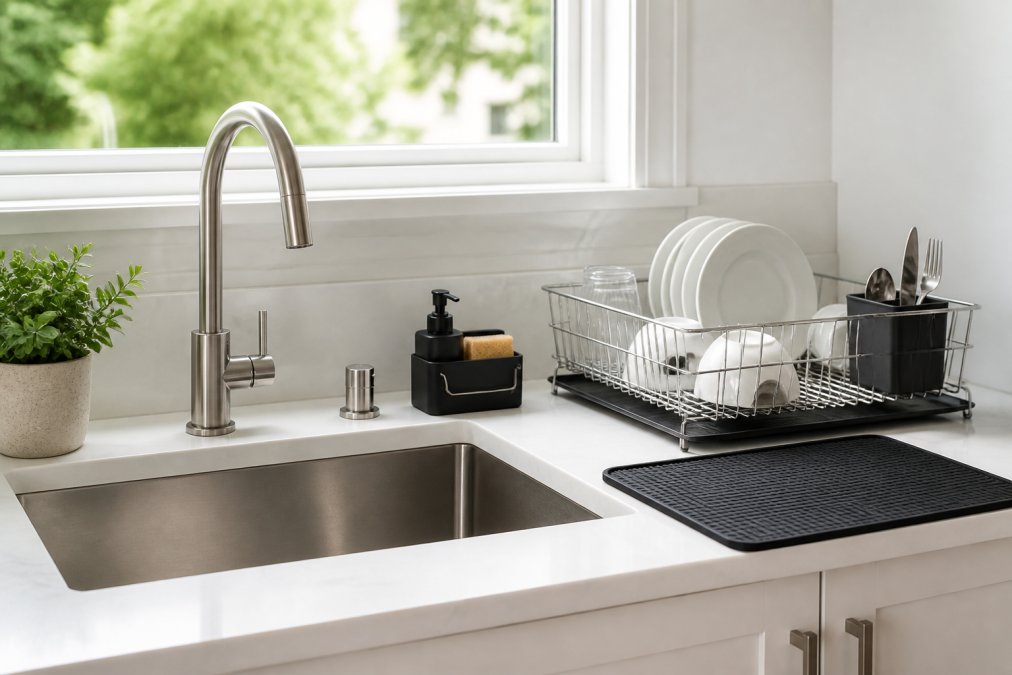
SinkElle FlowRack Pro - Best Sponge and Scrub Brush Holder ($34.99)
A sponge sitting in a puddle on the counter is a bacterial incubator. The SinkElle FlowRack Pro elevates the sponge off the surface, allowing air to circulate underneath so it actually dries between uses. Rather than a sealed tray that collects water, the FlowRack Pro uses an open, ventilated structure that lets water drip away.

Best for: Urban apartment kitchens where the sink caddy needs to pull double duty as a scrub brush holder and countertop organizer.
Pros:
- Compact footprint
- Keeps sponges genuinely dry between uses
- Doubles as a dishcloth organizer
- Minimalist aesthetic
Cons:
- Single-purpose focus
- Best suited for single-bay sink setups
Price: $34.99
SinkElle DryFlow Dish Rack - Best Full Drainage System ($61.99)
The SinkElle DryFlow Dish Rack treats drainage as a system rather than a feature. The auto-draining design channels water directly toward the sink, eliminating standing water that makes most dish racks smell within a week. The white finish integrates cleanly into modern kitchen aesthetics.
Best for: Households that hand-wash daily and want a dish storage rack that looks intentional.
Pros:
- Auto-draining eliminates standing water
- Clean, modern design works in minimalist kitchens
- Handles plates, bowls, and utensils
Cons:
- Higher price point
- Requires clear countertop space alongside the sink
Price: $61.99
SinkElle Sink Organization Bundle - Best Complete Setup ($43.99)
The SinkElle Sink Organization Bundle combines core components into a single, coordinated system. Rather than sourcing individual pieces and hoping they work together visually, this bundle covers everything your sink area needs without guesswork.
Best for: New homeowners or anyone doing a full kitchen organization overhaul who wants a coordinated setup from day one.
Pros:
- Complete sink setup in one purchase
- Coordinated design aesthetic
- Tool-free installation
Cons:
- Less flexible if you only need one component
- Fixed configuration may not suit every sink layout
Price: $43.99
SinkElle DryFlow Splash Mat - Best Countertop Splash Guard ($19.99)
The SinkElle DryFlow Splash Mat is a black silicone splash mat designed to intercept water that escapes during washing and rinsing. The silicone construction is genuinely water-repellent and wipes clean in seconds.

Best for: Anyone dealing with chronic wet countertops from an active faucet.
Pros:
- Minimalist profile
- Black silicone suits modern aesthetics
- Non-slip base keeps it in position
Cons:
- Focused specifically on splash control
- Needs regular wiping
Price: $19.99
SinkElle DryStone Quick-Dry Kitchen Mat - Best for Wet Countertops ($14.99)
The SinkElle DryStone Quick-Dry Kitchen Mat is a diatomite mat for anyone who's cycled through fabric dish drying mats and found them perpetually damp. Diatomite absorbs water on contact and dries quickly through natural evaporation, meaning the mat itself stays dry.
Best for: Anyone replacing a perpetually damp fabric mat who wants a low-maintenance, naturally hygienic alternative.
Pros:
- Absorbs and releases moisture naturally
- Stays genuinely dry between uses
- No washing required
Cons:
- Can crack if dropped
- Requires occasional sunning to maintain capacity
Price: $14.99
Quick Comparison: SinkElle Sink Organizer Products
| Product | Price | Primary Function | Best Sink Type | Installation |
|---|---|---|---|---|
| FlowRack Pro | $34.99 | Sponge and scrub brush holder | Single-bay or double-basin | Freestanding |
| DryFlow Dish Rack | $61.99 | Full drainage system for dishes | Single-bay or double-basin | Freestanding |
| Sink Organization Bundle | $43.99 | Complete sink setup | Any configuration | Tool-free |
| DryFlow Splash Mat | $19.99 | Countertop splash guard | Any, especially active faucets | Lay flat |
| DryStone Quick-Dry Mat | $14.99 | Wet countertop absorption | Any | Lay flat |
Under Sink Storage Ideas for Small and Awkward Spaces
Under-sink storage is the most underused square footage in most kitchens. The cabinet beneath a sink typically holds a garbage disposal, supply lines, a drain trap, and cleaning supplies shoved in without a plan. Turning that space into functional storage requires working around the plumbing rather than pretending it isn't there.
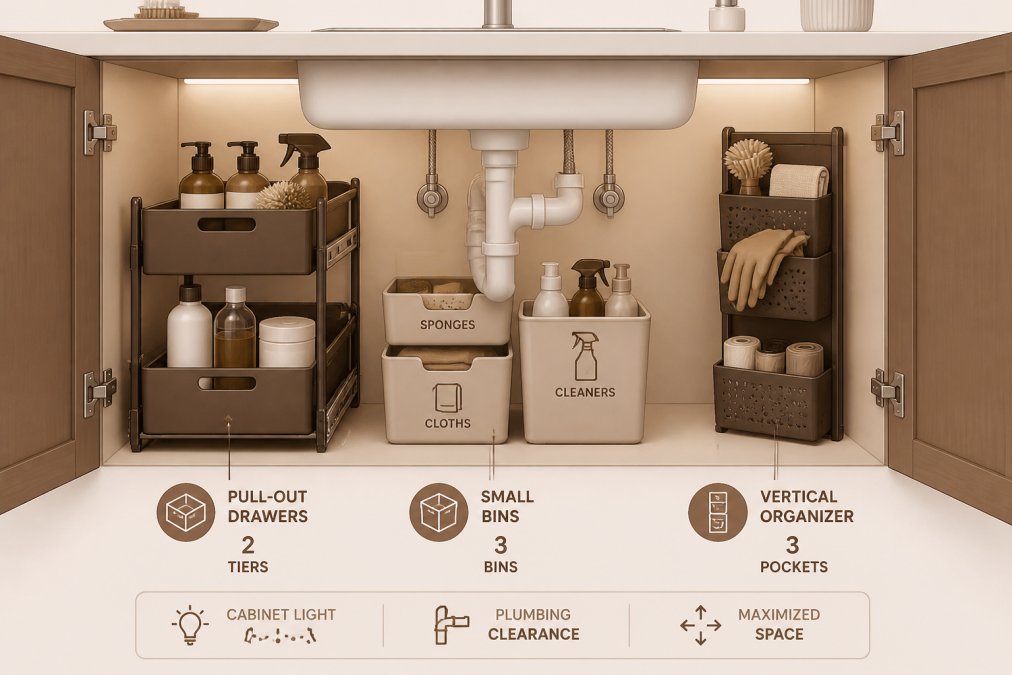
The good news: the under-sink cabinet in most American kitchens has more usable depth than it appears. Pipes and disposal units occupy the center and back, which means the front corners and sides are often completely clear.
Vertical Storage and Pull-Out Drawers
Vertical storage is the most space-saving approach for under-sink cabinets. Stackable bins and tiered shelves that fit alongside the drain pipe use height rather than floor space. A two-tier shelf positioned in the front corner can hold cleaning supplies, extra sponges, and a scrub brush without touching the plumbing.
Pull-out drawers are worth considering if you use the under-sink space frequently. A sliding drawer system brings items at the back within easy reach without requiring you to crouch and reach past the drain trap. According to [University of Minnesota Extension's kitchen organization(/collections/kitchen-organization) research | extension.umn.edu], accessible storage that reduces bending and reaching significantly improves how consistently people maintain organized systems over time.
Working Around Garbage Disposals and Plumbing Angles
A garbage disposal takes up significant vertical space on one side of the under-sink cabinet. Treat the disposal side as a single-use zone for tall, narrow items and concentrate organized storage on the opposite side. Awkward plumbing angles require the same approach: map the obstacles first, then choose storage that fills the gaps.
For renters, the under-sink cabinet is the one storage zone where temporary, tool-free solutions are non-negotiable. Freestanding shelf units that sit on the cabinet floor without mounting hardware give you full organizational function without permanent modification.
How to Organize Under the Kitchen Sink for Long-Term Results
Organizing under the kitchen sink for long-term results means designing the system around maintenance, not just initial setup. A beautifully organized cabinet that requires 20 minutes to reset every time you grab a cleaning product won't stay organized.
Categorize by frequency of use: daily items (dish soap, sponge refills, scrub brush) go in the front. Weekly items (cleaning sprays, trash bags) go in the middle tier. Rarely used items go in the back or highest shelf.
Sanitation and Mold Prevention Protocols
Mold prevention under the sink starts with eliminating standing moisture. The two most common sources are drip leaks from supply lines and condensation on cold pipes during humid months.
Check supply line connections every three months. A slow drip that soaks a cardboard box of cleaning supplies for weeks is the most common cause of under-sink mold. The EPA's guide to mold prevention in homes recommends addressing any moisture source within 24-48 hours to prevent mold establishment.
Choose materials that don't absorb moisture: wire baskets, plastic bins with open sides, and rust-resistant coated metal shelves. Avoid fabric bins, cardboard organizers, and untreated wood. Wipe the cabinet floor monthly as a minimum.
Sink-Specific Compatibility: Single-Bay vs. Double-Basin
Single-bay sink setups have one continuous basin with more countertop space on either side. Double-basin sinks split the space between two compartments. If you're using a bridge-style organizer that spans both basins, confirm the internal width before ordering. Most standard double-basin kitchen sinks measure between 30 and 36 inches total width, with each basin running approximately 14-16 inches across.
A double-basin sink naturally creates two functional zones: one for washing, one for rinsing and drying. Organizing around that split makes the kitchen workflow genuinely more efficient.
Space-Saving Design Tips for a Minimalist Aesthetic
The most common mistake in minimalist kitchen organization is buying the right products and placing them wrong. Three principles that actually work:
Keep the immediate sink perimeter clear. The 6-inch zone directly beside the faucet should hold only what you use every single day: sponge and dish soap. Everything else goes further back or under the sink.
Match materials across the counter. A stainless steel FlowRack Pro next to a chrome faucet and a white dish rack creates visual conflict. Coordinating finishes across your sink area makes the whole setup read as intentional.
Use vertical storage before expanding horizontally. A utensil holder that adds height takes up the same footprint as a flat tray but organizes twice as much.
According to the National Kitchen and Bath Association's design guidelines, maintaining clear countertop zones around the sink improves both workflow efficiency and the perception of kitchen cleanliness.
A cluttered sink area is one of the most persistent frustrations in any kitchen, but it's also one of the easiest to fix with the right system. SinkElle's full range of kitchen sink organizers, from the FlowRack Pro sponge holder to the DryFlow Dish Rack and the complete Sink Organization Bundle, gives you a coordinated, minimalist solution that installs without tools and holds up against daily water exposure. Every product is designed to maximize counter real estate, reduce clutter, and look like it belongs in the kitchen. Shop Now at sinkelle.com and build your complete sink setup today.
Frequently Asked Questions
How do you organize a kitchen sink area minimally?
Start by removing everything from the counter and keeping only daily-use items within reach: a soap dispenser, a sponge holder, and a drying mat. Use a compact sink caddy or a dish rack with a built-in drip tray to consolidate tools in one spot. Vertical storage and wall-mounted or over-the-sink organizers free up countertop space without requiring any drilling, which is ideal for renters. The SinkElle FlowRack Pro ($34.99) handles sponges and scrub brushes in one footprint.
What are the best materials for minimalist sink organizers?
Rust-resistant stainless steel is the most durable choice for dish racks and utensil holders near water. Silicone trays and mats are flexible, non-slip, and easy to wipe clean without warping. Diatomite mats absorb water fast and dry quickly, resisting mold better than standard fabric mats. Avoid untreated wood or plastic near constant moisture, both warp and discolor over time. SinkElle products use waterproof, rust-resistant materials designed specifically for high-moisture sink environments.
Are under-sink organizers worth it for small kitchens?
Yes, especially when counter space is limited. The cabinet beneath the sink is often wasted because of irregular plumbing, but modular organizers with adjustable shelves or pull-out drawers can work around pipes and a garbage disposal. Stackable bins and vertical storage solutions can double usable capacity. For apartments where drilling is not allowed, freestanding under-sink organizers require no installation hardware and can be repositioned as needed.
What should I keep near my kitchen sink?
The essentials: dish soap or a refillable soap dispenser, a sponge or scrub brush in a ventilated holder, a drying rack or quick-dry mat, and a microfiber cloth or dish towel. Anything used less than daily, extra cleaning supplies, trash bags, belongs under the sink or in a drawer. Keeping only these five items on the counter maintains a clutter-free, hygienic workspace and makes kitchen workflow noticeably faster.
Will a tool-free sink organizer damage my countertop or sink?
Quality tool-free organizers use suction cups, non-slip bases, or over-the-sink arms that leave no marks and require no drilling. SinkElle products are designed with renter-friendly installation in mind, no screws, no adhesive, and no permanent hardware. For suction-cup models, clean and dry the surface before attaching for the strongest hold. Always check the product's listed load capacity before placing heavy items to avoid stress on the mounting system.
This article was written using GrandRanker