


Table of Contents
- How to Choose the Right Waterproof Kitchen Sink Organizer
- The Best Waterproof Kitchen Sink Organizers: Top Picks for 2026
- Waterproof Under Sink Mat: Protecting Your Cabinet from Leaks
- Organizing Under the Kitchen Sink: Solutions for Awkward Plumbing
- Installation and Cleaning Maintenance Tips
- Conclusion
Last Updated: October 5, 2026
Most kitchen sink areas are cluttered with soggy sponges, dripping soap bottles, and cleaning supplies with nowhere to live. At SinkElle, we've built an entire product line around solving exactly this problem. This guide breaks down the best waterproof kitchen sink organizers available in 2026, what to look for before you buy, and how to organize even the most awkward under-sink cabinet.
The core problem most organizers fail to solve isn't storage capacity, it's moisture. A caddy that warps after two weeks, a mat that grows mildew under the pipes, a shelf liner that peels away: these failures send people back to square one. Waterproof materials and smart drainage design aren't optional extras. They're the whole point.
Quick Picks:
- Best Sponge Holder: SinkElle HookNest Kitchen Sponge Holder
- Best Splash Guard: SinkElle DryFlow Splash Mat
- Best Faucet Drip Catcher: SinkElle AquaShield Faucet Guard
- Best Eco-Friendly Option: SinkElle DryStone Quick-Dry Kitchen Mat
- Best Full Dish Rack: SinkElle DryFlow Dish Rack
How to Choose the Right Waterproof Kitchen Sink Organizer
Choosing the right organizer comes down to three decisions: material, footprint, and whether you're solving an above-sink or below-sink problem.
Material Durability and Waterproofing: What to Look For
Stainless steel is the most durable option for countertop caddies and dish racks. Look for rust-proof grades and ventilated designs that allow air circulation, since standing water breeds mildew. The trade-off is weight.
Silicone is best for splash mats and faucet guards. It's fully waterproof, flexible, anti-skid on the underside, and easy to clean. Check whether the silicone has raised edges for spill containment: a flat mat catches splashes but doesn't contain them.
Diatomite (natural stone composite) is ideal for quick-dry mats. It absorbs moisture quickly and releases it through evaporation, keeping the surface dry, which also helps it resist mildew. It can crack if dropped.
Plastic and coated wire are common in organizers and sponge holders. Uncoated wire rusts and thin plastic warps. If you choose this route, look for sturdy plastics like ABS and drainage built into the base rather than a solid tray that pools water.
Moisture that sits on sink-area accessories gives bacteria a place to grow, which is why drainage and airflow matter as much as the material itself.
Space-Saving Design Features That Actually Matter
Vertical storage moves items off the countertop and stacks them upward, using a fraction of the surface area of laying items flat. For small kitchens, this is the single most impactful feature.
Modular design means components can be rearranged or purchased separately. This matters most for under-sink organization, where plumbing configurations vary significantly.
Adjustable shelving in under-sink cabinets lets you customize heights to match your actual cleaning supplies.
Tool-free installation using tension rods, weighted bases, or friction-fit components gives you flexibility without damaging walls or cabinets.
The Best Waterproof Kitchen Sink Organizers: Top Picks for 2026
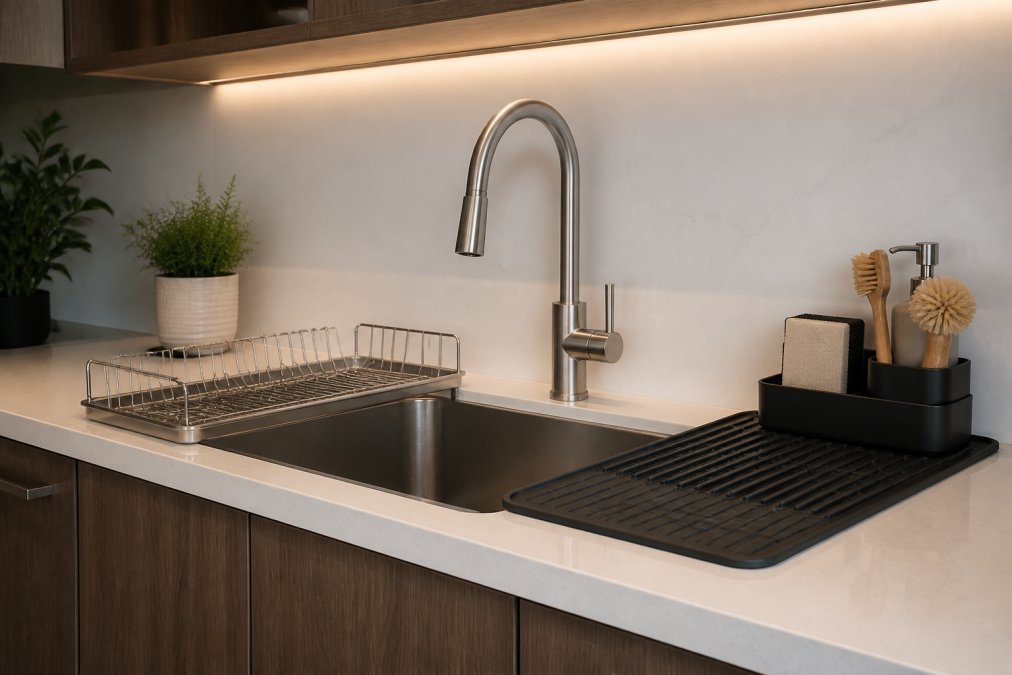
SinkElle HookNest Kitchen Sponge Holder: Best Sponge Holder
The SinkElle HookNest Kitchen Sponge Holder solves the most common sink-area problem: sponges and scrubbers with nowhere to go. It gives your sponges, scrubbers, and small cleaning tools one dedicated spot beside the sink, and its built-in hook holds a dish cloth so it can hang and dry instead of sitting in a damp pile.

It's made from ABS plastic, so it won't rust, and it comes in white, grey, and black to match your sink and fixtures.
Best for: Anyone wanting a clutter-free countertop with a modern, minimalist look.
SinkElle DryFlow Splash Mat: Best Sink Splash Guard
The SinkElle DryFlow Splash Mat addresses water that lands on the counter rather than in the basin. Made from silicone, it's fully waterproof, heat-resistant, and anti-skid. The raised edge design contains splashes rather than just catching them.

The black colorway doesn't show water spots or soap residue, so the sink area looks clean between wipes. It also comes in green and light grey.
Best for: Anyone with a countertop surface that shows water damage, or anyone protecting quartz, marble, or stone countertops.
SinkElle AquaShield Faucet Guard: Best Faucet Drip Catcher
The SinkElle AquaShield Faucet Guard catches faucet drips before they spread. Faucet drips deposit water at the base of the faucet, where mineral deposits build up and caulk deteriorates. The AquaShield keeps this area dry without requiring tools or permanent installation.
It's one of the simplest, highest-impact additions to a sink area.
Best for: Anyone dealing with mineral buildup around the faucet base.
SinkElle DryStone Quick-Dry Kitchen Mat: Best Eco-Friendly Option
The SinkElle DryStone Quick-Dry Kitchen Mat is built from diatomite, a naturally occurring sedimentary material. It absorbs water on contact and releases it through evaporation, keeping the surface dry.
That matters because, according to the EPA's guidance on mold, controlling moisture is the key to preventing mold growth indoors.
It's also one of the most affordable pieces in the SinkElle range.
Shop Sink & Countertop Essentials →
Best for: Eco-conscious households and anyone frustrated with microfiber mats that stay damp.
SinkElle DryFlow Dish Rack: Best Full-Size Dish Drying Rack
The SinkElle DryFlow Dish Rack is designed as a complete dish drying solution with auto-draining and organized storage. The auto-draining design channels water away from the counter surface, keeping the area underneath dry. It comes in single- and double-layer versions.
It's a bigger purchase than the other picks, best suited to households that hand-wash dishes regularly.
Best for: Households without a dishwasher or those that hand-wash specific items and need a dedicated drying station.
| Product | Best For | Key Feature |
|---|---|---|
| HookNest Kitchen Sponge Holder | Sponge and scrubber clutter | Built-in dish cloth hook, rust-free ABS |
| DryFlow Splash Mat | Countertop protection | Raised-edge silicone, anti-skid |
| AquaShield Faucet Guard | Faucet drip control | Waterproof base guard |
| DryStone Quick-Dry Mat | Eco-friendly absorption | Natural diatomite material |
| DryFlow Dish Rack | Full dish drying station | Auto-draining, modern design |
Waterproof Under Sink Mat: Protecting Your Cabinet from Leaks
A waterproof under sink mat lines the cabinet floor and contains water from drips, leaks, or spills. Under-sink cabinets take damage in two ways: slow damage from condensation and minor spills, and fast damage from a pipe fitting that loosens or a drain connection that fails. A waterproof mat with raised edges handles both scenarios.
The right mat has four characteristics: a waterproof base (no absorption), raised edges for spill containment, a non-slip underside, and a material that resists mold and mildew. Silicone and heavy-duty EVA foam are the most common materials.
For renters, a waterproof mat is particularly important. Cabinet damage from water is a common source of security deposit disputes. An inexpensive mat can prevent a repair bill that costs considerably more.
Slow leaks are the sneaky ones: a drip under the sink can go unnoticed for weeks while it soaks into the cabinet floor, which is why a mat that shows water is worth having.
Organizing Under the Kitchen Sink: Solutions for Awkward Plumbing
Under-sink organization is harder than it looks. The space is dominated by a drain pipe, often a garbage disposal, sometimes a water filter housing, and pipes that run at angles. Most fixed-shelf organizers don't match reality.
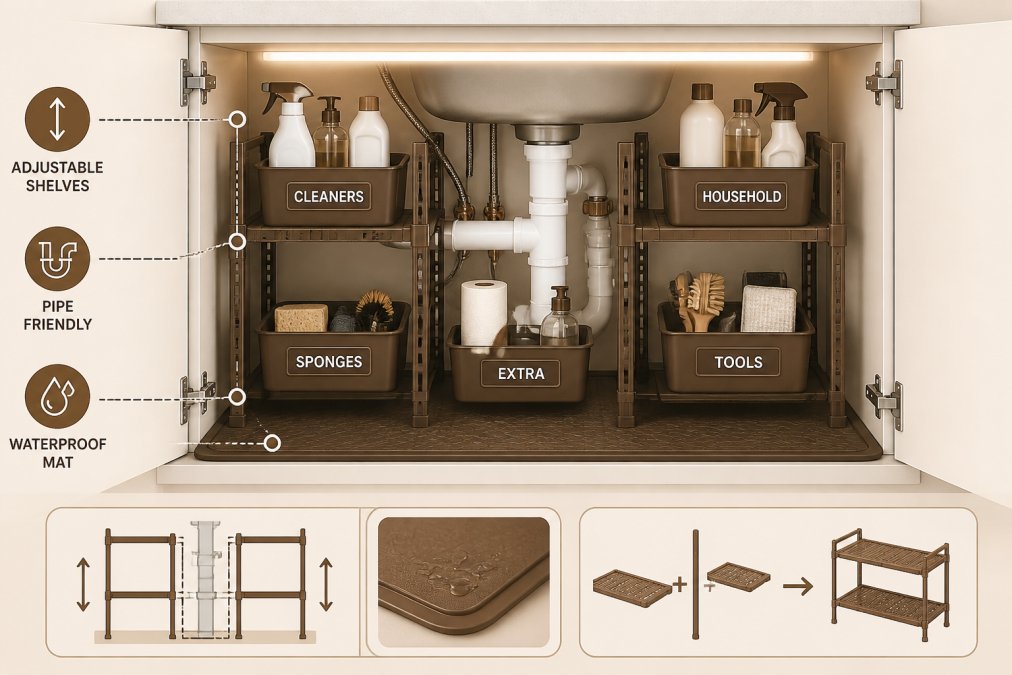
Treat the under-sink cabinet as a modular space rather than a fixed one. Start with a waterproof mat on the cabinet floor. Build upward using components that route around plumbing rather than requiring plumbing to conform to the organizer.
Tension rod systems work well for creating a second level above the drain pipe. Hang spray bottles from the rods to free up floor space. Stackable bins with open fronts let you see and access supplies without pulling everything out. Adjustable shelving beside (not over) the drain pipe maximizes usable vertical space.
Keep frequently used items at the front and eye level. Items you reach for daily should never be buried behind items you use monthly.
Small-Space and Apartment-Specific Storage Ideas
Small apartment kitchens present a specific challenge: shallow cabinet depth, non-standard plumbing, and no adjacent storage to overflow into.
Divide the under-sink space into three zones: the floor zone (waterproof mat, large refill bottles, heavy items), the mid-height zone (tension rod with hanging spray bottles, small stackable bins), and the door zone (over-door organizers for rubber gloves, scrubbers, and drain strainers).
For the countertop, vertical storage is the only viable strategy when counter space is limited. A compact holder like the HookNest Sponge Holder occupies a small footprint while keeping daily-use items accessible.
The common mistake is trying to store everything within reach. A better approach is to store only what you use daily at the counter and move everything else under the sink.
Installation and Cleaning Maintenance Tips
Tool-free installation separates genuinely renter-friendly organizers from those requiring permanent modification. SinkElle's sink products are designed for tool-free setup: no drilling, no adhesive residue, no modifications that concern landlords.
For countertop organizers, setup is straightforward: place the mat or holder on the counter and position it relative to the sink basin.
For under-sink organization:
- Empty the cabinet and wipe down the interior
- Lay the waterproof mat flat on the cabinet floor
- Position modular shelving units on either side of the drain pipe
- Install tension rods at the desired height for hanging spray bottles
- Add over-door organizers to the cabinet door if using the door zone strategy
- Return items in order of use frequency, front to back
Cleaning maintenance is simpler than expected. Silicone and plastic products can be rinsed and wiped dry. Stainless steel should be wiped with a damp cloth and dried immediately to prevent water spotting. Diatomite mats should be left to air-dry fully, ideally in sunlight, if they become saturated.
Remove the under-sink mat every few months to check the cabinet floor and rinse the mat clean. Inspect plumbing connections for signs of moisture.
Keeping surfaces dry is part of basic kitchen hygiene: damp sponges, cloths, and counters give bacteria the moisture they need to grow.
Conclusion
Keeping a kitchen sink area organized requires solving the moisture problem first. SinkElle's waterproof kitchen sink organizers address both the countertop and the cabinet below with products designed to work together as a system. Shop the Sink & Countertop Essentials collection and build a sink area that stays clean, dry, and organized.
Frequently Asked Questions
What is the best material for a waterproof kitchen sink organizer?
Stainless steel and silicone are the top choices for waterproof kitchen sink organizers. Stainless steel resists rust and holds up to constant moisture without warping, making it ideal for dish drying racks. Silicone is flexible, mold-resistant, and easy to wipe clean, which makes it the go-to material for splash mats and faucet guards. Sturdy plastics like ABS work well for sponge holders because they won't rust. Avoid organizers made from untreated wood or low-grade plastic, as these tend to warp, stain, or develop mold with regular sink exposure.
How do I keep my under-sink cabinet dry and prevent water damage?
Start by lining the cabinet floor with a raised-edge waterproof under sink mat that can contain drips from pipes or a garbage disposal. Check supply line connections and the P-trap for slow drips every few months. Use moisture-resistant, modular storage units rather than cardboard boxes or untreated wood shelving. Keeping the cabinet clutter-free also helps you spot a new leak quickly before it causes damage. A spill containment mat with a raised edge is the single most effective first step for most kitchens.
Are plastic or metal organizers better for under the kitchen sink?
Metal organizers, particularly rust-proof coated steel or stainless steel, generally outlast plastic in under-sink environments because they handle moisture and the weight of cleaning supplies without cracking or bowing. That said, high-quality, heavy-duty plastic can work well for lighter items. The main risk with plastic is that cheaper versions warp over time in humid cabinets. For the cabinet floor itself, a silicone or rubber waterproof mat outperforms both, since it stays flexible and won't corrode.
Can I use a sink organizer if I rent and can't drill into walls or cabinets?
Yes. Most countertop sink caddies and under-sink organizers require no tools and no drilling. Freestanding units, tension-rod shelf systems, and adhesive-free mats sit in place using their own weight or anti-skid bases. SinkElle's sink products are designed for tool-free installation, so nothing attaches permanently to your walls, plumbing, or cabinet surfaces. When you move out, everything comes with you and leaves no marks.
How do I organize under the kitchen sink when the plumbing takes up most of the space?
Focus on vertical storage and modular design. Slim stackable bins placed on either side of the P-trap use the dead space most people ignore. Adjustable shelving can straddle pipes rather than compete with them. A waterproof under sink mat with a raised edge lines the floor first, then you build around the plumbing from there. For garbage disposal setups, look for half-shelf or L-shaped units that fit the irregular footprint rather than standard rectangular organizers.