


Table of Contents
- Joseph Joseph vs SimpleHuman Sink Caddy: The Core Differences
- Design, Materials, and Kitchen Aesthetics Compared
- Installation and Mounting: Suction Cup Reliability vs. Over-Sink Design
- Drainage and Airflow: Which Caddy Keeps Sponges Drier?
- How to Clean a Sink Caddy to Prevent Mold and Mildew
- The Best Kitchen Sink Caddy for Small Spaces and Renters
- Durability, Rust Resistance, and Long-Term Value
- Which Sink Caddy Should You Choose?
- Frequently Asked Questions
Last Updated: September 6, 2026
When you search for a new sink caddy, two names dominate: Joseph Joseph and SimpleHuman. Both make attractive, functional organizers, but they solve the problem of a messy sink area in fundamentally different ways. The real question isn't which brand is better overall, but which design philosophy fits your kitchen, your habits, and your tolerance for maintenance. The answer comes down to one thing: how each caddy handles water.
A sink caddy is a dedicated organizer for sponges, brushes, and dish soap designed to keep the area around your kitchen sink tidy and dry. The choice between Joseph Joseph and SimpleHuman hinges on whether you prefer a weighted, over-sink design or a suction-mounted solution. Below, we break down the core differences, examine drainage efficiency, and show you what to look for so you don't end up with a moldy, rusted mess six months from now.
Joseph Joseph vs SimpleHuman Sink Caddy: The Core Differences
Joseph Joseph and SimpleHuman approach the sink caddy from opposite angles. Joseph Joseph builds compact, countertop units that sit inside the sink or on the edge, using a weighted base and a rolled sponge holder to keep tools elevated. SimpleHuman relies heavily on suction cup technology to mount caddies directly to the sink wall or tile, freeing up counter space entirely.
That distinction drives everything else. A Joseph Joseph caddy rests over the sink divider or lip, meaning no adhesive and no drilling, but it occupies real estate inside the basin. A SimpleHuman caddy clears the counter completely, but its performance depends on how well the suction cups hold against your specific sink material. If you have a textured, stone, or heavily brushed sink, suction cups can fail within weeks.
The practical takeaway: Joseph Joseph prioritizes stability and simplicity, while SimpleHuman prioritizes space-saving design. Neither is objectively wrong, but each creates a different set of trade-offs for your daily routine.
Design, Materials, and Kitchen Aesthetics Compared
Joseph Joseph caddies lean on bright colors, ABS plastic, and a playful, modern look. SimpleHuman prefers brushed stainless steel and matte finishes that read as more premium and understated. If your kitchen follows a minimalist Scandinavian-inspired aesthetic, SimpleHuman's steel blends in more seamlessly, though it shows water spots and fingerprints readily.
Material quality is where the difference matters most. Joseph Joseph's plastic resists rust completely and wipes clean easily, but it can stain from dyes in dish soap or food residue over time. SimpleHuman's steel looks high-end and feels durable, yet the brand's own guidance acknowledges that stainless steel requires regular wiping to maintain its finish.
For design-conscious buyers, the choice comes down to visual weight. A Joseph Joseph caddy adds a pop of color and a sculptural element. A SimpleHuman caddy disappears into the background, letting the sink remain the focal point. If you're coordinating with other kitchen accessories, matching the finish of your faucet and hardware becomes the deciding factor.
Installation and Mounting: Suction Cup Reliability vs. Over-Sink Design
SimpleHuman's core promise is tool-free installation through high-strength suction cups. In theory, you press the caddy against a clean, smooth surface and it holds. In practice, suction cups demand perfect conditions: a non-porous, perfectly flat surface, zero soap residue, and periodic re-tightening. Many users report that suction cups lose their grip after a few weeks, especially near a sink where steam and heat cycle constantly.
Joseph Joseph sidesteps this entirely. Their over-sink and countertop caddies rely on gravity and a weighted base, so there's nothing to fail mechanically. The caddy sits where you place it and stays there. The trade-off is that it occupies sink or counter space, which can be a problem in a small apartment kitchen.
For renters, this distinction is critical. Suction cups leave no marks and remove cleanly, which satisfies strict landlords. Over-sink designs also require no drilling and leave no residue, but they can interfere with washing large pots or moving a sprayer hose. Your sink's configuration determines which mounting style will actually work for you.
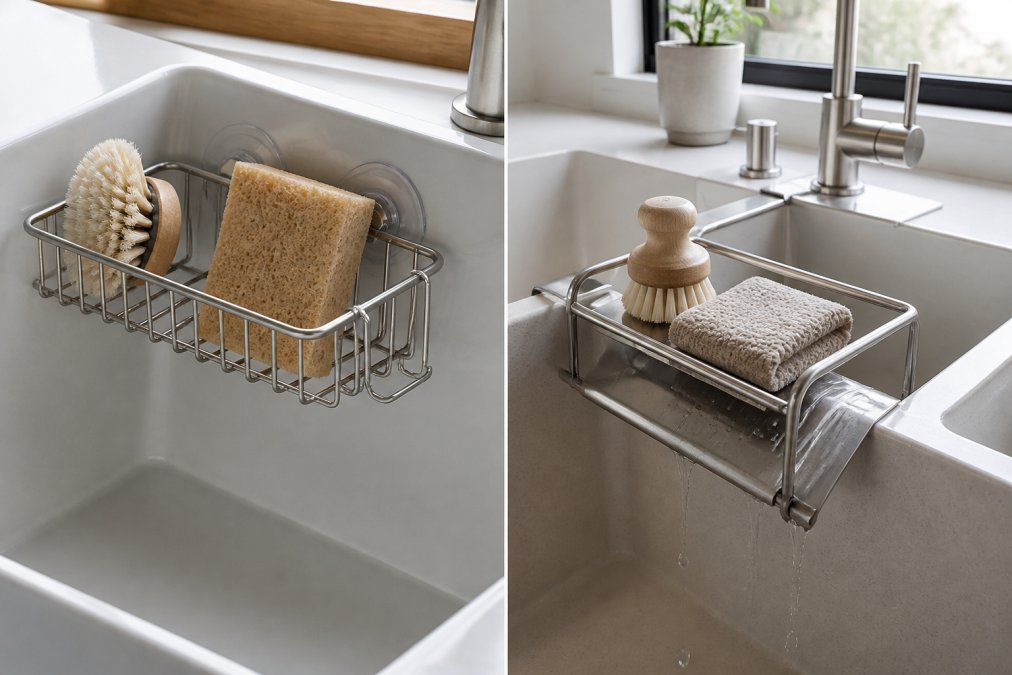
Drainage and Airflow: Which Caddy Keeps Sponges Drier?
The core function of any sink caddy is to dry your tools, not just hold them. A sponge left in a puddle of water becomes a bacterial breeding ground within 24 hours (the CDC). Here, the design philosophies of Joseph Joseph and SimpleHuman lead to very different real-world outcomes.
Joseph Joseph's Roll-Up Mechanism
Joseph Joseph's signature design, like the popular Roll-Up, uses a weighted, rolling cradle that holds a sponge vertically. By suspending the sponge on its edge, air circulates around the entire surface area, not just the top. Water runs down the sponge and drips through the cradle's slots into the sink basin below. This vertical orientation is measurably more effective at drying than a flat sponge resting on a tray, as it prevents the bottom from sitting in a film of water (PubMed). The trade-off is that the cradle's multiple rolling bars and end caps create many small crevices where soap scum can accumulate if not cleaned regularly.
SimpleHuman's Vented Trays and Wall-Mounts
SimpleHuman offers two primary configurations. Their countertop models feature a flat, vented tray with a raised grid. Water drains through the grid into a shallow well underneath. While this keeps the sponge off the counter surface, the well itself can hold standing water, creating a humid micro-climate beneath your tools. Their wall-mounted caddies, which attach via suction cups, often have a more open-frame design or a sloped base. The effectiveness depends heavily on the angle of the mount. If mounted perfectly level, water can pool on the base. If mounted with a slight backward tilt, water will run down the back and streak the sink wall, leaving mineral deposits from hard water over time.
The Six-Month Mold Test
Most reviews focus on the first week of use. The real test is what happens after six months of daily dishwashing. The primary failure point is not the sponge holder itself, but the secondary surfaces where water is directed.
- Joseph Joseph: The water is channeled directly back into the sink. This is the gold standard. However, the plastic cradle can develop a pinkish-orange biofilm (a common bacteria) in the tiny gaps between the rollers and the frame if you do not disassemble it for a deep clean monthly.
- SimpleHuman: The water is directed to a tray or down the sink wall. For countertop models, the water well under the grid is a prime spot for black mold to develop. For wall-mounted models, the constant moisture at the suction cup base can weaken the seal over time, leading to the caddy detaching mid-wash.
The Unique Angle: Airflow from Below
A critical factor often overlooked is whether the caddy allows airflow from below the sponge. A sponge sitting on a solid tray, even a vented one, has its bottom surface sealed against the plastic or steel, preventing evaporation from the underside. Joseph Joseph's vertical roll eliminates this issue entirely. For SimpleHuman, look for models with a true open-grid design elevated at least 0.5 inches off the counter, allowing air to move freely underneath the sponge. If you have a deep sink, a caddy that mounts on the inside wall and holds the sponge vertically is often the best way to ensure maximum airflow.
How to Clean a Sink Caddy to Prevent Mold and Mildew
A sink caddy is a high-moisture environment. Even with perfect drainage, soap residue, food particles, and hard water minerals will accumulate. The specific design of your caddy dictates the cleaning method required. Here is a deep-clean guide tailored to the two brands' distinct architectures, addressing the hard-to-reach crevices that lead to mold complaints.
The Joseph Joseph Deep-Clean Protocol
Joseph Joseph's Roll-Up and similar models are designed for disassembly. The weighted base and the rolling cradle separate easily.
- Disassemble: Remove the sponge and the rolling cradle from the weighted base.
- Soak: Fill your sink with hot water and add a quarter-cup of white vinegar. Submerge all plastic parts for 15 minutes. This dissolves hard water scale and soap scum without damaging the ABS plastic.
- Scrub the Crevices: The critical area is the axle where the rolling cradle meets the frame. Use a cotton swab or a pipe cleaner to scrub inside this joint. This is where a black, slimy biofilm forms. A toothbrush is too thick for this gap.
- Rinse and Dry: Rinse thoroughly with hot water. Air dry completely on a dish rack before reassembling. Do not put the plastic parts in a dishwasher, as the high heat can warp the weighted base's internal components.
The SimpleHuman Deep-Clean Protocol
SimpleHuman's stainless steel caddies require a different approach to avoid scratching the finish.
- Remove and Inspect: Take the caddy off the wall or off the counter. Inspect the suction cups for mold growth around the rubber edges. This is a common failure point.
- Clean the Steel: Use a non-abrasive cleaner like Bar Keepers Friend or a simple solution of dish soap and warm water. Apply with a soft microfiber cloth, wiping with the grain of the brushed steel. Never use steel wool or scouring pads, as they will permanently scratch the surface, creating micro-crevices for bacteria to hide.
- Target the Vents: For countertop models with a vented grid, use a small bottle brush to push through each slot. The underside of the grid and the water well are the highest-risk areas for mold. If you see black spots, soak the entire tray in a 1:1 solution of water and bleach for 10 minutes, then scrub with an old toothbrush (the EPA).
- Recondition the Suction Cups: Wash the suction cups with warm, soapy water to remove any soap film. Rinse and let them dry. Before re-attaching, wipe the sink wall with rubbing alcohol to remove any oily residue. This ensures a fresh, strong seal.
The Weekly Maintenance Habit
A deep clean once a month is necessary, but a 30-second daily or weekly rinse prevents the heavy buildup. After washing dishes, simply rinse the caddy under the faucet to clear food debris. Once a week, spray it with a daily shower cleaner (one designed for daily use) and wipe it down. This prevents the soap scum from ever hardening.
The Best Kitchen Sink Caddy for Small Spaces and Renters
For small spaces and rental kitchens, the best kitchen sink caddy is one that stores your cleaning tools without permanently altering the sink area or consuming precious counter space. Over-sink designs that rest on the divider or lip of the basin are ideal because they keep tools within reach while leaving the counter completely clear.
Renters should prioritize caddies that require no drilling, no adhesive, and no tools for installation. Both brands offer tool-free options, but the over-sink style is more reliable than suction cups for long-term daily use in a rental. A caddy that sits securely on the sink edge won't suddenly detach and drop your sponge into a dirty basin.
Consider the SinkElle FlowRack Pro, a rust-resistant stainless steel organizer that rests over the divider or edge of most standard sinks. It holds sponges, scrubbers, brushes, and dish soap, with a hanging bar for your dishcloth. The angled drain tray sends water back into the sink instead of pooling under your tools, and it wipes clean in seconds with no grime-catching crevices. At $29.99, it delivers the space-saving benefit of an over-sink design with the durability of premium stainless steel.

| Feature | Joseph Joseph Style | SimpleHuman Style | SinkElle FlowRack Pro |
|---|---|---|---|
| Mounting | Over-sink / countertop | Suction cup | Over-sink (no tools) |
| Primary Material | ABS plastic | Stainless steel | Stainless steel |
| Drainage | Rolled sponge holder | Vented base | Angled drain tray |
| Installation | Place and use | Press to adhere | Place and use |
| Rust Risk | None (plastic) | Low (steel) | Low (steel) |
| Best For | Stable daily use | Clear countertops | Renters, small sinks |
Durability, Rust Resistance, and Long-Term Value
Long-term durability depends more on material and construction than on brand name. Stainless steel caddies resist rust in normal use, but they are not immune. Low-grade steel, or steel with exposed cut edges, can corrode when constantly exposed to hard water and abrasive cleaners. Plastic caddies never rust, but they can become brittle, stain, or warp under heat and UV exposure.
The quality of the finish matters. A brushed or coated stainless steel surface resists water spotting and fingerprints better than a polished one. Look for caddies with smooth, rounded edges rather than sharp seams, which are prone to catching grime and, in the case of steel, can be entry points for rust.
Consider the total cost of ownership, not just the sticker price. A $15 plastic caddy that needs replacing every year due to staining or cracking costs more over five years than a $30 stainless steel caddy that lasts. SimpleHuman's steel caddies are built to last, but their reliance on suction cups can undermine the overall value if the mounting fails. A well-designed over-sink caddy has no mechanical parts to wear out, making it the more reliable long-term investment.
Which Sink Caddy Should You Choose?
Choose a Joseph Joseph sink caddy if you want a stable, plastic-based organizer that sits securely in or over your sink without any mounting hardware. It's a solid choice for busy households that prioritize function and don't mind a more colorful, playful look in the kitchen.
Choose a SimpleHuman sink caddy if you have a smooth, non-porous sink surface and want to keep your countertops completely clear. The brushed stainless steel aesthetic is premium, and the suction mount works well when conditions are ideal, but be prepared to re-seat the cups periodically.
For most renters and small-space dwellers, the better answer is an over-sink caddy with a rust-resistant frame and a drain system that returns water to the basin. The SinkElle FlowRack Pro delivers exactly that: tool-free installation, an angled drain tray, and a hanging bar for your dishcloth, all in a compact stainless steel design. It keeps your sponges dry in hours instead of days and clears your counter of clutter without any permanent changes to your kitchen. The durability of rust-resistant stainless steel combined with the hygiene of an effective drainage system makes it a reliable choice for daily use.
Choosing between Joseph Joseph and SimpleHuman means deciding whether you value mounting simplicity or counter-free design. Most kitchens, particularly rentals and tight urban spaces, benefit more from a caddy that sits securely over the sink, drains water away from your tools, and requires zero upkeep on the mounting mechanism. SinkElle's FlowRack Pro offers that solution with a minimalist Scandinavian-inspired design that complements any modern kitchen. Get started with SinkElle and keep your sink area dry, organized, and clutter-free.
Frequently Asked Questions
Which sink caddy is the best rated for preventing mold?
Caddies with a vented base and a design that allows airflow are the best rated for mold prevention. Models made of rust-resistant stainless steel with drainage holes that let air circulate underneath sponges and brushes dry faster, reducing the chance of mildew. A caddy that traps water against your sponge creates a breeding ground for bacteria. Look for a design that lifts items off the surface and channels water directly back into the sink, as this is the most effective way to keep things dry and hygienic.
Do sink caddies prevent mold growth?
Yes, a well-designed sink caddy actively prevents mold growth by promoting airflow and drainage. The key is to choose a caddy with a vented base or drainage holes that allow water to escape, so sponges and brushes are not sitting in a puddle. To maintain this benefit, you must also clean the caddy regularly. A simple weekly rinse and wipe-down will prevent grime and soap scum from building up, which can also harbor mold.
Is a stainless steel or plastic sink caddy better for hygiene?
Stainless steel is generally better for hygiene. It is non-porous, which means it won't absorb water or harbor bacteria as easily as some plastics. High-quality stainless steel is also rust-resistant, so it won't degrade and create rough spots where grime can collect. While some plastics are treated with antimicrobial agents, these can wear off over time. A rust-resistant stainless steel caddy is a more durable and hygienic choice for a constantly wet environment.
How do I choose the right kitchen sink caddy for a small space?
Start by measuring the edge or divider of your sink. For small kitchens, look for a compact design that mounts over the sink to save precious countertop space. An over-sink caddy eliminates counter clutter entirely. Also, consider the capacity you need. A model with a built-in soap dispenser and a dishcloth bar can replace several separate items, further reducing visual clutter. Ensure the caddy's dimensions fit your sink to guarantee a stable fit.