


Quick Summary
Reusable kitchen cloths cut waste and usually lower cost per use compared with paper towels, but only if you keep them in service long enough to pay off. Their hygiene depends on a routine of washing, sanitizing when needed, and drying fully between uses.
- Compare reusable kitchen cloths by cost per use, not sticker price.
- Keep cloths in service long enough and they usually beat paper towels on cost.
- Wash cloths in hot water with mild detergent and skip fabric softener.
- Dry cloths fully between uses, because damp cloths grow bacteria quickly.
- Replace any cloth that stays sour after washing or has lost its absorbency.
Table of Contents
- Why Reusable Kitchen Cleaning Cloths Are Gaining Ground
- Reusable Kitchen Cloths vs. Paper Towels: Cost, Waste and Performance
- Absorbency, Durability and Material Trade-offs
- Are Reusable Cloths Hygienic? What the Evidence Shows
- How to Wash Reusable Kitchen Cloths
- How to Sanitize Kitchen Cleaning Cloths
- How to Store Kitchen Cleaning Cloths So They Dry Fast
- Setting Up Your Kitchen Cloth Routine
- Frequently Asked Questions
Reusable kitchen cleaning cloths have moved from niche eco-shop items to everyday kitchen staples. Many American households now keep a few on the counter instead of reaching for a fresh roll of paper towels. This guide explains what separates a good reusable cloth from a poor one.
Reusable cloths are not automatically better. The benefits depend on the material, how the cloth is cleaned, and where it is used. Some cloths absorb well and dry fast, while others hold odors or wear out after a few months of heavy use. The sections below cover the trade-offs so you can choose cloths that fit your kitchen, your cleaning habits and your budget.
Why Reusable Kitchen Cleaning Cloths Are Gaining Ground
Reusable cloths are promoted as a way to cut the waste of disposable paper towels and wipes. Solenis notes that reusable cloths are not discarded after a single use the way disposable wipes are, which reduces landfill waste. Ecologie Living claims that one Swedish dishcloth can replace 17 rolls of paper towels, though that figure comes from a marketing source rather than an independent test.
The appeal is clear for households that wipe counters several times a day. Each cloth can handle many cycles, so the cost per use drops as the cloth ages. The tradeoff is that you must wash and dry them consistently, which adds a small routine to your kitchen habits.
Reusable Kitchen Cloths vs. Paper Towels: Cost, Waste and Performance
Paper towels win on convenience. You tear one off, use it, and throw it away. Reusable cloths win on long-term waste and, usually, on cost per use, but only if you keep them in service long enough to pay off. A cloth that lasts three months costs far less per use than a cloth that wears out in three weeks.
The useful comparison is cost per use, not sticker price. A transparent break-even looks like this: take the price you paid for the cloth, add an estimate for the laundry you will run because of it, and divide by the number of uses you realistically get before it wears out. Then compare that to what you spend on paper towels over the same period. The inputs are yours to fill in, but the structure keeps the comparison honest.
Laundry is the hidden cost. A cloth that gets washed after every heavy use adds cycles to your weekly laundry. Washing a full load of kitchen linens together, cloths, dish towels, and napkins, spreads that cost across more items and is the common pattern among households that stick with reusables. Washing one cloth alone in a hot cycle is where the cost-per-use math turns against you.
Waste is not just the roll in the trash. A lifecycle comparison looks at four stages: manufacturing, laundering, water use, and disposal. Paper towels are used once and land in the trash or compost; reusable cloths carry manufacturing impact up front, then add laundering water, detergent, and energy over their life, and finally a disposal step when they wear out. Reusability alone is not proof of lower impact, a cloth washed in a half-empty hot load every day can carry a larger footprint than the paper towels it replaced. The defensible claim is narrower: for households already doing regular laundry, adding cloths to those loads usually lowers the disposable burden without adding many cycles.
Performance depends on the task. Consumer Reports tested microfiber cloths and Swedish dishcloths side by side for cleaning performance, and you can review how each type handled everyday messes in their Consumer Reports comparison of microfiber cloths and Swedish dishcloths. Use paper towels for greasy spills you do not want to spread, and reusable cloths for routine wiping and dishes. For raw-meat spills and heavily soiled messes, a disposable paper towel or a dedicated raw-food cloth that goes straight into a hot wash is often the more sensible choice, a balanced cloth routine includes those exceptions rather than pretending they do not exist.
Absorbency, Durability and Material Trade-offs
Material decides most of what you will experience. Microfiber is a common choice because of its fine fibers, and the CDC notes that microfiber is often preferred over cotton for cleaning cloths because it picks up more dirt and microorganisms. Swedish dishcloths, made from cellulose and cotton blends, are popular for their sponge-like texture and quick drying.
Durability varies by construction. Cheaper cloths may pill, fray or lose absorbency after repeated washing. Check whether the seams are tight and whether the fibers hold their shape when wet. Watch out: a cloth that feels plush out of the package can lose much of its absorbency after a few hot-water cycles, so judge it after several washes, not on day one.
Are Reusable Cloths Hygienic? What the Evidence Shows
This is the question most buyers ask first, and the honest answer is that a reusable cloth is only as hygienic as its care routine. Kimberly-Clark Professional cautions that microfiber cloths need special laundering to keep their lifespan and hygiene, and that reusable cloths are not automatically more hygienic than disposables. A cloth left damp in a sink basin can grow bacteria quickly.
The practical takeaway from public health guidance is a three-step routine: wash, sanitize when needed, and dry fully. Washing removes soil and most microorganisms; sanitizing reduces what remains; drying removes the moisture bacteria need to multiply. Skipping any one step is where most household cloth problems start.
Wash. For everyday counter and dish cloths, a hot-water machine wash with a mild detergent is the baseline most practitioners recommend. Avoid fabric softener and dryer sheets, which coat fibers and reduce absorbency. Wash microfiber separately from lint-producing fabrics like terry towels, and check the care label before using bleach on colored cloths.
Sanitize. Sanitizing is a separate step from washing. For cloths used around raw meat, raw poultry, or raw seafood, many households keep a dedicated set and launder them on the hottest cycle the fabric allows, then dry them thoroughly. If you use a disinfectant product, follow the label exactly, contact time matters, and more product is not better. The CDC's guidance on CDC guidance on cleaning supplies and equipment is a reliable starting point for cleaning versus sanitizing versus disinfecting.
Sinkelle HookNest Kitchen Sponge Holder →
Dry. Airflow is the underrated step. Hang cloths so air reaches both sides, and keep them off the counter where water pools. A cloth balled up in a damp corner stays wet, smells, and grows bacteria. If a cloth still smells sour after a full wash and dry, that odor is a signal of bacterial buildup in the fibers, replace it rather than trying to wash it again.
Replace. Cloths are consumables, not forever items. Replace any cloth that stays sour after washing, has visible fraying or holes, has lost most of its absorbency, or has been used for raw-meat cleanup and cannot be laundered hot. Keeping a small rotation of three to five cloths makes it easy to pull one out of service without falling back on paper towels.
For a clear overview of cleaning tools and sanitizing practices, see the CDC's guidance linked above. Wash cloths after each day's heavy use and let them dry fully between uses.
How to Wash Reusable Kitchen Cloths
Wash cloths in hot water with a mild detergent, and avoid fabric softener, which coats fibers and reduces absorbency. Microfiber in particular should be washed separately from lint-producing fabrics. Air dry or use a low-heat setting, because high heat can break down synthetic fibers over time.
Sort cloths by use. Keep the cloths for raw meat cleanup separate from general wiping cloths, and launder them on a hot cycle.
How to Sanitize Kitchen Cleaning Cloths
Sanitizing is a separate step from washing. Washing removes soil; sanitizing reduces microorganisms. A hot-water wash is the simplest routine for most households. For cloths used around raw food, add a sanitizing step as your own kitchen policy allows, and follow the product label for any disinfectant you choose. Replace cloths that smell sour even after washing, since odor often signals bacterial buildup in the fibers.
How to Store Kitchen Cleaning Cloths So They Dry Fast
Storage is where many cloths fail. A cloth balled up in a damp corner stays wet, smells and grows bacteria. Our guide to keeping sponges dry and clean covers the same habits for sponges. Hang cloths so air reaches both sides, and keep them off the counter where water pools. Our sink-area drying advice-style setup works best with a rack that lets water drain back into the basin.
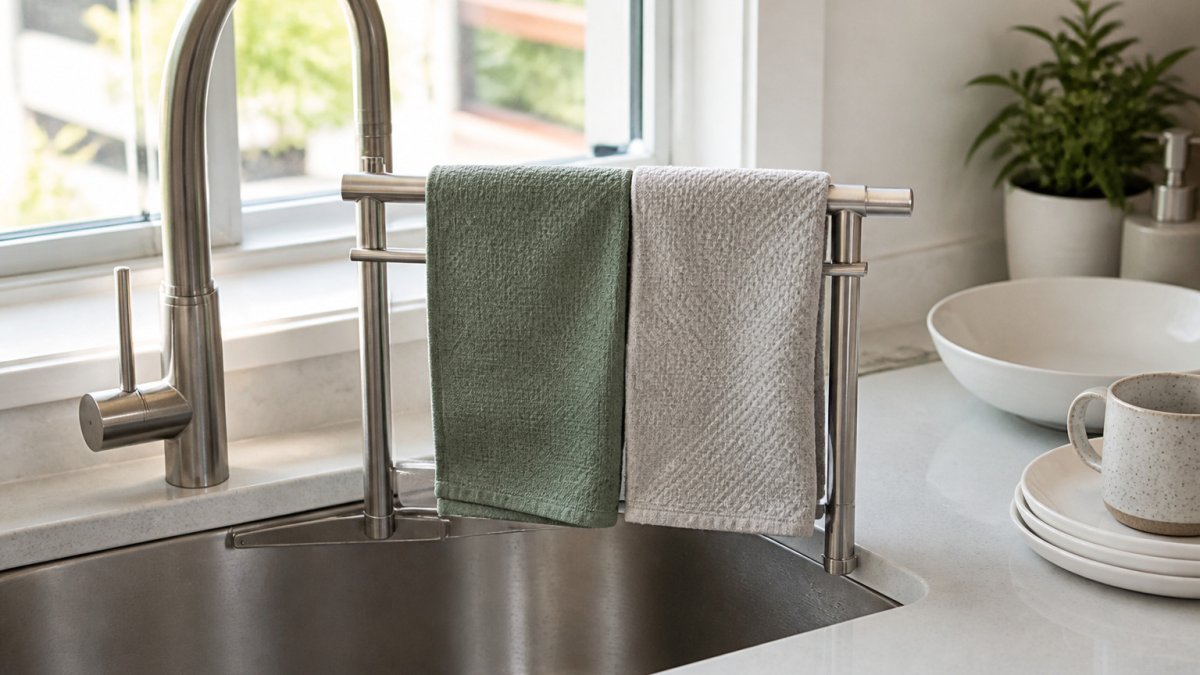
For wet sponges and brushes, the SinkElle Sinkelle HookNest Kitchen Sponge Holder gives sponges, scrubbers and dish cloths a dedicated hanging spot.

!A pair of reusable cloths hanging to dry over a sink-side rack in a bright, tidy American kitchen
Setting Up Your Kitchen Cloth Routine
Start with three to five cloths, one set for dishes, one for counters, and one for spills. Wash them on a set schedule, such as every other day for busy kitchens, and replace any that lose absorbency. For a full routine to fit cloth care into, read the daily kitchen sink sanitizing routine. Keep the routine simple so it survives a busy week. If you want to add a mat to the sink area, see the benefits of quick-dry kitchen sink mats.
The Sinkelle FlowRack Pro Caddy, priced at $39.99, drains its built-in spout straight back into the sink.

Frequently Asked Questions
Are reusable kitchen cloths more hygienic than paper towels?
Not automatically. Kimberly-Clark Professional cautions that microfiber cloths need special laundering to maintain their hygiene, so a reusable cloth that sits damp or goes unwashed can hold bacteria. Paper towels are single-use and avoid that problem. The hygiene advantage of a reusable cloth depends on how consistently it is washed, dried and replaced. A CDC resource notes microfiber is often preferred over cotton because it absorbs more dirt and microorganisms, which is one reason regular laundering matters.
How often should you wash kitchen cleaning cloths?
Wash them after each use when they have handled raw meat, spills or greasy surfaces, and at least every day or two for general dishwashing and wiping. Cloths that smell sour or feel slimy need washing immediately. Use hot water and a standard detergent, and dry them fully before storing. Washing frequently keeps odor and bacteria from building up, which is the main hygiene variable for reusable cloths.
Can reusable kitchen cloths replace paper towels?
For most everyday wiping, yes. Reusable cloths handle spills, countertops, stovetop messes and dishes well. They are less suitable for drying glassware, where a Swedish dishcloth may leave lint, and for jobs where a disposable is more sanitary, such as raw meat clean-up. Many households keep a small roll of paper towels for those exceptions while cutting overall use significantly.
How many reusable kitchen cloths does a household need?
A practical starting set is six to eight cloths for an average household: enough that one is always clean and dry while others are in the wash. Use separate cloths for dishes, countertops and spills where possible to limit cross-contamination. Adding more cloths makes sense for larger households or if you cook daily, since rotation depends on how often they are laundered.
Choose cloths that match your cleaning habits, store them where they can dry, and replace them when they stop performing. SinkElle designs its organizers to keep the sink area clear and dry, so your cloth routine stays easy to maintain.
