


Table of Contents
- Is a Minimalist Kitchen Sink Caddy Actually Worth the Investment?
- Best Minimalist Kitchen Sink Organizers: What Sets Them Apart
- How to Organize a Small Kitchen Sink Area for Maximum Efficiency
- Durability, Hygiene, and Long-Term Performance
- Space-Saving Design: Countertop Footprint vs. Storage Capacity
- Minimalist Sink Caddy vs. DIY and Budget Alternatives
- Conclusion: The Real Value of Minimalist Sink Organization
Last Updated: August 23, 2026
Is a Minimalist Kitchen Sink Caddy Actually Worth the Investment?
A minimalist kitchen sink caddy solves one of the most persistent problems in small homes: clutter accumulation where water, soap, sponges, and tools collide daily. In compact kitchens where counter space is measured in inches, the question isn't whether you need organization, it's whether a dedicated caddy delivers enough value to justify the cost.
This guide breaks down whether a minimalist caddy is worth it for your situation, what separates quality organizers from cheap alternatives, and how to maximize your space.
Best Minimalist Kitchen Sink Organizers: What Sets Them Apart
Not all sink caddies are created equal. The difference between a transformative product and one that collects dust comes down to three factors: how well it manages water runoff, whether it fits your sink configuration, and whether materials hold up under constant moisture exposure.
The most effective organizers share a common design philosophy: they lift items off the countertop, create intentional drainage paths, and occupy minimal footprint while maximizing functional storage.
The Sinkelle FlowRack Pro: Drying Speed and Rust Resistance
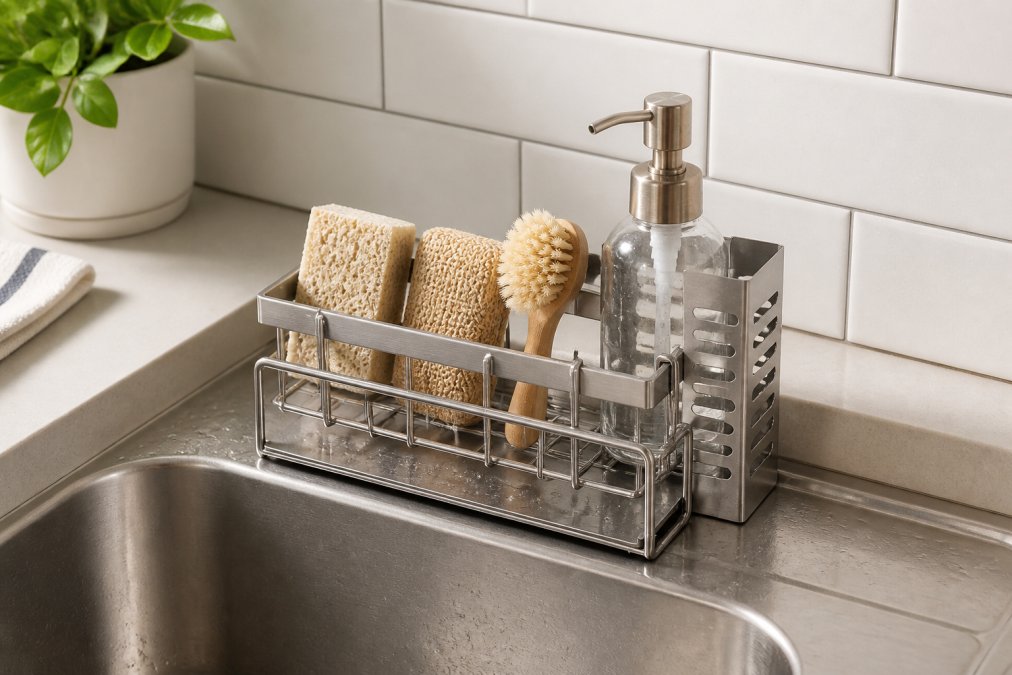
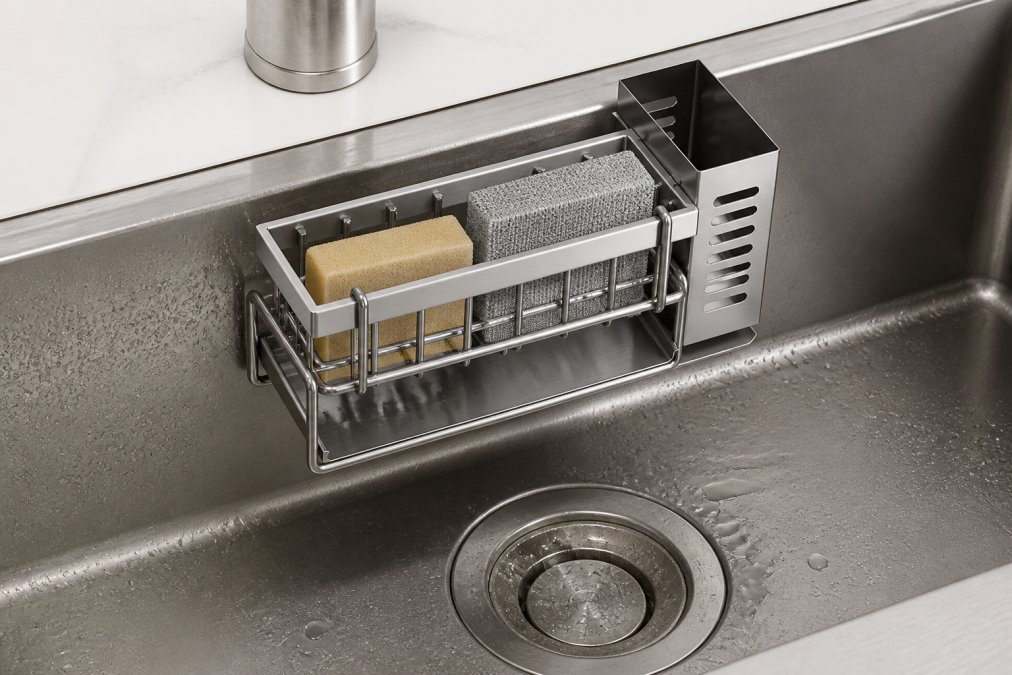
The Sinkelle FlowRack Pro ($29.99) addresses the biggest complaint about traditional sink organization: wet sponges that stay soggy and breed odors. This caddy uses an angled drainage tray that channels water directly back into the sink basin rather than pooling underneath your tools.


The slim profile design doesn't consume excessive counter space, critical in small kitchens. It holds sponges, brushes, dishcloths, and a dish soap dispenser in one compact footprint. Stainless steel construction resists rust and corrosion after months of direct water contact.
The no-tools installation matters for renters facing strict landlord restrictions. The FlowRack Pro simply rests over your sink divider, requiring zero installation. This makes it genuinely temporary, you can remove it, relocate it, or take it with you without leaving marks.
Main limitation: it only works with standard sink configurations. If your sink is unusually narrow, has a garbage disposal in the center, or features unusual plumbing angles, fit becomes a problem. The product includes dimension specifications to check compatibility before ordering.
Bundled Solutions for Complete Sink Organization
For homeowners wanting a complete ecosystem, the Sink Organization Bundle ($43.99) combines three complementary pieces: the core organizer, a splash mat, and a quick-dry kitchen mat. This bundled approach addresses the entire sink area ecosystem, where you store cleaning tools, where water splashes land, and where dishes drain.
The bundle strategy makes sense for small spaces because it solves multiple problems simultaneously. The splash mat prevents water from spreading across your countertop. The quick-dry mat absorbs moisture around the sink perimeter. Together, they create a coordinated system that feels intentional rather than piecemeal.
Purchasing these items separately would cost more than the bundle price. For renters or anyone hesitant to commit to multiple products, the bundle offers a lower financial barrier to trying a complete system.
How to Organize a Small Kitchen Sink Area for Maximum Efficiency
Choosing the right caddy is only half the equation. How you use it determines whether you maintain an organized sink area or gradually accumulate clutter again.
Start with inventory. Assess what actually lives in your sink area daily: How many sponges do you use? Do you keep multiple brushes? Where does your dish soap dispenser sit? Small kitchens demand ruthless prioritization. Every item occupying space should earn that real estate through regular use.
Once you've identified essentials, the organization principle is straightforward: items that dry quickly go on the caddy itself. Items that absorb moisture, like certain dishcloths, should hang separately or rotate through a drying cycle. Soaps and dispensers go in dedicated holders that prevent splashing and dripping.
Ergonomic placement matters in cramped kitchens. If your sink is positioned against a wall or stove, accessibility becomes critical. Test placement before committing. Can you grab a sponge without bumping your hand on the faucet? Can you refill the soap dispenser without moving other items? Small inefficiencies compound over time.
Maintenance rhythm determines long-term success. A well-designed caddy should be wipeable in seconds with smooth surfaces and no crevices where grime collects. The best minimalist designs prioritize this: brushed stainless steel instead of textured finishes, simple geometry instead of ornate details, drainage paths that prevent water pooling.
Durability, Hygiene, and Long-Term Performance
Many budget organizers fail after months of constant water exposure. A caddy might function well initially, but inferior materials warp, rust, or develop microbial growth.
Stainless steel is the standard for sink-adjacent products because it resists rust better than painted metal or plastic. Higher-grade stainless (304 or 316) resists corrosion far better than lower grades (astm.org). Most quality sink organizers use 304-grade stainless, which handles freshwater exposure reliably for years.
Plastic alternatives are cheaper but problematic in humid sink environments. Plastics absorb water, warp under heat, and create conditions where mold and mildew thrive.
Drainage design directly impacts sanitation. If water pools underneath your sponges or brushes, you're creating an ideal breeding ground for bacteria and mold (peer-reviewed research). Angled drainage trays prevent this by ensuring water flows back into the sink rather than sitting stagnant.
| Consideration | Impact on Longevity | What to Check |
|---|---|---|
| Material Grade | Determines rust resistance | Look for 304+ stainless steel, not painted metal |
| Drainage Design | Prevents water pooling and mold | Verify angled trays or drainage spouts direct water to sink |
| Surface Finish | Affects cleaning ease and grime buildup | Choose smooth, non-textured finishes |
| Seams and Joints | Where corrosion begins | Fewer seams mean longer lifespan |
| Ventilation Design | Allows air circulation for drying | Open-frame designs outperform enclosed containers |
Space-Saving Design: Countertop Footprint vs. Storage Capacity
In small kitchens, the tension between storage capacity and available counter space creates a constant trade-off. A caddy that holds everything but consumes half your counter defeats the purpose. The best minimalist organizers solve this through thoughtful vertical design and compact footprints.
The Sinkelle FlowRack Pro exemplifies this balance. Its slim profile occupies roughly 8-10 inches of counter space while accommodating a sponge holder, brush storage, a soap dispenser slot, and a hanging bar for dishcloths. This is intelligent use of vertical space and multi-functional components.
A sleek stainless steel organizer with minimalist design reads as intentional kitchen decor rather than clutter management. This psychological shift affects how people interact with the space and whether they maintain it long-term.
For apartments or rental homes where you can't modify cabinetry or install permanent shelving, a compact caddy becomes your primary sink organization tool. The space-saving component is non-negotiable.
Minimalist Sink Caddy vs. DIY and Budget Alternatives
DIY Solutions: Repurposing items like mason jars or mounting small shelves costs less upfront but fails over time. Adhesive hooks fail under moisture. Mounted shelves require landlord approval. Mason jars don't drain water, creating the soggy sponge problem you're trying to solve.
Budget Plastic Caddies: Discount retailers sell plastic organizers for $5-15. These warp, discolor, and develop mold within months. Over a 3-year period, buying cheap caddies repeatedly costs more than investing in one quality organizer.
Premium Competitors: High-end kitchen brands offer sink organizers at $50-80. For most small-space dwellers, they're overpriced. The Sinkelle FlowRack Pro ($29.99) delivers comparable functionality and durability at a fraction of the cost.
A quality minimalist caddy ($25-45) outperforms budget alternatives over time and costs less than premium competitors while solving the specific problem of water management and clutter in compact sink areas.
Conclusion: The Real Value of Minimalist Sink Organization
A minimalist kitchen sink caddy is worth it if you live in a small space, rent your home, want to reduce daily clutter around your sink, and are willing to maintain the system through regular sponge rotation and cleaning. The value is in the behavioral shift it enables: a cleaner, more organized sink area that requires minimal effort to maintain.
The investment starts at $29.99 for the Sinkelle FlowRack Pro, which solves the core problem of water management and sponge storage. For a complete system, the Sink Organization Bundle at $43.99 combines complementary products that work together.
Where minimalist caddies fall short: they don't solve fundamental space limitations in severely cramped kitchens, they require compatible sink configurations, and they demand consistent maintenance to prevent clutter reaccumulation.
For modern homeowners prioritizing kitchen efficiency, reducing visual clutter, and maintaining a functional aesthetic in limited space, SinkElle's minimalist organizers deliver measurable improvements in daily workflow and countertop organization. Tool-free installation ensures renters can implement solutions without landlord conflict, and durable stainless steel construction means your investment works for years, not months.
Frequently Asked Questions
Will a minimalist kitchen sink caddy actually fit in a tight corner next to my stove?
Most minimalist caddies, including the Sinkelle FlowRack Pro, rest over the sink divider or edge rather than taking up counter space. They're designed for compact layouts and fit standard sink widths. If your sink is unusually narrow or positioned in an extremely tight corner, check the exact dimensions before ordering. Tool-free installation means you can test placement without commitment, and many caddies work around plumbing obstacles like garbage disposals.
How is a minimalist kitchen sink caddy different from cheaper plastic organizers?
Minimalist caddies prioritize durable materials, drainage design, and aesthetic integration. Brushed stainless steel resists rust and maintains appearance over years of wet use, while premium caddies feature angled drain trays that send water back into the sink instead of pooling underneath. The slim profile and minimalist aesthetic complement modern kitchens rather than clashing with décor. At $29.99 to $43.99, quality caddies dry sponges in hours instead of days, preventing mold and odor, a hygiene advantage cheap plastic bins don't deliver.
Does 'tool-free installation' mean it's temporary and won't damage walls or plumbing?
Yes. Tool-free caddies like the Sinkelle FlowRack Pro require no drilling, mounting, or plumbing modifications. They rest on the sink itself or hang over the edge using their own weight and contact points. This makes them ideal for rental properties with strict landlords, there are no holes, no adhesive residue, and no permanent changes. You can remove it instantly if needed, making it both renter-friendly and flexible for kitchen remodels.
What makes a minimalist caddy's waterproof claim actually credible?
Premium minimalist caddies use materials specifically engineered for wet environments: brushed stainless steel that resists corrosion, premium silicone that won't warp or absorb moisture, and diatomite mats that wick water away rather than trapping it. Unlike cheap plastic organizers that absorb water and develop mold within months, quality caddies feature sloped surfaces and drainage holes that actively move water back into the sink. The Sinkelle DryFlow Splash Mat and FlowRack Pro both use these proven materials designed for daily water contact without degradation.
Is the price worth it compared to just buying cheaper bins from a big-box retailer?
A minimalist caddy saves time, prevents mold, and protects your kitchen's aesthetic in ways cheap bins don't. At $29.99 for the FlowRack Pro or $43.99 for a complete bundle, you're paying for rust-resistant materials, smart drainage design, and a slim profile that fits tight spaces. Cheap plastic bins occupy more counter space, require constant cleaning to prevent mold, and clash with modern décor. Over 2-3 years, one quality caddy outperforms multiple replacements of budget alternatives, and your kitchen looks intentional, not cluttered.
The real question isn't whether a minimalist sink caddy is worth it in theory, it's whether you're ready to commit to using it consistently. If you are, SinkElle's products provide the durability, smart drainage design, and minimalist aesthetic to transform your sink area into an organized, functional space that actually stays that way.