


Table of Contents
- Why Waterproof Matters in Rental Kitchens
- How to Declutter Kitchen Sink Area Without Permanent Damage
- No-Drill Storage Solutions That Actually Stay Put
- Under Sink Storage for Renters: Working Around Plumbing
- Vertical Space Hacks and Over-the-Door Organizers
- Waterproof Materials That Won't Warp or Mold
- Maintaining and Cleaning Your Rental Kitchen Organization
- Conclusion
Last Updated: August 21, 2026
Why Waterproof Matters in Rental Kitchens
Waterproof kitchen organization for renters solves a problem most landlords and tenants overlook until it's too late. Your sink area is ground zero for moisture damage: splashing water, condensation from pipes, leaks from garbage disposals, and humidity create an environment where standard organizers warp, mold, and fail within months. At SinkElle, we've designed solutions specifically for this challenge, recognizing that renters need organization that protects their security deposit while maximizing limited counter space.
A warped cabinet insert or moldy shelf liner can trigger landlord disputes, cost hundreds in damage claims, or leave behind stains that won't clean. Traditional plastic organizers absorb water like sponges. Fabric-based systems develop mildew in weeks. Metal hardware rusts. Waterproof kitchen organization for renters demands materials engineered to withstand constant moisture exposure without degradation.
What makes this different from general kitchen organization is the intersection of three constraints: you can't drill into walls or cabinets, everything must be removable without leaving marks, and your materials must actually repel water rather than simply claim to. This guide walks you through the specific strategies, products, and materials that work in real rental kitchens.
How to Declutter Kitchen Sink Area Without Permanent Damage
The first step in creating waterproof kitchen organization for renters is ruthlessly decluttering what you actually need around your sink. Most rental kitchens have cramped counter space, and every item you keep there needs to earn its real estate.
Start by removing everything from your sink area and under-sink cabinet. Be honest: do you use that decorative soap dispenser, or does it just collect water spots? Does that sponge holder actually drain, or does it sit in standing water? Keep only what you actually reach for, one sponge, one dish brush, one bottle of dish soap. Everything else goes under the sink or into a cabinet.
Next, categorize what stays: cleaning supplies, dish care items, and drying tools. Assign each category a dedicated zone, either on your countertop near the sink or inside under-sink storage. This zoning approach prevents the "everything everywhere" chaos that makes organization systems fail. The final step is identifying items that don't belong near your sink at all. Coffee mugs, cooking utensils, and pantry items should live elsewhere. Your sink zone should contain only items directly related to washing, drying, and cleaning.
No-Drill Storage Solutions That Actually Stay Put
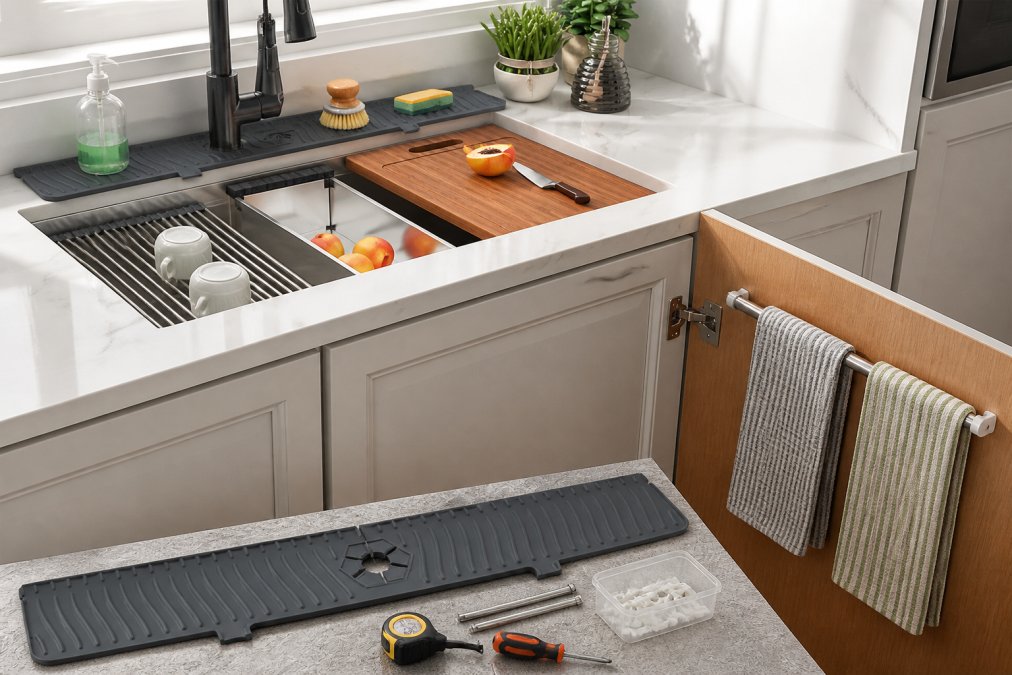
Modern adhesive-based and tension-rod systems are engineered to hold weight without damaging walls or cabinets, and they're specifically designed for the moisture-heavy environment around kitchen sinks.
Heavy-duty command-style adhesive hooks rated for wet environments can hold 5-7 pounds when installed correctly on clean, dry cabinet surfaces. Wipe the cabinet door with rubbing alcohol and let it dry completely before applying the hook. Press firmly for 30 seconds and wait the full 24 hours before hanging anything.
Tension rods installed horizontally inside a cabinet can hold cloth towels, dish rags, or lightweight baskets without any drilling. Vertical tension rods on the inside of cabinet doors create instant hanging storage for spray bottles or small organizers. They're completely removable and leave zero marks.
Stainless steel magnetic strips mounted with heavy-duty adhesive can hold metal utensils, scissors, or small metal containers. They're waterproof and won't rust if you use quality stainless steel. Over-the-door organizers hung on the inside of a cabinet door transform dead space into usable storage for spray bottles, small containers, or cleaning cloths. These are completely removable and handle moisture well when you choose vinyl or stainless steel options.
Under Sink Storage for Renters: Working Around Plumbing
Under-sink storage is the most challenging area for renters because of visible plumbing, limited vertical space, and constant moisture exposure. Start by measuring your under-sink space precisely. Note the location of your P-trap, water supply lines, and any shut-off valves. Take photos from multiple angles so you can reference them while shopping for storage solutions.
Modular drawer dividers are your best friend for under-sink storage. Unlike fixed shelves, these slide in and out, allowing you to work around plumbing obstacles. Waterproof plastic dividers with adjustable heights let you create compartments for cleaning supplies, trash liners, and sponges.
For items that need to sit on the cabinet floor, use moisture-resistant containers or trays. Stainless steel or polypropylene containers won't warp or mold. Line the bottom of your cabinet with a waterproof mat or towel to catch drips from pipes or supply lines. Replace the mat monthly or whenever you notice moisture buildup.
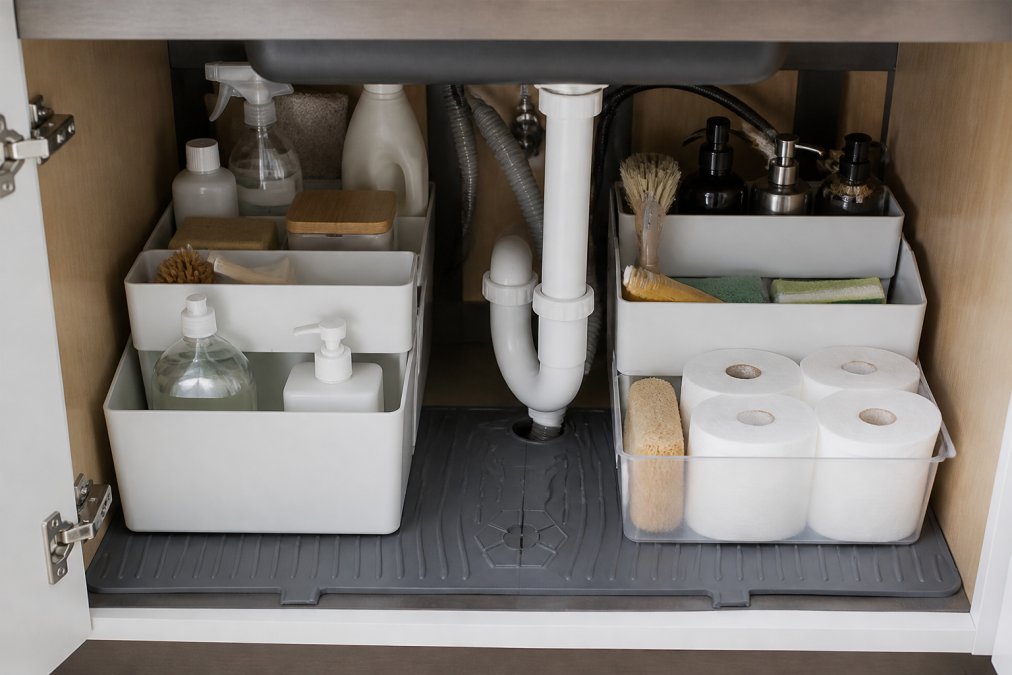
Don't seal pre-drilled holes for plumbing access or block them with organizers. These holes allow water to drain if a leak occurs. Blocking them can cause water to pool inside your cabinet. The SinkElle FlowRack Pro keeps sponges and dish brushes elevated off the cabinet floor, preventing them from sitting in standing water.

Vertical Space Hacks and Over-the-Door Organizers
Rental kitchens rarely have generous cabinet space, which means vertical organization becomes your primary strategy. The wall space above your sink and the inside surfaces of cabinet doors represent untapped real estate.
Over-the-door organizers create instant storage for spray bottles, small containers, or cleaning tools. These require zero installation and are completely removable. Vinyl or stainless steel organizers handle moisture better than fabric-based versions.
Wall-mounted magnetic strips provide vertical storage without drilling. Using heavy-duty adhesive, a stainless steel magnetic strip can hold metal containers, scissors, or small utensils. Adhesive-mounted shelves use heavy-duty adhesive rather than brackets or screws, making them completely removable. Most adhesive shelves hold 10-15 pounds maximum, which works well for lightweight organizing containers.
Tension rods installed vertically inside cabinets create hanging storage for small baskets, hanging organizers, or lightweight shelving. When you move storage off your countertop and onto walls or inside cabinets, your kitchen immediately feels larger and less cluttered, making it more functional because you have more working surface area at your sink.
Waterproof Materials That Won't Warp or Mold
The material choice makes the difference between an organization system that lasts years and one that fails within months. Waterproof kitchen organization for renters demands materials engineered to handle constant moisture exposure.
Stainless steel is the gold standard. It's waterproof, rust-resistant, easy to clean, and durable enough to last through multiple rentals. Stainless steel organizers don't warp, don't mold, and don't develop musty smells. For under-sink storage specifically, stainless steel containers are worth the investment because they directly contact moisture.
Polypropylene and high-density polyethylene plastics are waterproof alternatives to stainless steel (the FDA). These materials don't absorb water, so they won't warp or develop mildew. They're lighter weight and significantly cheaper, though they can crack if forced or dropped.
Silicone is increasingly used in kitchen organizers because it's completely waterproof, flexible, and easy to clean. Silicone mats, organizers, and drawer liners won't harbor mold and are dishwasher safe. The SinkElle DryFlow Splash Mat uses silicone to create a waterproof barrier between your countertop and sink splashing.
Avoid fabric of any kind (absorbs moisture and molds), cardboard (disintegrates when wet), untreated wood (swells and rots), and standard plastic without waterproof certification (warps under repeated moisture exposure). Even "water-resistant" isn't good enough for rental kitchens.
Maintaining and Cleaning Your Rental Kitchen Organization
A waterproof organization system only works if you maintain it. Mold, mildew, and water stains can develop even on waterproof materials if you don't clean regularly and manage moisture.
Weekly maintenance takes five minutes. Wipe down your silicone mats, magnetic strips, and any visible organizers with a damp cloth. Dry everything thoroughly, lingering moisture is what causes mold, even on waterproof surfaces.
Monthly deep cleaning prevents buildup. Remove your organizers and wipe down the cabinet surfaces underneath. Check for any water pooling or signs of moisture damage. If you notice water sitting under your sink, investigate the source immediately.
For under-sink storage, replace your waterproof mat monthly or whenever it becomes saturated. Check your containers for any signs of mold or mildew. Ventilation is your secret weapon, after using your sink, leave the cabinet doors open for 30 minutes to allow air circulation. If your rental has a range hood, use it while washing dishes.
Quarterly inspections catch problems early. Look inside cabinets for any signs of rust, discoloration, or odors. Check adhesive hooks to ensure they're still firmly attached. Test tension rods to confirm they're still secure.
Waterproof kitchen organization for renters isn't a luxury, it's a practical necessity if you want your storage system to survive a rental lease and protect your security deposit. The right combination of no-drill storage solutions, waterproof materials, and smart maintenance transforms even the most cramped rental kitchen into a functional, organized space.
SinkElle's complete waterproof system, from the DryFlow Splash Mat that keeps your countertop dry to the AquaShield Faucet Guard that prevents splashing, is engineered specifically for renters who need effective organization without permanent installation. Every product uses durable, waterproof materials that won't warp, mold, or fail under constant moisture exposure. Tool-free installation means you're organized in minutes, and complete removability means your landlord sees no evidence you were ever there.

Shop SinkElle's complete waterproof kitchen organization collection and reclaim your rental kitchen today.
Frequently Asked Questions
Q: Can waterproof kitchen organization solutions work in a tight corner kitchen layout?
A: Yes. Waterproof storage works in tight spaces because most renter-friendly options are modular and adjustable. Adhesive hooks, tension rods, and slim organizers fit snugly between walls and appliances. The Sinkelle DryFlow Splash Mat ($19.99) sits flat on any countertop edge, even narrow ones. Measure your space first, width, depth, and distance from the wall, then choose stackable or vertical solutions that don't require repositioning plumbing or cabinets.
Q: What makes waterproof materials different from regular plastic organizers?
A: Waterproof materials resist moisture absorption, preventing warping, mold, and mildew that plague standard plastic bins. Quality waterproof organizers use silicone, food-grade polymers, or sealed wood composites that shed water rather than trap it. They won't degrade after repeated exposure to sink splashes or under-cabinet condensation. The Sinkelle AquaShield Faucet Guard ($17.99) uses durable silicone that maintains its shape and appearance even with daily water contact.
Q: How do I remove waterproof organizers without damaging rental walls or cabinets?
A: Use adhesive-based products designed for damage-free removal. Command strips and similar products leave no marks when removed slowly at a 45-degree angle. For tension rods, simply unscrew the end caps. Magnetic strips pull cleanly from metal surfaces. Test any adhesive on a hidden area first. When you move out, remove organizers slowly and use rubbing alcohol to dissolve any adhesive residue. Tool-free installation means no drilling, just peel, stick, and adjust as needed.
Q: Can waterproof organizers fit around garbage disposals and complex under-sink plumbing?
A: Yes, with careful planning. Measure around your disposal and plumbing pipes before buying. Use shallow, modular drawer dividers that fit on cabinet floors without touching pipes. Avoid tall organizers that could jam against P-traps or disposal units. Leave 2-3 inches of clearance around all plumbing. Consider storing cleaning supplies in pull-out baskets on cabinet doors instead of underneath. This approach keeps your under-sink area functional while protecting both your rental agreement and the plumbing itself.
This article was written using GrandRanker