


Table of Contents
- Why Organize Under the Kitchen Sink: More Than Just Tidy Cabinets
- The Hidden Cost of an Unorganized Under-Sink Cabinet
- How to Prevent Water Damage Under the Sink
- Under Sink Storage Ideas for Small Kitchens
- Best Kitchen Sink Organizers 2026: What to Look For
- The 5-Minute Declutter: A Step-by-Step Plan
- Common Mistakes to Avoid When Organizing
- Conclusion: Start With One Shelf
- Frequently Asked Questions
Last Updated: September 7, 2026
Why Organize Under the Kitchen Sink: More Than Just Tidy Cabinets
Most homeowners ignore the space under the sink until a bottle of cleaner tips over or a leak goes unnoticed for weeks. Understanding why organize under the kitchen sink matters transforms a dark, damp catch-all into one of the most functional zones in your home. At SinkElle, we design storage systems specifically for this awkward real estate, and a few deliberate changes can reduce daily frustration and prevent costly repairs.
The reasons to organize under the kitchen sink go beyond aesthetics. This cabinet faces constant moisture, temperature swings, and heavy daily use, making it the most failure-prone storage area in the kitchen. A structured approach protects your plumbing, your belongings, and your peace of mind. Below, we will show you exactly how to tackle this space, what materials actually hold up, and which mistakes turn a tidy cabinet back into a mess within a month.
The Hidden Cost of an Unorganized Under-Sink Cabinet
An unorganized under-sink cabinet creates a silent drain on your time, money, and patience. Every time you rummage through loose bottles and tangled scrub brushes to find a specific spray, you waste minutes that add up over a week. More seriously, clutter hides the early warning signs of trouble.
When items pile up against pipes, they trap moisture against metal fittings and wood surfaces. This accelerates corrosion on supply lines and creates ideal conditions for mold growth on cabinet floors. According to guidance from the Environmental Protection Agency on indoor moisture control, keeping areas dry and well-ventilated is critical to preventing mold and the respiratory issues it can cause.
The financial cost of neglect is substantial. A slow drip hidden behind a stack of cleaning products can damage cabinet flooring, subflooring, and even the ceiling below before you notice it. Organizing under the kitchen sink means creating clear sightlines so you can spot a damp fitting or a rusted connection while there is still time to fix it cheaply.
How to Prevent Water Damage Under the Sink
Water damage under the sink starts with prevention, not cleanup. The first line of defense is a waterproof liner or tray that sits beneath everything you store. This barrier catches drips from bottles and condensation from pipes, keeping them off the raw cabinet surface where they cause the most harm.
Check your plumbing connections regularly. A simple monthly inspection takes under a minute: run your hand along supply lines and the drain trap, feeling for dampness. Look for mineral buildup or rust streaks, which indicate slow leaks. Catching these early prevents the majority of serious water damage cases.
Proper airflow is the second pillar of prevention. Closed cabinets trap humidity from dishwashing and washing produce. Leave the cabinet door open periodically to air it out, or install a small vent. This simple habit reduces the clammy environment that warps particleboard and encourages mildew.
Choosing Waterproof Materials That Last
Not all waterproof claims hold up in practice. Many plastic organizers warp or become brittle after months of exposure to temperature changes and cleaning chemical fumes. Metal with a coated or powder-finished surface resists moisture far better, provided the coating is continuous and scratch-resistant.
Look for materials that do not absorb water at all. Solid metal frames with drainage holes or open designs allow air to circulate rather than trapping moisture underneath each item. Sealed edges and welded joints matter more than the overall finish, since water collects in seams and crevices first.
The SinkElle 2 SlideNest Organizer uses a durable metal frame designed for exactly these conditions. Its open, two-tier structure keeps bottles elevated off the cabinet floor, so spills and condensation dry out instead of pooling against your storage. For renters or anyone wary of drilling, SinkElle systems install without tools and leave no marks, making them a practical choice for strict landlords.

Under Sink Storage Ideas for Small Kitchens
Small kitchens force every inch to earn its place, and the under-sink cabinet is no exception. The key is to think vertically and in layers, using the full height of the cabinet rather than just the floor. Stackable tiers and hanging systems multiply usable space without expanding your footprint.
A common approach is to group items by frequency of use. Daily cleaning supplies stay at the front and on the top tier where you can grab them without bending. Occasional items like drain cleaner or spare sponges live at the back or on lower shelves. This logic keeps the most-used products accessible while still storing everything in one place.
Working Around Pipes and Garbage Disposals
Plumbing obstructions are the real challenge in this space. Garbage disposals eat up the back half of the cabinet, and the P-trap cuts diagonally across the middle. Trying to work around these fixtures with standard shelving usually fails because nothing fits the irregular shape.
The solution is to use the space that plumbing leaves open, primarily the front strip and the upper area near the cabinet door. Hanging organizers attach to the inside of the cabinet door or to the underside of the sink itself, capturing storage that would otherwise go unused. For the floor area, a narrow cart or slim rack can slide into the gap beside a disposal unit.
Best Kitchen Sink Organizers 2026: What to Look For
Choosing the right organizer comes down to four criteria: material durability, adjustability, installation method, and fit. The best kitchen sink organizers prioritize waterproof construction and tool-free setup, reflecting both renters' needs and homeowners' desire for quick upgrades.
Material durability is non-negotiable. Metal frames outlast plastic in moist environments, and they support heavier loads without bowing. Adjustability matters because every sink cabinet has a unique layout. Look for tiers that can be repositioned or units with multiple height settings so you can adapt as your storage needs change.
Installation should not require a drill. Tool-free systems that tension-mount or hang from existing fixtures protect your walls and plumbing while making setup a five-minute job. Fit is the final consideration: measure your cabinet's interior width, depth, and the height to the trap before purchasing.
| Organizer | Material | Installation | Best For |
|---|---|---|---|
| SinkElle 2 SlideNest Organizer | Durable metal frame | Tool-free | Two-tier storage around pipes |
| SinkElle CabinetFlow Hanging Organizer | Durable metal | Hangs under shelves | Using vertical dead space |
| SinkElle FlowCart Storage Rack | Multi-tier metal | Rolling, no install | Narrow gaps beside cabinets |
The National Kitchen and Bath Association's design guidelines emphasize accessible, low-maintenance storage solutions, which aligns with choosing fewer, higher-quality pieces over a jumble of mismatched bins.
The 5-Minute Declutter: A Step-by-Step Plan
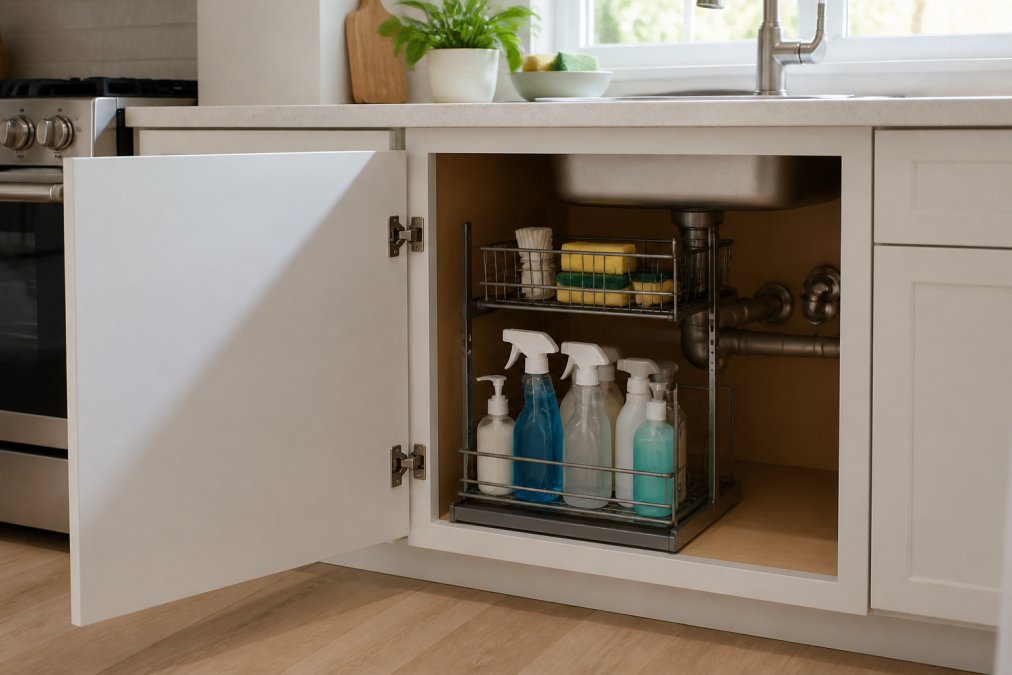
You can transform this cabinet in a single session. Set a timer for five minutes and work through these steps without getting sidetracked.
- Pull everything out and place it on the counter or floor. Group items into categories: cleaning supplies, sponges and brushes, trash bags, and rarely used products.
- Check expiration dates and discard anything old, especially chemical cleaners that have separated or changed consistency. Recycle empty bottles.
- Wipe down the empty cabinet interior with a dry cloth first, then a damp one. Inspect the floor and pipes for moisture, rust, or mold as you clean.
- Place a waterproof liner or tray across the cabinet floor to catch future drips.
- Return items in priority order. Daily-use products go on the top tier or nearest the front. Reserve the back and bottom for overflow and bulky supplies.
- Stand back and check for clear sightlines to all plumbing fittings before closing the door.
This process works because it forces a full inventory. Most people discover they own duplicates of the same cleaner or products they forgot they had, which immediately reduces what needs storing.
Common Mistakes to Avoid When Organizing
The most common mistake is buying organizers before measuring. A rack that fits a standard double sink cabinet may not clear your garbage disposal or offset plumbing, leaving you with a useless piece of metal and a wasted purchase.
Another frequent error is over-stuffing. When you pack the cabinet to capacity, you recreate the same problem you started with: items stacked and hidden, leaks obscured, and nothing easy to reach. Leave breathing room in every tier. If it does not fit comfortably, you own too much for this space.
Skipping the waterproof layer is a third mistake. Even with a metal organizer, condensation and bottle drips reach the cabinet floor. A simple liner or tray is cheap insurance against the most common cause of under-sink damage.
Conclusion: Start With One Shelf
Organizing under the kitchen sink delivers benefits you notice every single day: faster cleaning routines, fewer wasted products, and early detection of leaks that could otherwise cause expensive damage. The effort takes minutes, but the payoff in reduced clutter and lower stress compounds over time.
Begin with one shelf or one tier rather than overhauling everything at once. Choose waterproof, tool-free pieces that fit your actual cabinet dimensions, and keep plumbing fittings visible. SinkElle's durable, minimalist organizers are designed for exactly this purpose, helping you maximize sink area space and reduce kitchen clutter without drilling or permanent changes. Get started with SinkElle and turn the most neglected cabinet in your kitchen into a model of efficiency.
Frequently Asked Questions
What is the best way to organize under the kitchen sink?
Start by removing everything and wiping down the cabinet. Group items by frequency of use, then install a tiered organizer like the SinkElle 2 SlideNest Organizer to use vertical space above the plumbing. Keep daily-use sprays within reach on the top tier and reserve the bottom for backup supplies. Use waterproof bins for smaller items so leaks don't ruin your supplies.
What should you not store under the kitchen sink?
Skip storing non-waterproof items like paper towels, dry goods, or wooden cutting boards directly on the cabinet floor. These absorb moisture and can grow mold. Also avoid storing harsh chemical cleaners next to food items or pet food. If you have a garbage disposal, keep bulky tools out of that side of the cabinet to prevent accidental drops.
How do you maximize space under a kitchen sink with pipes?
Measure the clearance from the cabinet floor to the bottom of the sink trap. In most cases, you have 8 to 10 inches of usable space below the pipes. Slide a low-profile organizer like the SinkElle 2 SlideNest Organizer around the plumbing. Hang cleaning supplies on the inside of the cabinet door with a hanging organizer to use otherwise wasted vertical space.
Is it worth buying an organizer for under the kitchen sink?
Yes, a purpose-built organizer pays for itself by preventing wasted product and water damage. A $55.99 SinkElle 2 SlideNest Organizer replaces a pile of unstable plastic bins that tip over and spill. The durable metal frame holds bottles upright, so you stop buying replacements for leaked cleaner. You also save time because you can see every item at a glance instead of digging through a dark cabinet.