


Table of Contents
- The Time Cost of Kitchen Clutter
- How Minimalist Kitchen Storage Reduces Cognitive Load
- Best Minimalist Kitchen Sink Organizers for Efficiency
- How to Declutter Kitchen Counters and Keep Them Clear
- Space-Saving Kitchen Hacks That Streamline Your Workflow
- Building Maintenance Routines That Stick
- Conclusion
Last Updated: August 30, 2026
The Time Cost of Kitchen Clutter
Every morning, you reach for your coffee mug and spend 30 seconds searching through a crowded cabinet. You want a specific spice and scan five shelves before finding it. You need scissors and open three drawers. These aren't big problems individually, but they compound.
A cluttered kitchen isn't just aesthetically chaotic, it's a productivity drain. Each search interrupts your workflow. Each decision about where something belongs adds cognitive friction. When you're moving through your kitchen during meal prep, cooking, or cleanup, clutter forces your brain to process unnecessary information and make unnecessary choices.
This is where minimalist kitchen storage changes the equation. By reducing what you keep and organizing what remains with intention, you eliminate those micro-interruptions. You know exactly where everything is. You move faster. You think less. The time you save across hundreds of small interactions adds up to hours per month.
At SinkElle, we've designed our storage solutions around this principle: the less visual noise in your kitchen, the faster you move through it. A minimalist approach isn't about deprivation, it's about removing friction from the activities you do every single day.
How Minimalist Kitchen Storage Reduces Cognitive Load
Minimalist kitchen storage reduces cognitive load by eliminating unnecessary visual and mental processing during everyday tasks. When your kitchen contains only essential items arranged in clear, consistent locations, your brain doesn't have to filter through clutter or make repeated decisions about where things belong.
Cognitive load is the amount of mental effort required to complete a task (apa.org). In a cluttered kitchen, every time you need something, your brain processes dozens of irrelevant items before finding what you need. You see things you forgot you owned. You notice items that are out of place. You make micro-decisions about organization as you move through the space. These small demands accumulate into mental fatigue.
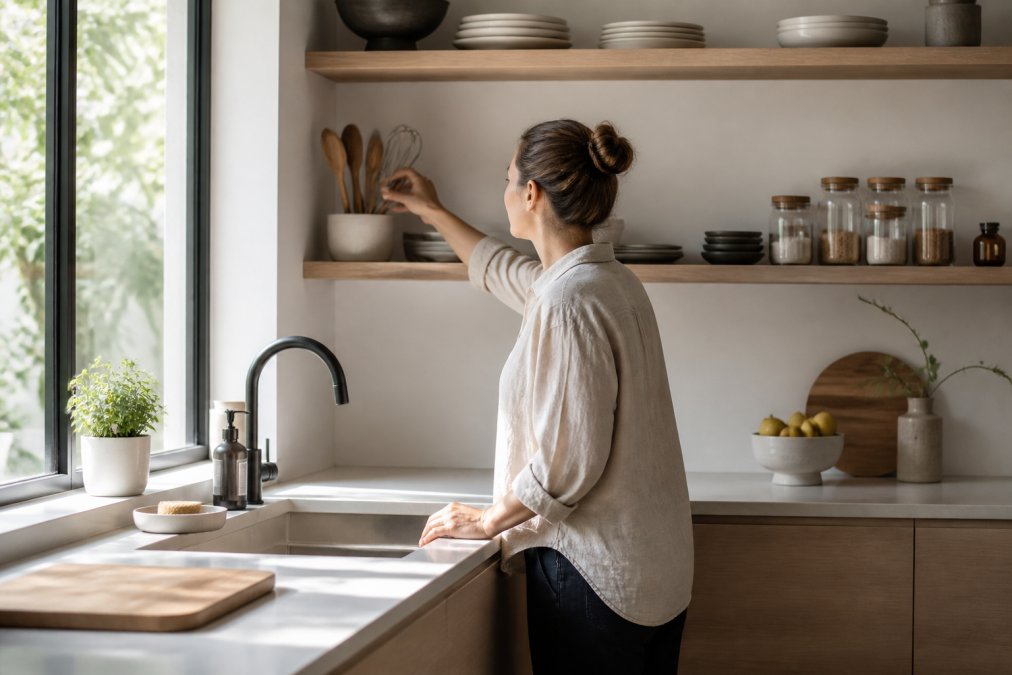
When you adopt minimalist kitchen storage, you reverse this pattern. You keep only what you use regularly. Everything has a designated spot. Your eyes land on fewer items, so your brain processes less information. The visual clarity creates mental clarity. Studies in environmental psychology show that visual order reduces stress and improves focus, the same principle applies in your kitchen (peer-reviewed research).
This matters because your kitchen is a high-frequency space. You visit it multiple times daily. Small friction points compound. A kitchen that requires 30 seconds of searching per visit adds up to 2-3 hours per month of wasted time and mental energy (peer-reviewed research). Multiply that across a year and the time savings become significant.
The psychological benefit runs deeper than efficiency. When your kitchen feels organized and minimal, you're more likely to maintain it. You're less likely to let new clutter accumulate because the baseline is already clean. The visual baseline shapes behavior, if everything has a place, you're more motivated to put things back where they belong.
Best Minimalist Kitchen Sink Organizers for Efficiency
The sink area is where minimalist kitchen storage has the highest impact. This is your highest-traffic zone, where you wash dishes, prep food, and access cleaning supplies multiple times daily. An organized sink area reduces the time you spend hunting for items and keeps your counter clear for actual work.
The best minimalist kitchen sink organizers share common traits: they maximize vertical space, use clear materials or minimal design, and keep items accessible without creating visual clutter. The goal is to get things off your counter and into organized storage that's still within arm's reach.
The SinkElle CabinetFlow Hanging Organizer exemplifies this approach. It mounts beneath your cabinet, creating storage without occupying counter space. At $44.99, it provides multiple compartments for sponges, dish brushes, and cleaning supplies, items that typically clutter your sink area. The hanging design keeps these essentials accessible during washing but hidden from view when you're not using them. This is the efficiency gain of minimalist kitchen storage: items are instantly available, but they don't create visual noise.

For under-sink organization, the challenge is working around plumbing. Many people assume their under-sink space is unusable, so they keep cleaning supplies on open shelves or countertops. A properly designed organizer accommodates typical plumbing configurations and creates usable storage in an otherwise wasted zone.
The SinkElle PanNest Adjustable Pot Organizer serves a different purpose but follows the same principle. Pots and pans are bulky items that consume cabinet space or clutter your countertop. The PanNest ($38.99) uses vertical slots to organize cookware efficiently, freeing up cabinet real estate for other essentials. When your pots are organized vertically rather than stacked, you can grab what you need without moving five other items.
For spice and small item organization, vertical storage is essential. The SinkElle SpiceRise 3-Tier Organizer ($58.99) uses tiered shelving to keep spices, seasonings, and small jars visible and accessible. The black metal design fits a minimalist aesthetic while keeping frequently used items within reach. With tiered organization, you eliminate the need to dig through a spice cabinet, you see everything at once.
Counter space is premium real estate in most kitchens. The SinkElle CounterRise 2-Tier Shelf ($34.99) creates vertical storage on your counter without taking up additional footprint. This works for coffee essentials, frequently used condiments, or everyday items you want accessible. The tiered design lets you organize without spreading items across your surface.
The common thread: each organizer removes items from open counter space and arranges them vertically or in concealed storage. This is minimalist kitchen storage in practice, you're not eliminating items, you're eliminating visual clutter by using space intentionally.
How to Declutter Kitchen Counters and Keep Them Clear
Decluttering your kitchen counters is the first step toward minimalist kitchen storage. Most people keep far more on their counters than necessary, and each item creates visual noise and decision friction.
Start by removing everything from your counters. Yes, everything. This forces you to make conscious decisions about what actually belongs there. Create three categories: daily use, weekly use, and rarely used. Daily-use items are candidates for counter space. Weekly-use items belong in accessible storage but not on display. Rarely-used items should be stored elsewhere or removed entirely.
Daily-use items typically include: coffee maker, utensil holder, cutting board, and items you use during meal prep. These are legitimate candidates for counter presence because you access them frequently. Everything else should move into storage.
The second step is establishing a clear counter baseline. Decide what your ideal counter looks like. For most minimalist kitchens, this means: one or two appliances, a utensil holder, and a small dish for everyday items. Nothing else. This baseline becomes your maintenance target.
The third step is implementing a "one in, one out" rule. When you bring a new item into your kitchen, something else leaves. This prevents counter creep, the gradual accumulation of items that turns a clean space back into chaos.
The final step is creating homes for items you remove. If you take something off your counter, it needs a designated storage location. This prevents the problem where items migrate back to the counter because they have nowhere else to go. Use drawer dividers, cabinet organizers, or shelving to ensure every removed item has a clear home.
Many people struggle with counter maintenance because they haven't addressed the root cause: too many items in the kitchen overall. Decluttering counters is temporary relief if you don't also reduce what you own. A minimalist approach addresses both, fewer items overall, and those items organized intentionally.
Space-Saving Kitchen Hacks That simplify Your Workflow
Beyond traditional storage, several space-saving hacks enhance the efficiency gains of minimalist kitchen storage. These are workflow optimizations that work best in a decluttered environment.
Vertical wall space: Most kitchens underutilize wall space. Pegboards, magnetic strips, or wall-mounted shelving create storage without consuming counter or cabinet space. A magnetic strip for knives keeps them accessible and off your counter. Wall-mounted shelving for frequently used items keeps them visible and reachable.
Multi-functional tools: Instead of owning ten single-purpose gadgets, choose tools that serve multiple functions. A good knife reduces your need for specialized slicers, choppers, and peelers. A quality cutting board becomes your prep surface and serving board. Multi-functional items reduce overall kitchen inventory.
Clear containers: Transparent storage lets you see what you have without opening cabinets. This is a minimalist principle, visibility reduces the need to keep backup items. If you can see you have pasta, you won't buy more. Clear organization also makes it easier to maintain because you immediately notice when something is out of place.
Drawer dividers: Drawers are where kitchen items go to disappear. Dividers create designated slots for utensils, gadgets, and small items. When everything has a specific location, you find items instantly and maintain the organization naturally.
Cabinet organization: Inside your cabinets, use the same principles as counters. Keep only what you use. Arrange items by frequency of use, with daily items at eye level and rarely used items on higher or lower shelves. Use risers or tiered organizers to maximize vertical space within cabinets.
Pantry zones: If you have a pantry, organize it by category: grains, spices, canned goods, snacks. Keep items you use regularly at eye level. This reduces search time during meal prep and prevents buying duplicates.
These hacks work because they're built on the same foundation: removing unnecessary items and organizing what remains with intention. A pegboard in a cluttered kitchen just adds more visual complexity. The same pegboard in a minimalist kitchen becomes a functional, clean storage solution.
Building Maintenance Routines That Stick
The difference between a temporarily clean kitchen and a permanently organized one is maintenance. Minimalist kitchen storage only works if you maintain it consistently. Without routines, clutter creeps back in.
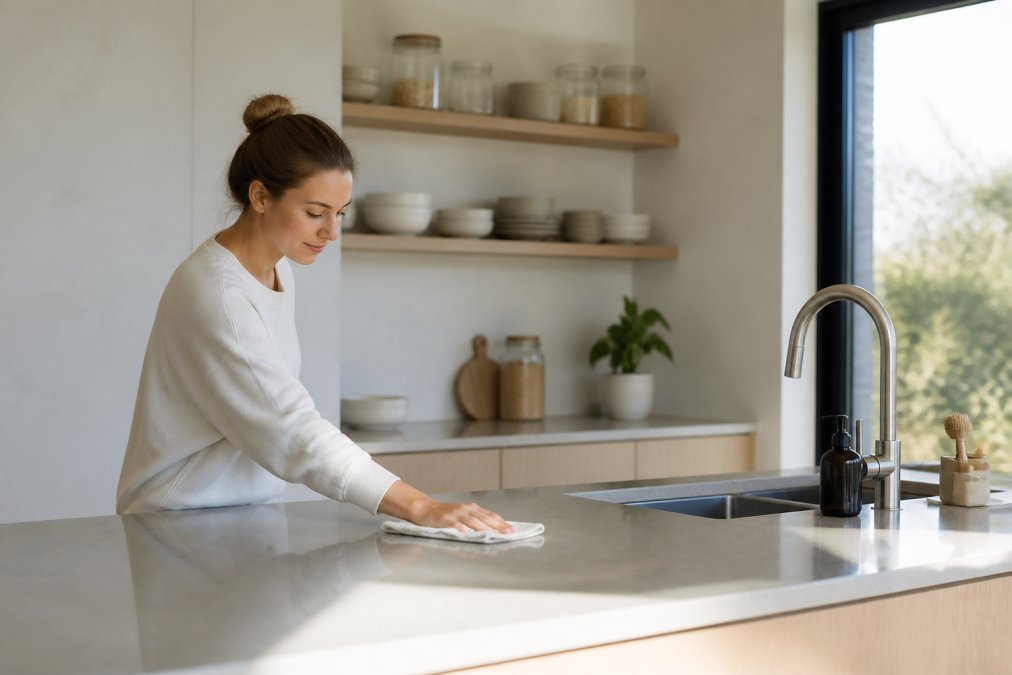
The most effective maintenance routine is daily reset. Spend five minutes each evening returning items to their designated homes. This prevents the accumulation that turns a clean kitchen back into chaos. The five-minute investment saves hours of cleaning and reorganization later.
Weekly maintenance involves deeper cleaning and checking organization. Once a week, wipe down shelves, organize any items that migrated out of place, and assess whether anything new has entered your kitchen that doesn't belong. This weekly check prevents slow drift.
Monthly maintenance is the time to evaluate what's working and what isn't. If you consistently find items out of place, their storage location might not be intuitive. If you're keeping items you don't use, remove them. A minimalist kitchen is dynamic, it evolves as your needs change.
The key to maintenance routines that stick is making them as frictionless as possible. If your daily reset takes 10 minutes, you won't do it consistently. If it takes five minutes and everything has a clear home, you're more likely to maintain it. Design your organization around your actual behavior, not your ideal behavior.
Many people create elaborate organization systems that fail because they're too complicated to maintain. A simpler system you actually use beats a perfect system you abandon. Start with the basics: everything has a home, you reset daily, and you evaluate weekly. Add complexity only if the basics are working.
Maintenance also includes being honest about what you actually use. If you've kept something for six months and haven't used it, it's taking up space that could serve something useful. Regular purging is part of maintaining a minimalist kitchen.
A cluttered kitchen costs you time every single day. You search for items, make unnecessary decisions, and navigate visual chaos during the moments you're most focused on cooking or cleaning. Minimalist kitchen storage eliminates this friction by reducing what you keep and organizing what remains with intention.
The time savings compound across hundreds of small interactions. The cognitive clarity improves your experience in your kitchen. The visual simplicity creates a space that's easier to maintain and more pleasant to inhabit.
SinkElle's minimalist Scandinavian-inspired organizers are designed specifically for this outcome. Products like the CabinetFlow Hanging Organizer and SpiceRise 3-Tier Organizer use vertical space efficiently, keep items accessible while maintaining visual clarity, and install without tools in minutes. Whether you're working with limited counter space or an awkwardly configured under-sink area, these solutions create functional storage that elevates your kitchen's efficiency and aesthetic.

Start with your counters. Remove what doesn't belong there. Organize what remains. Then build outward to your cabinets, drawers, and storage zones. The time you save is immediate. The habit of maintaining it compounds over months and years. A minimalist kitchen isn't a destination, it's a system that keeps working for you every single day.
Frequently Asked Questions
Q: How does minimalist kitchen storage actually save time during cooking?
A: Minimalist kitchen storage reduces the time spent searching for tools and ingredients. When every item has a designated spot and visual clutter is eliminated, you locate what you need in seconds rather than minutes. A streamlined layout also minimizes the steps needed to move between prep areas, cutting overall cooking time significantly.
Q: What are the best minimalist kitchen sink organizers for small spaces?
A: The best minimalist kitchen sink organizers use vertical storage and wall space to maximize limited counter real estate. Solutions like the Sinkelle CabinetFlow Hanging Organizer ($44.99) hang beneath cabinets without requiring tools, creating accessible storage for essentials. For countertop organization, the Sinkelle CounterRise 2-Tier Shelf ($34.99) elevates items off the counter while maintaining a clean aesthetic. These systems prioritize accessibility and visual simplicity, keeping your sink area functional and uncluttered.
Q: Can I maintain a minimalist kitchen if I cook frequently?
A: Yes. Frequent cooking benefits most from minimalist organization because you use tools and ingredients regularly, making it easier to maintain the system. The key is storing only essentials and items you use weekly. Establish a quick reset routine after cooking, returning items to their designated spots takes two minutes and prevents clutter from accumulating. Many busy professionals find that minimalist storage actually enables more frequent cooking because the kitchen feels less overwhelming to use.
Q: How do I prevent a minimalist kitchen from becoming cluttered again?
A: Prevention relies on maintenance routines and honest inventory management. Weekly, spend five minutes returning items to their homes and removing anything that didn't get used. Monthly, review what's stored and remove duplicates or tools you haven't touched. The minimalist approach works because it's easier to maintain fewer items than to constantly reorganize clutter. Pairing organizational systems like the Sinkelle PanNest Adjustable Pot Organizer ($38.99) with these habits ensures your kitchen stays efficient long-term.
This article was written using GrandRanker