


Table of Contents
- Why Your Kitchen Sink Area Becomes a Clutter Magnet
- Step 1: Remove Everything and Sort by Category
- Step 2: Declutter Non-Essentials Around Your Sink
- Minimalist Kitchen Sink Organization Ideas That Work
- Under Sink Storage Solutions for Maximum Space
- How to Keep a Kitchen Sink Area Clutter Free Daily
- Small-Space Hacks for Tight Kitchen Layouts
- Conclusion
Last Updated: August 29, 2026
Why Your Kitchen Sink Area Becomes a Clutter Magnet
Your kitchen sink area attracts clutter because it's the most-used zone in your kitchen. Sponges sit in puddles, dish soap bottles crowd the edge, and cleaning cloths drape over cabinet doors. The problem isn't disorganization, it's that most kitchens lack a system designed for sink-area workflow. Items don't have designated spaces, water sits on surfaces instead of draining, and under-sink storage is either unused or packed too tightly.
At SinkElle, we understand homeowners struggle with this exact issue. The solution isn't buying more organizers or cleaning more often. It's creating a simplified system that matches how you actually use your sink. Once you establish designated storage zones, implement proper drainage, and choose functional organizers that fit your space, maintaining a clutter-free kitchen sink area becomes automatic.
Step 1: Remove Everything and Sort by Category
Remove every item from your sink area and the cabinet below it, dish soap, sponges, cleaning cloths, scrub brushes, everything. Place it all on a nearby counter where you can see everything at once.
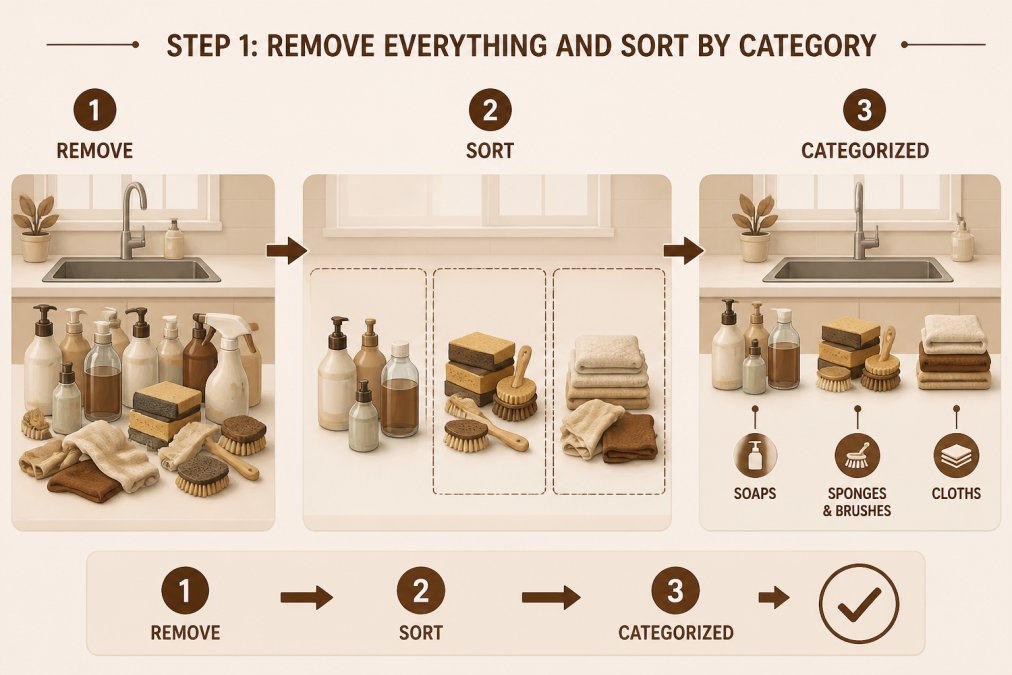
Sort everything into clear categories: cleaning supplies together, items that dry separately, and anything unused in the past month set aside. This reveals what you actually use daily versus what's wasting space. Be honest about duplicates, most kitchens have three sponges when one would do. Keep only what serves an active purpose.
This initial purge typically takes 10-15 minutes but saves hours of frustration later (peer-reviewed research).
Step 2: Declutter Non-Essentials Around Your Sink
Look at each item and ask: Do I use this weekly? Does it earn its space? If not, it goes. Non-essentials typically include expired cleaning products, specialty tools used once, decorative items that collect water splashes, and backup supplies.
Be particularly aggressive with items under the sink, that space is premium real estate. A half-empty bottle of floor cleaner, old sponges, or replaced cleaning supplies shouldn't take up room. Keep only what you use regularly and what genuinely improves functionality. Every item should have a clear purpose.
Minimalist Kitchen Sink Organization Ideas That Work
Minimalist organization focuses on reducing visual clutter while maximizing functionality. Choose a few high-quality pieces that handle multiple tasks rather than filling your space with gadgets.
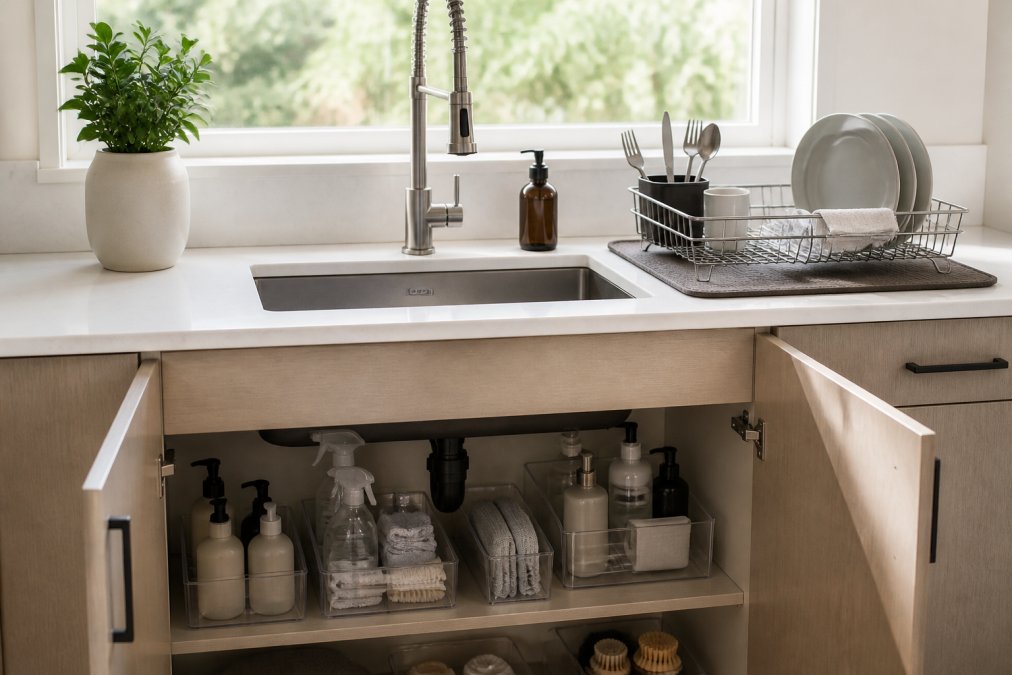
Start with a single, elegant sponge holder that drains water properly, look for designs with an inclined surface that channels moisture back into the sink. Next, implement a splash mat or faucet guard that prevents water from spreading across your countertop. Under the sink, use clear, stackable containers to organize cleaning supplies; transparency lets you see what you have without opening every cabinet.

Keep your countertop completely clear except for one item: a quality dish soap dispenser in a neutral color. This approach transforms your sink area from a catch-all zone into a calm, functional space.
Under Sink Storage Solutions for Maximum Space
The under-sink cabinet is often underutilized yet one of the most valuable storage areas. Most people avoid organizing it because of plumbing obstacles and moisture concerns, but with the right approach, this space can hold everything your sink area needs.
Use shallow, stackable bins that fit around plumbing without touching pipes. Clear bins let you see contents without pulling everything out. Choose waterproof organizers that resist warping and mold growth, avoid fabric or porous materials that absorb water.
Consider vertical storage using stackable shelves or tiered organizers. This transforms an awkward, flat space into multiple usable levels, letting you store more items in less footprint while keeping everything visible and accessible. When you can quickly find what you need without moving other items, you're more likely to maintain the organization long-term.
How to Keep a Kitchen Sink Area Clutter Free Daily
Keeping your sink area clutter-free requires establishing a daily maintenance habit, not willpower. Design a simple routine that takes less than five minutes and integrates into your existing habits.
The first habit is immediate cleanup. After washing dishes, wipe down your countertop completely and return items to their designated spaces immediately. The second habit is a daily 60-second wipe-down each evening to remove water spots and prevent moisture buildup (the CDC). The third habit is a weekly deep-clean: remove everything, wipe surfaces, check for migrated items, and return everything to its designated spot.
These three habits require minimal time but deliver maximum results. They work because they're small enough to stick with and frequent enough to prevent problems from building up.
Small-Space Hacks for Tight Kitchen Layouts
Small kitchens demand different strategies. Go vertical by installing command hooks or adhesive organizers on the wall above your sink to hold cleaning cloths and brushes. Mount a slim shelf above the faucet for daily-use items.
Choose multi-functional organizers, a quality sink caddy combines storage with drainage in one compact footprint. Use the inside of cabinet doors by mounting shallow organizers or adhesive hooks to hold supplies. Choose slim, stackable designs that maximize vertical space rather than spreading horizontally.
Most importantly, eliminate anything without a clear daily purpose. Small kitchens simply don't have room for backup supplies or "just in case" items. This ruthless approach makes your space actually functional.
Choosing the Right Organizers for Your Sink Area
The organizers you choose determine whether your system works. Start with material, waterproof is non-negotiable for anything near your sink. Water splashes, condensation builds up, and moisture sits on surfaces. Organizers made from waterproof silicone, stainless steel, or sealed plastic resist mold and deterioration.
Next, consider drainage. An organizer that holds water fails its purpose. Look for designs with sloped surfaces, drainage holes, or gaps that let water flow back into the sink. Installation matters significantly in small kitchens or rentals, command hooks and adhesive organizers let you maximize space without drilling or damaging walls.
Size and capacity should match your actual usage. A massive organizer system is overkill if you use five products. Design and aesthetics matter because you'll see these organizers multiple times daily, a minimalist, elegant organizer encourages maintenance.
The SinkElle Sink Organization Bundle combines waterproof materials, proper drainage, tool-free installation, and minimalist Scandinavian design. Quality organizers can last years longer and support your effort to maintain organization.

Conclusion
Decluttering your kitchen sink area isn't about buying expensive organizers or forcing yourself to be neater. It's about creating a system that matches how you actually use your sink and maintaining it with simple daily habits.
Start by removing everything and sorting ruthlessly. Keep only what serves a clear purpose. Implement a simplified organization system with proper drainage, designated storage zones, and minimalist design. Finally, establish three simple habits: immediate cleanup after use, a daily 60-second wipe-down, and a weekly 10-minute deep-clean.
The SinkElle Sink Organization Bundle and SinkElle FlowRack Pro are specifically designed to support this workflow. The FlowRack Pro's angled drainage tray keeps sponges dry, while the DryFlow Splash Mat channels water back into the sink. Both feature waterproof materials and tool-free installation.

A clutter-free kitchen sink area transforms how your entire kitchen feels. Get started with SinkElle and create a functional, beautiful sink area that supports your daily routine.
Frequently Asked Questions
How do I declutter a kitchen sink area if I have limited counter space?
Start by removing everything from your sink area and counter. Keep only daily essentials like dish soap and a sponge holder within arm's reach. Move cleaning supplies under the sink using vertical organizers and compartments. Use wall-mounted storage or cabinet door organizers to maximize vertical space instead of spreading items across limited countertop real estate. The key is designating specific zones: one for washing, one for drying, one for supplies.
What's the difference between minimalist kitchen sink organization and other storage systems?
Minimalist kitchen sink organization focuses on keeping only functional items visible and accessible. Rather than storing everything you might need someday, you keep dish soap, a sponge, and a drying rack on display, while less-used cleaning supplies go under the sink. This reduces visual clutter, makes daily cleaning faster, and creates a calm countertop aesthetic. Other systems often prioritize quantity and hidden storage, while minimalist approaches prioritize daily efficiency and visual calm.
How often should I reorganize my under sink storage solutions to prevent clutter from building back up?
Review your under sink storage solutions monthly during your regular kitchen deep clean. Wipe down containers, check for expired products, and remove items you haven't used. Most people find that spending 10 minutes monthly prevents clutter from accumulating. Set a weekly habit of returning items to their designated compartments after use. This prevents the slow creep of clutter that happens when items don't have a home.
What items should I keep versus throw away when decluttering around my sink?
Keep only items you use at least weekly: dish soap, sponges, a cleaning cloth, and a drying rack. Everything else, expired cleaners, duplicate tools, decorative items, goes. Ask yourself: Do I use this in my daily sink routine? Does it have a clear purpose? If the answer is no, it's a non-essential taking up valuable space. Eco-friendly decluttering means donating usable items rather than discarding them, and recycling or composting what you can.
This article was written using GrandRanker