


Last Updated: October 26, 2026
Quick Summary
The best sustainable kitchen cabinet storage ideas start with an inventory of what you already own, not a shopping cart. Audit one cabinet at a time, donate what you have not used in a year, and measure shelf depth, height, and door clearance before buying anything. Then choose durable, repairable organizers like bamboo, steel, or glass that fit your measured space.
- Empty one cabinet at a time and sort items into used weekly, used occasionally, and forgotten piles.
- Mark anything unused in the past year for donation before considering any purchase.
- Measure shelf depth, height, and door clearance in centimeters and photograph the empty cabinet.
- Score each organizer 1 to 5 on five criteria; anything below 15 out of 25 is likely a regret.
- Skip bamboo under sinks and next to dishwashers, where humidity causes swelling and warping.
Table of Contents
- Start With What You Own Before Buying Anything
- 1. Pull-Out and Tiered Shelving That Uses Every Inch
- 2. Best Materials for Kitchen Pantry Organization Systems
- 3. Plastic-Free Pantry Organization That Still Keeps Food Fresh
- 4. Bamboo Kitchen Cabinet Organizers: Where They Work and Where They Don't
- 5. Low-Waste Kitchen Organization: Sort, Refill, Repeat
- 6. Renter-Friendly and No-Buy Cabinet Fixes
- 7. A Simple Sustainability Scorecard for Storage Products
- Frequently Asked Questions
Start With What You Own Before Buying Anything
Most sustainable kitchen cabinet storage ideas begin with a purchase, and that is the first mistake, the best sustainable kitchen cabinet storage ideas start with an inventory instead. A sustainable approach starts with an inventory, not a shopping cart.
The logic is simple. Every organizer you buy has a manufacturing footprint, a shipping footprint, and an eventual disposal cost. The greenest cabinet shelf is the one you already have.
Here is the audit we recommend running before any purchase:
- Empty one cabinet completely and wipe the shelf
- Group items by task: cooking, baking, food storage, cleaning
- Mark anything unused in the past year for donation
- Measure shelf depth, height, and door clearance in centimeters
- Photograph the empty cabinet for reference while shopping
That last step matters more than it sounds. For a deeper comparison of material options once the audit is done, our guide to the best materials for kitchen pantry organization covers the trade-offs in detail.
1. Pull-Out and Tiered Shelving That Uses Every Inch
Vertical space is the most wasted resource in a small kitchen. Tiered shelving and pull-out shelves turn a single shelf into two or three usable levels, and they do it without adding a single new cabinet.
The practical rule: keep the tallest items at the back, use risers for cans and spices, and reserve the front edge for daily items.
For cookware specifically, stacking pans nests them into a scratched pile. Our two-tier pantry rack is built for exactly this job, using vertical space on a countertop, cabinet shelf, or pantry shelf.

Watch out: measure shelf height before buying any tiered rack. A rack that leaves too little clearance above it forces you to store short items only, which defeats the purpose.
Under-Sink Storage That Works Around Plumbing
Under-sink storage is where most organization plans collapse. The garbage disposal and the P-trap eat the middle of the cabinet, leaving two narrow zones on either side. The fix is a two-tier pull-out system that slides around the plumbing rather than fighting it. A sliding frame lets you reach cleaning supplies at the back without kneeling on the floor. Measure the clearance around your disposal before ordering anything, and check that the frame width clears both the drainpipe and the cabinet hinges.
2. Best Materials for Kitchen Pantry Organization Systems
Material choice decides how long an organizer lasts, and longevity is the whole point of sustainable storage.
Bamboo grows quickly and is renewable, which makes it a common choice for shelf risers and drawer dividers. It works well in dry pantry conditions but performs poorly in damp spots under a sink.
| Material | Best For | Moisture Tolerance | Repairability | End of Life |
|---|---|---|---|---|
| Bamboo (FSC-certified where possible) | Dry pantry shelves, spice risers | Low | Sand and reseal | Compostable or burnable |
| Powder-coated steel | Cabinet racks, pot organizers | Medium | Re-tighten, touch up chips | Recyclable |
| Stainless steel | Under-sink, heavy cookware | High | Re-tighten, replace parts | Highly recyclable |
| Glass | Food storage, visible pantry | High | Replace lids, keep body | Recyclable |
| Recycled plastic | Drawer dividers, bins | High | Limited | Limited recycling |
The honest limitation: no material is perfect. Bamboo warps if it sits in a puddle, and cheap coated steel chips at the edges and rusts from the chip outward. Match the material to the room's humidity, not to the photo on the box.
Once you have a shortlist, run each candidate through the scorecard in section 7 before checkout. The material table tells you what a product is made of; the scorecard tells you whether it earns a place in your kitchen.
3. Plastic-Free Pantry Organization That Still Keeps Food Fresh
Plastic-free pantry organization works when the container does the job plastic was doing: sealing out air and moisture.
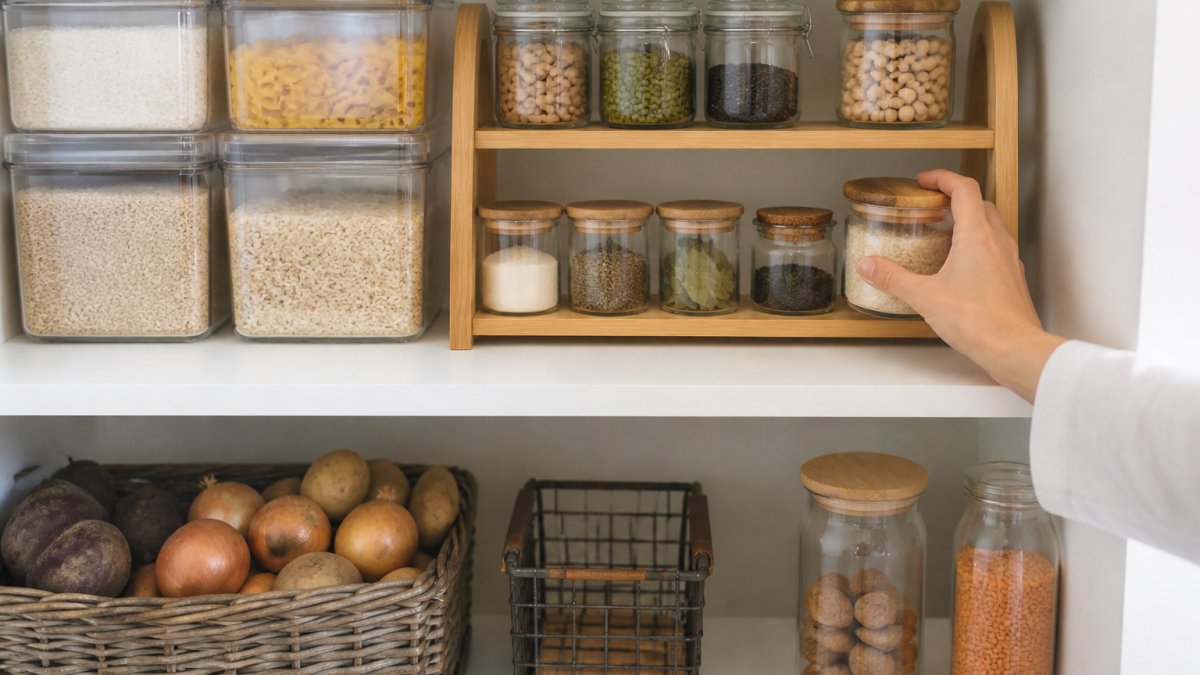
For readers avoiding plastic entirely, our guide to alternatives to plastic under sink bins covers the practical swaps in more detail. One caveat worth stating plainly: hand wash recommended means hand wash.
4. Bamboo Kitchen Cabinet Organizers: Where They Work and Where They Don't
Bamboo kitchen cabinet organizers earn their place on dry shelves and lose it everywhere else. The material is renewable, lightweight, and warm-looking, which suits open shelving and pantry risers.
Use bamboo for spice risers, jar shelves, drawer dividers, and countertop tiers. Skip it for anything sitting directly under plumbing, next to a dishwasher, or in a basement pantry with damp air.
Sinkelle PanNest Adjustable Pot Organizer →
What most guides miss is the finish. Sealed bamboo resists stains far better than raw bamboo, but even a sealed rack should never sit in standing water. Wipe up leaks the day they happen. Treat bamboo like a wooden cutting board: durable, but not waterproof.
5. Low-Waste Kitchen Organization: Sort, Refill, Repeat
Low-waste kitchen organization is a system, not a shelf.
Start with waste sorting. A dedicated bin or two under the sink, clearly labeled, stops the "throw it in the general trash" habit that sends recyclables to landfill.
Next, build a refill habit. Buy dry goods from bulk bins where available, refill the same labeled canisters each time, and skip the packaging entirely.
Then build the rotation. A first-in-first-out pantry zone works like a small grocery shelf: new purchases go to the back, older items move to the front, and a "use first" bin catches open bags and near-date items.
Close the loop on the organizers themselves. When a rack breaks, repair it before replacing it: metal racks can be re-tightened, bamboo can be sanded and resealed, and glass containers outlive their lids. When you genuinely no longer need an organizer, clean it and offer it to a neighbor, a buy-nothing group, or a local donation center before recycling it. The end-of-life question belongs at purchase, not at the curb.
That is the throughline of every idea here.
6. Renter-Friendly and No-Buy Cabinet Fixes
Renter-friendly cabinet fixes cost nothing and leave no marks. You can reorganize an entire kitchen with items you already own, and that is the most sustainable option available.
- Use existing mugs and jars as drawer dividers
- Repurpose a baking sheet as a drawer organizer tray
- Stack plates vertically using a dish rack you already have
- Hang cutting boards and utensils from existing hooks
- Group items by task so each zone holds only what belongs there
When a purchase is genuinely needed, choose no-drill options. A hanging organizer adds storage beneath a shelf without a single screw. Our CabinetFlow hanging organizer hangs under cabinets and holds paper towels, cutting boards, pot lids, and wraps, which is exactly the kind of fix a renter can install and remove without touching the wall.

Watch out: check the weight limit on any hanging rack before loading it. Overloaded hanging storage can bow a shelf or pull loose over time.
7. A Simple Sustainability Scorecard for Storage Products
A sustainability scorecard turns a vague feeling into a decision. Score each candidate organizer from 1 to 5 on five criteria, then total the score out of 25. Anything below 15 is a purchase you will likely regret.
- Material footprint: Is it renewable, recycled, or recyclable? (1 = virgin plastic, 5 = bamboo or recycled steel)
- Durability: Will it survive five years of daily use? (1 = flimsy, 5 = metal or glass)
- Repairability: Can it be fixed rather than replaced? (1 = sealed unit, 5 = tighten or replace parts)
- End of life: Can it be recycled, composted, or reused? (1 = landfill only, 5 = clean recycling stream)
- Fit to your space: Does it match measured dimensions? (1 = guessed, 5 = measured and confirmed)
Run the score before checkout, not after. Our PanNest adjustable pot organizer is a useful example of the scoring logic in practice: carbon and stainless steel construction, adjustable to fit different cookware sizes, and built to be reused rather than replaced.

That is the throughline of every idea here. Sustainable storage is not a product category; it is a habit of buying once, measuring first, and keeping what works.
Frequently Asked Questions
What materials are best for sustainable kitchen storage?
Bamboo, stainless steel, carbon steel, glass, and food-grade PET are the practical choices. Bamboo regrows quickly and suits dry pantry shelves, while metal frames hold heavier cookware without sagging. For anything that touches food, look for airtight silicone seals and BPA-free food-grade plastics. The best materials for kitchen pantry organization systems are the ones that survive daily use for years, because an organizer you replace every 18 months is not sustainable no matter what it is made of.
How can I organize kitchen cabinets without buying plastic organizers?
Start with what you already have: repurpose glass jars for dry goods, use ceramic bowls as drawer dividers, and stand cutting boards upright against the cabinet wall. Add bamboo or metal pieces only where a real gap exists, such as a tiered rack for spices or a hanging organizer under a shelf. Plastic-free pantry organization works best when you buy fewer, sturdier items instead of a full matching set you may not need.
Are bamboo kitchen cabinet organizers more sustainable than plastic ones?
Bamboo grows fast and needs little replanting, so it carries a lower material footprint than virgin plastic. It also biodegrades at end of life. The catch is moisture: bamboo can warp in damp under-sink cabinets, so keep it on dry pantry and countertop shelves. For wet zones, a metal frame lasts longer. Match the material to the location rather than assuming one option wins everywhere.
How do I reduce waste when organizing kitchen cabinets?
Three moves cut most of it. First, declutter before you shop so you do not buy storage for things you will toss. Second, decant dry goods into airtight canisters so you can see what you have and stop buying duplicates. Third, group items by use so food gets rotated and used before it expires. Low-waste kitchen organization is mostly about visibility and rotation, not about buying more containers.
How can I make the most of deep kitchen cabinets?
Deep cabinets lose usable space at the back. Pull-out shelves and two-tier sliding organizers bring the rear section forward so you can reach it without kneeling. For pots and pans, an adjustable rack that stands cookware on edge uses vertical space instead of stacking. Measure the cabinet depth and the tallest item you plan to store before buying, and leave clearance for the door to close.
The hardest part is not finding sustainable kitchen cabinet storage ideas. It is starting with the cabinet you already have instead of the one you wish you had. SinkElle builds minimalist, Scandinavian-inspired organizers with waterproof materials and tool-free installation, designed to make that first step easier: measure, sort, and add only what earns its place. Get started with SinkElle and turn the cabinet you already own into storage that lasts.
