


Table of Contents
- Why Switch From Plastic Under Sink Bins
- Stainless Steel Under Sink Organizers
- Bamboo Kitchen Cabinet Organizers
- How to Organize Under the Kitchen Sink
- Comparison of Non-Plastic Materials
- Installation and Maintenance Tips
- Conclusion
Last Updated: August 24, 2026
Why Switch From Plastic Under Sink Bins
Plastic bins have dominated under-sink storage for decades, but they come with real limitations that many homeowners overlook until they've already invested in them. Moisture, mold, warping, and that persistent chemical smell are common complaints. The real issue isn't that plastic bins don't work, it's that better alternatives now exist that actually improve your kitchen's functionality and longevity.
When you're looking for alternatives to plastic under sink bins, you're essentially asking: what materials and systems can handle the unique environment under a kitchen sink while staying organized, durable, and visually appealing? The answer depends on your priorities. Some people prioritize durability and moisture resistance. Others want an eco-friendly option that aligns with their values. Still others need something that fits around complex plumbing configurations or accommodates a garbage disposal.
The shift away from plastic reflects a broader kitchen design trend toward sustainable materials and smarter storage systems. According to the EPA's guidance on sustainable household products, choosing durable, non-plastic alternatives reduces waste and extends product lifespan, both key factors in reducing environmental impact. Homeowners who switch to alternatives to plastic under sink bins often report higher satisfaction with their organization systems, partly because these materials actually stand up to the humid, wet environment that breaks down plastic over time.
This guide covers the most practical alternatives: stainless steel organizers, bamboo storage solutions, and modern pull-out systems that transform how you access what you store. We'll also walk you through installation, maintenance, and how to choose the right system for your specific kitchen layout.
Stainless Steel Under Sink Organizers
Stainless steel is the gold standard for under-sink storage because it handles moisture better than any other material. Unlike plastic, it doesn't warp, crack, or develop that musty smell. Unlike wood, it won't rot or swell. Stainless steel organizers provide durability that typically outlasts the kitchen itself.
The key advantage is structural integrity. Stainless steel maintains its shape and strength even when exposed to water splashes, humidity, and temperature fluctuations. A quality stainless steel under-sink organizer can support significant weight without sagging, making it ideal for storing heavy cleaning supplies, bulk items, or multiple containers (astm.org). The material is also non-porous, which means bacteria and mold have nowhere to take hold.
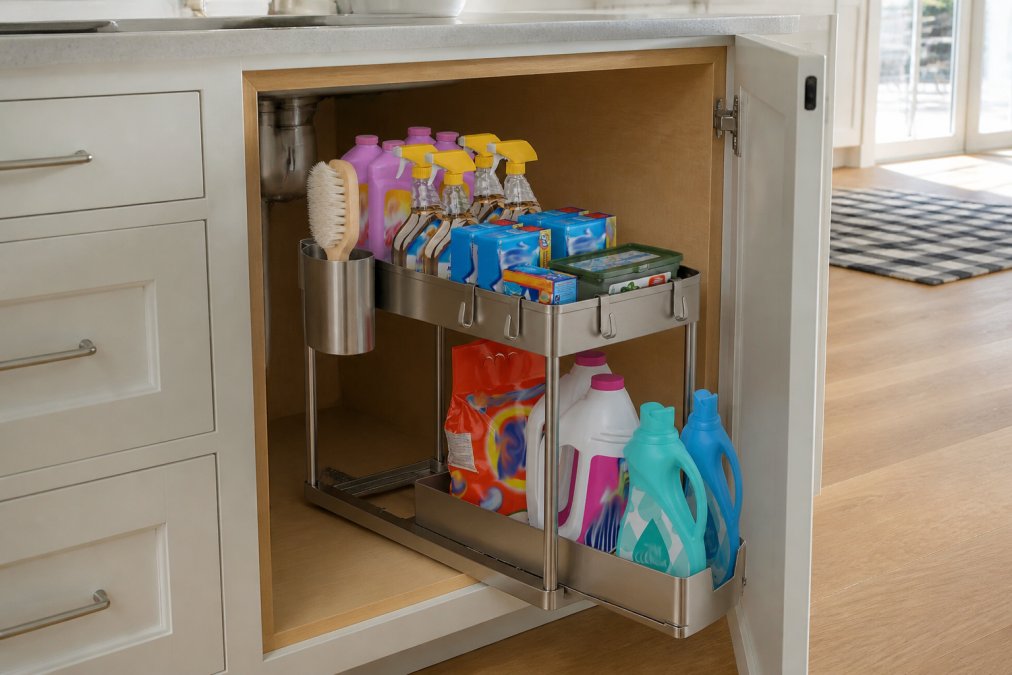
Installation is straightforward for most stainless steel systems. Many slide directly into the cabinet space without requiring any tools or permanent modifications, a major advantage if you rent or want to avoid drilling into cabinetry. The smooth metal surfaces make cleaning simple: a quick wipe with a damp cloth removes dust, spills, and buildup. Stainless steel also pairs well with minimalist kitchen aesthetics, especially Scandinavian-inspired designs that emphasize clean lines and functional beauty.
The primary trade-off is cost. Stainless steel organizers typically run higher than plastic alternatives, but the longevity justifies the investment. A quality stainless steel system will outlast multiple generations of plastic bins. For homeowners planning to stay in their home long-term or those who value durability above all else, this is the practical choice.
Weight capacity varies by design, but most stainless steel under-sink organizers can safely hold 50-100 pounds depending on the shelf configuration and support structure. This makes them suitable for storing heavy bottles, bulk cleaning supplies, or even small appliances. Plastic bins, by contrast, often degrade under sustained weight and moisture exposure.
Bamboo Kitchen Cabinet Organizers
Bamboo has emerged as the go-to eco-friendly alternative to plastic under sink bins, and for good reason. It's a rapidly renewable resource that grows to maturity in 3-5 years, making it far more sustainable than petroleum-based plastics or slow-growing hardwoods (fao.org). Bamboo is also naturally antimicrobial, which helps prevent mold and bacterial growth in the humid under-sink environment.
The aesthetic advantage is significant. Bamboo brings warmth and natural elegance to your kitchen, especially when paired with modern or Scandinavian design styles. It softens the industrial look of metal pipes and creates a more inviting space. For design-conscious homeowners who want their under-sink storage to reflect their values, both functionally and visually, bamboo organizers deliver.
Bamboo's structural properties make it surprisingly practical for this application. Quality bamboo is denser and stronger than many people assume. A well-constructed bamboo shelf or rack can support 30-50 pounds comfortably, which covers most household storage needs under the sink. The material is also naturally moisture-resistant when properly finished, though it requires more maintenance than stainless steel or plastic.
Here's what matters: not all bamboo is created equal. Cheap bamboo organizers often use thin veneer over particle board, which swells and delaminate when exposed to moisture. Invest in solid bamboo construction with a water-resistant finish (typically a food-safe varnish or oil coating). This protects the material from humidity and extends its lifespan significantly.
The SinkElle 2-Tier Pantry Storage Rack, made from premium bamboo, exemplifies this approach. Starting at $71.99, it provides a durable, eco-friendly storage solution that maximizes vertical space while maintaining the sophisticated aesthetic of a well-designed kitchen. The adjustable design accommodates different cabinet depths, making it flexible for various kitchen configurations.

Maintenance for bamboo organizers is straightforward but necessary. Wipe spills immediately to prevent water absorption. Every few months, apply a food-safe wood conditioner or oil to maintain the finish and protect against moisture penetration. This takes minimal effort but extends the life of your organizer significantly.
How to Organize Under the Kitchen Sink
Organizing under the sink is fundamentally different from organizing a typical cabinet because of plumbing constraints, moisture exposure, and the awkward angles created by pipes and a garbage disposal. The best approach accounts for these realities rather than fighting against them.
Start by assessing your space honestly. Measure the cabinet depth, width, and height. Note where the main water supply line enters, where the drain exits, and whether you have a garbage disposal. Identify any sharp edges or protruding hardware that could damage organizers or your hands. This 10-minute assessment prevents purchasing systems that won't actually fit your space.
Pull-Out Track Systems for Maximum Access
Pull-out track systems are the game-changer for under-sink organization. These sliding drawers or shelves glide out smoothly on ball-bearing tracks, giving you full access to items stored at the back of the cabinet without having to reach awkwardly or remove everything in front.
The Sinkelle 2 SlideNest Organizer ($55.99) exemplifies this approach. Its two-tier pull-out design with smooth sliding drawers maximizes the usable space while making every item accessible. Instead of digging through a static bin, you slide out the drawer and grab what you need. This simple difference transforms under-sink storage from frustrating to functional.
Installation requires no tools. Most pull-out systems use friction-fit or adhesive-backed mounting hardware that secures to the cabinet frame. This non-permanent approach appeals to renters and homeowners who want to avoid drilling. The smooth gliding action depends on quality ball-bearing tracks, cheap systems with plastic slides will stick and jam within months.
Weight capacity matters here. Quality pull-out systems can handle 50-75 pounds per drawer, which covers cleaning supplies, bulk items, and household essentials. Distribute weight evenly across the drawer to prevent tilting or derailing.
Vertical Storage and Stacking Solutions
When horizontal space is limited, go vertical. Stacking organizers and vertical racks use the full height of your cabinet, effectively tripling your storage capacity compared to a single shelf. This approach works especially well in apartments and smaller kitchens where cabinet footprint is precious.
The Sinkelle FlowCart Storage Rack ($30.99) demonstrates vertical efficiency. Its multi-tier rolling design fits into narrow gaps and provides multiple levels of storage. The smooth-rolling wheels allow you to slide the entire unit in and out, making items at the back accessible without removing everything in front.
Stacking solutions work best when you group items by category: cleaning supplies on one tier, under-sink essentials on another, and bulk items on a third. This organization system reduces clutter and makes it easy to find what you need quickly.
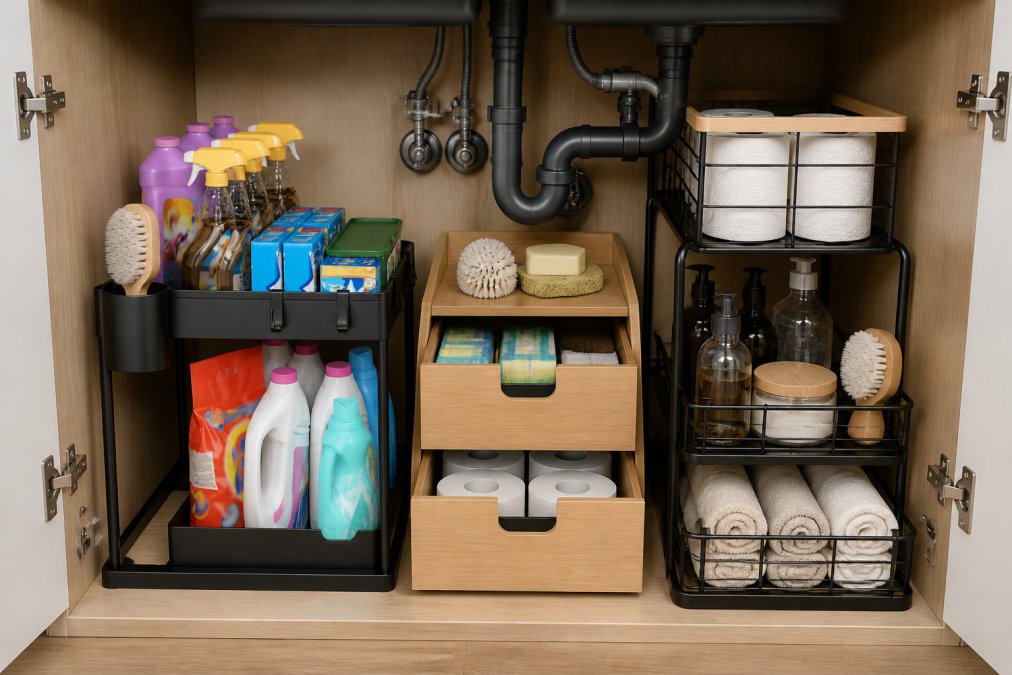
The key to successful vertical storage is stability. Ensure your stacking system is anchored or weighted so it doesn't tip when you pull out drawers or access items on upper tiers. Top-heavy configurations create safety hazards and instability.
Comparison of Non-Plastic Materials
| Material | Durability | Moisture Resistance | Cost | Eco-Friendly | Best For |
|---|---|---|---|---|---|
| Stainless Steel | Excellent (20+ years) | Excellent | $40-80 | Recyclable | Heavy items, high humidity |
| Bamboo | Good (8-12 years) | Good with finish | $35-75 | Yes | Aesthetic appeal, eco-conscious users |
| Metal (Powder-Coated) | Very Good (15+ years) | Very Good | $30-60 | Recyclable | Budget-conscious, durability |
| Resin/Composite | Fair to Good (5-10 years) | Fair | $25-50 | No | Light items, temporary solutions |
The comparison reveals a clear pattern: materials that resist moisture and support weight cost more upfront but deliver better long-term value. Stainless steel and quality bamboo dominate because they balance durability, aesthetics, and practical performance.
The choice ultimately depends on your priorities. If you rent and want a temporary, affordable solution, resin organizers work fine. If you own your home and plan to stay long-term, stainless steel delivers the best value per year of use. If you prioritize environmental impact and design aesthetics, bamboo with a quality finish is the sweet spot.
Installation and Maintenance Tips
Most modern under-sink organizers are designed for tool-free installation, which is a significant advantage. The Sinkelle CabinetFlow Hanging Organizer ($44.99) hangs beneath cabinets without any drilling, creating additional storage in otherwise wasted space. This approach works for renters and homeowners who want to avoid permanent modifications.

For pull-out systems, ensure the cabinet floor is clean and level before installation. Use a level to check, even slight slopes can cause drawers to slide unexpectedly. If your cabinet floor is uneven, shim it with thin plastic shims until it's level.
Maintenance varies by material. Stainless steel requires minimal care: wipe with a damp cloth and dry immediately to prevent water spots. Bamboo needs periodic conditioning with food-safe oil to maintain the water-resistant finish. Metal organizers benefit from occasional wiping to prevent rust or dust buildup.
The most important maintenance task is preventing moisture accumulation. Ensure your cabinet has adequate ventilation by leaving the doors open occasionally or installing a small ventilation fan if humidity is a persistent issue. Use moisture-absorbing packets or containers to control humidity in closed cabinets. This simple step extends the life of any organizer material.
Check pull-out systems quarterly to ensure smooth operation. If drawers start sticking, clean the tracks with a dry cloth and apply a small amount of silicone-based lubricant (not oil-based, which attracts dust). This maintenance takes five minutes and prevents costly damage.
Conclusion
Switching from plastic under sink bins to durable, moisture-resistant alternatives transforms your kitchen organization from a frustrating experience to a functional system that actually works. Whether you choose stainless steel for maximum durability, bamboo for eco-friendly aesthetics, or a hybrid approach combining materials, the key is selecting organizers designed for the unique moisture and plumbing challenges of under-sink storage.
SinkElle's collection of organizers, from the durable 2 SlideNest Organizer with smooth pull-out drawers to the eco-friendly 2-Tier Pantry Storage Rack in premium bamboo, provides sophisticated, minimalist solutions that maximize your sink area while maintaining the elegant design aesthetic your kitchen deserves. Shop Now and experience how the right organization system transforms your kitchen's functionality and appearance in minutes.

Frequently Asked Questions
Q: What are the most durable materials for alternatives to plastic under-sink storage?
A: Stainless steel, bamboo, and powder-coated metal are among the most durable alternatives to plastic. Stainless steel resists moisture and corrosion, making it ideal for under-sink environments where water exposure is frequent. Bamboo offers natural durability and eco-friendly appeal, though it requires occasional sealing to resist moisture. Metal organizers with rust-resistant finishes provide structural integrity and can support heavier loads than plastic bins. These materials typically offer good longevity with proper maintenance.
Q: How do I organize under the kitchen sink without using plastic bins?
A: Start by measuring your cabinet space and identifying plumbing clearance. Use pull-out track systems like the Sinkelle 2 SlideNest Organizer to maximize accessibility. Layer vertical storage with stainless steel or bamboo shelving units. Group items by category: cleaning supplies, trash, and recycling. Place moisture-resistant organizers near the cabinet back, away from active plumbing. Install a hanging organizer under the cabinet for frequently used items. Leave space around pipes for ventilation to prevent mold growth.
Q: Are bamboo kitchen cabinet organizers better than stainless steel for under-sink storage?
A: Each has distinct advantages. Bamboo organizers offer a minimalist aesthetic, are eco-friendly, and may cost less initially, but require sealing to resist moisture in under-sink environments. Stainless steel organizers are more moisture-resistant, require minimal maintenance, and support heavier loads, but may cost more upfront. For under-sink specifically, stainless steel is often considered more practical due to constant moisture exposure. Bamboo works well for general cabinet organization in drier areas. Choose based on your cabinet conditions and design priorities.
Q: Can I use pull-out sliding systems in a cabinet with limited clearance around plumbing?
A: Yes, but measure carefully first. Most pull-out systems like the Sinkelle 2 SlideNest require adequate usable height and depth. Check for garbage disposal units, p-traps, and water supply lines. Position organizers around plumbing rather than directly underneath. Avoid blocking access to shut-off valves. Slim, vertical organizers may work better in tight spaces than wide pull-out systems. Consider a hanging organizer under the cabinet instead if floor space is severely limited.
Q: What's the difference between eco-friendly under-sink storage and standard plastic bins?
A: Eco-friendly alternatives use sustainable, non-toxic materials like bamboo, stainless steel, or recycled metals instead of petroleum-based plastics. They're designed for reusability and longevity, reducing waste over time. Plastic bins can degrade faster and may end up in landfills. Eco-friendly options often resist moisture and mold without chemical coatings, are often modular for repair rather than replacement, and align with sustainable living practices. While initially more expensive, they can reduce long-term replacement costs and environmental impact.
This article was written using GrandRanker