


Table of Contents
- Suction Cup vs Adhesive Kitchen Storage: Key Differences
- Suction Cup Weight Capacity Limits and Load-Bearing Performance
- Adhesive Storage: Strength, Durability, and Long-Term Adhesion
- Surface Compatibility: Where Each Method Works Best
- Minimalist Sink Organization Ideas Using Both Methods
- How to Remove Adhesive Hooks Without Damage
- Humidity, Temperature, and Durability in Kitchen Environments
- Making the Right Choice for Your Kitchen
- Frequently Asked Questions
Last Updated: September 2, 2026
Suction Cup vs Adhesive Kitchen Storage: Key Differences
When organizing a kitchen with limited counter space, the choice between suction cup vs adhesive kitchen storage comes down to permanence: how long do you want your solution to last? Suction cups and adhesive hooks solve the same problem, vertical storage without drilling, but work through entirely different mechanisms. Suction cups create a vacuum seal against non-porous surfaces using atmospheric pressure. Adhesive hooks bond directly to walls using strong adhesive residue, creating a more permanent fixture.
The choice affects installation, longevity, compatible surfaces, and potential wall damage upon removal. Most homeowners discover too late that one method works beautifully in their bathroom but fails above the kitchen sink, where humidity, temperature swings, and splashing water create a uniquely hostile environment.
The American Chemical Society's research on adhesive bonding shows that adhesive performance degrades significantly in high-humidity environments, which is precisely why kitchen conditions test both methods so severely.
Suction Cup Weight Capacity Limits and Load-Bearing Performance
A quality suction cup typically holds between 2 and 5 pounds per cup, depending on diameter and surface quality (the FTC). Real-world performance often falls short of manufacturer specifications, especially in kitchens where humidity and temperature fluctuations weaken the vacuum seal over time.
Load-bearing limits depend on three critical factors: surface material, suction cup size, and environmental conditions. A 3-inch suction cup on perfectly smooth glass might hold 5 pounds consistently, while the same cup on slightly textured tile could fail at 2 pounds. The vacuum seal weakens as moisture enters, a common problem in kitchens where steam and splashing water are unavoidable.
Suction cups lose effectiveness gradually, not suddenly. You might notice storage slowly sagging over weeks, or one cup failing while others hold firm. This unpredictability makes them risky for heavy items. They work beautifully for lightweight organizers, soap dispensers, and small shelves holding sponges or cleaning cloths, items under 2 pounds that won't cause panic if they fall.
The vacuum mechanism requires completely clean, non-porous surfaces. Any dust, soap residue, or microscopic texture reduces the seal. In a kitchen sink area, you'll battle constant moisture and grime buildup, requiring weekly surface cleaning and cup re-seating to maintain reliable hold.
Adhesive Storage: Strength, Durability, and Long-Term Adhesion
Adhesive hooks offer dramatically higher weight capacity than suction cups, typically holding 5 to 15 pounds per hook. This makes them suitable for heavier storage solutions and items you depend on staying put. The adhesive residue creates a permanent bond that doesn't degrade with humidity the way suction cups do.
Once the adhesive cures, usually within 24 to 48 hours, it becomes remarkably stable. Unlike suction cups, which weaken gradually, adhesive hooks maintain consistent holding power for months or years. This reliability is why designers prefer them for permanent kitchen installations.
However, long-term adhesion in kitchens presents a genuine challenge. The adhesive is vulnerable to temperature swings from hot water and dishwasher use. Over 6 to 12 months of regular kitchen use, the bond can weaken at the edges, causing the hook to tilt or fail. This happens more frequently in kitchens than other rooms because of constant thermal cycling.
Surface preparation is absolutely critical. The surface must be clean, dry, and free of oils or residue. Many failures occur because homeowners skip this step or don't wait for full cure before loading weight. Adhesive performs best on smooth, non-porous surfaces like glass, tile, and laminate. Textured walls and painted drywall are riskier.
Surface Compatibility: Where Each Method Works Best
Different kitchen surfaces favor different storage methods. Choosing the wrong one for your specific backsplash is the most common cause of failure.
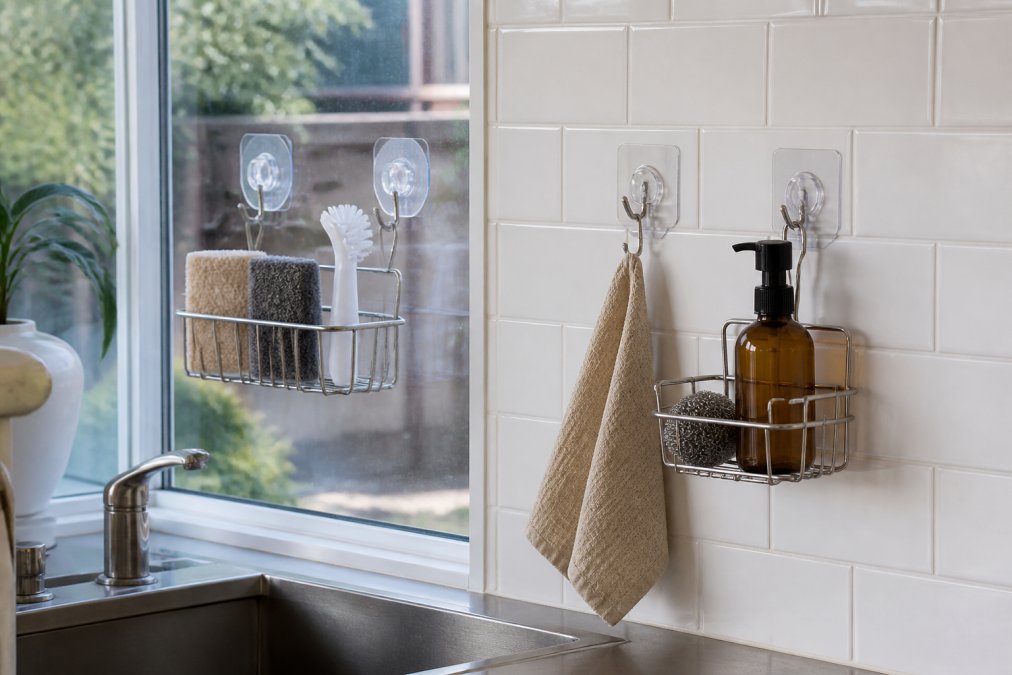
Glass and mirror surfaces are ideal for both methods, but they favor suction cups slightly. The smooth, non-porous glass creates a perfect vacuum seal. Adhesive hooks also work on glass but are overkill for lightweight items. If you might reconfigure storage later, suction cups are better on glass.
Tile and ceramic backsplashes are where adhesive hooks excel. The smooth, glazed surface provides excellent bonding and can hold substantial weight reliably. Suction cups struggle on tile because grout lines and slight texture prevent a complete seal. Even high-quality suction cups often fail within weeks.
Stainless steel around the sink presents a paradox: it's non-porous but often slightly oily or coated, preventing a strong suction seal. Adhesive hooks designed for metal surfaces perform better, though you must use a formula specifically rated for metal bonding.
Painted drywall is the worst surface for both methods. Suction cups won't seal against textured drywall, and adhesive hooks rely on the paint layer holding firm, which it often doesn't. Consider a no-drill tension rod or magnetic strip mounted to the stud instead.
Laminate and Formica countertops work reasonably well with adhesive hooks on clean, smooth surfaces. Suction cups struggle because slight texture and microscopic air gaps prevent reliable seals.
Surface texture and cleanliness matter more than material itself. A dusty, oily tile backsplash will reject both methods. Clean and dry your chosen surface thoroughly before installation, this single step dramatically improves success rates.
Minimalist Sink Organization Ideas Using Both Methods
The most effective kitchen sink organization strategies combine both suction cups and adhesive hooks, using each where it performs best. This hybrid approach provides flexibility for lightweight, frequently-moved items and stability for permanent fixtures.
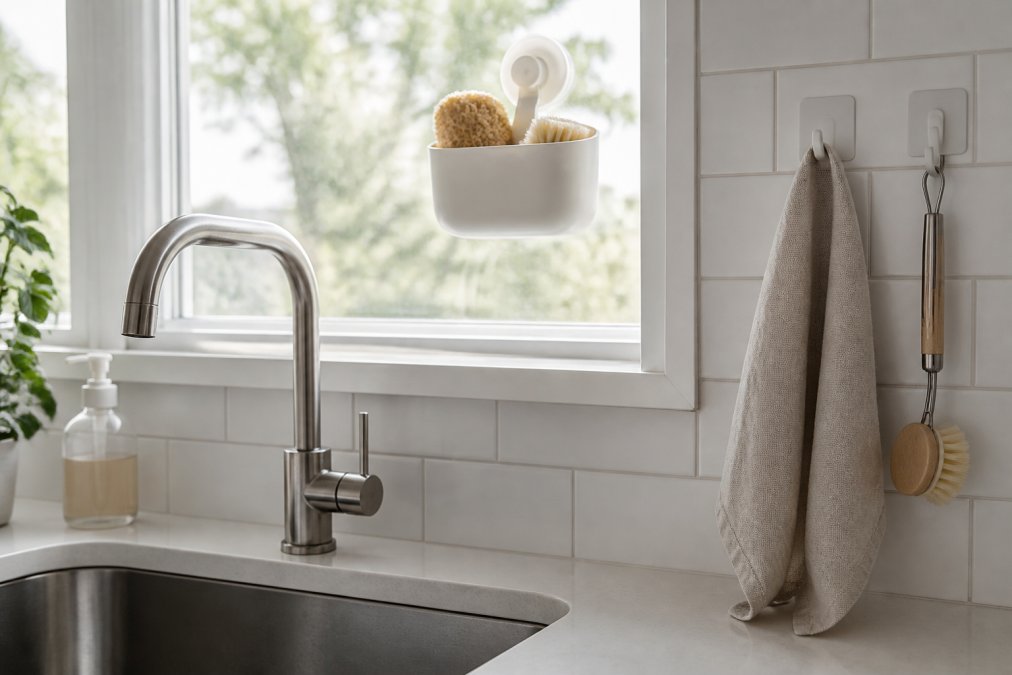
Layer your storage vertically. Use adhesive hooks on your backsplash to hold a linen towel and small brush organizer. Mount a suction cup caddy on the window or glass partition to hold sponges and cleaning supplies, allowing weekly removal and cleaning without wall damage.
Separate temporary from permanent. Adhesive hooks suit items staying in one place: dish towels, cloths, utensil holders. Suction cups suit frequently-moved items: soap dispensers, sponge holders, or organizers you clean and reposition regularly.
Embrace negative space. A single adhesive hook holding a quality linen towel, paired with one well-placed suction cup caddy, creates a cleaner aesthetic than multiple scattered hooks. SinkElle's philosophy centers on sophisticated organization that doesn't overwhelm your sink area visually.
Choose complementary materials. Stainless steel suction cup caddies and matte-finish adhesive hooks blend seamlessly into modern kitchens. Avoid bright plastic or chrome finishes for a Scandinavian-inspired look.
Test before committing. If renting or unsure about permanence, start with suction cups on glass surfaces and reserve adhesive hooks only for items you're certain will stay.
How to Remove Adhesive Hooks Without Damage
Removing adhesive hooks without leaving marks requires patience and proper technique. Rushing almost guarantees surface damage.
Apply heat and gentle tension simultaneously. Use a hair dryer set to medium heat, holding it 6 inches from the hook for 30 to 60 seconds. The heat softens the adhesive. Once warm, gently pull the hook away at a 45-degree angle, moving slowly and steadily rather than jerking. If it resists, apply more heat and wait longer.
For stubborn residue remaining after hook removal, rubbing alcohol or adhesive remover can help. Apply the liquid, wait a few minutes, and gently rub with your fingernail or plastic scraper. Avoid metal scrapers, which damage tile or paint. Never use excessive force.
Surface quality determines how forgiving removal is. Smooth tile and glass forgive aggressive methods; painted drywall and matte finishes are far less forgiving. On delicate surfaces, prioritize gentleness even if it takes longer.
The best removal strategy is prevention: use lower-quality hooks for experimental layouts, saving premium hooks for permanent installations. If renting or uncertain, suction cups eliminate removal concerns entirely.
Humidity, Temperature, and Durability in Kitchen Environments
Kitchen conditions are uniquely hostile to both storage methods. Understanding how humidity and temperature affect each helps you choose the right solution.
Suction cups weaken predictably in humid kitchens. Moisture infiltrates the seal, reducing vacuum effectiveness. You might notice sagging after weeks of daily use near the sink. Most homeowners need to re-seat suction cups monthly in active kitchens.
Adhesive hooks handle humidity better but face different challenges from temperature swings. Hot water and dishwasher use raise sink-area temperatures, causing adhesive expansion. When the kitchen cools, it contracts. Over months, this thermal cycling weakens the bond at edges, causing tilting or lifting. Poor ventilation and frequent cooking accelerate degradation.
Durability differs substantially: suction cups last 2 to 6 months in active kitchen use before requiring replacement or re-sealing. Adhesive hooks last 6 to 18 months, depending on surface quality and conditions. Neither is truly "permanent" in a kitchen.
Materials matter significantly. Suction cups made from silicone or TPE resist humidity better than rubber. Adhesive formulations rated for "high-humidity" or "kitchen" use perform better than generic hooks. Premium options' superior material composition directly translates to longer lifespan.
Research from the Journal of Adhesion Science and Technology demonstrates that adhesive performance in humid environments depends heavily on polymer composition and cure time.
Making the Right Choice for Your Kitchen
The decision between suction cup vs adhesive kitchen storage depends on your surface type, commitment to permanence, and tolerance for maintenance.
Choose suction cups if:
- Your backsplash is glass, mirror, or very smooth tile
- You're renting and want zero wall damage risk
- You store lightweight items (under 2 pounds per cup)
- You're willing to clean and re-seat cups monthly
- You like layout flexibility
- You have limited counter space needing maximum adaptability
Choose adhesive hooks if:
- Your backsplash is tile, laminate, or smooth painted drywall
- You want a permanent, stable solution
- You're storing heavier items or multiple organization layers
- You're willing to wait 24-48 hours for cure before loading
- You plan to keep your layout consistent for at least 6 months
- You prioritize aesthetics and intentional design
For most homeowners, the hybrid approach works best: suction cups for flexibility and temporary items, adhesive hooks for permanent fixtures and heavier loads.
SinkElle's minimalist storage solutions work seamlessly with both installation methods, allowing you to choose the approach fitting your kitchen and lifestyle. The key is starting with an honest assessment of your surfaces, needs, and timeline. Test your chosen method on a less visible area first, this single step prevents costly mistakes and ensures your kitchen organization works long-term.
Frequently Asked Questions
Can suction cups hold up on stainless steel sinks?
Suction cups struggle on stainless steel because the surface is too smooth and non-porous for a strong vacuum seal. They may work briefly but often slip under weight. Adhesive hooks perform better on stainless steel, though surface preparation is critical. For reliable suction cup weight capacity limits on steel, most standard cups max out at 2-3 pounds before failing. Adhesive options typically hold 5-10 pounds depending on the bonding agent and surface texture.
How do you remove adhesive storage without damaging kitchen surfaces?
Gently pull adhesive hooks at a 45-degree angle rather than straight out to avoid gouging walls or tile. Apply heat with a hairdryer for 30 seconds to soften the adhesive before removal. For stubborn residue, use rubbing alcohol or a plastic scraper, never metal tools on delicate surfaces. Test on a small area first. Some adhesive removal products are designed specifically to dissolve bonding agents without harming paint or finishes.
What surfaces do suction cups not work on?
Suction cups fail on textured surfaces like brick, stone, or rough tile because they cannot form an airtight seal. They also won't stick to porous materials like unfinished wood, fabric, or cork. Stainless steel and powder-coated metals are too smooth for reliable grip. Wet surfaces reduce suction effectiveness. For these incompatible surfaces, adhesive hooks are the better choice, though surface preparation is essential for long-term adhesion.
Is adhesive or suction cup better for heavy-duty kitchen storage?
Adhesive storage wins for heavy-duty applications because bonding agents create stronger tensile strength than vacuum seals. Adhesive hooks can hold 8-15 pounds depending on the product and surface, while most suction cups max out at 3-5 pounds. However, adhesive requires proper surface preparation and curing time. For renter-friendly, temporary solutions, suction cups offer no-drill installation and easier removal, though they're limited to lighter loads.
Organizing your kitchen sink area shouldn't require permanent wall damage or constant maintenance. SinkElle's tool-free installation system works with both suction cup and adhesive methods, giving you sophisticated, minimalist storage that adapts to your space. Our waterproof, Scandinavian-inspired designs maximize your sink area while maintaining the clean aesthetic you're after. Shop now and transform your kitchen in minutes, no tools, no drilling, no regrets.
This article was written using GrandRanker