


Table of Contents
- How to Organize Small Kitchen Without Cabinets: The Foundation
- How to Maximize Kitchen Counter Space With Vertical Storage
- Best Kitchen Organizers for Small Spaces: Furniture-Based Solutions
- Open Shelving Kitchen Organization: Decluttering and Display
- Under-Sink Organization: Maximizing Hidden Storage
- Rental-Friendly Installation: No-Damage Organization Methods
- Common Mistakes to Avoid When Organizing Without Cabinets
- Conclusion
Last Updated: August 27, 2026
How to Organize Small Kitchen Without Cabinets: The Foundation
Organizing a small kitchen without cabinets forces you to think vertically and strategically about every inch of available space. At SinkElle, we understand that limited cabinetry is an opportunity to design a kitchen that's both functional and beautiful. Whether you're renting, living in a compact apartment, or prefer an open aesthetic, learning how to organize small kitchen without cabinets transforms your entire cooking experience.
The real challenge is finding smart storage. A cluttered countertop wastes precious workspace and makes your kitchen feel cramped. The solution involves layering multiple storage strategies, wall-mounted racks, rolling carts, under-sink organizers, and open shelving, that work together as an integrated system to maximize every usable surface.
We'll cover proven methods to reclaim counter space, furniture-based solutions that don't require permanent installation, strategies for displaying items beautifully while keeping them accessible, and rental-friendly approaches that leave no damage behind.
How to Maximize Kitchen Counter Space With Vertical Storage
Vertical storage is the single most effective way to organize small kitchen without cabinets. Instead of spreading items across limited counter real estate, move them up the walls. This approach immediately opens up workspace while keeping everything within arm's reach.
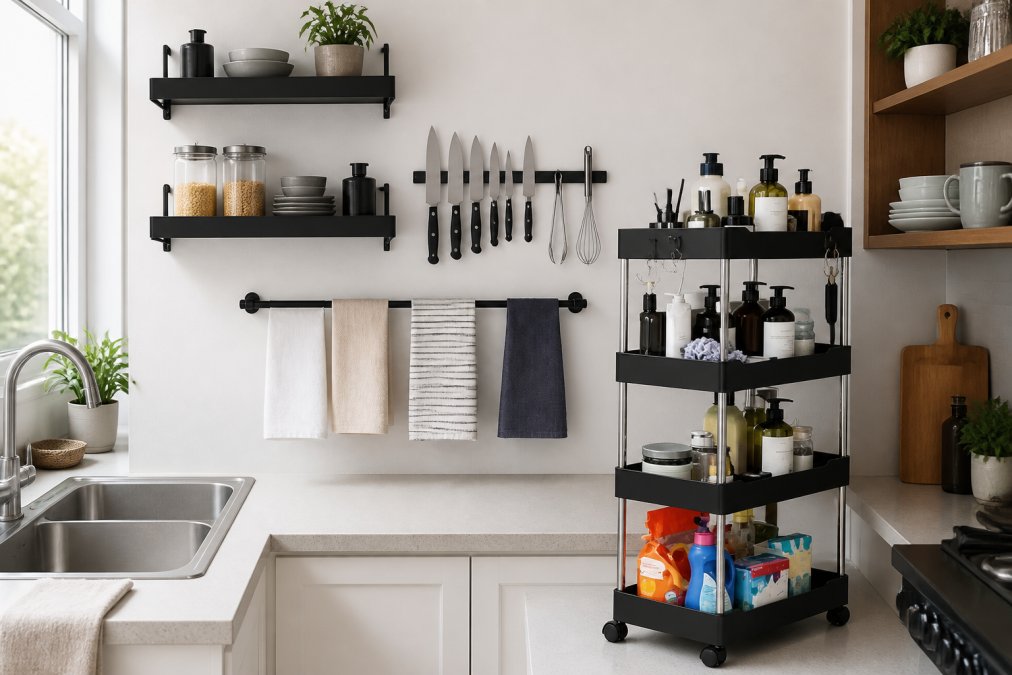
Wall-Mounted Racks and Shelving
Wall-mounted racks and shelving are the foundation of vertical organization. Open shelving works particularly well above the sink or along a blank wall. The key is being intentional about what you display: coffee mugs, frequently used spices, everyday plates, and cooking utensils are ideal candidates. Avoid cramming shelves with decorative items that collect dust and block access to what you actually need.
Installation matters. Many wall-mounted solutions require drilling, which isn't an option if you're renting. Tension rods, adjustable metal bars that fit between walls, offer a no-drill alternative and are surprisingly sturdy when installed correctly. Adhesive-backed strips and damage-free mounting systems have improved dramatically, though they work best on flat, smooth walls.
The Sinkelle CounterRise 2-Tier Shelf is designed specifically for this purpose, offering a rust-resistant metal structure that maximizes vertical space without requiring permanent installation.

Magnetic Strips and Hanging Rods
Magnetic strips hold metal utensils, knives, measuring spoons, and scissors securely while keeping them visible and accessible. A single magnetic strip mounted on the wall beside your stove eliminates the need for a utensil drawer.
Hanging rods, tension rods, or simple wooden dowels work similarly. Thread them through pot handles, hang kitchen towels, or attach S-hooks to hold measuring cups and ladles. Tension rods are especially valuable because they require zero permanent installation and can be repositioned anytime.
Best Kitchen Organizers for Small Spaces: Furniture-Based Solutions
When walls are full or you need more flexibility, furniture-based storage becomes your second line of defense. Rolling carts, bookcases, and kitchen islands designed for small spaces offer substantial storage without permanent installation.
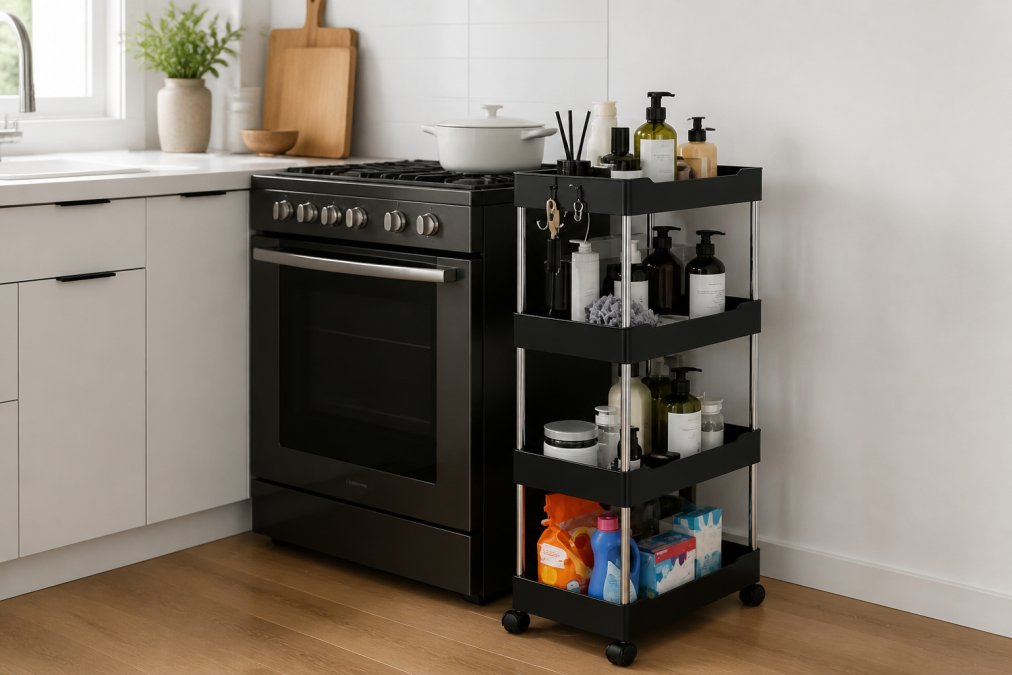
Furniture solutions are particularly valuable for renters because they're completely portable and leave no trace on walls or plumbing.
Rolling Utility Carts and Kitchen Islands
A rolling utility cart is perhaps the most versatile single piece for organizing a small kitchen without cabinets. These carts come in various widths, from narrow 12-inch models that fit between appliances to wider 20-inch versions that offer more storage capacity.
The Sinkelle FlowCart Storage Rack is engineered specifically for tight spaces, fitting into narrow gaps between appliances and countertops. Its multi-tier design lets you organize by category: spices on one level, cooking oils on another, frequently used pots on a third. When you're not actively cooking, roll it out of the way to reclaim floor space.

Kitchen islands designed for small spaces, like the Sinkelle RollCrest Kitchen Island Cart, combine storage, workspace, and mobility. These typically feature a drop-leaf or fold-out top that extends your prep surface when needed, then tucks away to reclaim floor space. Built-in storage compartments hold cookware, linens, and pantry items. Some models include power strips for charging devices or running small appliances.
Bookcases and Open Shelving Units
Standard bookcases work surprisingly well in small kitchens. A tall, narrow bookcase against an empty wall provides multiple shelves for organizing dishes, bowls, glasses, and pantry items at a fraction of the cost of custom kitchen shelving.
Choose sleek, minimalist designs with clean lines in neutral colors, white, black, natural wood, or stainless steel, that complement your kitchen's existing palette. Avoid ornate designs that add visual clutter.
Organization within the bookcase follows the same principle as open shelving: group items by category and frequency of use. Daily-use items go at eye level. Less frequent items go higher or lower. Heavy items like serving bowls go on lower shelves for stability and safety.
Open Shelving Kitchen Organization: Decluttering and Display
Open shelving forces you to confront a hard truth: you can't hide clutter. This is actually a strength. When everything is visible, you naturally maintain better organization because disorganization is impossible to ignore.
Before installing open shelving, ruthlessly declutter. Ask yourself: Do I use this item at least once a month? Does it serve a purpose? Is it something I actually enjoy looking at? Items that don't meet these criteria should be donated, sold, or discarded.
Group similar items together and use matching containers for dry goods to create visual consistency. Clear glass containers let you see what's inside and when you're running low. Uniform sizing and color reduce visual noise.
Lighting matters more with open shelving than with closed cabinets. Consider adding under-shelf LED strips, which are inexpensive and require minimal installation. This illuminates the shelves below, making items easier to find and making your kitchen feel brighter overall.
Resist the urge to display every kitchen item you own. Curate what you show. A few beautiful pieces displayed well creates a more sophisticated look than crowded shelves.
Under-Sink Organization: Maximizing Hidden Storage
The area under your sink is often wasted space. Pipes, plumbing, and the garbage disposal create awkward angles that seem impossible to work around. But with the right approach, this space can hold a surprising amount of useful items.
Organizing Around Plumbing Obstacles
Measure your available space carefully, accounting for pipes, shut-off valves, and drain lines. Take photos from multiple angles so you remember exactly where everything is positioned.
Tiered shelf risers create multiple levels within your under-sink cabinet, effectively doubling or tripling your storage capacity. Choose risers specifically designed for under-sink use, as they account for pipe placement and typically have cutouts for plumbing.
Pull-out drawers and sliding organizers work better than fixed shelves in tight spaces. They let you access items at the back without removing everything in front.
Store cleaning supplies, dish soap, sponges, trash bags, recycling containers, and paper towels under the sink. Some people also store backup pantry items or small appliances. The key is keeping everything in waterproof, sealed containers because under-sink areas are prone to moisture and occasional leaks.
Waterproof Storage Solutions
Moisture is the enemy under the sink. Use waterproof containers with tight-sealing lids, not cardboard or fabric, for everything stored here. Avoid storing anything that would be ruined by water.
Waterproof shelf liners protect your shelves from moisture damage and make cleanup easier if a small leak occurs. Check under your sink monthly for signs of leaks. Even small drips can cause mold growth or water damage over time.
Rental-Friendly Installation: No-Damage Organization Methods
If you're renting, permanent installation is off-limits. Fortunately, excellent no-damage solutions exist.
Tension rods are your most versatile tool. They work horizontally between walls, vertically in corners, and even diagonally in tight spaces. They hold significant weight, often 20-40 pounds depending on the rod and wall type, without any installation beyond twisting to tighten. They leave zero marks or damage.
Adhesive strips and command hooks have evolved dramatically. Modern damage-free strips hold items weighing several pounds and remove cleanly without leaving residue. The key is following installation instructions precisely: clean the wall thoroughly, apply the strip firmly for 30 seconds, and wait the recommended time before hanging anything.
Freestanding furniture, carts, bookcases, shelves, requires no installation at all. Everything sits on the floor and can be moved anytime. This is why the Sinkelle FlowCart Storage Rack and RollCrest Kitchen Island Cart are so valuable for renters.

Over-the-door organizers hang on existing doors without damaging them. Pantry doors, cabinet doors, and even exterior doors can hold hanging organizers with pockets, baskets, or hooks.
Common Mistakes to Avoid When Organizing Without Cabinets
The most common mistake is overestimating how much you can store in open spaces. Visible clutter makes small kitchens feel smaller. Edit ruthlessly and keep only items you use regularly or genuinely love looking at.
Another mistake is ignoring the visual impact of organization. Open shelves need to look intentional and curated. Group similar items, use matching containers, and leave breathing room between objects.
Poor lighting makes open shelving look dark and uninviting. If your shelves aren't well-lit, add LED strips.
Placing heavy items on upper shelves is a safety hazard. Keep heavier items on lower shelves where they won't fall and cause injury. This also improves visual balance.
Ignoring moisture in under-sink areas leads to mold, mildew, and water damage. Check regularly, use waterproof containers, and address leaks immediately.
Choosing aesthetically wrong organizers for your kitchen wastes money. Before buying, consider how the organizer looks in your space, not just whether it functions.
Organizing a small kitchen without cabinets requires intentional choices about what you keep, where you store it, and how you display it. The strategies we've covered, vertical storage, furniture-based solutions, smart under-sink organization, and rental-friendly methods, work together to create a kitchen that's both functional and beautiful.
SinkElle's purpose-built solutions like the FlowCart Storage Rack and RollCrest Kitchen Island Cart are designed specifically for this challenge. Their minimalist Scandinavian aesthetic, waterproof materials, and tool-free installation make them ideal for small spaces where every inch matters. Start with one piece that addresses your biggest pain point, then build your system from there.
American Rental Housing Association guidelines on tenant improvements
National Kitchen and Bath Association small space design standards
Consumer Product Safety Commission guidance on wall-mounted storage safety
Frequently Asked Questions
How can I organize my kitchen if I don't have cabinets?
Use a combination of vertical storage solutions: wall-mounted shelves, magnetic strips for utensils, and hanging rods for towels or pots. Add furniture-based storage like rolling carts or open shelving units. For under-sink areas, install drawer organizers and containers around plumbing. The key is using your walls and vertical space instead of relying on cabinet storage. Products like the Sinkelle CounterRise 2-Tier Shelf ($34.99) and FlowCart Storage Rack ($30.99) maximize storage without permanent installation.
What's the best way to organize a small kitchen without damaging walls for renters?
Choose tension rods, adhesive-backed magnetic strips, and over-the-door organizers that require no drilling or wall damage. Use removable shelving systems and freestanding furniture like rolling carts and bookcases. Tension rods fit between walls or inside existing frames without permanent installation. The Sinkelle FlowCart rolls into tight spaces and requires no installation at all. Always test adhesive products on a small area first, and use removable hooks rated for your wall type.
How do I keep open shelving from looking cluttered and dusty?
Declutter ruthlessly: keep only items you use weekly or that add visual value. Group similar items together using matching containers or baskets to create visual harmony. Wipe shelves weekly with a microfiber cloth to manage dust. Use glass-front containers for frequently accessed items like spices or snacks. Maintain a minimalist aesthetic by limiting the number of items per shelf and leaving breathing room. Open shelving works best when you commit to regular maintenance and intentional curation.
Can I organize under my sink if I have a garbage disposal and unusual plumbing?
Yes, but plan carefully around your plumbing layout. Measure the exact space and identify which areas are accessible. Use shallow, stackable containers that fit between pipes and the disposal unit. Avoid storing anything flammable or moisture-sensitive. Install pull-out sliding organizers or tiered racks that work with your specific plumbing configuration. If space is severely limited, use the area only for cleaning supplies in waterproof containers. Consider moving frequently used items to wall-mounted storage or rolling carts instead.
This article was written using GrandRanker