


Table of Contents
- Measure Your Cabinet Space and Plumbing Layout
- Work Around Plumbing Obstructions and Garbage Disposal
- Best Under Sink Organizers for Plumbing Constraints
- Maximizing Vertical Space and Using Pull-Out Organizers
- Minimalist Kitchen Sink Organization Systems
- How to Maximize Under Sink Cabinet Space
- Declutter, Maintain, and Protect Your Under-Sink Area
Last Updated: August 22, 2026
Measure Your Cabinet Space and Plumbing Layout
Before buying organizers, understand your space. Remove everything from under your sink to see what you're working with. Measure cabinet width, depth, and height in three places, front, middle, and back, since dimensions aren't always uniform.
Identify every plumbing component: main drain line, supply lines, shut-off valves, and garbage disposal. Mark their exact positions and sizes, as these obstacles determine your usable space. Sketch a rough overhead view marking where pipes run, where the disposal sits, and where supply lines enter. Write down clearance measurements between the disposal and cabinet walls, between pipes and the floor, and between obstacles and the door.
Check whether your cabinet floor is flat or sloped. Uneven floors affect how organizers sit and may require adjustments before you invest in products.
Work Around Plumbing Obstructions and Garbage Disposal
A garbage disposal is the single biggest constraint in under-sink organization. It takes up significant floor space, generates heat, and creates an offset plumbing configuration that makes traditional shelving nearly impossible.
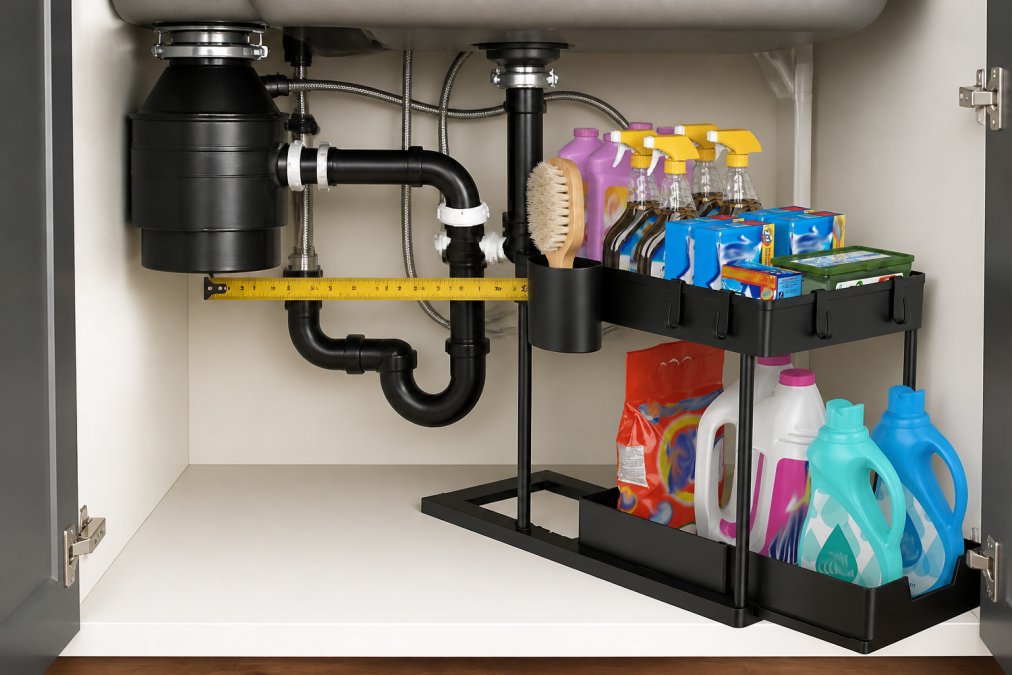
You can't run shelves straight across because the disposal blocks them. Instead, work with the space on either side and above it. Measure the offset from your main drain to the garbage disposal outlet, this determines whether you can use pull-out organizers on both sides or only one.
An offset garbage disposal typically creates an S-curve or P-trap that takes up vertical space. You need at least 6 inches of clearance above this pipe for water flow and to prevent clogs (the CDC). Putting a shelf directly above a drain trap will cause backups.
Work with the space you have. If your disposal sits on the right side, maximize the left side with pull-out organizers. Use the space above the disposal for lightweight, moisture-resistant containers. Avoid storing anything directly under the disposal due to heat and potential leaks.
Best Under Sink Organizers for Plumbing Constraints
Pull-out organizers are ideal for under-sink storage with plumbing constraints. They slide out on smooth tracks, giving you access to items at the back without reaching past pipes. Look for models with adjustable height shelves to customize spacing around your specific plumbing layout. The Sinkelle 2 SlideNest Organizer features two tiers that adjust to fit around obstacles, and the pull-out design means you're not constantly reaching into tight spaces.

Two-tier shelving works if you have vertical clearance. Choose organizers with gaps or cutouts for pipes, standard solid shelves block access to plumbing. Tiered shelving that leaves the center open for your drain line lets you use both shelves while keeping pipes accessible.
Hanging organizers mounted on the cabinet door or interior walls maximize vertical space without taking up floor room. The Sinkelle CabinetFlow Hanging Organizer uses this approach, keeping your floor clear for plumbing while providing storage for cleaning supplies and small items.
Choose organizers made from waterproof plastics, stainless steel, or treated materials that won't degrade if exposed to water. Leaks happen, and your organizer will be exposed to humidity and occasional moisture.
Distribute weight evenly across shelves with pull-out organizers. Heavy items stored in the back can cause the drawer to tip forward when fully extended. This prevents damage to the slides and keeps the organizer stable.
Maximizing Vertical Space and Using Pull-Out Organizers
Vertical space is your best friend when organizing under sink with garbage disposal constraints. Most under-sink cabinets have 24-30 inches of height, but plumbing eats into that (nkba.org).
Two-tier shelving doubles your storage capacity without taking additional floor space. Place the lower shelf above your drain pipes, leaving at least 6 inches of clearance. Use the upper shelf for lighter items.
Pull-out organizers give you access to items you'd normally have to reach for. Without pull-outs, items stored in the back become inaccessible. Pull-outs solve this by letting you slide the entire drawer out, giving you full access to everything stored there.
The Sinkelle 2 SlideNest Organizer excels here because adjustable shelves let you work around your specific plumbing layout, and the pull-out mechanism means you're not constantly struggling to reach items in the back. Installation takes minutes with no tools required.

Stack containers vertically to create more usable space. Use tall, narrow containers instead of wide, shallow ones. This approach works especially well for cleaning supplies and trash bags. Vertical stacking also keeps items visible.
Install organizers that use the full height of your cabinet. Use hanging organizers or shelves that mount high on the cabinet wall to give you storage without interfering with plumbing below.
Minimalist Kitchen Sink Organization Systems
Minimalist design isn't about having less storage, it's about having exactly what you need, organized so you can find it instantly.
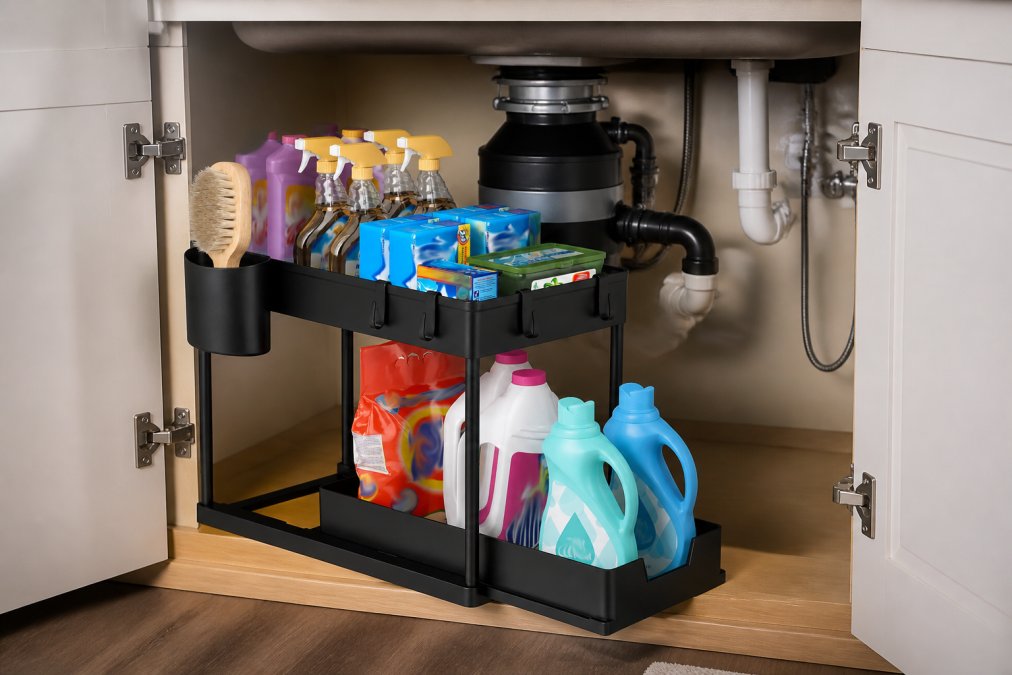
Start by keeping only what you actually use. Pull everything out and be honest about what you use weekly versus what's been sitting there for months. Donate or recycle the rest.
Use a consistent color palette. Choose organizers and containers in neutral colors, white, natural wood, soft grays. This creates a cohesive look even with different organizer types. The Sinkelle CabinetFlow Hanging Organizer and the Sinkelle 2 SlideNest Organizer both follow this principle with their Scandinavian-inspired aesthetic.
Label everything clearly. When you can see at a glance what's in each container, you use the space more efficiently. This prevents duplicate purchases and keeps the system functional over time.
Contain your cleaning supplies in matching containers. Transfer products from bulky original packaging into uniform bottles to save space and create visual consistency. Choose waterproof containers that won't degrade if they get wet.
Keep frequently used items at eye level and within arm's reach. Items you grab daily should be the most accessible. Seasonal or occasional items can go higher or in the back.
Maintain negative space. Don't fill every inch. A minimalist system includes breathing room, preventing the space from feeling cluttered and making it easier to grab items without disturbing everything else.
How to Maximize Under Sink Cabinet Space
Measure the clearance above your plumbing. If you have 8-10 inches of clearance, a thin shelf or organizer fits perfectly. If you have 12-14 inches, you can stack two shallow organizers.
Use pull-out organizers instead of fixed shelves. Pull-outs give you access to items you'd otherwise have to reach around pipes to get. The Sinkelle FlowCart Storage Rack slides smoothly, letting you access items without wrestling with your plumbing.

Install organizers that work with your cabinet's existing features. Work with what your cabinet offers rather than forcing a one-size-fits-all solution.
Consider your cabinet door. The inside of the door is wasted space in most under-sink areas. Hanging organizers or adhesive hooks on the door give you storage for small items without using cabinet floor space.
Vertical dividers help organize containers and keep items from shifting. Use them to create designated zones for different product types.
Stack items strategically. Heavy items belong low and toward the back. Light items can go high and toward the front. This distribution prevents organizers from tipping and makes access easier.
Use the space between your pipes and cabinet walls. This awkward space is often wasted, but it's perfect for thin organizers or containers.
Declutter, Maintain, and Protect Your Under-Sink Area
Organization only works if you maintain it. A system that falls apart in two months wastes your money and time.
Set a maintenance schedule. Once a month, pull everything out and check for leaks or water damage. This catches problems early before they destroy your organizers.
Inspect your plumbing monthly. Look for slow leaks that might not be obvious at first. A slow drip can ruin organizers and create mold. If you notice water pooling or dripping, address it immediately.
Use moisture-resistant organizers and containers (the EPA). Waterproof materials matter under a sink because leaks happen. Choose organizers made from materials that won't warp, rust, or degrade if exposed to water.
Keep cleaning supplies in sealed containers. Open bottles leak and create moisture. Sealed containers prevent spills and keep the cabinet drier.
Declutter regularly. Every three months, review what you're storing. Remove products you haven't used. This prevents the space from accumulating unnecessary items.
Protect your cabinet floor. Use shelf liners or waterproof mats to protect the cabinet floor from moisture. Replace liners if they become waterlogged.
Check organizer stability. Pull-out organizers should slide smoothly without wobbling. Ensure shelves are level and secure.
Keep the space accessible for plumbing maintenance. Don't store items in ways that block access to shut-off valves or make it impossible to clear a clogged drain.
Use your system consistently. Establish the habit of returning items to their designated spots immediately after use.
| Task | Frequency | Why It Matters |
|---|---|---|
| Check for leaks | Monthly | Catches water damage before it spreads |
| Declutter and review | Quarterly | Prevents accumulation of unused items |
| Replace moisture-damaged items | As needed | Maintains waterproof integrity |
| Tighten organizer fasteners | Every 6 months | Ensures stability and safety |
| Deep clean cabinet | Twice yearly | Prevents mold and maintains freshness |
Organizing under sink with garbage disposal works best when you start with honest measurements and choose organizers designed for plumbing constraints. The space you have is workable, it just requires planning and the right products.
SinkElle's organizers are built specifically for this challenge. The Sinkelle 2 SlideNest Organizer adjusts around your plumbing, and the Sinkelle CabinetFlow Hanging Organizer uses vertical space without floor footprint. Both install without tools and feature waterproof materials that stand up to the moisture inherent in under-sink storage. Start with a clear measurement of your space, choose an organizer that fits your layout, and maintain it consistently. Your under-sink area can be both functional and beautiful.
Frequently Asked Questions
How do I organize under a kitchen sink with a garbage disposal?
Start by measuring your cabinet dimensions and identifying your garbage disposal location and drain pipe configuration. Use tiered organizers or sliding drawers designed for plumbing obstructions, placing heavier items on the cabinet floor and lighter supplies on adjustable shelves. Keep cleaning supplies in moisture-resistant containers away from the disposal. The Sinkelle 2 SlideNest Organizer ($55.99) is specifically designed for this constraint, offering two-tier storage that accommodates offset plumbing while maximizing vertical space.
What are common mistakes to avoid when organizing under sink storage?
Avoid overstuffing shelves, which limits access and creates moisture traps. Don't store heavy items on upper shelves where they can fall and damage plumbing. Skip standard plastic containers that aren't waterproof, moisture buildup causes warping and mold. Never block access to shut-off valves or the garbage disposal for maintenance. Resist the urge to store items directly on the cabinet floor where leaks can damage them. Finally, don't ignore drain pipe clearance; measure twice to ensure your organizers don't interfere with water flow or disposal operation.
Can I use pull-out drawers with a garbage disposal unit?
Yes, but you must account for weight distribution and plumbing placement. Pull-out drawers work best when installed on the side of the cabinet away from the disposal and drain pipes. Ensure the drawer slides don't interfere with the garbage disposal's motor housing or electrical connections. Heavy-duty pull-out systems designed for kitchen cabinets can support cleaning supplies and trash bag storage on one side while leaving the disposal area clear. Always measure your under-sink clearance before purchasing to confirm the drawer depth won't conflict with your specific plumbing configuration.
How do I keep cleaning supplies organized and accessible under the sink?
Use adjustable height shelving or tiered organizers to create designated zones for different supply types. Store frequently used items like dishwasher tablets and sponges at eye level for quick access. Keep hazardous cleaners in clearly labeled, moisture-resistant containers away from children and pets. Hang a Sinkelle CabinetFlow Hanging Organizer ($44.99) on the cabinet door to store small bottles and spray bottles vertically, freeing up shelf space. Use drawer dividers or small bins to prevent bottles from rolling, and check regularly for leaks or spills that could damage your organization system.
This article was written using GrandRanker