


Table of Contents
- How Organization Makes a Small Kitchen Look Bigger
- How to Maximize Kitchen Counter Space
- Use Vertical Storage Ideas for Kitchens
- Apply Minimalist Kitchen Organization Ideas
- Declutter and Create Visual Openness
- Design Choices That Amplify Perceived Space
- Maintenance Routines to Keep Your Small Kitchen Organized
Last Updated: August 30, 2026
How Organization Makes a Small Kitchen Look Bigger
A cluttered kitchen feels smaller than it actually is. When you organize it strategically, the entire space transforms. This is visual psychology combined with practical storage solutions. When your kitchen lacks visual clutter, your brain perceives more space, even if the square footage hasn't changed (peer-reviewed research). Organization is the fastest, cheapest way to make a small kitchen look bigger without renovation or expense.
The key insight: it's not about having more space, but making the space you have feel intentional and open. A small kitchen with everything in its place reads as "cozy and efficient." The same kitchen with items scattered reads as "cramped and chaotic."
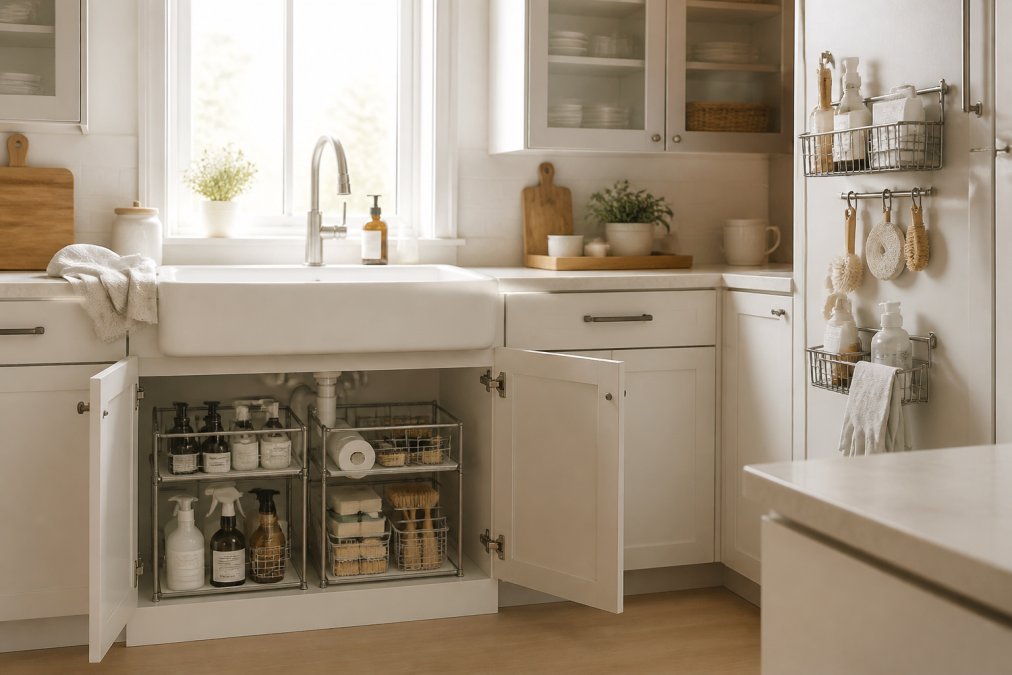
How to Maximize Kitchen Counter Space
Counter space is premium real estate in a small kitchen. The goal is to eliminate the appearance of clutter while keeping essentials accessible. Most people struggle between hiding everything away (sterile) and leaving everything out (chaotic).
Identify what actually lives on your counters. That coffee maker, utensil holder, cutting board, and spice rack probably stay. Everything else should have a home elsewhere. Remaining items should be arranged intentionally.
Vertical storage is your best friend. Instead of spreading items across the counter, stack them upward. A tiered shelf organizer like the Sinkelle CounterRise 2-Tier Shelf takes minimal counter footprint while creating space for frequently used items. Placing it near your sink creates a defined zone rather than visual chaos.

Consider what's necessary on the counter versus what's just convenient. That blender you use twice a month? Store it in a cabinet. The dish soap and sponge holder? That stays. Every item on your counter competes for visual attention.
Use wall space above your counter. The Sinkelle CabinetFlow Hanging Organizer hangs beneath cabinets and holds cutting boards, baking sheets, or essentials without consuming counter real estate.

Group similar items together in one designated spot. A coffee station in one corner, cooking utensils in one holder, spices in one rack. This creates visual zones that feel intentional and calm.
Use Vertical Storage Ideas for Kitchens
Vertical storage is the secret weapon for making a small kitchen look bigger. Moving items upward instead of outward reduces visual footprint while maintaining accessibility. This draws the eye upward, creating the illusion of height and spaciousness.
Wall-mounted shelving is the most obvious choice, but not the only one. Magnetic strips hold knives and metal utensils. Pegboards organize frequently used tools. Over-the-door organizers add storage without taking up cabinet or counter space. Each follows the same principle: use vertical surfaces that would otherwise sit empty.
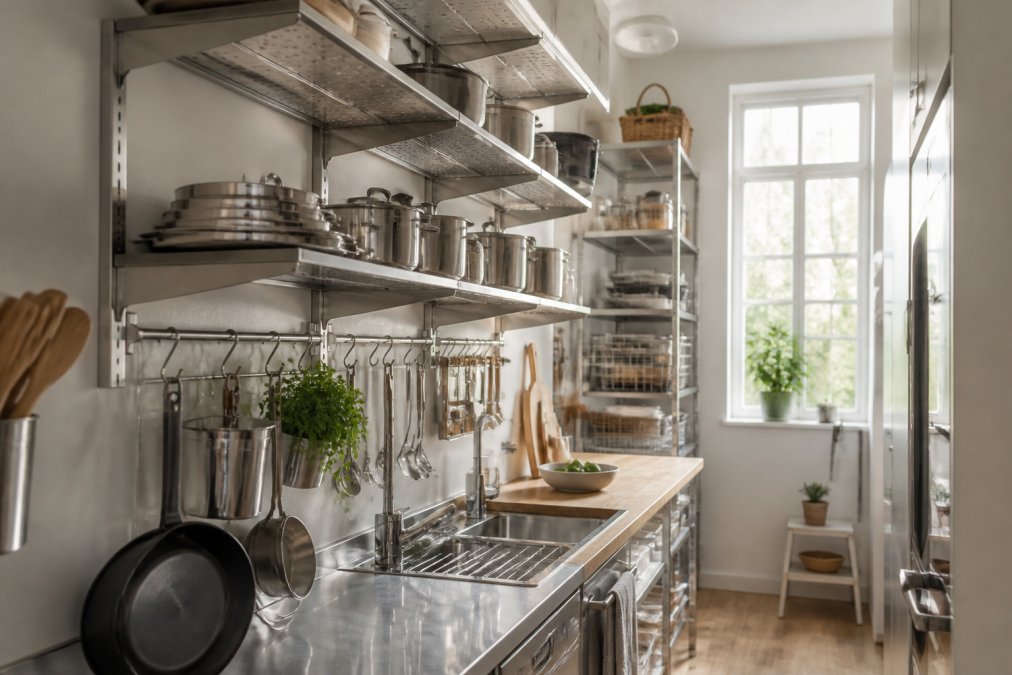
The under-sink area deserves special attention because it's often wasted space. Use adjustable shelving or tiered organizers to create multiple storage levels. The Sinkelle PanNest Adjustable Pot Organizer stores pots, pans, and lids in a compact footprint that maximizes cabinet depth.

Corner spaces are notoriously difficult. A corner shelf unit or carousel organizer turns dead space into accessible storage. Organizing corners makes a noticeable difference in how spacious your kitchen feels.
Height variation matters. Don't install all shelves at the same level. Stagger them slightly to create visual interest and prevent the monotonous, cramped feeling that uniform shelving creates.
The goal with vertical storage is to create a logical system where items live in a specific place, are easy to access, and don't create visual clutter. When someone looks at your kitchen, they should see organized shelves, not a jumble of items fighting for space.
Apply Minimalist Kitchen Organization Ideas
Minimalism in kitchen organization doesn't mean owning fewer things. It means being intentional about what stays visible and what gets hidden. A minimalist approach focuses on reducing visual noise while maintaining functionality.
Start with a neutral color palette for storage solutions. Stainless steel, white, natural wood, or matte black organizers recede visually and don't compete for attention. Colorful or patterned storage makes a small space feel busier and smaller. This is why Scandinavian-inspired design, with its emphasis on clean lines and neutral tones, works well in compact kitchens.
Consistency matters. If your organizers, containers, and storage solutions match in style and color, the kitchen feels more cohesive and spacious. Mismatched containers create visual fragmentation that makes a small space feel chaotic. Use matching containers for pantry items, matching drawer dividers, matching shelf organizers.
Hidden storage is your friend. Cabinets with solid doors hide contents while maintaining a clean visual line. Glass-front cabinets work if contents are organized and aesthetically pleasing, but require more maintenance. For most small kitchens, opaque doors create a cleaner, more spacious feeling.
Apply the "one in, one out" rule ruthlessly. Every new item that enters your kitchen should displace something that leaves. This prevents the gradual creep of clutter that makes small spaces feel suffocating.
Choose multi-functional items. A cutting board that doubles as a serving board. A pot with a lid that becomes a storage container. Every item should earn its place by serving a clear purpose.
Declutter and Create Visual Openness
Decluttering is the foundation of making a small kitchen look bigger. You can't organize your way around excess. You have to eliminate it first.
Walk through your kitchen and identify items you haven't used in six months. Duplicate items, broken items you keep meaning to fix, items that don't align with how you actually cook. These are candidates for removal.
Appliances take up disproportionate visual real estate. That bread maker you use twice a year? Store it elsewhere or donate it. Keep only appliances you use at least monthly. This often frees up significant counter space and creates an immediate sense of openness.
Empty space is not wasted space, it's breathing room. In a small kitchen, negative space is as important as storage. A few empty inches of counter or shelf creates visual calm and makes the kitchen feel larger.
Transparent containers help. When you can see what's inside, items feel less cluttered and more organized. For frequently used items, clear containers create a sense of openness while keeping things organized.
Create zones for different activities: a coffee station, a cooking prep area, a utensil zone. When items are grouped logically, the kitchen feels organized rather than cluttered.
Design Choices That Amplify Perceived Space
Organization is only half the battle. Design choices, lighting, color, materials, and finishes, dramatically influence how spacious your small kitchen feels. These aren't expensive renovations, they're strategic choices that work with your organization system.
Lighting is the most powerful tool. Bright, even lighting makes a space feel larger and more open. Under-cabinet task lighting illuminates work surfaces while creating visual interest. Avoid heavy overhead fixtures that create shadows. Natural light is always best; keep windows clear and use light-colored window treatments.
Reflective surfaces amplify light and create the illusion of depth. Stainless steel appliances, glass-front cabinets, and polished countertops bounce light around the space (peer-reviewed research). Glossy finishes on cabinet doors work better than matte finishes in compact kitchens.
Light, neutral colors make a space feel larger (peer-reviewed research). Whites, soft grays, warm beiges, and pale wood tones all work. Dark colors feel heavier and more confining. Use color as an accent rather than painting all walls or cabinets a dark shade.
Continuous flooring creates seamless visual transitions. If your kitchen flows into a dining or living area, using the same flooring material makes the entire space feel larger.
Cabinet hardware influences visual weight. Sleek, minimal handles feel more modern and spacious than ornate knobs. Handles that blend with the cabinet color create a cleaner line.
The Sinkelle FlowCart Storage Rack demonstrates how design and function work together. Its slim profile fits tight spaces, its mobile design adapts to your needs, and its minimalist aesthetic complements your kitchen design.
Maintenance Routines to Keep Your Small Kitchen Organized
Organization isn't a one-time project. It's a system you maintain daily. Without a maintenance routine, even a beautifully organized small kitchen will gradually devolve into clutter.
Establish a daily reset routine. Spend five minutes each evening clearing counters, washing dishes, and putting items back in their designated homes. This prevents the slow accumulation of clutter that makes spaces feel chaotic.
Weekly, do a deeper reset. Check that items are in their designated zones. Wipe down shelves and organizers. Remove items that have migrated to the wrong location.
Monthly, evaluate what's working and what isn't. Are certain items frequently out of place? That means they don't have a good home yet. Are some storage solutions rarely used? Consider repurposing them.
Establish the "one in, one out" rule as a permanent practice. This prevents the gradual accumulation that makes small spaces feel cramped.
Create a home for every item. If something doesn't have a designated place, it will become clutter. Be specific: not "utensils" but "cooking utensils in the drawer next to the stove."
Prevent re-clutter by being ruthless about what enters your kitchen. Before buying a new gadget, ask: where will this live? Do I have space? Will I actually use it?
The maintenance routine is where most people fail. The solution isn't better organization, it's a system simple enough to maintain without thinking. Your daily five-minute reset and weekly deeper check should become automatic.
A small kitchen doesn't have to feel cramped. Strategic organization, combined with thoughtful design choices, transforms how spacious your kitchen actually feels. The solutions aren't complicated or expensive, they're about intention, consistency, and maintenance. SinkElle's minimalist, waterproof storage systems are specifically designed for this challenge: they maximize your sink area and counter space with tool-free installation, so you can create an organized, open-feeling kitchen in minutes. Shop Now and experience how the right organization system elevates both your kitchen's functionality and its aesthetic.
Frequently Asked Questions
Q: How can I make my small kitchen look bigger without renovating?
A: Organization is the fastest way to make a small kitchen look bigger. Remove visual clutter from counters by storing items vertically or in cabinets, use reflective surfaces like glass-front cabinets to create depth perception, and apply a neutral color palette to expand the sense of space. Tools like the Sinkelle CabinetFlow Hanging Organizer and CounterRise 2-Tier Shelf create storage that eliminates the cramped feeling without any renovation.
Q: What's the best way to maximize kitchen counter space in a tiny kitchen?
A: Maximize counter space by moving items off the surface entirely. Use under-cabinet and task lighting to highlight vertical storage, install hanging organizers above or beside your sink, and choose multi-functional furniture like tiered shelves that hold more in less footprint. The Sinkelle PanNest Adjustable Pot Organizer, for example, stores cookware inside cabinets instead of on counters, instantly freeing up workspace.
Q: Can I use these organization solutions if I rent and can't drill or damage walls?
A: Yes. Most minimalist organization systems, including SinkElle products, require no tools and no permanent installation. Hanging organizers attach to existing cabinet undersides, tiered shelves sit freely on counters, and rolling carts fit into tight spaces without modification. This makes them ideal for renters or anyone avoiding wall damage or plumbing interference.
Q: How do minimalist kitchen organization ideas actually prevent clutter from coming back?
A: Minimalist organization works because it assigns every item a specific home and removes excess. When you declutter ruthlessly and keep only what you use, there's less to manage daily. Establish a maintenance routine: spend 5 minutes each evening returning items to their designated spots and wipe down surfaces. This prevents the creep of visual clutter and keeps your small kitchen feeling spacious long-term.
This article was written using GrandRanker