


Table of Contents
- Why Minimalist Sink Maintenance Matters
- Daily Habits for a Clean Kitchen Sink
- Decluttering Your Sink Area: What Stays and What Goes
- How to Hide Dish Soap and Sponge Effectively
- Best Minimalist Kitchen Sink Organizers for Your Space
- Material-Specific Maintenance for Longevity
- Preventing Food Particles and Drain Buildup
- Polishing and Maintaining a Shiny, Dry Sink Surface
Why Minimalist Sink Maintenance Matters
A cluttered sink drains your energy before you start the day. When your sink is organized and clean, everything in your kitchen feels more manageable. Maintaining a minimalist sink directly impacts how efficiently you work and how long your fixtures last.
The philosophy is simple: keep only what serves a purpose, arrange it thoughtfully, and maintain it consistently. This eliminates daily frustration of searching for tools and cleaning around clutter. At SinkElle, homeowners who commit to minimalist sink maintenance find their space more satisfying.
Your sink sees constant action, water splashes, food particles accumulate, soap residue builds up. Without a system, these problems compound. With intentional organization and daily habits, you prevent most issues before they start. A minimalist sink system should require minimal effort to maintain, which is why this guide focuses on habits you can actually keep.
Daily Habits for a Clean Kitchen Sink
The Morning Reset
Start your day by clearing your sink completely. Remove dishes, rinse the basin, and wipe down the surface with a clean cloth, about two minutes total. A dry sink signals order and control.
The morning reset removes overnight buildup, gives you a blank canvas to work from, and creates a mental anchor for what "clean" looks like. Use a microfiber cloth or soft sponge, avoiding abrasive scrubbers at this stage. If your sink is stainless steel, wipe in the direction of the grain. Make this part of your morning routine.
Evening Drain Care
Before bed, run hot water down your drain for 30 seconds to flush away food particles and grease (the CDC). Follow with cold water. This prevents buildup that leads to clogs and odors.
If you notice slow drainage or smell anything unpleasant, pour a half cup of baking soda down the drain, followed by a half cup of white vinegar (the EPA). Let it sit for 15 minutes, then flush with hot water. Repeat this weekly as preventive maintenance. A clogged drain forces water to sit longer in your sink, creating moisture and muck. Spending 30 seconds on drain care helps avoid plumbing issues.
Decluttering Your Sink Area: What Stays and What Goes
Your sink should hold only items you use daily. Ask yourself: Do I use this every day? Does this belong on my counter, or can it live under the sink or in a cabinet?
Items that stay near your sink: dish soap, one sponge or brush, a cloth for drying. Everything else, extra sponges, scrubbing powders, cleaning sprays, decorative items, should be stored out of sight. Visual simplicity makes the space feel larger, easier to clean, and more inviting.
Under-sink storage deserves special attention. Use vertical space with stackable plastic containers. Group like items together and label containers so you know what's inside without opening them. Visibility creates accountability; hidden clutter tends to grow exponentially.
How to Hide Dish Soap and Sponge Effectively
Dish soap and sponges are functional necessities but don't need to be visible. Leaving them sitting in a puddle next to your faucet undermines the minimalist aesthetic and creates maintenance problems.
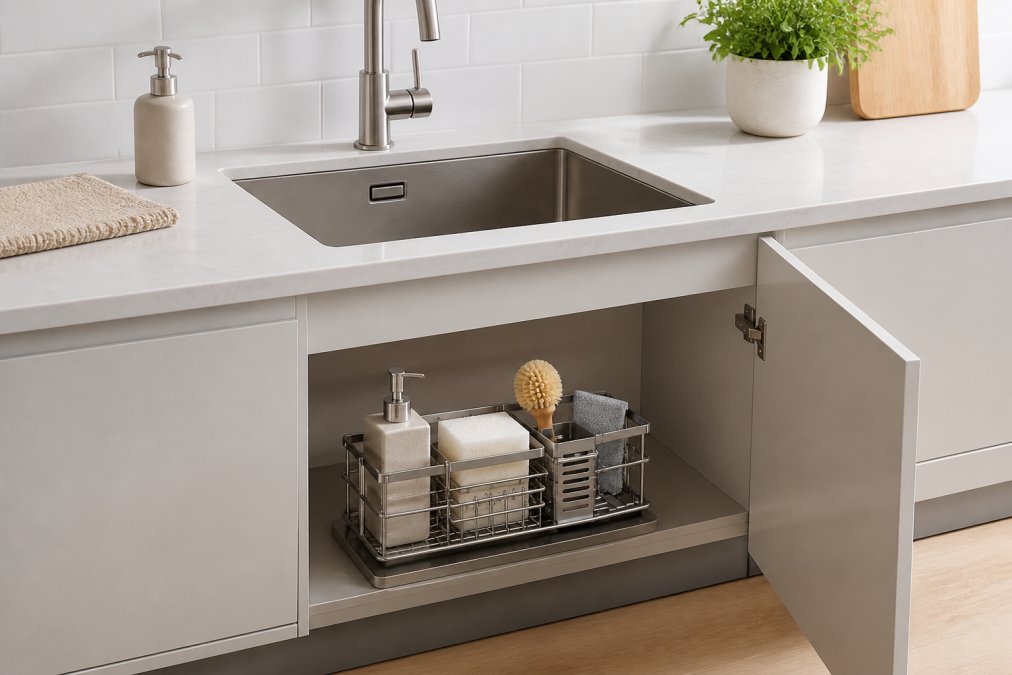
The most effective solution is a pull-out caddy mounted inside your under-sink cabinet. The SinkElle FlowRack Pro keeps sponges and brushes elevated on an angled tray so they dry quickly rather than sitting in standing water. Sponges dry in hours instead of days, helping to eliminate musty smells (peer-reviewed research).

If you prefer soap more accessible, use a soap dispenser mounted on your counter or wall. Refillable dispensers are more sustainable and integrate seamlessly into a minimalist aesthetic.
For sponges, keep only one active sponge at a time. When it degrades, replace it and store backups in a cabinet. This prevents accumulation of half-worn sponges.
Best Minimalist Kitchen Sink Organizers for Your Space
The right organizer transforms your sink area from chaotic to controlled. Look for pieces that are waterproof, durable, and designed to maximize limited space.
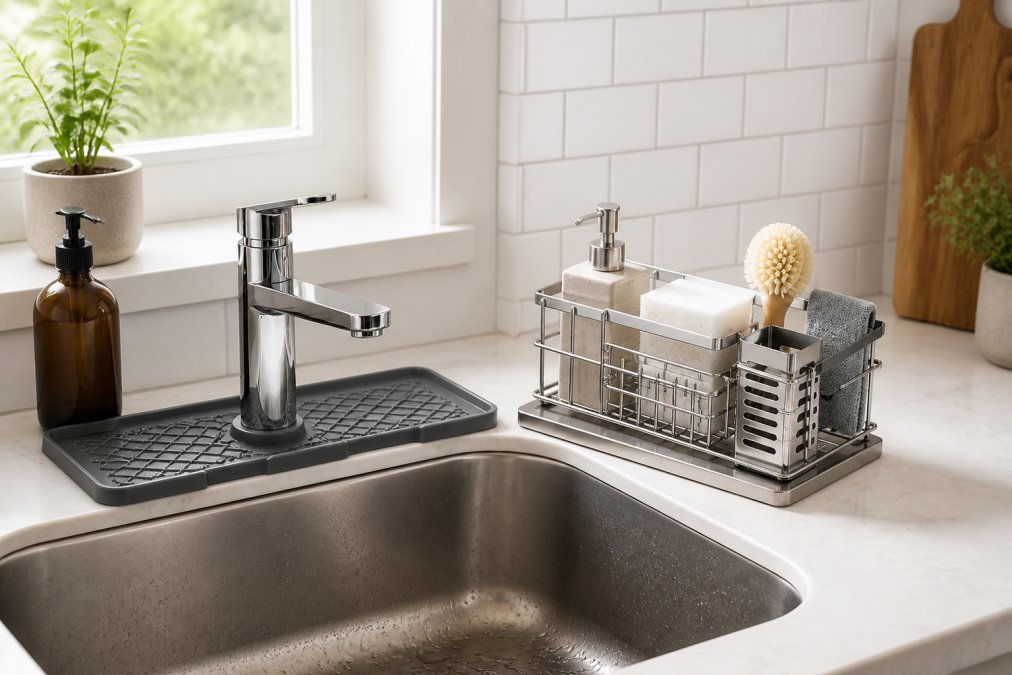
The SinkElle Sink Organization Bundle combines three essential components: a splash mat that prevents water from spreading across your countertop, a faucet guard that catches drips, and a compact rack for holding sponges and brushes. The SinkElle DryFlow Splash Mat features an angled surface that slopes toward the sink basin, so water flows downward rather than spreading outward. Made from waterproof silicone, it's easy to clean and won't degrade.

For under-sink storage, prioritize clear or semi-transparent containers so you can see contents without opening them. Stackable designs maximize vertical space. Avoid wire racks that rust. The best organizer fits your actual kitchen layout, not a generic solution.
Material-Specific Maintenance for Longevity
Different sink materials require different care. Understanding your sink's material helps you prevent damage and maintain appearance.
Stainless steel sinks are durable but prone to water spots. Dry your sink immediately after use to prevent mineral deposits. Wipe in the direction of the grain. Avoid abrasive scrubbers. For stubborn spots, use vinegar or stainless steel polish.
Ceramic and porcelain sinks are beautiful but can chip or crack. Avoid slamming pots into the basin. Use a sink mat if concerned about impact damage. Clean with gentle, nontoxic cleaners and dry immediately to prevent water spots.
Composite sinks (quartz or granite-based) are extremely durable and resistant to staining. Clean with mild soap and water. Avoid bleach-based cleaners. Dry after use to maintain appearance.
Cast iron sinks require seasoning similar to cast iron cookware. Dry immediately after use to prevent rust. Avoid leaving acidic foods sitting in the basin.
Regardless of material, dry your sink after use. Water left sitting creates mineral deposits, rust, mold growth, and odors. A 30-second habit of wiping down prevents most problems.
Preventing Food Particles and Drain Buildup
Food particles are the primary cause of drain problems. They accumulate gradually, combining with grease to form blockages. Prevention is more effective than reaction.
Use a drain strainer in your sink basin to catch food particles before they enter your pipes. Empty the strainer after each use. Rinse it under running water to clear debris.
If you have a garbage disposal, use it strategically. Disposals work best for very small food particles, not fibrous vegetables, starchy foods, or large quantities.
Never pour cooking grease or oil down your sink. Grease cools and solidifies in pipes, trapping food particles and creating clogs. Wipe grease off pans with a paper towel instead. If you accidentally pour grease down the sink, flush it immediately with hot water.
Weekly drain maintenance prevents most problems. Pour hot water down your drain to flush accumulated particles. Once weekly, use the baking soda and vinegar method. If you notice slow drainage, address it immediately rather than waiting for a complete clog.
Polishing and Maintaining a Shiny, Dry Sink Surface
A shiny sink looks clean and inviting. Water flows off smooth, polished surfaces more easily. The difference between a dull and polished sink is largely about regular drying and occasional polishing.
For stainless steel sinks, polish monthly to maintain shine and protect against fingerprints and water spots. Use a microfiber cloth and stainless steel polish, or make your own with equal parts white vinegar and mineral oil. Apply in the direction of the grain, then buff with a clean cloth. This takes about five minutes.
For ceramic or composite sinks, simply keep them dry and clean. A soft cloth and mild soap are sufficient. The key to maintaining a shiny sink is preventing water spots in the first place by drying immediately after use.
Keep a dedicated microfiber cloth near your sink specifically for drying. After washing dishes or cleaning, spend 30 seconds drying the entire surface. This habit becomes automatic and dramatically improves appearance.
| Maintenance Task | Frequency | Time Required | Impact |
|---|---|---|---|
| Morning reset (rinse and dry) | Daily | 2 minutes | Prevents buildup, maintains aesthetic |
| Evening drain flush | Daily | 1 minute | Prevents clogs and odors |
| Drain cleaning (baking soda + vinegar) | Weekly | 15 minutes | Maintains drainage efficiency |
| Polish stainless steel | Monthly | 5 minutes | Maintains shine and protection |
| Deep clean under-sink area | Monthly | 20 minutes | Prevents mold and odors |
| Organize and declutter | As needed | 10 minutes | Maintains minimalist aesthetic |
Maintaining a minimalist sink isn't about perfection, it's about building sustainable habits that keep your kitchen functional and visually calm. The daily practices outlined here take less than five minutes total and prevent problems that would otherwise require hours of deep cleaning.
SinkElle's minimalist organizers make these habits easier by creating a system where everything has a place and water drains efficiently. The SinkElle Sink Organization Bundle brings together splash protection, faucet drainage, and sponge storage in one coordinated system. When your sink area is designed to support your daily habits, maintaining it becomes effortless. Start with the morning reset and evening drain care, these two habits alone will transform how your sink feels and functions. Add intentional organization, and you've built a system that sustains itself.
=== FAQ ANSWERS (audit these too, same rules) ===
[1] Q: How often should I deep clean my kitchen sink to maintain a minimalist look? A: Deep clean your sink weekly to maintain a minimalist aesthetic. For daily upkeep, rinse and dry the basin after each use to prevent food particles and residue buildup. Weekly deep cleaning with baking soda or a nontoxic cleaner removes grease and sanitizes the surface. If you have hard water or heavy use, consider deep cleaning twice weekly. Consistent maintenance prevents the need for intensive scrubbing later.
[2] Q: What are the best minimalist storage solutions for kitchen sinks? A: The best minimalist storage solutions combine function with clean aesthetics. Look for waterproof containers that fit under-sink cabinets, keeping cleaning supplies corralled and out of sight. The Sinkelle Sink Organization Bundle ($43.99) includes everything needed: a splash mat, faucet guard, and storage rack. Vertical organizers maximize space in tight corners. Choose neutral colors like white, black, or stainless steel to maintain your minimalist design while keeping dish soap, sponges, and brushes hidden from view.
[3] Q: How do I keep my kitchen sink area clutter-free? A: Keep your sink clutter-free by designating specific spaces for each item and removing anything unused daily. Store dish soap and sponges in under-sink storage rather than on the counter. Use a splash mat to protect your countertop and prevent puddles that trap debris. Limit countertop items to one sink rack for active use. Establish a daily habit of clearing the basin before bed, wiping surfaces dry, and returning tools to their designated storage. This routine prevents muck from accumulating.
[4] Q: Are there waterproof storage options for minimalist sink areas? A: Yes, waterproof storage is essential for minimalist sink organization. The Sinkelle DryFlow Splash Mat ($19.99) and AquaShield Faucet Guard ($17.99) are specifically designed to handle moisture. Under-sink plastic containers with secure lids protect supplies from water damage and warping. Choose storage with sloped surfaces that channel water back into the sink rather than trapping it. Waterproof materials prevent mold and mildew, ensuring your organizing system remains functional and hygienic for months.

Frequently Asked Questions
Q: How often should I deep clean my kitchen sink to maintain a minimalist look?
A: Deep clean your sink weekly to maintain a minimalist aesthetic. For daily upkeep, rinse and dry the basin after each use to prevent food particles and residue buildup. Weekly deep cleaning with baking soda or a nontoxic cleaner removes grease and and helps sanitize the surface. If you have hard water or heavy use, consider deep cleaning twice weekly. Consistent maintenance prevents the need for intensive scrubbing later.
Q: What are the best minimalist storage solutions for kitchen sinks?
A: The best minimalist storage solutions combine function with clean aesthetics. Look for waterproof containers that fit under-sink cabinets, keeping cleaning supplies corralled and out of sight. The Sinkelle Sink Organization Bundle ($43.99) includes everything needed: a splash mat, faucet guard, and storage rack. Vertical organizers maximize space in tight corners. Choose neutral colors like white, black, or stainless steel to maintain your minimalist design while keeping dish soap, sponges, and brushes hidden from view.
Q: How do I keep my kitchen sink area clutter-free?
A: Keep your sink clutter-free by designating specific spaces for each item and removing anything unused daily. Store dish soap and sponges in under-sink storage rather than on the counter. Use a splash mat to protect your countertop and prevent puddles that trap debris. Limit countertop items to one sink rack for active use. Establish a daily habit of clearing the basin before bed, wiping surfaces dry, and returning tools to their designated storage. This routine prevents muck from accumulating.
Q: Are there waterproof storage options for minimalist sink areas?
A: Yes, waterproof storage is essential for minimalist sink organization. The Sinkelle DryFlow Splash Mat ($19.99) and AquaShield Faucet Guard ($17.99) are specifically designed to handle moisture. Under-sink plastic containers with secure lids protect supplies from water damage and warping. Choose storage with sloped surfaces that channel water back into the sink rather than trapping it. Waterproof materials prevent mold and mildew, ensuring your organizing system remains functional and hygienic for months.
This article was written using GrandRanker