


Table of Contents
- Step 1: Declutter and Remove Non-Essentials from Your Sink Area
- Step 2: How to Maximize Kitchen Counter Space Around Your Sink
- Step 3: Under Sink Organization Ideas That Actually Work
- Step 4: Install a Drainage System to Prevent Water Buildup
- Step 5: Kitchen Sink Organization Hacks for Small Spaces
- Step 6: Create a Daily Maintenance Routine to Keep Clutter Away
- Step 7: Organize Cleaning Supplies and Essentials Properly
- Conclusion
Last Updated: August 24, 2026
Step 1: Declutter and Remove Non-Essentials from Your Sink Area
Pull everything off your countertop and the area around your sink. Every sponge, spray bottle, dish brush, soap dispenser, and accumulated item needs a decision: keep it, relocate it, or discard it.
Most people keep far more than they use. That extra sponge saved "just in case" or backup dish soap sitting for months are clutter anchors that don't serve a daily function. Keep only what you need within arm's reach: one primary sponge or brush, one bar of dish soap or dispenser, and a cloth for drying. Everything else, backup supplies, cleaning products, specialty brushes, gets stored elsewhere to keep your sink area calm and functional.
Once decluttered, wipe down the entire area to remove water rings, soap residue, and dust. You're starting with a clean slate.
Step 2: How to Maximize Kitchen Counter Space Around Your Sink
Counter space around your sink is premium real estate. The strategy is vertical: move items up and off the surface instead of spreading them across it.
Install command hooks on cabinet doors beside or above your sink to hold your daily dishcloth, hand towel, or spray bottle. These require no drilling and eliminate the need for a dish rack on your counter. A mounted rack, wire shelf, tension rod with S-hooks, or magnetic strip, transforms wall space into functional storage. Small shelves hold your soap dispenser and sponge container; magnetic strips hold metal tools.
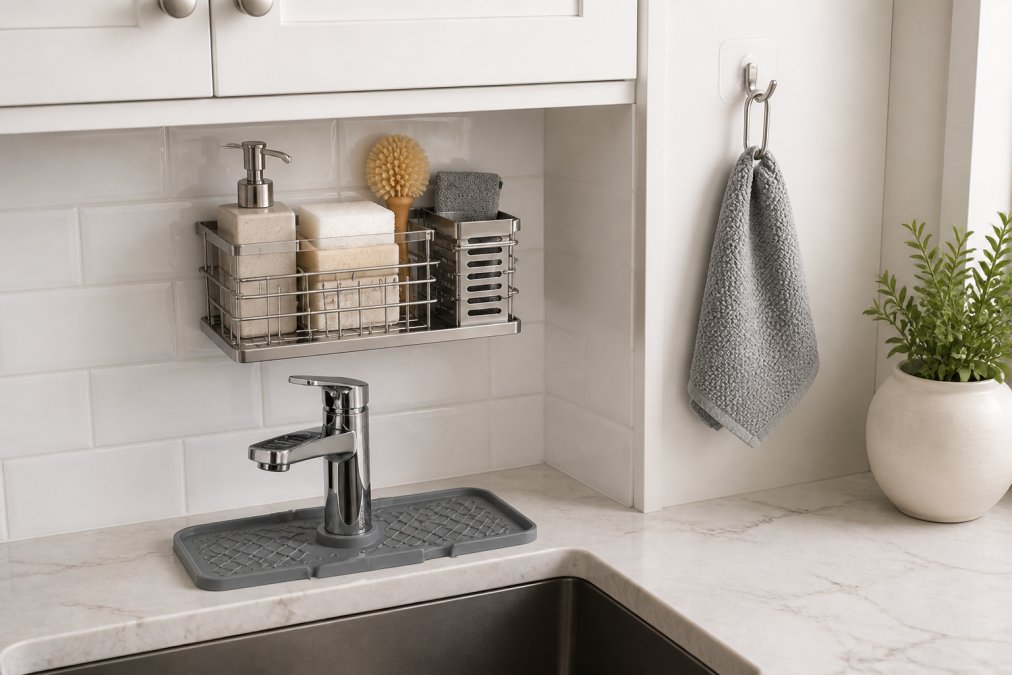
The SinkElle Sink Organization Bundle combines multiple solutions into one cohesive system designed to maximize counter space while maintaining a sophisticated aesthetic. The Sinkelle FlowRack Pro lifts sponges and brushes off the wet surface, allowing them to dry on an incline that channels water back into the sink, preventing soggy sponges and water rings. The Sinkelle DryFlow Splash Mat sits under your faucet and channels splashes back into the sink instead of spreading across your counter, preventing water pooling and the perpetually damp feeling that leads to clutter.

Step 3: Under Sink Organization Ideas That Actually Work
The space under your sink is your best opportunity to store supplies without visible clutter, though it's often dark and obstructed by plumbing.
Remove everything, check for leaks or moisture, and wipe it down. Address any standing water first, as moisture creates mold and damages storage containers. Measure the space around your pipes and choose storage solutions that work with your layout. Pull-out organizers work if your pipes allow room; stackable plastic containers are more flexible. Clear containers let you see contents without opening every box.
Create zones: one for cleaning supplies, one for backup dish soap and sponges, one for miscellaneous items. Use labels so you know what's stored. If your plumbing setup makes under-sink storage impossible, use a cabinet elsewhere in your kitchen instead.
Step 4: Install a Drainage System to Prevent Water Buildup
Water buildup is the silent culprit behind clutter. When your sink area stays wet, items don't dry properly, mold develops, and you constantly move things around to prevent damage.
The Sinkelle AquaShield Faucet Guard prevents splashes and drips from spreading across your countertop by channeling water back into the sink basin. The DryFlow Splash Mat uses a sloped surface to channel water back into the sink and won't absorb water like fabric would.

Ensure your sink itself drains properly. If water sits in the basin after washing dishes, you have a drainage issue that needs attention before organizing. A slow drain means water will be constantly present, creating conditions for wet sponges and damp cloths (peer-reviewed research). Even a slight slope toward the sink basin helps water flow naturally instead of pooling (nsf.org).
Step 5: Kitchen Sink Organization Hacks for Small Spaces
Apartment kitchens and tight corner sinks require optimizing every inch vertically and using multi-functional products.
Over-the-faucet organizers hang directly on your faucet and hold a spray bottle or small items without taking up counter space. Tension rods mounted inside cabinet doors create hanging space for cloths or baskets. Magnetic strips on your refrigerator or narrow wall space hold metal utensils, freeing up drawer space.
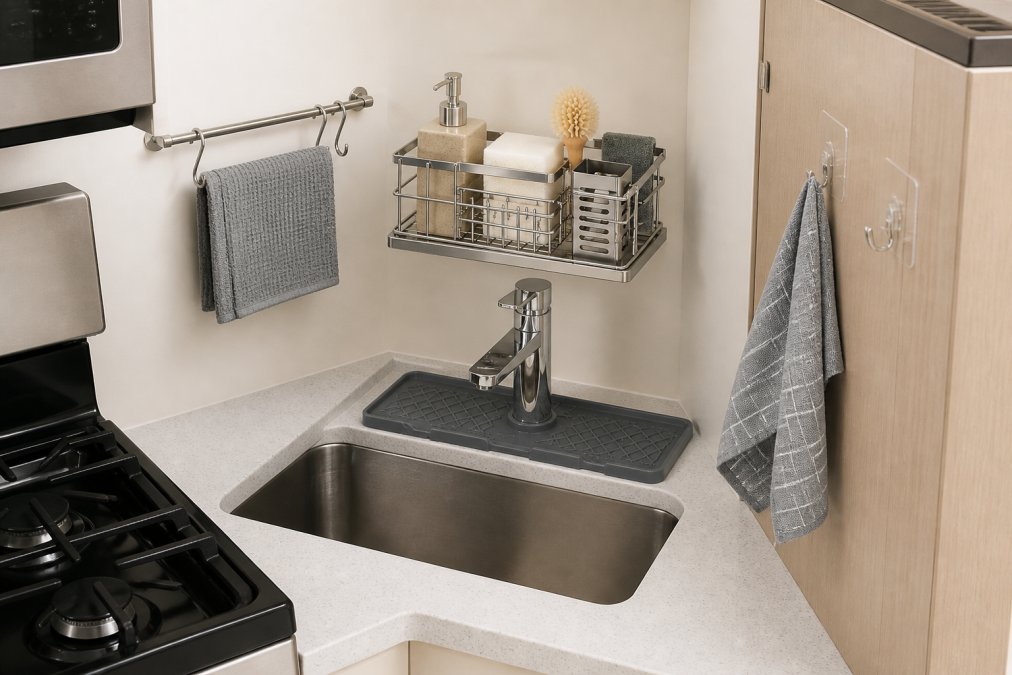
Choose products that serve double duty: a cloth that dries dishes and can be wrung out and hung immediately, a spray bottle that's also your soap dispenser. Measure your space first, then choose solutions that fit your specific layout. For renters, adhesive solutions and tension rods are ideal, Command hooks, adhesive shelves, and magnetic strips all come off cleanly without damaging walls.
Step 6: Create a Daily Maintenance Routine to Keep Clutter Away
Organization only works if you maintain it. Each evening, spend five minutes resetting your sink area: rinse your sponge and place it on the FlowRack Pro to dry, wipe down the splash mat and faucet area, return any items that wandered onto the counter to their designated spots, and ensure the area is dry.

Morning routine: check that everything is in place before starting your day. If something's out of position, return it immediately. Weekly, do a deeper clean: remove everything from organized spots, wipe down surfaces, check for water damage or mold, and reorganize as needed.
The maintenance routine is where most people fail. Without it, you're just moving clutter around, not stopping it. Set a phone reminder for the first two weeks to make it automatic.
Step 7: Organize Cleaning Supplies and Essentials Properly
Cleaning supplies need their own designated space, separate from daily-use items. Create a cleaning supply zone under your sink or in a nearby cabinet using stackable containers or tiered organizers. Group similar items together and label containers.
For daily-use items, dish soap, your primary sponge, maybe a cloth, keep these in your organized sink area. Everything else lives in the supply zone and comes out only when needed. The SinkElle Sink Organization Bundle includes storage specifically designed for cleaning supplies, keeping them contained and accessible without cluttering your sink area.
Backup supplies should be stored completely out of sight. Buy consumables in bulk, store them in a cabinet, and bring one out when your current item needs replacing.
| Step | Primary Focus | Time Required | Frequency |
|---|---|---|---|
| Declutter | Remove non-essentials | 30 minutes | Once (initial setup) |
| Maximize Counter Space | Install vertical storage | 1-2 hours | Once (initial setup) |
| Under Sink Organization | Create storage zones | 45 minutes | Once (initial setup) |
| Drainage System | Prevent water buildup | 30 minutes | Once (initial setup) |
| Small Space Hacks | Optimize tight areas | 1 hour | Once (initial setup) |
| Daily Maintenance | Reset and refresh | 5 minutes | Daily |
| Supply Organization | Store extras properly | 30 minutes | Weekly check-in |
A cluttered sink area isn't permanent, it results from not having a system in place and not maintaining it. Your kitchen sink is one of your home's most-used spaces and deserves to be organized.
SinkElle's solutions, from the FlowRack Pro that keeps sponges dry to the DryFlow Splash Mat that prevents water from spreading, are designed to support a maintenance routine. They're tools that make staying organized effortless. When your system works with your daily habits, maintaining an organized sink area becomes automatic.
Start with Step 1 this week: declutter your sink area completely. Within a month, you'll have a system in place that keeps your sink area organized with minimal effort. Get started with SinkElle and transform your sink area into a functional, beautiful space that makes your daily kitchen routine more efficient and enjoyable.
Frequently Asked Questions
Q: How do I keep my kitchen sink area clutter-free on a daily basis?
A: Establish a 5-minute reset routine each evening: remove all items from the countertop, wipe down the sink and surrounding surfaces, and return only essentials to their designated storage zones. Store cleaning supplies in a dedicated caddy or under-sink organizer, keep your dish rack or air drying solution in one consistent spot, and use command hooks on cabinet doors to hold spray bottles and dishcloths. The key is returning items to their homes immediately after use rather than letting them accumulate.
Q: What's the best way to organize under my kitchen sink with a garbage disposal?
A: Work around the disposal by creating zones on either side of the plumbing. Use tiered shelving or stackable containers on one side for cleaning supplies in spray bottles and small bins. Keep the area directly under the disposal clear to avoid water damage. Install a pull-out caddy or sliding organizer that lets you access supplies without moving items around the plumbing. Waterproof materials are essential in this wet environment, avoid cardboard and opt for silicone, plastic, or stainless steel containers that won't warp or mold.
Q: How can I stop water from pooling around my sink and creating clutter?
A: Water buildup forces you to store absorbent items like dish towels and sponges directly on the counter, creating visible clutter. Install a splash mat or faucet guard with an angled drainage design that channels water back into the sink. The Sinkelle DryFlow Splash Mat ($19.99) and AquaShield Faucet Guard ($17.99) are designed specifically for this, they prevent moisture from spreading across your countertop. Pair these with a vertical dish rack like the FlowRack Pro ($29.99) that air-dries items on an incline, so sponges and brushes drain completely rather than sitting in puddles.
Q: Will tool-free storage systems actually fit my small apartment kitchen?
A: Yes, if you choose systems designed for tight spaces. Measure your sink area first, including the depth between the sink and wall, and the width available on either side. Look for vertical storage solutions like command hooks, wall-mounted racks, and over-the-cabinet organizers that don't require drilling. The Sink Organization Bundle ($43.99) combines splash protection, sponge storage, and cleaning supply organization in a compact footprint. Test any system's fit before committing, and prioritize products with adjustable or removable components so you can customize them to your specific layout.
This article was written using GrandRanker