


Last Updated: October 25, 2026
Quick Summary
Waterproof cabinet organizers for bathroom vanities are storage units made from materials that shed water rather than absorb it, such as molded plastic trays and sealed metal frames, keeping supplies off the cabinet floor so air can move underneath. Judge waterproofing at the weakest point, checking seams, rivet holes, cut edges, and the base where water collects first.
- Moisture resistance carries the most weight in scoring at 30 percent, ahead of fit and plumbing clearance at 25 percent.
- Waterproof means moisture cannot pass through the material or its seams under normal use, unlike water-resistant materials.
- Measure cabinet width inside the frame, since door frames and hinges can steal an inch or more on each side.
- The SinkElle 2 SlideNest Organizer costs $55.99 and pulls the whole shelf forward for full cabinet access.
- Keep the cabinet floor clear so you can spot leaks early and wipe surfaces monthly to stop mildew.
Table of Contents
- Why Waterproof Cabinet Organizers for Bathroom Vanities Matter
- How We Evaluated These Waterproof Cabinet Organizers
- 1. SinkElle 2 SlideNest Organizer: Best Pull-Out Under-Sink Pick
- 3. SinkElle DoorNest 5-Tier Hanging Organizer: Best Over-the-Door Option
- Under Sink Organizers for Bathroom Cabinets: Measuring Before You Buy
- Bathroom Vanity Organization Ideas by Configuration
- Organizing a Bathroom Vanity With No Drawers
- Frequently Asked Questions
Why Waterproof Cabinet Organizers for Bathroom Vanities Matter
Waterproof cabinet organizers for bathroom vanities solve a problem most storage products ignore: the under-sink zone is the wettest, darkest, most humid spot in your home. At SinkElle, we build around that reality.
A bathroom vanity cabinet is a hostile environment for anything porous. Supply lines sweat. Drain traps drip. Shampoo bottles leak. Hot showers push humidity into every corner, and the cabinet door keeps it trapped.
What Actually Fails Under a Sink
The failures follow predictable patterns. Particleboard and MDF shelves swell at the first sign of moisture and never recover their shape. Unsealed steel wire racks rust at the joints, and the rust stains whatever sits beneath them.
The EPA's guide to mold and moisture control is blunt about this: mold needs moisture, and controlling moisture is the fix. For a deeper look at which waterproof materials actually hold up, see our waterproof sink organizer materials durability guide.
Watch out: stacking bottles directly against the cabinet's back wall blocks the ventilation gap and traps condensation, which is the fastest route to a musty cabinet.
How We Evaluated These Waterproof Cabinet Organizers
Most roundups rank organizers by look and price. Under a bathroom vanity, that order is backwards.
The Five Scoring Criteria
| Criterion | Weight | What We Looked For |
|---|---|---|
| Moisture resistance | 30% | Material behavior after repeated splash and humidity exposure; sealed versus unsealed surfaces; seam construction |
| Fit and plumbing clearance | 25% | Real cabinet dimensions, drain trap and supply line clearance, door swing, pull-out travel room |
| Load capacity and stability | 20% | Rated weight, shelf sag under a full bottle of detergent, anti-tip design |
| Cleanability | 15% | Smooth, non-porous surfaces; removable trays; reachable corners; drainage and airflow |
| Durability after moisture exposure | 10% | Corrosion at joints, brittleness, fabric odor, coating wear |
How We Separated Waterproof From Water-Resistant
These terms are not interchangeable, and the difference decides how an organizer behaves after a leak. Waterproof means moisture cannot pass through the material or its seams under normal use.
A common pattern under a sink: a coated metal frame is water-resistant at the coating but vulnerable wherever the coating is scratched or drilled. A molded plastic tray with no seams is effectively waterproof.
Moisture Exposure and Durability Checks
We assessed each pick against three moisture scenarios that match real vanity use:
- Splash exposure: water from a leaking bottle or a wet sponge sitting on the shelf for hours.
- Humidity cycling: repeated hot showers pushing damp air into a closed cabinet, then drying out.
- Slow leak: a drip from a supply line or drain trap that goes unnoticed for days.
After each scenario, we looked for the failure signs that matter: rust blooming at welded joints, coating blistering, plastic turning chalky or cracking at stress points, fabric holding odor, and any standing water trapped under the base. An organizer that traps water against the cabinet floor fails even if the organizer itself survives, because the cabinet beneath it does not.
Fit, Clearance, and Load Testing
Fit came second only to moisture because an organizer that will not clear a drain trap is useless regardless of build quality. We checked cabinet width, depth, and height against the lowest point of the plumbing, plus the travel room a pull-out needs at the front and the headroom a tiered tray needs above the trap. Load capacity was tested with the heaviest items a bathroom cabinet actually holds: a full bottle of detergent, a gallon of vinegar, and stacked toiletry bottles.
1. SinkElle 2 SlideNest Organizer: Best Pull-Out Under-Sink Pick
Our top pick is the SinkElle 2 SlideNest Organizer, a two-tier pull-out unit built on a durable reusable metal frame.

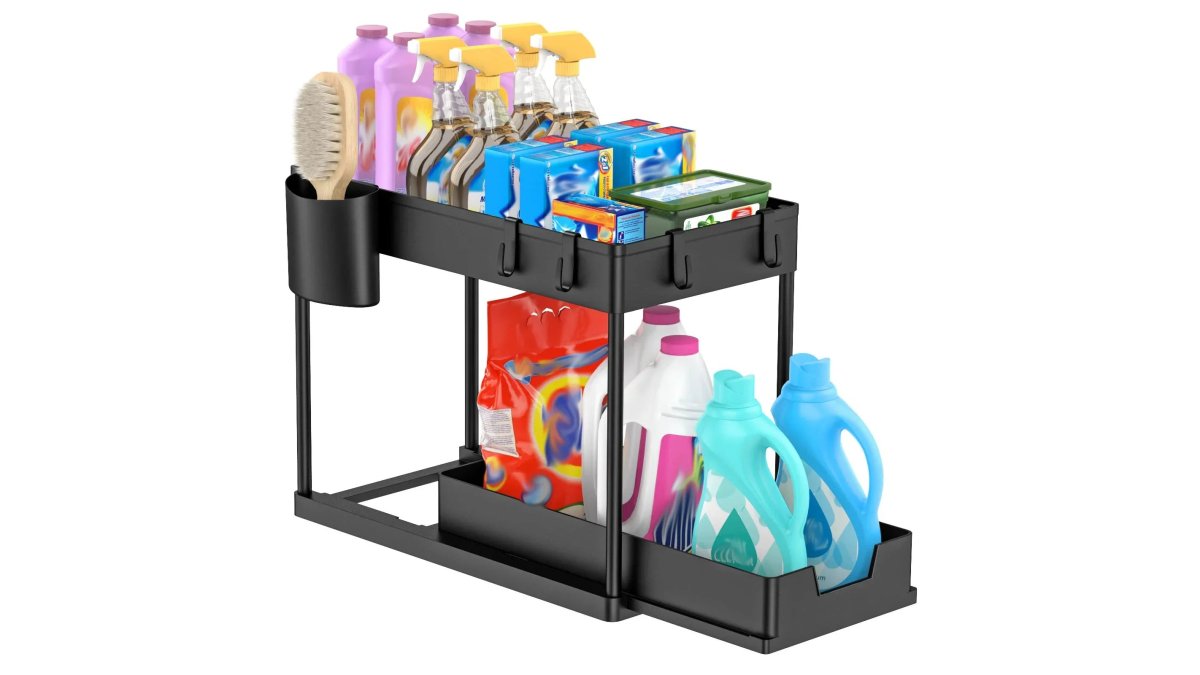
The durable lightweight plastic construction means splashes are not a concern, and the smooth-rolling wheels let you pull the whole rack out for cleaning.
Best for: tight spaces between the vanity and a wall, tub, or cabinet run. Skip if: you need enclosed storage, since the open tiers are visible.
3. SinkElle DoorNest 5-Tier Hanging Organizer: Best Over-the-Door Option
When the cabinet itself is full, the back of the door is free real estate. The SinkElle DoorNest 5-Tier Hanging Organizer uses five large-capacity pockets in durable, breathable non-woven fabric, hung over the door with no drilling or permanent installation.
Sinkelle 2 SlideNest Organizer →

The anti-tilt structure keeps items from shifting, and the breathable fabric avoids the trapped-damp problem that solid liners create. It suits bathrooms, closets, and nurseries equally well.
Best for: renters and anyone who cannot drill into the door or wall. Skip if: you need to store heavy bottles, since fabric pockets suit toiletries and lighter items.
Under Sink Organizers for Bathroom Cabinets: Measuring Before You Buy
Measure first, buy second. Most returns on under sink organizers for bathroom cabinets happen because the buyer skipped the tape measure or measured the cabinet opening instead of the usable interior. Here is the sequence we recommend, with the exact points to measure and what each number rules in or out.
The Measurement Checklist
- Cabinet width: measure inside the frame at the widest point, not the door opening. Door frames and hinges can steal an inch or more on each side.
- Cabinet depth: measure from the inside face of the door to the back wall. For a pull-out, subtract the travel room it needs at the front, usually a few inches.
- Usable height: measure from the cabinet floor to the lowest point of the drain trap, not to the underside of the counter. The trap is almost always the real ceiling.
Turning Measurements Into an Organizer Type
| Constraint | What to Check | Typical Fix |
|---|---|---|
| Low drain trap | Height under the trap | Tiered tray off to one side |
| Garbage disposal | Width of the unit | Narrow rolling rack beside it |
| Deep cabinet | Reach to the back | Pull-out sliding shelf |
| No drawers | Door or wall space | Over-the-door hanging organizer |
| Narrow gap | Gap width | Slim rolling cart |
| Center plumbing drop | Usable width on each side | Two narrow bins flanking the trap |
Plumbing clearance is the step people skip. A pull-out organizer needs a clear path forward, and a tiered tray needs headroom above the trap. If your plumbing drops low in the center, plan storage on either side rather than across the middle. If the disposal sits on one side, a narrow rolling rack on the opposite side often recovers more usable space than a full-width shelf that cannot slide past the motor.
Fit Guidance by Vanity Configuration
- Plumbing-obstructed cabinet: measure the clear width on each side of the trap and choose two narrow units rather than one wide one.
- Narrow vanity: prioritize vertical storage and a slim rolling cart; skip full-width pull-outs that cannot travel.
- Rental bathroom: favor no-drill over-the-door and freestanding options so nothing is permanent.
- Vanity without drawers: use the door and the cabinet floor, and keep the floor clear enough to spot leaks early.
A quick sanity check before checkout: place a tape measure on the cabinet floor and mark the organizer's footprint with painter's tape. If the tape clears the trap, the supply lines, and the door swing, the organizer will fit. If it does not, no amount of good reviews will save the purchase.
Bathroom Vanity Organization Ideas by Configuration
Match the organizer to the vanity, not the other way around. A drawerless pedestal vanity needs different storage from a double-sink cabinet with deep drawers.
For a deep cabinet, a pull-out organizer wins because it eliminates the dead zone at the back. For a shallow cabinet, tiered trays and stackable bins make better use of vertical space. For a vanity with drawers, drawer organizers handle small items while the cabinet below takes the bulk.
Organizing a Bathroom Vanity With No Drawers
A drawerless vanity is a common problem in older bathrooms and rentals, and it is solvable without drilling.
The short version: over-the-door organizers, freestanding tiered trays, and rolling racks all add storage without a single screw. Renters who want more clever under sink storage ideas that need no drilling can find them here.
Watch out: pushing bins tight against the cabinet door can crack the hinges over time, so leave a small gap for the door to close freely.
Frequently Asked Questions
What is the best waterproof material for bathroom cabinet organizers?
Metal frames with a powder-coated or sealed finish and solid, non-porous plastic hold up best against humidity and occasional drips. Breathable non-woven fabric works for over-the-door pockets as long as it is not sitting in standing water. Avoid unfinished particleboard and uncoated steel, which swell or rust once moisture reaches them. Whatever you choose, wipe the organizer dry after a leak and keep a small gap between it and the cabinet floor so air can move.
How do I protect under sink organizers for bathroom cabinets from leaks and moisture?
Start by checking the plumbing connections and the cabinet floor for slow drips, since no organizer survives a constant leak. Place a shallow tray or liner under the organizer to catch condensation and small spills, and leave clearance around pipes so air circulates. Pull the organizer out monthly, wipe the surface, and let it air dry before sliding it back. A pull-out design like the Sinkelle 2 SlideNest Organizer makes that routine check far easier than reaching into a fixed shelf.
How can I organize a bathroom vanity with no drawers?
Use vertical layers and pull-out access instead of drawers. A two-tier sliding organizer creates a top and bottom level inside one cabinet, so smaller items sit above taller bottles. Add stackable bins for tubes and jars, hang an over-the-door organizer for brushes and hair tools, and group items by use: daily skincare in front, backup supplies in the back. Measure the cabinet width, depth, and height first, and note where the plumbing crosses the space before buying anything.
What should I store in a bathroom vanity cabinet?
Keep daily items within easy reach and heavy or refill-size products lower down. Cleaning supplies, toiletries, spare soap, and hair tools are typical cabinet contents. Store paper products and anything moisture-sensitive in sealed containers or on the upper tier, away from pipes. If the cabinet sits under a shower or has a history of dampness, keep medications and electronics out of it entirely and use a ventilated bin for damp sponges.
The real test of any bathroom storage setup is whether it still works six months in, after the humidity, the drips, and the daily rush have had their way with it. SinkElle builds waterproof, Scandinavian-inspired organizers designed to pass that test, with durable metal and easy-clean materials, tool-free installation, and space-optimized designs that fit real under-sink plumbing. Get started with SinkElle and turn your vanity cabinet into storage you can actually reach.
