


Table of Contents
- Why Material Choice Matters for Sink Organizers
- Stainless Steel vs. Plastic: Durability Under Moisture
- Silicone and Waterproof Under-Sink Mats: Performance in Wet Conditions
- Rust-Resistant Sink Organizers: Materials That Stand the Test
- Best Pullout Organizer for Under Sink: What Durability Means
- Long-Term Performance: How Materials Hold Up to Real Kitchen Conditions
- Choosing the Right Material for Your Sink Area
- Frequently Asked Questions
Last Updated: October 12, 2026
Why Material Choice Matters for Sink Organizers
The material your sink organizer is made from determines how long it will actually last. Organizers that look perfect in the showroom can deteriorate within months under real kitchen conditions. The difference comes down to how each material handles constant moisture, temperature swings, and daily wear.
Choosing the right material isn't just about durability, it's about protecting your cabinet, preventing water damage, and avoiding the frustration of replacing organizers every few seasons. A waterproof sink organizer materials choice can mean the difference between a system that works for years and one that warps, rusts, or develops mold within months.
At SinkElle, we design our organizers with material performance as the foundation. The materials you select for your sink area storage directly impact your kitchen's functionality and longevity. Below, we'll walk you through the key materials used in sink organizers, how they perform under moisture exposure, and which ones actually deliver on durability claims.
Stainless Steel vs. Plastic: Durability Under Moisture
Stainless steel and plastic represent two fundamentally different approaches to sink organizer construction, each with distinct advantages and trade-offs in wet environments.
Stainless steel offers superior corrosion resistance. Unlike regular steel, which rusts when exposed to water and minerals, stainless steel contains chromium that forms a protective oxide layer. This layer prevents rust even under constant moisture exposure. Stainless steel organizers maintain their structural integrity indefinitely if properly maintained, they won't warp, swell, or degrade from water contact.
The drawback: stainless steel costs more. A stainless steel caddy or pullout organizer typically runs higher in price than plastic alternatives. Stainless steel can also show water spots and fingerprints more visibly, requiring regular wiping to maintain appearance.
Plastic organizers are affordable and lightweight. Most are made from polypropylene or ABS plastic, which resist moisture better than many people expect. Quality plastic won't rust or corrode. However, plastic has limitations. Repeated exposure to standing water, especially in warm cabinets, can cause swelling or warping over time. Some plastics absorb odors and stains. Lower-quality plastics become brittle with age and UV exposure.
The trade-off is clear: stainless steel delivers long-term durability but costs more upfront. Plastic is budget-friendly but may need replacement sooner. For areas with frequent moisture exposure, stainless steel typically outlasts plastic by several years.
| Material | Moisture Resistance | Rust Risk | Cost | Lifespan | Best For |
|---|---|---|---|---|---|
| Stainless Steel | Excellent | None | Higher | 10+ years | Heavy moisture areas |
| Plastic (Quality) | Good | None | Lower | 3-5 years | Light to moderate moisture |
| Silicone | Excellent | None | Medium | 5-7 years | Splash zones, flexibility needed |
Silicone and Waterproof Under-Sink Mats: Performance in Wet Conditions
Silicone has emerged as a premium material for waterproof sink organizer applications, particularly for splash mats and protective barriers around faucets.
Food-grade silicone is inherently waterproof. It doesn't absorb water, doesn't swell, and resists mold growth even in perpetually damp conditions. Silicone remains flexible across temperature ranges, so it won't crack in cold cabinets or become brittle in warm ones. The material is also easy to clean, water and soap rinse away instantly without leaving residue.
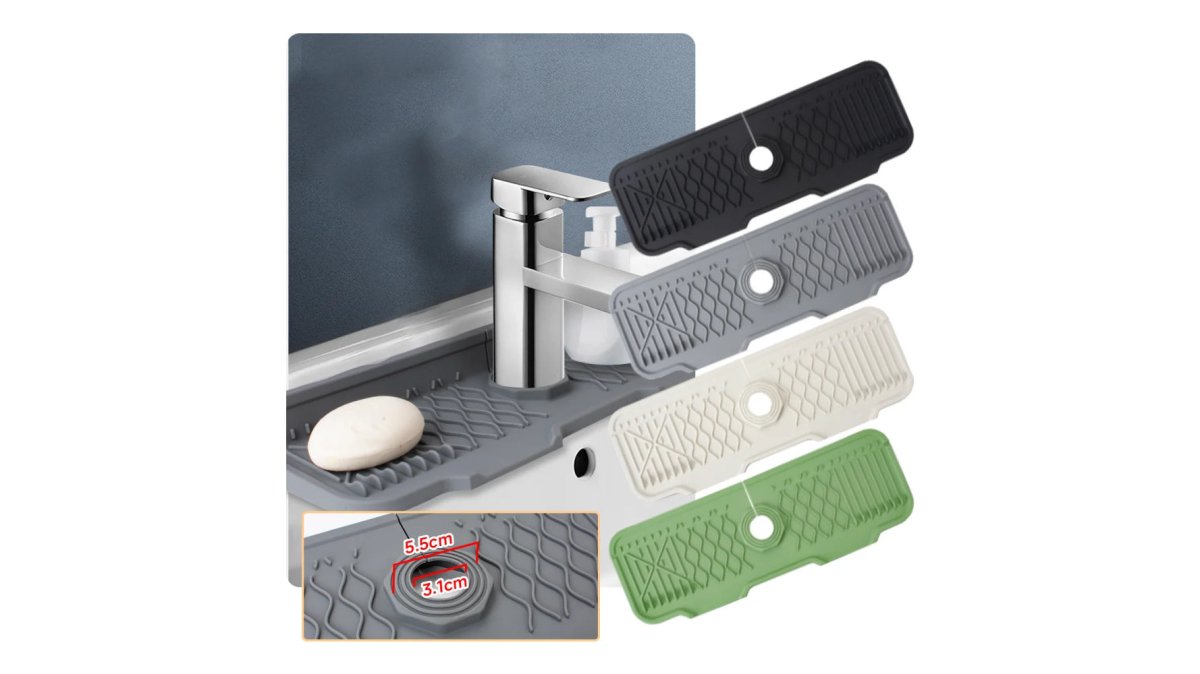
A waterproof under-sink mat made from silicone performs exceptionally well at channeling water back into the sink basin. The sloped design of products like the Sinkelle DryFlow Splash Mat uses silicone's flexibility to guide water flow while staying in place. Silicone mats dry quickly, preventing the standing water that can lead to mold or mildew.

The limitation is cost. For homeowners prioritizing waterproof performance and ease of maintenance, silicone offers strong value.
Silicone's real advantage shows up over time. Unlike plastic, silicone doesn't degrade under repeated moisture cycles. It maintains its original shape and function with minimal maintenance. A simple wipe-down keeps it clean; no special treatments required.
Rust-Resistant Sink Organizers: Materials That Stand the Test
Rust resistance is non-negotiable for sink organizers. The environment around a sink combines moisture, mineral-rich water, and temperature fluctuations, conditions that accelerate corrosion in untreated metals.
Stainless steel organizers eliminate rust risk entirely. The chromium content (typically 10-30% depending on grade) creates a self-healing oxide layer. Even if scratched, stainless steel repairs itself when exposed to oxygen. This passive protection means your organizer stays rust-free without coatings or treatments.
Coated carbon steel (like the Sinkelle FlowRack Pro Caddy) offers another rust-resistant option. Carbon steel is stronger and less expensive than stainless steel, but it requires a protective coating. A quality epoxy or powder-coat finish creates a barrier between the steel and moisture. As long as the coating remains intact, the organizer resists rust. Damage to the coating can eventually lead to surface rust, though this takes months or years.

Plastic and silicone organizers skip the rust question entirely, they contain no metal components that corrode. However, if your organizer has metal hardware (screws, brackets, hinges), those components should be stainless steel to prevent rust spots.
The practical takeaway: for caddies with metal frames, stainless steel or coated steel with verified durability are your best bets. Check product specifications for coating type and thickness. A thicker, professional-grade coating outlasts thin finishes applied to budget organizers.
Best Pullout Organizer for Under Sink: What Durability Means
A durable sink organizer combines material durability with functional design. Durability in this context means the organizer maintains structural integrity, resists water damage, and continues functioning smoothly over years of daily use.
The Sinkelle FlowRack Pro Caddy exemplifies this balance. Its coated carbon steel frame withstands moisture without rusting. The built-in drain spout prevents standing water, a key durability factor. Stagnant water accelerates material degradation and promotes mold growth. By channeling water back into the sink, the caddy reduces the moisture stress on materials.
Stability matters for durability too. An organizer that shifts or tips under load will eventually fail. Weight capacity should match your actual use. If you're storing heavy bottles or tools, an organizer rated for light loads will sag or collapse prematurely.
For durability, prioritize:
- Coated or stainless steel frames (not bare metal)
- Built-in drainage to prevent standing water
- Stable, reinforced construction (no flimsy joints)
- Waterproof materials for baskets and dividers
A durable organizer typically costs more upfront than a budget option lasting 1-2 years. The total cost of ownership, purchase price plus replacements, often favors the durable choice.
Sinkelle HookNest Kitchen Sponge Holder →
Long-Term Performance: How Materials Hold Up to Real Kitchen Conditions
Real kitchens present challenges that showroom displays don't reveal. Moisture isn't just occasional spray, it's daily humidity, condensation on cabinet walls, and occasional spills that sit for hours before cleanup.
Stainless steel organizers show minimal change after years of exposure. They may develop a patina or light discoloration, but structural integrity remains intact. Stainless steel caddies from 5-10 years ago still function as designed.
Plastic organizers often show visible wear. Colors fade, surfaces become dull, and edges may develop a sticky feel as the material breaks down. Plastic that was rigid becomes slightly flexible. Small cracks appear around stress points.
Silicone performs exceptionally well long-term. Food-grade silicone resists UV degradation, doesn't become brittle, and maintains flexibility. A silicone mat or faucet guard from five years ago functions identically to a new one. Color may fade slightly, but material properties remain constant.

Coated steel depends on coating quality. Professional-grade epoxy coatings last 5-7 years under constant moisture. Budget coatings may show rust spots or peeling within 2-3 years. The coating is the weak point, if it fails, rust develops quickly.
Temperature cycling accelerates material stress. Cabinets under sinks experience temperature swings, warm during dishwashing, cool at night. This expansion and contraction stresses materials. Silicone and stainless steel handle these cycles better than plastic. Plastic becomes brittle over time as polymers break down from repeated stress.
Mineral deposits from hard water accumulate on organizer surfaces. Stainless steel and silicone resist staining. Plastic absorbs minerals and becomes difficult to clean. Over years, this buildup becomes permanent.
The honest assessment: stainless steel and silicone maintain performance for years. Quality plastic lasts for several years. Budget plastic may fail within 1-2 years. For areas with high moisture exposure, material choice directly determines how long you'll avoid replacement.
Choosing the Right Material for Your Sink Area
Your specific kitchen conditions should guide material selection. Consider these factors:
Moisture level: Does your cabinet stay relatively dry, or is it perpetually damp? High moisture favors stainless steel or silicone. Moderate moisture tolerates quality plastic.
Water exposure type: Occasional splashes differ from standing water. Faucet splash zones benefit from silicone mats.
Budget: Stainless steel costs more but lasts longer. Plastic is affordable but requires earlier replacement. Silicone sits in the middle, offering durability at moderate cost.
Aesthetic preference: Stainless steel has a professional appearance. Plastic comes in colors. Silicone is available in neutral tones. SinkElle's minimalist Scandinavian-inspired designs in materials like stainless steel and premium silicone integrate durability with modern aesthetics.
Cabinet space: Tight cabinets with unusual angles may require flexible silicone mats or compact plastic organizers. Spacious cabinets can accommodate larger stainless steel caddies.
Maintenance tolerance: Stainless steel and silicone require minimal maintenance, occasional wiping keeps them clean. Plastic may need deeper cleaning to prevent staining.
For most homeowners, a hybrid approach works well. Use stainless steel or coated steel for structural components (caddies). Add silicone mats for splash protection and moisture management. Reserve plastic for lightweight storage where moisture exposure is minimal.
The Sinkelle HookNest Kitchen Sponge Holder, made from durable ABS plastic, works well for organizing cleaning supplies above the sink where splash exposure is moderate. For areas with direct water exposure, the Sinkelle FlowRack Pro Caddy's coated steel frame and drainage design provide superior long-term performance. For faucet areas, the Sinkelle AquaShield Faucet Guard's premium silicone construction resists moisture while maintaining flexibility.
Material durability directly impacts how long your sink organization system will actually function. According to the American Chemistry Council's polymer durability research, properly selected materials for wet environments can extend product lifespan by 50-70% compared to budget alternatives. Investing in waterproof sink organizer materials that match your kitchen's moisture profile means fewer replacements and better long-term value.
Choosing materials for your sink area shapes how your kitchen functions daily. Waterproof sink organizer materials that resist moisture, rust, and degradation transform a cluttered space into an organized, efficient one. SinkElle's range, from the premium silicone DryFlow Splash Mat at $19.99 to the durable FlowRack Pro Caddy at $46.99, combines material science with minimalist design to keep your sink area organized for years.
Frequently Asked Questions
What is the most durable material for a waterproof sink organizer?
Stainless steel and food-grade silicone are the most durable options. Stainless steel resists rust and corrosion in wet environments, while food-grade silicone remains flexible and waterproof for years without degradation. ABS plastic falls in the middle, durable for moderate moisture but prone to warping over time. For areas with heavy water exposure, stainless steel or silicone outperform standard plastic.
Does stainless steel rust under a kitchen sink?
Quality stainless steel resists rust because of its chromium content, which forms a protective oxide layer. However, low-grade stainless steel or coated carbon steel can rust if the protective coating is damaged or if chloride exposure is high. Coated carbon steel (used in products like the Sinkelle FlowRack Pro Caddy) is rust-resistant when the coating remains intact, but scratches or impacts can expose the base metal to moisture and corrosion.
Is silicone a good material for a waterproof under-sink mat?
Yes, food-grade silicone is excellent for waterproof mats. It resists moisture absorption, doesn't degrade from standing water, and remains flexible for years. Silicone mats like the Sinkelle DryFlow Splash Mat and Sinkelle AquaShield Faucet Guard channel water efficiently and dry quickly, preventing mold and mildew. Unlike plastic, silicone won't warp or crack under repeated wet-dry cycles, making it ideal for splash zones and cabinet floors.
How do you prevent moisture damage under a kitchen sink?
Use waterproof organizers and mats that drain standing water rather than trap it. Silicone mats with sloped designs channel water back into the sink basin. Ensure organizers have drainage spouts or gaps that allow air circulation. The Sinkelle FlowRack Pro Caddy prevents water pooling with its built-in drain spout. Pair organizers with quick-dry materials like diatomite (used in the Sinkelle DryStone mat) to absorb residual moisture and reduce cabinet humidity.