


Table of Contents
- Why Under Sink Storage Is the Hardest Working Space in a Small Kitchen
- Start With a Clean Slate: Empty, Inspect, and Measure
- Under Sink Storage Ideas for Garbage Disposal Setups
- Best Under Sink Organizers for Small Spaces
- How to Organize Cleaning Supplies Under Sink Without Clutter
- Maximizing Vertical Space and Cabinet Doors
- Safety and Accessibility Rules Most People Skip
- Keeping It Tidy Long-Term: Maintenance Habits That Stick
- Frequently Asked Questions
Last Updated: September 30, 2026
Why Under Sink Storage Is the Hardest Working Space in a Small Kitchen
The space beneath your sink is the most valuable real estate in a small kitchen, and most people waste it. A typical under sink cabinet holds cleaning supplies, trash bags, dish soap, sponges, and often a garbage disposal, all crammed into a dark, awkward cavity wrapped around plumbing. The pattern is consistent: the sink cabinet becomes a dumping ground because it's hard to see, hard to reach, and hard to fit.
That's a solvable problem.
Start With a Clean Slate: Empty, Inspect, and Measure
Empty the entire cabinet before you plan anything. Pull everything out, including the items you "always keep" there, and set them on the counter or floor.
Then inspect. Look for:
- Water stains or soft spots on the cabinet floor
- Damp patches around supply lines or the P-trap
- Rust on hinges or screws
- Any active drips under the disposal
Next, measure. Write down:
- Cabinet interior width, depth, and height
- Distance from cabinet floor to the bottom of the P-trap
- Space to the left and right of the garbage disposal
- Height of the cabinet door opening
Under Sink Storage Ideas for Garbage Disposal Setups
A garbage disposal changes everything about under sink storage. It occupies one side of the cabinet, radiates heat, and leaves you with a narrow strip of usable space on the other side.
Working Around the Disposal and P-Trap
Plan storage in three zones:
- Left of the disposal: usually the widest clear area, good for taller bottles and a tiered rack
- Right of the disposal: often narrower, better for slim bins, sponges, or brushes
- In front of the P-trap: shallow space, best for flat items like trash bags or a slim caddy
Never store anything directly against the disposal housing. It gets warm during use, and plastic containers pressed against it can warp over time.
Protecting the Cabinet Floor From Leaks and Moisture
Waterproofing the cabinet floor costs very little and saves a lot of grief. Options that work:
- Adhesive vinyl tile or a waterproof liner mat
- A shallow plastic tray that catches drips
- Silicone mats cut to fit around pipe openings
Best Under Sink Organizers for Small Spaces
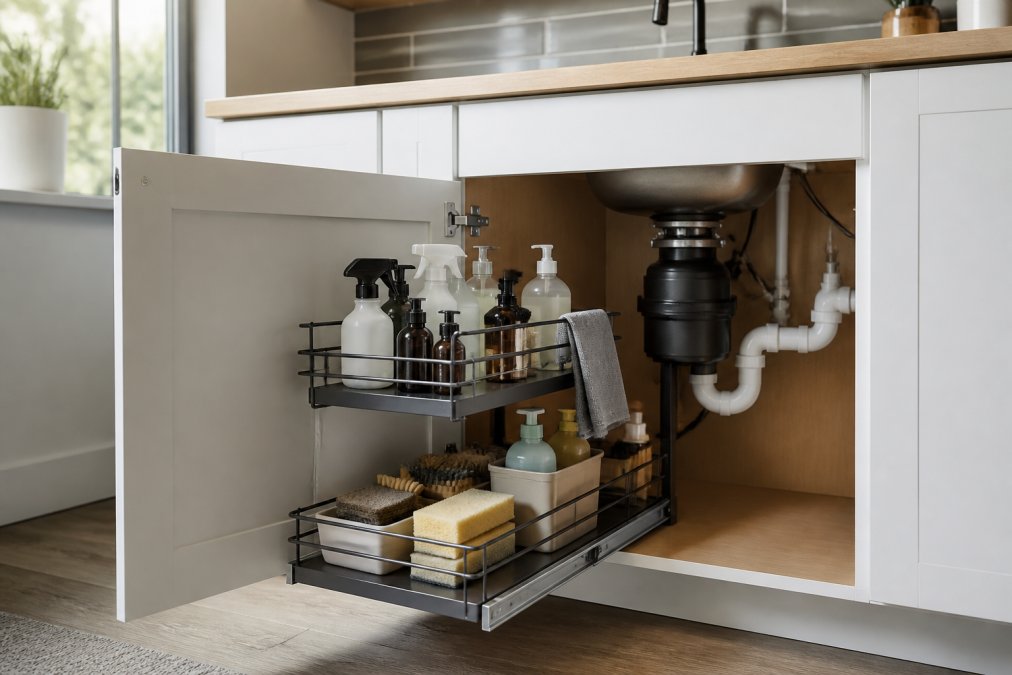
The best under sink organizers for small spaces are tiered or pull-out designs that work around plumbing rather than fighting it. Two-tier metal racks, slim slide-out drawers, and hanging door racks consistently outperform open bins in tight cabinets.
Slide-Out and Tiered Options That Fit Tight Cabinets
Three formats work best under a sink:
- Two-tier pull-out organizers - stack vertically and slide forward, so you reach items without crawling into the cabinet. The SinkElle 2 SlideNest Organizer uses this design with a durable metal frame and smooth sliding drawers, built specifically for under sink and cabinet use.
- Adjustable tiered racks - let you shift shelf height to clear a P-trap or disposal. The SinkElle 2-Tier Pantry Storage Rack uses premium bamboo with an adjustable layout, so it adapts to uneven cabinet interiors.
- Hanging under-cabinet racks - create storage on the cabinet door itself. The SinkElle CabinetFlow Hanging Organizer hangs beneath cabinets and shelves and holds paper towels, dishcloths, cutting boards, and pot lids without using counter or floor space.
For narrow side gaps beside a disposal, a slim tiered spice-style rack works well for small bottles. The SinkElle SpiceRise 3-Tier Organizer is adjustable and includes a built-in drawer for small items.

DIY vs. Ready-Made: What Actually Saves Money
DIY under sink storage looks cheaper until you add up the parts. A homemade tension rod setup, brackets, bins, and a liner can cost nearly as much as a purpose-built organizer, and it rarely fits as well.
| Approach | Typical Cost | Setup Time | Durability | Best For |
|---|---|---|---|---|
| DIY tension rods + bins | Low upfront, adds up | 1-2 hours | Varies, often weak | Renters testing a layout |
| Basic plastic bins | Low | 15 minutes | Warps in moisture | Temporary use |
| Purpose-built tiered rack | Moderate | Under 10 minutes | Metal or bamboo | Long-term organization |
| Pull-out two-tier system | Moderate | Under 10 minutes | Metal frame | Heavy daily use |
How to Organize Cleaning Supplies Under Sink Without Clutter
The fastest way to organize cleaning supplies under sink is to categorize first, contain second, and label last. Most clutter comes from mixing categories in one bin, not from having too much stuff.
Sinkelle PanNest Adjustable Pot →
Categorize, Contain, and Label
Sort everything into groups:
- Daily use: dish soap, sponges, surface spray
- Weekly use: floor cleaner, glass cleaner, disinfectant
- Rarely used: specialty cleaners, backup supplies
- Non-cleaning: trash bags, extra sponges, pet supplies
Then assign each group a container. Keep daily-use items in the front tier where you can grab them without bending. Push rarely used items to the back.
Maximizing Vertical Space and Cabinet Doors
Vertical space is the most underused resource under a sink. Most cabinets have 60 to 75 centimeters of height, and the top third usually sits empty.
Use it by:
- Stacking a two-tier rack on the floor and putting a slim shelf above it
- Adding an adjustable rack that extends upward, like the SinkElle 2-Tier Pantry Storage Rack, which is designed to expand vertical storage
- Mounting a hanging organizer on the inside of the cabinet door
Safety and Accessibility Rules Most People Skip
Safety under the sink is about two things: what you store and how you reach it. Both get ignored in most organization guides.
Storage safety:
- Keep cleaning chemicals in their original containers with labels intact
- Never store food, pet food, or medications in the sink cabinet
- If you have children or pets, use a cabinet lock, even on a well-organized cabinet
- Store flammable products away from the disposal housing
Accessibility:
- Put heavy items low, light items high
- Keep daily-use items between knee and shoulder height where possible
- Use pull-out drawers so you don't have to reach blindly into the back of the cabinet
- Leave a clear path to the shutoff valves in case of emergency
Keeping It Tidy Long-Term: Maintenance Habits That Stick
An organized under sink cabinet stays organized only if maintenance is easy. The trick is building habits that take under a minute, not weekend projects.
Three habits that work:
- The one-in, one-out rule. When you bring a new cleaner home, remove an old or duplicate one. This keeps volume stable.
- The monthly wipe-down. Once a month, pull everything out, wipe the floor and liner, check for leaks, and put it back. Takes five minutes.
- The seasonal deep check. Every few months, look at the P-trap and supply lines for early signs of moisture. Catching a drip early prevents cabinet damage.
Frequently Asked Questions
What are common mistakes to avoid when organizing under sink storage?
The biggest mistake is ignoring the plumbing layout before buying organizers. Measure around the garbage disposal, P-trap, and supply lines first. Another common error is storing cleaning supplies loose, which leads to spills and hard-to-reach items. Skipping a moisture barrier is also risky because slow leaks go unnoticed. Finally, overloading shelves beyond their weight capacity can cause sagging or collapse, especially with metal or plastic units.
How do you organize under the sink with a garbage disposal?
Start by mapping the disposal unit and its clearance zone. Use narrow, stackable bins on either side of the disposal rather than wide containers that block access. A tiered pull-out organizer like the Sinkelle 2 SlideNest Organizer ($55.99) fits compact spaces and slides out for easy reach. Keep heavy items low and frequently used supplies at eye level. Never place anything directly against the disposal motor, and leave room for air circulation.
What materials are best for under sink organizers to prevent water damage?
Metal, stainless steel, and sealed plastic hold up best under sinks where humidity and occasional drips are common. Avoid unfinished particleboard or cardboard, which swell and warp when wet. The Sinkelle 2 SlideNest Organizer uses a durable metal frame, and the Sinkelle CabinetFlow Hanging Organizer is built from metal construction. Adding a waterproof liner beneath organizers gives extra protection and makes cleanup faster.
How can I maximize vertical space under my kitchen sink?
Stack upward instead of outward. Use a two-tier rack like the Sinkelle 2 SlideNest Organizer to double your usable surface without widening your footprint. Hang a CabinetFlow Hanging Organizer ($44.99) under the cabinet shelf to hold paper towels, dishcloths, or cutting boards. Tension rods across the cabinet opening can suspend spray bottles by their triggers. Adjustable shelving lets you shift heights as your storage needs change.
How do I keep my under sink area clutter-free long-term?
Set a simple rule: one category per bin, and nothing goes back unless it belongs there. Wipe the cabinet floor monthly and check pipes for drips at the same time. Replace products as they run out instead of letting empties pile up. A pull-out system makes it easy to see everything at a glance, which naturally discourages stuffing random items into the back. Review the space every season and remove anything you have not used in three months.