


Table of Contents
- Why Under-Sink Organization Matters
- Step 1: Declutter and Purge Expired Products
- Step 2: Measure Your Cabinet Dimensions and Plan Your Layout
- Step 3: Address Plumbing Obstructions and Protect Surfaces
- Best Under Sink Organizers for Small Spaces
- Under Sink Storage Ideas: Categorize, Label, and Maintain
- Safety and Eco-Friendly Disposal Considerations
- Frequently Asked Questions
Last Updated: September 21, 2026
Why Under-Sink Organization Matters
A cluttered under-sink cabinet wastes space and creates safety hazards. Bottles tip over, spills happen, and finding what you need takes forever. Learning how to organize cleaning supplies under sink transforms this space into a functional zone where you know exactly what you have and access is quick and easy.
The difference between chaos and order comes down to three things: decluttering first, measuring your space, and choosing the right storage tools.
Step 1: Declutter and Purge Expired Products
Empty your entire cabinet and check expiration dates on every bottle. Old bleach loses strength and drain cleaners become less effective. Expired products take up space without delivering results.
Throw away anything that's:
- Past its expiration date
- Separated or discolored
- Dried up or thickened
- Leaking or damaged
Be ruthless: if you haven't used something in two years, discard it. One all-purpose cleaner beats three half-empty bottles.
What remains is what you'll organize. You'll be surprised how much space you've freed up.
Step 2: Measure Your Cabinet Dimensions and Plan Your Layout
To organize cleaning supplies under sink effectively, measure the width, depth, and height of your under-sink cabinet from the inside walls. Account for pipes and fixtures that jut out. Write these numbers down and sketch a rough layout marking where pipes are located, this becomes your shopping guide.
Most under-sink cabinets have unused height. Stackable organizers and tiered shelves multiply storage without taking more floor space. Place frequently grabbed items at eye level or easy-reach height; backup supplies can go higher or lower.
Step 3: Address Plumbing Obstructions and Protect Surfaces
Under-sink cabinets present two distinct challenges: physical obstructions and moisture damage. Both require deliberate planning to avoid costly mistakes and accessibility problems.
Working Around Plumbing
Measure the exact location of the drain pipe from the back wall and floor, noting its diameter (typically 1.5 to 2 inches) and clearance on each side. Trace water supply lines and note where they enter the cabinet. Work with these obstacles: a U-shaped organizer that wraps around the drain pipe uses more usable space than one that avoids it. Pull-out drawers that slide around plumbing are more accessible than fixed shelves.
Protecting Cabinet Surfaces from Moisture Damage
Line the cabinet floor with a waterproof barrier (rubber shelf liners, plastic drawer liners, or waterproof mats at least 1/8 inch thick). Wipe down the interior with a dry cloth and clean any mold with equal parts white vinegar and water. For cabinets with water damage, place a silica gel pack or activated charcoal in a corner and replace every 3-6 months. Use non-slip mats under organizers to prevent sliding.
Designing for Accessibility and Limited Mobility
Position frequently used items at waist height (24-36 inches from the floor) to eliminate excessive bending. Pull-out organizers bring items forward without requiring deep reaching. Avoid stacking heavy containers vertically; use a single tier for heavier items and higher shelves for lighter ones. Consider a pull-out cart with wheels if mobility is a concern. Choose clear bins with simple latches over sealed containers if you have arthritis or weak grip strength.
Best Under Sink Organizers for Small Spaces
The right organizers make all the difference. You want durable, waterproof systems that maximize every inch. SinkElle's 2 SlideNest Organizer is purpose-built for this exact challenge.

The Sinkelle 2 SlideNest Organizer features a durable metal frame with a smooth pull-out sliding system. Two tiers give you vertical storage without taking extra floor space. The sliding drawers let you reach items in the back easily. It costs just $55.99.
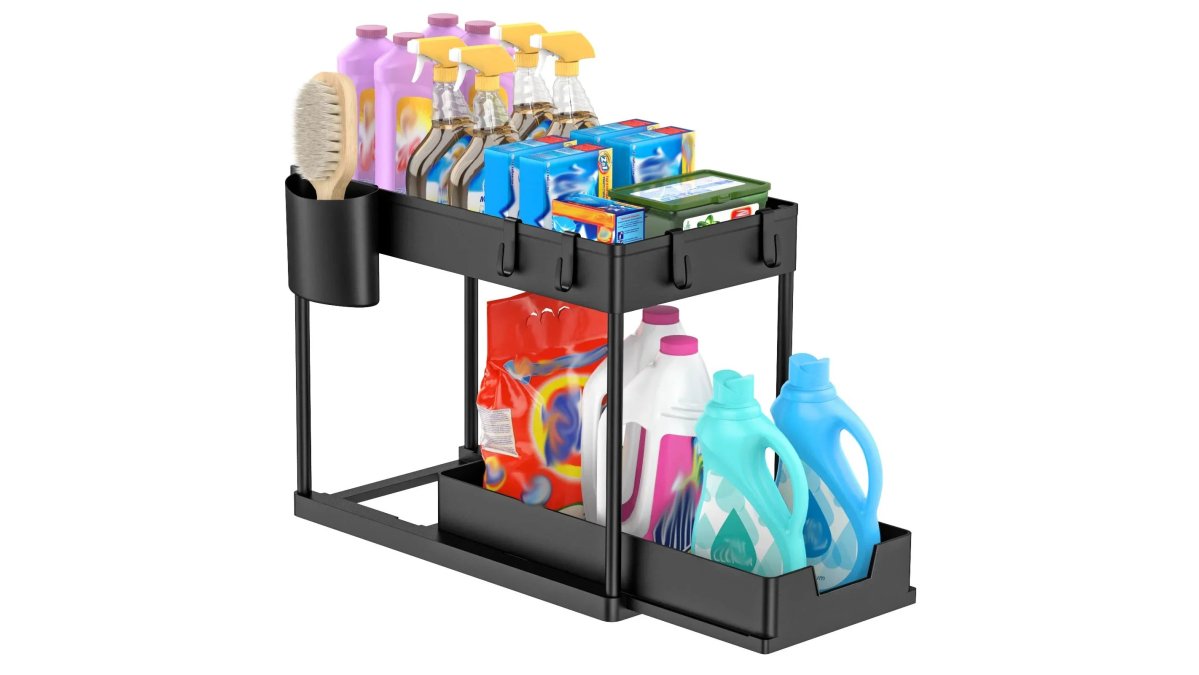
For cabinets with limited depth, the Sinkelle CabinetFlow Hanging Organizer ($44.99) hangs beneath your cabinet shelf. It holds paper towels, dishcloths, and frequently used items without consuming floor space.
The Sinkelle FlowCart Storage Rack ($30.99) works for cabinets where you need mobility. Its slim design fits between appliances. Rolling wheels let you slide it in and out for easy access.
Stackable bins work well alongside any organizer. Choose clear containers so you can see contents without opening them. Avoid opaque bins that hide what's inside.
Under Sink Storage Ideas: Categorize, Label, and Maintain
Organization only works if you maintain it. Create a system that makes sense and stick to it.
Group Items by Category
Keep similar products together. One section for scrubbing supplies. Another for disinfectants. A third for specialty cleaners. Grouping by category means you know exactly where to find what you need.
Glass and surface cleaners go together. Bathroom cleaners stay separate from kitchen cleaners. Drain cleaners and heavy-duty degreasers belong in their own spot.
This approach also prevents accidents. Bleach stays far away from ammonia-based cleaners. Corrosive drain cleaners sit safely apart from everyday supplies.
Sinkelle 2 SlideNest Organizer →
Label Your Containers
Labels transform a good system into a great one. Use a label maker or waterproof stickers. Write the product name clearly. Add the expiration date if the original container is removed.
Labels save time. No more reading every bottle to find what you need. Your family members know exactly where things go. Cleanup takes seconds instead of minutes.
Waterproof labels matter in this humid environment. Regular paper labels peel off and become unreadable. Invest in labels that stick in damp conditions.
Create a Maintenance Routine
Check your under-sink cabinet monthly. Look for leaks or spills. Wipe down any moisture. Toss empty bottles immediately.
Every three months, do a deeper check. Verify expiration dates. Reorganize if items have shifted. Adjust your system if something isn't working.
A five-minute monthly check prevents problems from building up. You'll catch leaks before they damage cabinets. You'll use products before they expire. Your space stays organized without major overhauls.
Safety and Eco-Friendly Disposal Considerations
Cleaning supplies contain chemicals that demand respect. Proper storage, access control, and disposal protect your household and environment. This isn't optional, it's essential.
Child-Proofing and Pet Safety
If your home has children under 12 or curious pets, under-sink storage requires locking mechanisms.
Childproof cabinet locks are inexpensive and install in minutes without tools. Two common types exist:
Magnetic locks use a magnetic key to release the latch. The key stays out of reach (on top of the refrigerator, for example). These locks are nearly invisible and don't interfere with cabinet aesthetics. They work on any cabinet door style.
Sliding latches physically block the cabinet door from opening more than 2-3 inches. They're visible but extremely durable and require no key. Some models allow you to unlock them with one hand if you have your hands full.
Install locks on both cabinet doors if your under-sink cabinet has two doors. A single locked door creates a false sense of security, children quickly learn to try the other side.
Test the lock mechanism regularly. Over time, repeated opening and closing can wear latches.
Proper Storage and Labeling
Keep cleaning products in their original containers whenever possible. Original labels contain critical safety information: ingredients, hazard warnings, first-aid instructions, and disposal guidelines. Transferring products to unmarked containers creates serious safety risks.
Safe Disposal of Expired and Unwanted Chemicals
Research your local disposal options before you need them:
Hazardous waste collection events are held in most communities 2-4 times per year. Contact your local solid waste management department or visit Earth911.com to find collection dates and locations. These events accept cleaning products, paint, batteries, and other hazardous household items for free or a small fee.
Reducing Chemical Storage Through Eco-Friendly Alternatives
The safest chemical is one you don't store. Eco-friendly alternatives reduce the volume of hazardous products in your home and simplify disposal concerns.
Reducing your chemical inventory means:
- Less storage space needed under the sink
- Fewer products to track and maintain
- Lower risk of accidental mixing or spills
- Simpler disposal when you do need to clean out
- Reduced exposure for children and pets
Frequently Asked Questions
What is the best way to organize everything under the sink?
Start by decluttering and removing expired products, then measure your cabinet space and account for plumbing. Use vertical storage solutions like stackable bins and pull-out organizers to maximize space. Group cleaning supplies by category (glass cleaners, disinfectants, scrubbing tools), label everything clearly, and use shelf liners to protect surfaces from spills. The Sinkelle 2 SlideNest Organizer provides a durable 2-tier pull-out system that fits perfectly under sinks while keeping essentials organized and accessible.
What are some common mistakes to avoid when organizing under sink storage?
Avoid storing hazardous chemicals where children can reach them without proper locks or barriers. Don't ignore plumbing obstructions, measure around drain pipes and P-traps before buying organizers. Skip flimsy containers that warp from moisture; invest in waterproof, durable materials instead. Never overcrowd shelves, which reduces accessibility and increases spill risk. Finally, don't organize without a labeling system, unlabeled containers lead to forgotten items and clutter creep.
How do you maximize space in a small under-sink cabinet?
Use vertical space with stackable bins and tiered organizers rather than spreading items across one shelf. Install adhesive hooks on cabinet doors for hanging cleaning cloths or spray bottles. Pull-out sliding systems like the Sinkelle 2 SlideNest Organizer can help make items at the back more accessible. Measure your cabinet depth and choose compact, slim-profile organizers designed for tight spaces. Consider a rolling cart like the Sinkelle FlowCart for items that don't fit under the sink but need quick access nearby.
Should household cleaners be stored under the kitchen sink?
Kitchen sink cabinets are convenient for frequently used cleaning supplies, but safety and moisture are key concerns. Store only non-toxic, everyday cleaners under the sink, keep harsh chemicals, bleach, and ammonia-based products in a separate, locked cabinet away from children and pets. Ensure proper ventilation to prevent moisture buildup, and use waterproof containers to protect against leaks. If your household includes young children, consider alternative storage in a high cabinet or locked utility closet instead.