


Table of Contents
- Why Sponge Hygiene and Fast Drying Matter
- How to Keep Kitchen Sponges Dry and Fresh
- Preventing Bacteria Growth on Kitchen Sponges
- Key Features of Fast-Drying Sponge Holders
- Installation Types: Suction Cup vs. Countertop vs. Over-the-Sink
- Space-Saving Benefits for Small Kitchens
- Maintenance and Cleaning Routines
- Frequently Asked Questions
Last Updated: October 3, 2026
Why Sponge Hygiene and Fast Drying Matter
Kitchen sponges are breeding grounds for bacteria. A wet sponge left in standing water can harbor millions of microorganisms within hours. The problem isn't just gross, it's a genuine health concern. When you use that sponge to clean dishes and countertops, you're spreading bacteria across surfaces where you prepare food.
This is where sponge holders dry quickly become essential. The right holder doesn't just keep your sink organized. It actively prevents bacterial growth by promoting airflow and drainage. Keep sponges elevated, keep water moving away, and let air circulate.

The difference between a wet sponge sitting in a puddle and one that dries between uses is measurable. A sponge that dries quickly will stay fresher longer. You'll replace it less often. Your kitchen will smell better.
How to Keep Kitchen Sponges Dry and Fresh
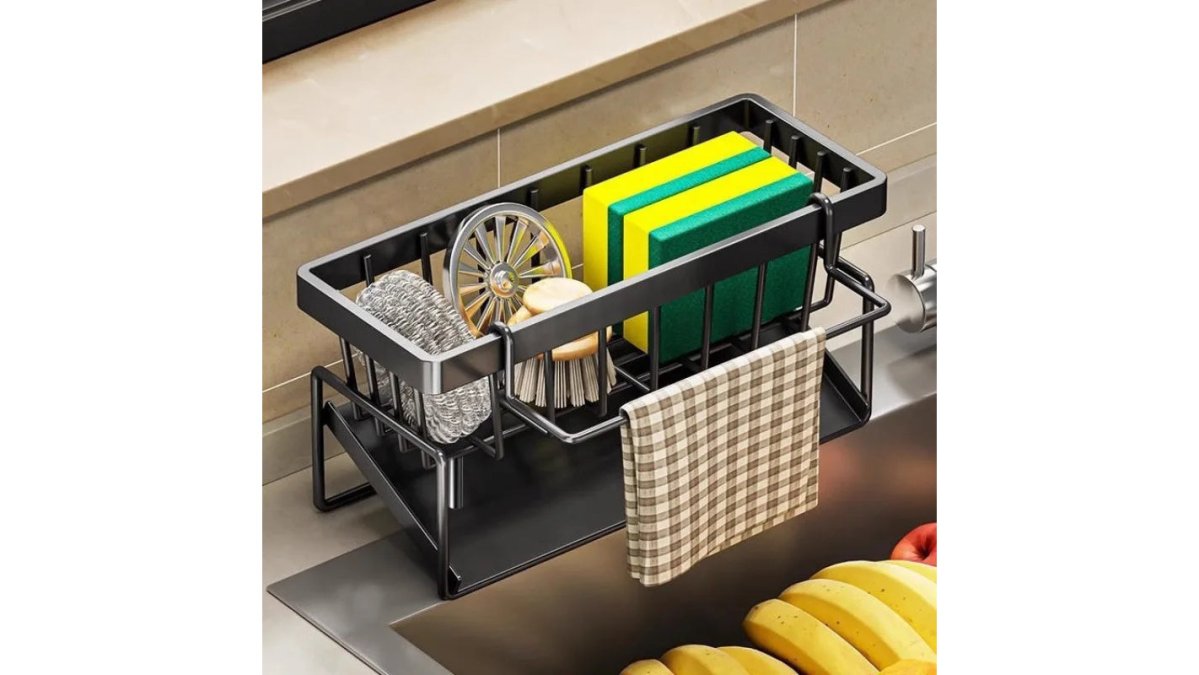
The fundamentals are straightforward: elevation, airflow, and drainage. A sponge sitting flat on your counter will stay damp for hours, whereas sponge holders dry quickly when designed with proper elevation and airflow. A sponge suspended in a holder with an open-grid design dries in minutes.
Start with a holder that doesn't trap water. Solid surfaces and enclosed designs create pockets where moisture collects. Open designs, with gaps and ventilation, let water fall through and air move around the sponge. This is non-negotiable.
Position your holder where air naturally circulates. Near a window or in a spot with indirect airflow is ideal. Avoid placing it directly under a cabinet or in a corner where stagnant air sits. Even the best holder won't dry a sponge quickly if it's in a dead zone.
Squeeze your sponge firmly after each use. Most people rinse their sponges but don't remove excess water. That remaining moisture is what keeps bacteria thriving. A quick, hard squeeze removes water that would otherwise linger for hours.
Consider rotating between two sponges. While one dries completely, you use the other. This extends the lifespan of both and gives each time to dry fully. Many households find this simple habit cuts sponge replacement frequency in half.
Preventing Bacteria Growth on Kitchen Sponges
Bacteria thrive in three conditions: moisture, warmth, and organic matter. Your kitchen sponge provides all three. The goal isn't to eliminate bacteria entirely, that's impossible. The goal is to slow growth enough that your sponge stays safe between replacements.
Fast drying is your most powerful tool. Bacteria reproduce rapidly in wet environments. A sponge that dries to near-dry status within 30 minutes will have far fewer microorganisms than one that stays wet for hours. This isn't theory, it's basic microbiology.
Ventilation matters more than most people realize. A sponge in a sealed container will stay wet longer and harbor more bacteria. A sponge in a holder with open airflow dries faster and stays fresher. The difference in bacterial load between these two scenarios is dramatic.
Drainage prevents water pooling around your sponge. If water sits underneath it, you're creating a reservoir for bacterial growth. A holder with a drip tray or drainage holes keeps water moving away from the sponge itself. This simple feature cuts microbial growth significantly.
Some people sanitize their sponges regularly, microwaving them or running them through the dishwasher. This works temporarily but doesn't address the root problem. A wet sponge will recontaminate within hours of sanitizing. The real solution is keeping it dry between uses.
Replace your sponge regularly. Even with perfect drying conditions, sponges have a lifespan. Most should be replaced every two to four weeks. If yours is staying damp or smelling off, replace it sooner. A fresh sponge costs a few dollars. Foodborne illness costs far more.
Key Features of Fast-Drying Sponge Holders
Not all holders are created equal. Some designs actively promote drying. Others trap moisture despite good intentions. Understanding what makes a holder effective helps you choose one that actually works.
Open-Grid Design and Airflow
An open-grid design is the foundation of a fast-drying holder. Think of it as a framework with gaps rather than solid surfaces. These gaps let air move freely around the sponge. They also allow water to fall through rather than collecting around the base.
Solid designs, especially those with enclosed compartments, trap moisture. Water pools underneath the sponge. Air can't circulate. The sponge stays damp for hours. This is the opposite of what you want.
Look for holders with sides that are mostly open. The more gaps, the better the airflow. Some premium designs use a lattice or mesh framework that maximizes ventilation while still supporting the sponge securely.
Drainage and Water Evaporation
Water evaporation is the mechanism that dries your sponge. Evaporation requires two things: airflow and time. A holder that promotes both will dry a sponge much faster than one that doesn't.
Drainage, the physical removal of standing water, is equally important. A holder with a drip tray or drainage holes prevents water from pooling underneath. This keeps the sponge elevated and allows air to reach its underside.
Some holders have angled surfaces that naturally direct water away from the sponge. Others have feet that create space between the sponge and the counter or sink surface. Both approaches work by the same principle: don't let water sit.
The material of the holder matters too. Non-porous materials like stainless steel or plastic don't absorb water but allow it to drain and evaporate freely.
Material Comparison: Stainless Steel vs. Diatomaceous Earth
Stainless steel holders are durable and sleek. They don't absorb water, so they won't degrade over time from moisture exposure. They're easy to clean and resistant to rust. For a minimalist aesthetic, stainless steel is hard to beat.
The downside? Stainless steel doesn't actively absorb moisture. It relies entirely on airflow and drainage to dry your sponge. This works fine if the design is good, but a poorly designed stainless steel holder will still leave your sponge damp.
Diatomaceous earth is a naturally porous material that actively absorbs water. A holder made from or lined with diatomaceous earth will pull moisture away from your sponge continuously. This accelerates drying significantly.
Diatomaceous earth holders excel at moisture management. They're also naturally antimicrobial, which adds an extra layer of protection. The tradeoff? They're more fragile than stainless steel and require careful handling. They can also be more expensive.
Sinkelle HookNest Kitchen Sponge Holder →
For most users, stainless steel with excellent drainage and airflow design outperforms a poorly designed diatomaceous earth holder. But a well-designed diatomaceous earth holder with good drainage will dry sponges fastest.
Installation Types: Suction Cup vs. Countertop vs. Over-the-Sink
Where you install your sponge holder affects both drying speed and convenience. Different installation types suit different kitchens, but the real challenge isn't choosing a type, it's making it work reliably on your specific sink surface.
Suction cup holders attach to your sink basin or backsplash using vacuum pressure. They require no drilling or permanent installation, making them ideal for renters. However, suction cup performance is highly dependent on surface compatibility.
Suction cups work best on smooth, non-porous surfaces like polished stainless steel or porcelain. They struggle on textured finishes, brushed stainless steel, or surfaces with a matte coating.
If your sink has a brushed or textured finish and a suction cup holder keeps falling, the problem isn't the holder, it's the surface incompatibility.
Suction cups also lose effectiveness over time as the rubber degrades from exposure to heat, soap, and moisture. Most cups remain reliable for 12-18 months before needing replacement.
Countertop holders sit directly on your counter or sink rim. They're stable, require zero installation, and can be moved instantly for cleaning. The tradeoff is counter space, a significant issue in compact kitchens.

Over-the-sink holders mount on the edge of your sink or on the faucet itself. They maximize vertical space and position your sponge directly above the sink where water naturally drains.
Clip-style over-the-sink holders work on standard sink rims but may not fit oversized or undermount sinks. Measure your sink rim thickness before purchasing.
Faucet-mounted holders attach directly to your faucet base. These work on nearly any faucet but can interfere with tall pots or pans if your sink is shallow. They're also the most likely to shift or wobble if the faucet isn't perfectly rigid.
For fast drying, position matters more than installation type. A sponge holder that's elevated, in open air, and positioned where water naturally drains will dry quickly regardless of how it's installed.
The best installation type for your kitchen depends on your sink material, available space, and whether you want a permanent or temporary solution. Countertop holders offer stability but consume counter space.
Space-Saving Benefits for Small Kitchens
In small kitchens, every inch of counter space is precious. A sponge holder that takes up minimal space while keeping your sink area organized is invaluable. This is where vertical solutions shine.
For apartments or compact kitchens, using vertical space can be transformative. You gain usable counter space without losing organization.
Compact countertop holders, designed with a small footprint, can work too. Look for holders that are narrow and tall rather than wide and shallow. They take up less counter space while still accommodating multiple sponges and dish cloths.
The SinkElle FlexiDrain Sink Caddy is specifically designed for space-constrained kitchens. Its compact footprint fits in tight corners while its open design promotes fast drying. At $24.99, it's an affordable way to organize your sink area without sacrificing precious counter space.
Maintenance and Cleaning Routines
A sponge holder needs regular cleaning to stay hygienic and functional. Mineral deposits, soap scum, and mold can accumulate over time.
Clean your holder weekly with warm soapy water and a brush. Pay special attention to any crevices or areas where water collects. For stubborn buildup, soak it in a solution of equal parts white vinegar and water for 30 minutes, then scrub.
If you notice mold or discoloration, increase your cleaning frequency. This usually indicates that moisture is lingering too long. You might also need to improve airflow in that location or choose a holder with better drainage.
Check suction cups monthly. If they're losing grip, clean the cup and the surface it attaches to thoroughly. Sometimes mineral deposits or soap residue is the culprit. If they still don't hold, replacement cups are inexpensive.
For stainless steel holders, dry them completely after cleaning to prevent water spots.
Replace your sponge holder itself if it becomes damaged or if you notice it's no longer drying sponges effectively. A cracked or warped holder won't perform well regardless of how often you clean it.
Frequently Asked Questions
How do sponge holders that dry quickly prevent bacteria growth?
Fast-drying sponge holders use open-grid designs and drainage systems that allow air to circulate and water to evaporate quickly. When sponges stay wet, bacteria and mildew thrive in the moist environment. By promoting airflow and preventing water from pooling, these holders reduce the conditions bacteria need to multiply. Look for holders with ventilation slots and drip trays that keep sponges elevated above standing water.
What's the difference between suction cup and countertop sponge holders?
Countertop models sit on your counter or rest on the sink rim, offering more stability and easier access without installation. Countertop options provide better durability and accommodate more sponges.
How often should I replace my kitchen sponge?
Most kitchen sponges should be replaced every 2 to 4 weeks, depending on use. A fast-drying holder extends sponge life by preventing bacterial buildup and mold. You'll notice when a sponge needs replacing if it develops odors, discoloration, or breaks apart easily.
Will a sponge holder work in a small kitchen with limited counter space?
Yes. The Sinkelle FlexiDrain Sink Caddy, for example, measures 24 × 9.8 × 7.2 cm and fits compactly around your sink basin, keeping sponges organized without consuming valuable countertop real estate.
Keeping your kitchen sponge dry and fresh starts with choosing a holder designed for fast drying. The SinkElle HookNest Kitchen Sponge Holder combines minimalist Scandinavian design with practical drainage and airflow features, making it an excellent choice for any kitchen. With tool-free installation and waterproof materials, it transforms your sink area into an organized, hygienic space in minutes. Shop SinkElle and experience the difference a well-designed sponge holder makes.