


Table of Contents
- Core Scandinavian Kitchen Design Principles
- Neutral Palettes, Light Wood Tones, and Natural Materials
- Minimalist Kitchen Sink Organization Ideas That Stay Tidy
- Small Kitchen Storage Solutions for Apartments
- How to Declutter Kitchen Counters the Scandinavian Way
- Lighting, Layout, and Long-Lasting Materials
- Frequently Asked Questions
Last Updated: September 16, 2026
Core Scandinavian Kitchen Design Principles
Scandinavian kitchen design essentials start with three ideas: minimalism, functionalism, and hygge. This guide from SinkElle breaks down how each one shapes a kitchen that looks calm and works hard. Minimalism removes what you do not use. Functionalism puts everything within reach. Hygge adds warmth so the room feels lived in, not staged.
Minimalism, Functionalism, and Hygge in Practice
Minimalism in a Scandinavian kitchen means fewer objects, each one chosen well. Functionalism means the layout follows your daily routine, not a showroom photo. Hygge is the result: soft light, warm textures, and clear surfaces that make the room inviting.
Neutral Palettes, Light Wood Tones, and Natural Materials
A neutral palette with light wood tones is the backbone of the Scandinavian look. Whites, soft grays, and pale earth tones keep the room bright. Oak and birch bring warmth without heaviness. Matte finishes absorb glare, while glossy surfaces bounce it around and make a small kitchen feel busy.
Oak, Birch, Matte Finishes, and Warm Textures
Oak and birch work because their grain is subtle and their tone is light. Pair them with matte cabinet fronts and stone countertops for contrast. Then add warm textures: ceramic bowls, linen towels, a wooden cutting board left out on purpose.
| Element | Best For | Watch Out For |
|---|---|---|
| Oak | High-traffic counters, open shelving | Heavy grain can dominate small rooms |
| Birch | Cabinets, drawer fronts | Softer surface, dents more easily |
| Matte finishes | Cabinet fronts, walls | Shows fingerprints on dark colors |
| Stone countertops | Prep zones, islands | Needs sealing and regular care |
| Ceramic and linen | Accents, textiles | Keep quantities low to avoid clutter |
Sustainable Sourcing and Low-Emission Finishes
Sustainability is the part of Scandinavian design that most American guides leave out. In practice, it comes down to three questions you can ask before you buy or refinish anything.
-
Is the wood certified? Look for third-party forest certification marks on solid wood and plywood. The Forest Stewardship Council (FSC) and the Sustainable Forestry Initiative (SFI) both run chain-of-custody programs that trace a board back to a responsibly managed forest. Bamboo is a fast-renewing alternative, but it is a grass, not a wood, and it behaves differently under moisture, see the maintenance section below.
-
What is the finish? Cabinet fronts, countertops, and shelving are usually sealed with a lacquer, oil, or water-based polyurethane. Solvent-based finishes and the adhesives in some engineered boards off-gas volatile organic compounds (VOCs) for days or weeks after installation. Water-based finishes and low-VOC adhesives are widely available now and cure faster, which matters in a small kitchen with limited ventilation.
-
Can it be repaired? A solid oak countertop can be sanded and re-oiled. A laminate or vinyl-wrapped front usually cannot. Repairability is the quiet sustainability win in a Scandinavian kitchen: the piece you can refinish is the piece you keep for twenty years.
Minimalist Kitchen Sink Organization Ideas That Stay Tidy
The sink zone is where minimalist kitchens succeed or fail. It collects sponges, soap, brushes, and dishes faster than any other surface. Minimalist kitchen sink organization ideas work when the system is tool-free, waterproof, and sized to the counter you actually have.
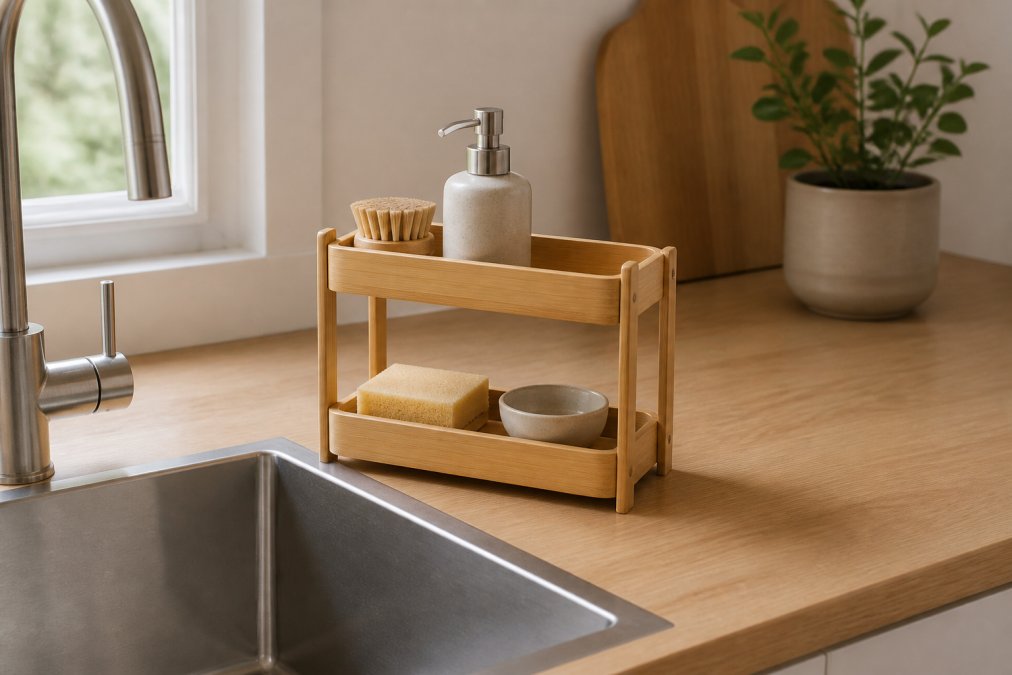
Tool-Free, Waterproof Systems for the Sink Zone
SinkElle builds its sink-area systems around exactly these two constraints: waterproof materials and installation with no tools.
Small Kitchen Storage Solutions for Apartments
Small kitchen storage solutions for apartments depend on vertical space, not more cabinets. When floor area is fixed, height is the only dimension you can still use. Stacking and tiering turn a single counter footprint into two or three usable levels.
A short checklist for apartment kitchens:
- Measure counter depth before buying any rack
- Choose adjustable widths so the piece survives your next move
- Keep the tallest items at the back, shortest at the front
- Leave one clear landing zone beside the sink, always
- Prefer pieces that lift out for cleaning over fixed installations
How to Declutter Kitchen Counters the Scandinavian Way
Decluttering kitchen counters is a repeatable routine, not a one-time cleanup. The Scandinavian approach is to give every object a home, then make returning it effortless. If putting something away takes more than a second, it ends up back on the counter.
Try this sequence:
Sinkelle 2-Tier Pantry Storage Rack →
- Empty one full counter section onto the table.
- Sort into daily use, weekly use, and rarely used.
- Return daily items to the counter in a defined zone.
- Move weekly items into a cabinet at waist height.
- Store rarely used items out of the kitchen or on a high shelf.
- Wipe the surface and stop. Do not reorganize the whole kitchen in one sitting.
Lighting, Layout, and Long-Lasting Materials
Lighting and layout decide whether a Scandinavian kitchen feels calm or cramped. Natural light is the priority, so keep window areas clear and choose window treatments that diffuse rather than block. Layer the rest: pendant lighting over an island or sink, task lighting under cabinets for prep work, and a warm ambient source for evenings.
| Goal | What to Do | Why It Lasts |
|---|---|---|
| More light | Clear windows, add pendants and task lights | Reduces reliance on one fixture |
| Better flow | Keep the sink-stove-fridge triangle tight | Less walking, less mess |
| Longer life | Choose stone, wood, ceramic, metal | Repairable, not disposable |
| Less clutter | One landing zone per work area | Prevents pile-ups |
Maintenance and Longevity: Caring for Light Wood and Stone
Light wood (oak, birch, ash).
- Wipe with a damp cloth and a pH-neutral soap. Avoid ammonia and abrasive cleaners, which dull the finish and raise the grain.
- Re-oil an oiled countertop once or twice a year, or whenever water stops beading. A thin coat, wiped back after twenty minutes, is enough.
- Blot spills immediately. Standing water is the main cause of black water stains and raised grain on solid wood.
- Keep wood out of the direct splash zone around the sink. If you want a wood-look surface there, choose a sealed or composite option instead.
Stone countertops (marble, quartz, granite).
- Marble and other calcium-based stones etch on contact with acidic things, lemon, vinegar, tomato, wine. Wipe those up right away.
- Quartz is non-porous and does not need sealing; natural stone usually does, every one to two years depending on use.
- Use a cutting board. A knife mark on quartz is permanent; a scratch on honed marble can sometimes be buffed out.
- Skip vinegar-and-water DIY cleaners on natural stone. They strip sealant over time.
Bamboo.
- Bamboo is a grass, so it moves more with humidity than oak or birch. Keep it away from the sink splash zone and dry it after wiping.
- Food-safe mineral oil, applied every few months, keeps bamboo from drying and cracking.
Matte cabinet fronts.
- Matte finishes hide glare but show fingerprints on darker colors. A microfiber cloth and warm water handle most marks; avoid wax-based polishes, which leave streaks on matte surfaces.
A simple rule ties the whole section together: choose materials you can maintain with a cloth, a neutral soap, and one annual re-oil or re-seal. If a surface needs a specialty product you will not keep on hand, it will not get the care it needs.
Frequently Asked Questions
What are the core principles of Scandinavian kitchen design?
Scandinavian kitchen design rests on minimalism, functionalism, and hygge. That means clean lines, uncluttered surfaces, and objects chosen because they earn their place. Light wood tones such as oak and birch, a neutral palette, and natural light are standard. In practice, you keep counters mostly bare, store what you use daily within reach, and let a few warm textures (soft textiles, ceramic, wood grain) do the decorating instead of busy patterns or heavy ornament.
How can I bring Scandinavian minimalism into a small kitchen?
Work vertically and keep the sink zone clear. A two-tier bamboo rack, like the Sinkelle PantryRise 2-Tier Storage Rack ($71.99), adds shelf space without eating counter depth, and it is adjustable for tight corners. Choose pieces in light wood or matte black so they recede rather than shout. Then apply one rule: if it is not used weekly, it does not live on the counter. Small kitchens feel larger when surfaces stay empty and storage rises upward.
Which color palettes work best in a Scandinavian-inspired kitchen?
Stick to a neutral base: white, warm gray, soft beige, and pale wood. Add one earthy accent such as muted sage, clay, or charcoal so the room does not read as sterile. Matte finishes keep the look calm, while brass or black hardware adds a small, deliberate contrast. Monochromatic cabinets paired with oak counters and a single ceramic or textile accent are the most reliable combination, and they age well if you want to change accessories later.
How do I declutter kitchen counters and keep them that way?
Decluttering counters is a storage problem, not a willpower problem. Give every item a home: spices on a tiered rack, cookware in an adjustable organizer, wine bottles on a countertop rack. The Sinkelle SpiceRise 3-Tier Organizer ($58.99) and Sinkelle PanNest Adjustable Pot Organizer ($38.99) both lift items off the surface. Then set a five-minute nightly reset. When the storage is tool-free and waterproof, maintaining the habit takes almost no effort.
What materials are most common in Scandinavian kitchen design?
Light woods (oak, birch, ash), stone countertops, ceramic, matte metal, and natural textiles are the staples. Bamboo is a practical, eco-friendly stand-in for wood in organizers because it handles moisture well. The Sinkelle VineNest Bamboo Wine Rack ($64.99) and Sinkelle PantryRise 2-Tier Storage Rack ($71.99) both use natural bamboo, which fits the Nordic aesthetic and holds up in a humid kitchen better than unfinished particleboard.
How can I make my kitchen feel more open and airy?
Let light move and keep surfaces quiet. Use open shelving sparingly so it does not become clutter, choose light wood tones and white or warm gray walls, and add task lighting under cabinets plus a pendant over the sink. Integrated appliances and uncluttered surfaces do more for a sense of space than knocking down walls. In apartments, a countertop rack that organizes vertically, such as the Sinkelle CounterRise 2-Tier Shelf ($34.99), opens up the working area without any renovation.
Do I need to drill or damage walls to get a Scandinavian-style organized sink area?
No. Many Scandinavian-inspired organizers are freestanding or countertop-based, so they need no drilling and leave no marks, which suits renters with strict landlords. The Sinkelle CounterRise 2-Tier Shelf ($34.99) sits on the counter, and the Sinkelle PantryRise 2-Tier Storage Rack ($71.99) is adjustable to fit tight layouts. Check the product listing for assembly requirements before ordering, since some items, like the VineNest Bamboo Wine Rack ($64.99), require simple assembly.