


Table of Contents
- Step 1: Declutter and Purge Expired Cleaning Products
- Step 2: Categorize Your Cleaning Supplies by Type and Use
- Step 3: Choose Clear Bins and Labels for Easy Identification
- Step 4: Set Up Under-Sink Storage and Vertical Space Solutions
- Non-Permanent Kitchen Organization for Renters
- Space-Saving Cleaning Supply Hacks for Small Kitchens
- Maintain Your Organized Cleaning Supplies System
- Frequently Asked Questions
Last Updated: September 3, 2026
Step 1: Declutter and Purge Expired Cleaning Products
Most households accumulate expired products, duplicates, and bottles that no longer serve a purpose. Decluttering first saves space, reduces waste, and ensures every item serves a real function.
Pull everything out from under the sink, cabinets, and storage areas and lay it on a counter so you can see your full inventory. Check expiration dates on every product, while most household cleaners lack formal expiration dates, they lose effectiveness over time (the EPA). If a product has separated, changed color, or smells off, discard it. For safety, follow the EPA guidelines on household hazardous waste disposal to properly dispose of old chemicals.
As you sort, ask yourself: Do I actually use this? Be honest about products you bought with good intentions but never touched. Group similar items together, all-purpose cleaners in one pile, disinfectants in another, specialized products in their own group. This temporary sorting gives you a clear picture of what you're working with.
Step 2: Categorize Your Cleaning Supplies by Type and Use
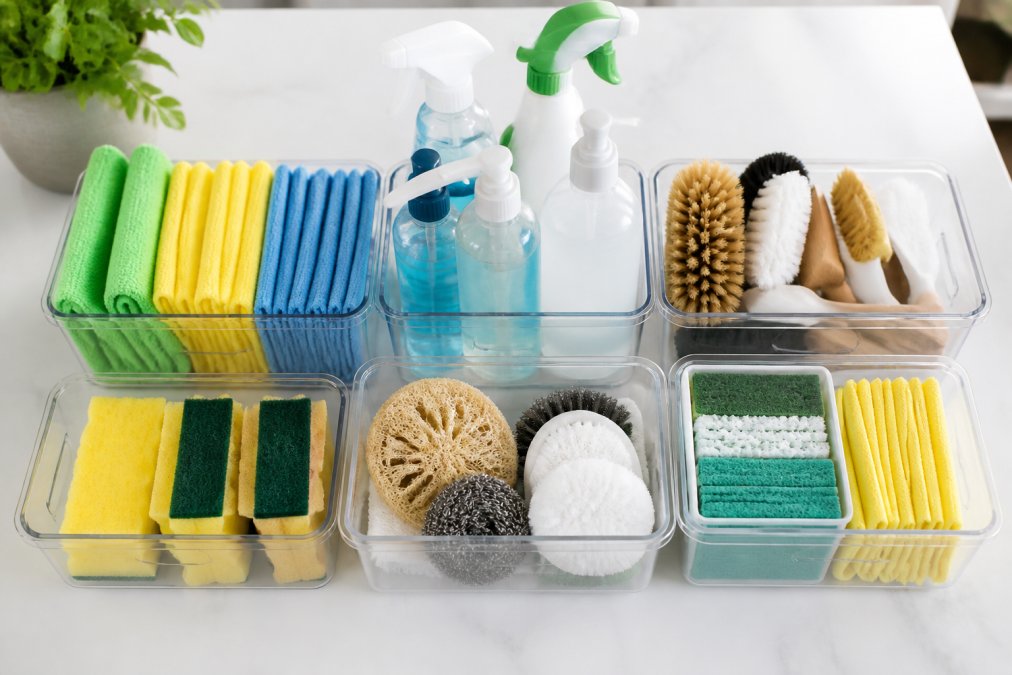
Organizing cleaning supplies by category is the foundation of a system that works. When supplies are grouped logically, you spend less time hunting and more time cleaning.
Start with these primary categories: surface cleaners, disinfectants, glass and mirror cleaners, specialty products, and cleaning tools. Within each category, group by size or frequency of use. Daily-use items should be most accessible; occasional-use products can go deeper into storage.
A portable cleaning caddy holding frequently used items reduces trips back and forth and keeps go-to supplies contained in one place. This works especially well for renters or anyone with limited cabinet space.
Keep supplies close to where you use them. Bathroom cleaners near the bathroom, kitchen cleaners accessible from the kitchen. This saves time and makes it more likely you'll maintain the system long-term.
Step 3: Choose Clear Bins and Labels for Easy Identification
Clear containers are essential for an organized system. You can see exactly what you have at a glance, preventing overbuying duplicates and making it obvious when you're running low on supplies.
Measure your available space before shopping. Square or rectangular containers stack more efficiently than round ones. For liquid cleaners, choose containers rated for chemical storage. Keep original bottles if they're in good condition, the product information and safety warnings matter.
Labels are crucial. Invest in a label maker or print waterproof labels that clearly identify each container's contents and what it's used for. If transferring product to a smaller container, always label it clearly and include safety information. Never transfer chemicals into unlabeled containers or containers that originally held food or beverages.
Consider moisture and humidity in your storage area. Under-sink cabinets can be damp, so choose containers that won't warp in moist conditions. Metal shelving or elevated storage racks keep containers off wet surfaces and improve air circulation.
Step 4: Set Up Under-Sink Storage and Vertical Space Solutions
Under-sink storage is prime real estate but comes with challenges. Most areas have plumbing that limits usable space, and moisture is a constant concern. Work with the space you have rather than fighting against it.
Measure the exact dimensions of your under-sink cabinet, accounting for pipes, garbage disposal, and other fixtures. This measurement determines what storage solutions will actually fit.
The Sinkelle 2 [SlideNest Organizer(/products/sinkelle-2-slidenest-organizer) | sinkelle.com] is designed specifically for under-sink spaces with its pull-out sliding system. It maximizes vertical space while accommodating typical plumbing angles, making it ideal for kitchens with unusual pipe configurations.
For tight spaces or rental kitchens, a rolling cart like the Sinkelle FlowCart Storage Rack works well. It slides into narrow gaps between appliances or next to cabinets, providing mobile storage without leaving marks, especially valuable for renters with strict landlord restrictions.
Vertical space above or beside cabinets often goes unused. Over-the-door organizers, hanging racks, or shelf risers create additional storage without taking up floor space. The Sinkelle DoorNest 5-Tier Hanging Organizer uses door space for storage, particularly useful in small kitchens or apartments where counter space is precious.
Non-Permanent Kitchen Organization for Renters
Renting means you can't drill holes or install permanent shelving. Non-permanent solutions exist that are actually better because they move with you to your next place.
Focus on solutions using existing structures: doors, cabinet interiors, and countertop surfaces. Over-the-door organizers require no installation beyond hanging. Tension rods inside cabinets create dividers without damaging walls. Adhesive shelf liners can be removed cleanly if you choose quality products.
Magnetic strips on cabinet doors hold metal cleaning tools, freeing up drawer space. Command hooks and damage-free adhesive strips work on many surfaces, though always test in an inconspicuous area first.
Rolling carts and freestanding shelving units provide storage without installation and move with you when you relocate. A slim rolling cart fits perfectly in gaps between appliances.

Stackable, modular containers give you flexibility as needs change. If your current setup isn't working, rearrange containers without starting over. This adaptability is crucial in rental situations.
Space-Saving Cleaning Supply Hacks for Small Kitchens
Small kitchens demand creative thinking. Every inch of storage matters, and wasting space on inefficient organization isn't an option.
Vertical space is your greatest asset. Wall-mounted racks, hanging organizers, and shelves that sit on top of existing cabinets add storage without eating into limited counter space. The Sinkelle CabinetFlow Hanging Organizer hangs beneath cabinets, creating storage where nothing existed before.
Consolidate products whenever possible. Instead of keeping three different all-purpose cleaners, use one good multi-purpose product. A microfiber cloth dampened with water cleans most surfaces, reducing the number of different products you need to store.
Use the inside of cabinet doors as hidden storage. Adhesive hooks, magnetic strips, or small shelves mounted on the inside hold frequently used items where they're accessible but hidden from view.
Drawer dividers and small bins inside cabinets prevent items from shifting and make it obvious when you're running low on supplies. Consider consolidating your cleaning supplies into a single, well-organized location rather than spreading them throughout the kitchen.
The Sinkelle 2-Tier Pantry Storage Rack uses vertical space efficiently and works on countertops or inside cabinets. Its adjustable design adapts to different shelf heights, making it ideal for maximizing awkward spaces in small kitchens.
Maintain Your Organized Cleaning Supplies System
Organization isn't a one-time project. Without maintenance, your system degrades quickly. Build habits that keep supplies organized without requiring complete reorganization every few months.
Set a monthly check-in schedule. Spend 10 minutes reviewing your inventory, checking that items are in their designated spots, and ensuring labels are readable and containers aren't leaking. This quick review catches problems early.
Establish a restocking routine. When you use the last of a product, write it on a shopping list immediately. Keeping supplies stocked prevents chaos from running out mid-cleaning session.
Wipe down containers regularly, especially in humid areas like under the sink. This maintenance helps you spot leaks or damage early and keeps labels readable.
Return items to their designated spots immediately after use. This one habit prevents your organized system from devolving into chaos. Make it easy by keeping frequently used items in the most accessible spots.
Seasonal adjustments keep your system relevant. If you do deep cleaning in spring, make sure those specialty products are accessible during that season. Items you use only occasionally can move to less convenient storage spots during other times of year.
Organizing cleaning supplies transforms your kitchen from cluttered to functional. The process starts with decluttering, moves through logical categorization, and succeeds through consistent maintenance. A well-organized cleaning supply system saves you time, reduces waste, and makes your daily routines smoother.
SinkElle understands that efficient kitchen organization starts at the sink. Our minimalist storage solutions, including the FlowCart Storage Rack and SlideNest Organizer, are designed specifically for the space constraints of modern homes. With tool-free installation and waterproof materials, these systems create an organized, functional kitchen in minutes. Shop Now and transform your sink area into an organized, efficient space that supports your everyday living.
Frequently Asked Questions
What is the best way to organize cleaning supplies in a small kitchen?
Start by decluttering expired products, then categorize by type (surface cleaners, disinfectants, tools). Use vertical space with over-the-door organizers or under-cabinet hanging systems like the Sinkelle CabinetFlow Hanging Organizer ($44.99). Store frequently used items in a portable caddy for quick access. Clear bins with labels prevent duplicate purchases and maximize visibility in tight spaces.
How do you store cleaning supplies in a way that's safe and accessible?
Keep hazardous materials in a locked cabinet or high shelf away from children and pets. Use the Sinkelle 2 SlideNest Organizer ($55.99) for under-sink storage with pull-out drawers for safe, easy access. Store heavier items on lower shelves, lighter items above. Color-code containers by product type and keep a quick-reference inventory list on your phone or posted inside the cabinet door.
What space-saving cleaning supply hacks work best for apartments?
Use the Sinkelle FlowCart Storage Rack ($30.99) to fit narrow gaps between appliances. Hang organizers on doors with the Sinkelle DoorNest 5-Tier Hanging Organizer ($65.99). Store supplies in stackable, clear containers under the sink. Attach magnetic strips to the inside of cabinet doors for metal tools. Use the vertical space above your toilet or on the side of a cabinet. Multi-purpose cleaners reduce the number of bottles you need to store.
How often should you declutter and reorganize your cleaning supplies?
Review your cleaning supplies monthly to catch expired products before they become hazardous. Do a deep declutter every 3-6 months to remove items you haven't used. Check expiration dates on bleach, disinfectants, and other chemical products regularly, most last 6-12 months once opened. Reorganize your system seasonally if your cleaning routine changes or if you've accumulated duplicates.
This article was written using GrandRanker