


Table of Contents
- Why Counter Space Near Your Sink Matters
- How to Organize Under the Kitchen Sink
- Using an Over the Sink Organizer to Reclaim Space
- Adding a Sink Caddy for Kitchen Sink Organization
- Small Kitchen Storage Ideas for Sink Areas
- Practical Maintenance: Keeping Your Organized Sink Area Clutter-Free
- Common Mistakes to Avoid When Organizing Near Your Sink
- Frequently Asked Questions
Last Updated: October 10, 2026
Why Counter Space Near Your Sink Matters
A cluttered sink area steals precious kitchen real estate. When you fail to maximize counter space near sink by letting sponges, soap, and cleaning supplies pile up, you lose room for food prep, dishes, and everyday tasks. The sink becomes a bottleneck instead of a functional hub.
A well-organized sink area makes your kitchen workflow faster and your space feel bigger.
When everything's scattered across your counter, simple tasks like grabbing a sponge or setting wet dishes become frustrating. An organized sink area eliminates that friction.
To maximize counter space near sink, you need only small, strategic choices about what you store where and how you store it.
How to Organize Under the Kitchen Sink
The space under your sink often feels unusable due to pipes and plumbing angles, but with the right approach, it becomes valuable storage real estate.
Step 1: Remove Everything and Assess Your Space
Empty everything from under your sink. Measure the height, width, and depth, and note obstacles like pipes, shut-off valves, or the garbage disposal, these determine what storage solutions will fit. Wipe down the cabinet interior to remove residue and buildup.
Step 2: Install Vertical Dividers and Shelving
Vertical storage transforms dead space into organized zones. Pull-out shelf systems slide out like drawers for easy access without reaching or crouching. Vertical dividers keep flat items like cloths and spray bottles visible and prevent toppling. Adhesive shelving strips work for awkward corners without drilling.
Step 3: Group Similar Items and Use Containers
Group like items together and use clear containers so you can see contents without opening them. Label containers if you share your kitchen. Use a waterproof mat or tray on the cabinet floor to protect against moisture and spills.
Using an Over the Sink Organizer to Reclaim Space
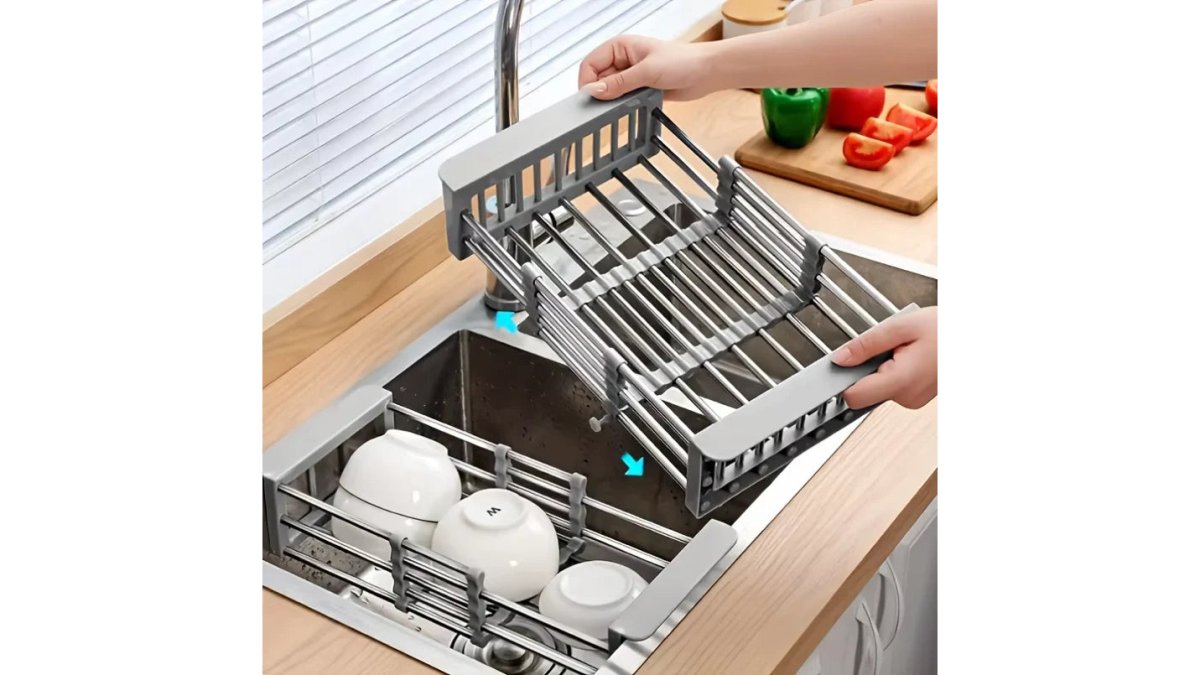
An over-the-sink organizer moves items off your counter and uses the airspace above your sink for drying dishes, rinsing produce, or temporary storage.
Choosing the Right Over-Sink Solution
The Sinkelle ExtendDry Retractable Sink Rack is designed to extend across different sink widths. It works for drying dishes, rinsing produce, or temporarily storing items that need to drain. The stainless steel construction resists rust and handles daily use without warping.

Choose racks with open, ventilated designs to prevent water trapping and mold. Check weight capacity, most quality racks handle 15-20 pounds without sagging.
Installation Tips for Tight Corners and Awkward Layouts
Measure your sink opening (both rim and basin width) and check side clearance before buying. For renters, choose tension-based designs that don't require drilling. Test the fit to ensure it sits level.
Adding a Sink Caddy for Kitchen Sink Organization
A sink caddy keeps daily-use items within arm's reach but off your counter.

What to Store in Your Sink Caddy
Store high-rotation items in your caddy: sponges, brushes, cloths, and dish soap. Don't overstuff, a caddy works because you can see everything and grab what you need in seconds.
Keeping Your Caddy Dry and Hygienic
A wet caddy breeds mold and mildew. Choose one with drainage holes or a design that doesn't trap water.
The Sinkelle FlowRack Pro Caddy uses a suction-cup mounting system with an open drain-rack design. Water flows away from stored items instead of pooling. No drilling required, and it mounts directly on your sink wall.
Empty your caddy weekly. Wipe it dry. Let sponges air out completely before storing them. Damp sponges are bacteria magnets.
Replace sponges every 1-2 weeks, depending on use. A sponge that smells off is already a problem. Don't wait.
Small Kitchen Storage Ideas for Sink Areas
Limited counter space doesn't mean limited options. Smart storage strategies maximize every inch.
Vertical Wall Storage and Hanging Solutions
Your walls are free real estate. Install magnetic strips to hold metal kitchen tools. Hang a narrow shelf above your sink for frequently used items. These moves keep your counter clear.
The Sinkelle HookNest Kitchen Sponge Holder combines storage and hanging capability. It holds sponges and scrubbers while the integrated hook hangs dish cloths. One compact unit does multiple jobs.
Consider a tension rod under your sink cabinet. Hang cleaning spray bottles from it. This frees up shelf space and keeps bottles visible and accessible.
Drawer Dividers and Pull-Out Organizers
Use drawer dividers to separate sponges, cloths, and brushes. Pull-out organizers work well for deep cabinets. Lazy Susans help with circular items like soap bottles.
Practical Maintenance: Keeping Your Organized Sink Area Clutter-Free
Organization only works if you maintain it. Maintenance prevents clogs, odors, and mold that turn a clean sink area into a problem.
Daily Habits to Maintain Organization and Prevent Drain Issues
Spend 30 seconds daily returning items to their homes. Wipe down your sink area while water runs, takes 20 seconds and prevents buildup. Remove wet sponges from your caddy to dry separately and prevent mold.
After cooking with grease or oil: Let grease cool in the pan for 5-10 minutes until it solidifies slightly. Pour it into a disposable container (a used soup can or small jar works well), let it harden completely, and toss it in the trash. Never pour hot or warm grease down the drain, even with running water.
After meals with food scraps: Scrape plates and bowls into the trash or compost bin before rinsing. Use a sink strainer or drain screen to catch any remaining food particles. Empty the strainer immediately after rinsing, don't let food sit and decompose in it.
Sinkelle ExtendDry Retractable Sink Rack →
Weekly Reset Routine
Every Sunday (or your preferred day), do a deeper reset. Empty your caddy completely. Wipe it dry. Clean your over-sink rack if you use one. Rinse out any containers.
Check what you actually used that week. If something never left the shelf, consider moving it elsewhere. Your caddy should contain only items you reach for regularly.
Replace sponges if they're showing wear or smell off. Sponges older than 2 weeks are often harboring odor-causing bacteria even if they look clean (pubmed.ncbi.nlm.nih.gov).
Toss expired cleaning products. An old bottle of cleaner takes up space and doesn't work. Replace it with something you'll actually use.
Listen for early warning signs: If you notice water draining slowly, hear a gurgling sound when you run the sink, or smell a faint sewer odor near the drain, act immediately.
Monthly Deep Clean
Once a month, flush your drain with hot water and baking soda to prevent buildup. Boil a kettle of water (not a full rolling boil, just hot enough to steam). Remove your strainer. Pour ½ cup of baking soda down the drain, followed slowly by the hot water. Let it sit for 15 minutes, then flush with cold water. This gentle method works for routine maintenance and is safe for all pipe types, including older cast-iron and PVC.
Avoid chemical drain cleaners for routine maintenance. They're caustic, can damage older pipes, and are unnecessary for prevention. Reserve them only for stubborn clogs, and follow label instructions carefully.
Wipe down the underside of your sink cabinet. Moisture and small spills accumulate here. A dry cabinet prevents mold and extends the life of your storage containers and organizers.
Common Mistakes to Avoid When Organizing Near Your Sink
Smart organization means learning from common pitfalls. But beyond the obvious (measure before buying, don't store items you never use), there are mistakes specific to sink areas that can damage your plumbing, create drainage problems, or waste money on solutions that don't fit your setup.
Organizational Mistakes
Don't buy organizers before measuring. A beautiful caddy that doesn't fit your space is wasted money. Measure first. Shop second.
Don't store items you never use. That fancy soap dispenser sitting unopened? It's clutter. Keep only what you actually reach for.
Don't overcomplicate your system. The best organization is simple enough to maintain. If your system requires 10 steps to put something away, you'll abandon it.
Don't neglect the space above your sink. Walls and the area above your counter are prime real estate. Use them.
Don't forget about under-sink storage. Many people leave this space completely unused because they assume plumbing makes it impossible. Often, you have more room than you think.
Plumbing and Drainage Mistakes
Don't ignore moisture under your sink. If you have a slow leak from your P-trap or shut-off valve, storing items directly on the cabinet floor will absorb water and warp.
Don't store harsh chemicals next to your pipes. Some drain cleaners and degreasers can corrode metal pipes or damage rubber seals on older plumbing.
Don't assume all sink organizers work with all plumbing setups.
Don't pour grease, oil, or food scraps down the drain, even with a garbage disposal running. A disposal grinds solids, but grease still cools and solidifies in your pipes downstream.
Don't neglect your drain strainer. A strainer that's clogged with food particles restricts water flow and creates the illusion of a slow drain. Empty it daily and rinse it.
System-Specific Considerations
If you have a septic system, be extra cautious about what goes down your drain. Septic tanks rely on bacteria to break down waste. Harsh chemicals, excessive grease, and solid food waste disrupt this process and can cause backups or system failure. Avoid chemical drain cleaners entirely.
If you have older cast-iron or galvanized steel pipes, avoid boiling water for drain flushing. Repeated thermal shock (very hot water followed by cold) can crack old pipes. Use hot (not boiling) water instead. Also avoid chemical drain cleaners, which corrode older metal pipes.
If you rent or live in a building with shared plumbing, check your lease before installing permanent organizers. Tension-based racks and adhesive shelving strips are renter-friendly. Drilling into sink cabinets or walls may violate your lease and cost you your security deposit.
Frequently Asked Questions
How can I maximize counter space near my sink if I have a garbage disposal?
Work around your disposal by using vertical storage solutions like wall-mounted caddies or over-the-sink organizers that don't require under-sink access. The Sinkelle ExtendDry Retractable Sink Rack ($24.99) sits directly over your sink, letting you drain dishes without taking up counter space. For sponges and cleaning supplies, the Sinkelle FlowRack Pro Caddy uses suction cups and needs no drilling, keeping essentials accessible while your disposal stays functional below.
What's the best way to organize a small kitchen without remodeling?
Focus on vertical storage and multi-functional pieces. Use wall-mounted organizers above your sink, install drawer dividers for under-sink cabinets, and choose products that serve multiple purposes. The Sinkelle HookNest Kitchen Sponge Holder ($29.99) holds sponges, scrubbers, and cloths in one spot, freeing up counter space instantly. Avoid buying more items; instead, store what you already have more efficiently by grouping similar products and using containers to stack vertically.
Are sink caddies or over-the-sink organizers better for saving counter space?
Both serve different purposes. Over-the-sink organizers like the Sinkelle ExtendDry Retractable Sink Rack maximize the unused space directly above your sink for dishes and produce. Sink caddies like the Sinkelle FlowRack Pro Caddy ($46.99) store cleaning supplies and essentials vertically on your wall or sink edge. For maximum space savings, use both: the over-sink rack for draining and temporary storage, and a wall-mounted caddy for everyday supplies you need quick access to.
How do I keep my organized sink area from becoming cluttered again?
Establish a daily reset habit: every evening, return items to their designated spots and wipe down surfaces. Dedicate specific containers for specific items so everything has a home. Weekly, remove items that don't belong near the sink. Choose waterproof, durable organizers like the Sinkelle DryFlow Dish Rack ($61.99) that encourage regular use and maintenance. When your storage system looks intentional and minimal, you're more likely to maintain it because clutter becomes immediately obvious.
An organized sink area transforms your entire kitchen. It makes daily tasks faster, your space feel bigger, and your kitchen more inviting. The Sinkelle DryFlow Dish Rack combines stainless steel durability with smart auto-draining design, helping you maximize counter space while keeping your sink area clean and organized. Start with one change, a caddy, a rack, or better under-sink storage, and build from there. Small moves create big results.