


Table of Contents
- Kitchen Sink Organization for Renters vs Homeowners: Key Differences
- Renter-Friendly Under Sink Storage Solutions
- Best Kitchen Sink Organizers 2026
- Non-Damaging Kitchen Organization Hacks
- Homeowner ROI: Permanent vs Temporary Solutions
- Decluttering and Space Optimization Strategies
- Conclusion
- Frequently Asked Questions
Last Updated: September 4, 2026
Kitchen Sink Organization for Renters vs Homeowners: Key Differences
The best kitchen sink organization for renters vs homeowners ultimately comes down to one question: can you drill into the walls and cabinets? Homeowners can install permanent shelving and mounted racks that maximize every inch of space. Renters, bound by security deposits and strict lease agreements, need damage-free solutions that deliver similar results without leaving a trace. This guide from SinkElle breaks down the practical differences, product strategies, and installation methods for both groups so you can reclaim your under-sink area regardless of your lease status.

Kitchen sink organization is the practice of systematically arranging the space under and around your sink to maximize storage, prevent moisture damage, and improve daily workflow. For renters, the challenge intensifies because the best solutions must be fully reversible. Homeowners, by contrast, can invest in permanent fixtures knowing they will recoup value or enjoy the benefit for years.
The core tension is that the under-sink zone is one of the most awkward spaces in any kitchen. The P-trap, garbage disposal, and supply lines create obstacles that generic shelving cannot accommodate. Both renters and homeowners need systems that work around plumbing, but only one group can screw into the cabinet floor to make it happen.
Renter-Friendly Under Sink Storage Solutions
Renter-friendly under sink storage prioritizes three things: no drilling, no wall damage, and easy removal at move-out. The most effective approach combines stackable bins with tension-based organizers that grip cabinet walls without screws.
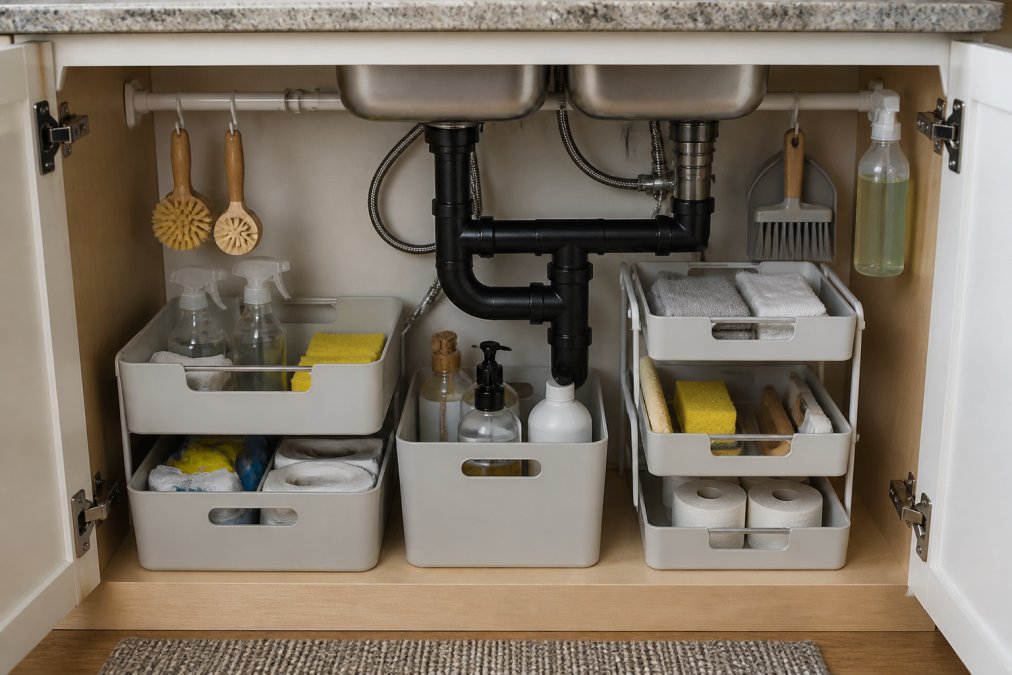
Start by removing everything and wiping down the cabinet interior. Measure the depth, width, and height of the space on either side of the P-trap. Most standard base cabinets run 15 inches deep, but the actual usable depth shrinks once you account for the trap and disposal. Purchase stackable bins that fit the measured footprint, not the full cabinet dimension.
No-Drill Installation Methods
Tension rods are the workhorse of no-drill organization. Install one horizontally near the top of the cabinet to hang spray bottles by their triggers, freeing the floor for bins. Install a second rod vertically to create a divider that keeps cleaning supplies from toppling into the plumbing zone.
Adhesive hooks rated for kitchen use hold lightweight items like scrub brushes and dishcloths on cabinet doors. Look for hooks with a stated weight limit of at least 5 pounds and clean the surface with rubbing alcohol before applying. Let the adhesive cure for 24 hours before hanging anything.
Plumbing Constraints and Safety
The P-trap occupies the center of the cabinet and slopes downward toward the wall. Never rest storage containers directly on the trap, as the weight can stress the pipe joints and cause leaks. Keep the area directly beneath the trap clear for access when a clog occurs.
Garbage disposals add another constraint. The unit's housing extends several inches below the sink floor, consuming vertical space on one side. Dedicate the opposite side of the cabinet to taller storage and use the disposal side for flat items like baking sheets or a slim rolling caddy.
Best Kitchen Sink Organizers 2026
The best kitchen sink organizers 2026 share a common design language: waterproof materials, modular components, and tool-free assembly. Brands are moving away from flimsy wire racks toward solid silicone, stainless steel, and diatomite that withstand constant water exposure.
For most households, the Sink Organization Bundle from SinkElle offers the most complete solution at $43.99. The bundle combines a countertop organizer, a splash mat, and a quick-dry mat, covering the full sink perimeter rather than just the cabinet below. It is designed for tool-free installation, making it equally viable for renters and homeowners.
Waterproof and Moisture-Resistant Options
The single biggest mistake in sink organization is buying porous materials. Bamboo looks beautiful but warps and harbors mold within months of constant water contact. Silicone, stainless steel, and diatomite are the materials that actually survive the environment.
The Sinkelle DryFlow Splash Mat at $19.99 channels water back into the sink through a sloped surface, preventing puddles from forming around the faucet base. The Sinkelle AquaShield Faucet Guard at $17.99 wraps around the faucet to catch drips before they spread across the countertop. Both are made from premium waterproof silicone and wipe clean in seconds.

Stackable and Modular Systems
Stackable bins transform vertical space under the sink, but only when chosen with the plumbing layout in mind. Measure the clearance between the bottom of the sink basin and the cabinet floor. Shallow bins in the 4-6 inch range fit beneath the trap on both sides, while taller bins belong on the outer edges where the cabinet depth is greatest.
The Sinkelle FlowRack Pro at $29.99 handles the countertop side of the equation. Its angled drain tray sends water back into the sink, and the rust-resistant stainless steel construction is built for daily water contact. The integrated bar basket and towel bar consolidate sponges, scrubbers, dish soap, and dishcloths into one footprint.
Non-Damaging Kitchen Organization Hacks
Non-damaging kitchen organization hacks extend beyond the under-sink cabinet to the entire sink zone, including the backsplash, countertop, and cabinet doors. The goal is maximum function with zero permanent alteration.
Adhesive Hooks and Tension Rods
Adhesive hooks work best on smooth, non-porous surfaces. Glass backsplash tiles and painted cabinet fronts provide ideal adhesion. Textured stone and unfinished wood do not. Test the hook on a small, hidden area first to confirm it will not pull paint or leave residue.
Tension rods are not just for the under-sink cabinet. Install one vertically between the countertop and upper cabinet to create a drying rack for cutting boards. Install a second horizontally behind the sink to hang measuring spoons and small utensils within arm's reach.
Preventing Mold and Water Damage
Moisture is the enemy of every sink organization system. Even waterproof containers trap humidity against cabinet walls, creating conditions for mold growth. The Environmental Protection Agency's mold remediation guidance recommends keeping indoor humidity between 30 and 60 percent and fixing leaks promptly to prevent mold from establishing.
Open cabinet doors for 30 minutes after washing dishes to let trapped moisture escape. Place a silica gel desiccant pack or a small moisture absorber in the corner of the cabinet. Check under the sink monthly for signs of condensation, discoloration, or musty odors, which signal that your organization system is trapping water instead of draining it.
Homeowner ROI: Permanent vs Temporary Solutions
Homeowners face a different calculation: does a permanent installation add enough value to justify the effort, or does a temporary system make more sense? The answer depends on how long you plan to stay and whether the kitchen is slated for a full remodel.
Permanent solutions like pull-out drawer systems and custom shelving cost more upfront but deliver daily convenience. A well-executed under-sink pull-out can increase the usable storage of a small kitchen significantly, which matters to prospective buyers during a home sale. The National Association of Realtors' Remodeling Impact Report consistently shows that organizational and decluttering improvements rank among the most requested features by home buyers.
Temporary solutions make sense for homeowners planning a remodel within two years or those who rent out their property. Why invest in custom cabinetry that will be demolished in a future renovation? High-quality modular systems deliver 80 percent of the function at a fraction of the cost, and you can take them to your next home.
Decluttering and Space Optimization Strategies
Decluttering the sink area starts with an honest inventory. Pull everything out and sort into three piles: daily use, weekly use, and never use. Daily use items earn counter space. Weekly use items belong in the cabinet. Everything else gets donated or discarded.
The United States Environmental Protection Agency's Safer Choice standard offers a useful framework for evaluating which cleaning supplies deserve cabinet space. Many households store multiple products that do the same job. Consolidating to one all-purpose cleaner, one disinfectant, and one degreaser frees an entire shelf.
Once you have reduced the inventory, apply the zone method. Assign each product category a specific home: sponges and brushes on the counter organizer, spray bottles on the tension rod, bulk refills in the deep cabinet corners. This system works because every item has a designated place, making it easy to maintain.
| Storage Method | Best For | Installation | Renter Safe | Cost Range |
|---|---|---|---|---|
| Tension rods | Spray bottles, lightweight tools | No tools | Yes | Low |
| Adhesive hooks | Door-mounted scrub brushes | No tools | Yes | Low |
| Stackable bins | Cleaning supplies, refills | No tools | Yes | Low to mid |
| Pull-out drawers | Heavy cookware, bulk items | Requires drilling | No | High |
| Countertop organizer | Sponges, soap, dishcloths | No tools | Yes | Mid |
Conclusion
Organizing the kitchen sink area comes down to understanding your constraints. Renters must prioritize damage-free, tool-free systems that survive a move. Homeowners can weigh permanent installations against flexible modular options based on their remodel timeline.
The Federal Trade Commission's guidance on product warranties reminds consumers to verify return policies before purchasing organizational products, especially when fit depends on unusual plumbing layouts. Measure your space, confirm the return window, and choose materials rated for constant water exposure.
SinkElle's waterproof, Scandinavian-inspired systems solve the core problem for both groups: tool-free installation that works around plumbing constraints while keeping the area dry and clutter-free. The Sink Organization Bundle at $43.99 covers the complete sink perimeter, and every product carries a 30-day guarantee. Get started with SinkElle and transform your sink area into a functional, elegant space in minutes.
Frequently Asked Questions
What's the best way to organize under the kitchen sink without drilling holes?
Use adhesive hooks, tension rods, and stackable bins that sit on the cabinet floor. Tension rods create vertical dividers for spray bottles and cloths, while stackable containers store items neatly. This approach works for both renters and homeowners, requiring zero drilling and taking minutes to install.
How can I prevent mold and moisture damage with renter-friendly under sink storage?
Ensure proper ventilation by leaving gaps between containers and the cabinet walls. Use waterproof, moisture-resistant materials like silicone or stainless steel organizers. Place absorbent mats or diatomite products like the DryStone Quick-Dry Kitchen Mat under your sink to catch leaks before they damage wood. Check regularly for standing water around the P-trap and garbage disposal. Waterproof silicone products prevent moisture buildup that causes mold.
Are permanent under-sink organizers worth the investment for homeowners?
Yes, if you plan to stay in your home for several years. Permanent solutions like custom shelving or drawer inserts maximize storage and improve daily kitchen efficiency. Homeowners can also invest in higher-end modular systems that adapt as needs change. However, quality renter-friendly options like the FlowRack Pro ($29.99) offer similar functionality without the commitment, making them a smart starting point even for homeowners testing what works best.
What's the difference between renter-friendly and homeowner kitchen sink organization?
Renters need damage-free solutions: adhesive hooks, tension rods, stackable bins, and no-drill organizers. Homeowners can install permanent shelving, drill mounting hardware, and customize cabinet interiors. Both benefit from waterproof, stackable systems that reduce clutter and improve accessibility. The key difference is flexibility, renters prioritize easy removal and reversibility, while homeowners can optimize for long-term durability and customization.
This article was written using GrandRanker