


Table of Contents
- Understanding Kitchen Sink Finishes and Durability
- Brushed vs Polished Stainless Steel Sink Finishes
- Matte Black Kitchen Sink Durability and Performance
- Scratch-Resistant Kitchen Sink Finishes: Materials That Hold Up
- Easy-to-Clean Kitchen Sink Finishes for Low Maintenance
- Comparing Finish Performance: Water Spots, Fingerprints, and Everyday Wear
- Choosing the Right Finish for Your Kitchen and Lifestyle
- Frequently Asked Questions
Last Updated: October 15, 2026
Understanding Kitchen Sink Finishes and Durability
The finish you choose affects how your sink looks and performs for years, making kitchen sink finish durability a key consideration for long-term satisfaction. At SinkElle, we know modern homeowners need finishes that resist scratches, fingerprints, and water spots. The right kitchen sink finish durability depends on your lifestyle, water quality, and maintenance willingness.
Sink finishes fall into two categories: stainless steel and composite materials. Stainless steel dominates because it's affordable and widely available; composites like granite and cast iron offer unique durability profiles but need different care.
Brushed vs Polished Stainless Steel Sink Finishes
Brushed stainless steel has a matte, directional texture; polished stainless reflects light like a mirror. The difference matters more than most people realize.
Brushed finishes hide imperfections. Water spots, fingerprints, and minor scratches blend into the texture, the biggest advantage for busy kitchens. A brushed sink looks intentionally worn, not neglected.
Polished finishes show everything. Fingerprints, water marks, and scratches stand out immediately, though they feel more luxurious and photograph better.
For durability, brushed wins: the texture masks wear, while polished requires constant wiping. With hard water or irregular cleaning habits, choose brushed.
| Finish Type | Water Spots | Fingerprints | Scratches | Maintenance |
|---|---|---|---|---|
| Brushed | Hidden | Hidden | Hidden | Low |
| Polished | Visible | Visible | Visible | High |
Matte Black Kitchen Sink Durability and Performance
Matte black is at least three distinct surface technologies with sharply different durability profiles. Knowing which one you're buying matters more than the color.
PVD (physical vapor deposition) matte black. A titanium- or zirconium-based coating is vaporized and bonded to the steel at the molecular level.
Powder-coated matte black. Dry powder is electrostatically applied and oven-cured. Common at mid-market prices, it looks excellent when new but chips most easily at the drain, faucet deck, and rim.
Enameled or ceramic matte black. Glass-like enamel is fired onto a cast iron or steel base.
How each matte black finish ages
- PVD: Holds color and texture 15+ years; fading is rare and minor scuffs buff out with a non-abrasive pad.
- Powder coat: Visible dulling in high-contact zones within 3-7 years; chips at the drain and rim come first. Touch-up pens rarely match the original sheen.
- Enamel: Color holds indefinitely, but any chip is permanent and exposes the base to corrosion.
Finish-specific care for matte black
Matte black is most often damaged by well-intentioned cleaning. The rules are strict:
- Use a soft microfiber cloth or non-scratch sponge, never steel wool, scouring pads, or abrasive powders.
- Use mild dish soap and warm water. Avoid chlorine bleach, ammonia-based glass cleaners, and citrus- or vinegar-based sprays, which attack powder coats and enamel over time.
- Don't leave acidic food residue (tomato, wine, lemon) overnight on powder-coated or enameled surfaces.
- For water spots, a 50/50 water-and-white-vinegar wipe is acceptable on PVD but sparing on powder coat and avoided on enamel.
- Rinse and dry after cleaning to prevent mineral film.
Repairability
This is where matte black separates from stainless. Brushed stainless can be re-grained to erase scratches; matte black cannot, any abrasive removes the coating. PVD scratches are largely permanent, though shallow ones are masked by the matte texture. Powder-coat chips can sometimes be touched up with a manufacturer pen, but the repair shows on close inspection. Enamel chips require professional refinishing, often costing more than the sink is worth.
Scratch-Resistant Kitchen Sink Finishes: Materials That Hold Up
Scratch-resistant kitchen sink finishes aren't scratch-proof, nothing is, but some resist visible scratching better than others.
Stainless steel resists scratching through hardness, and thicker gauges resist denting better: a 16-gauge sink holds up better than 18-gauge.
Cast iron with enamel resists scratching initially but chips if struck hard; once chipped, the exposed iron rusts. It requires careful handling.
The least scratch-resistant finishes are painted or powder-coated surfaces. Any coating can scratch, revealing the base material.
For maximum scratch resistance, choose composite granite or high-gauge stainless steel. On a budget, brushed stainless hides scratches better than polished.
Easy-to-Clean Kitchen Sink Finishes for Low Maintenance
Cleaning difficulty varies dramatically by finish, some need special cleaners, others just soap and water.
Brushed stainless is easiest: water and mild dish soap handle most cleaning, and you wipe with the grain.
Polished stainless needs more attention: dry it after use to prevent spots, wipe fingerprints immediately, and use specialized cleaner to maintain shine.
Composite granite is surprisingly easy: the surface doesn't show water spots, scratches don't reveal contrasting colors, and mild soap and water suffice.
Matte black hides dirt but needs gentler handling: soft cloths and non-abrasive cleaners only.
Composite Granite and Stone Sinks
Composite granite combines crushed stone aggregate with acrylic or polyester resin, offering durability that rivals stainless steel with a distinctive aesthetic.
Composite granite advantages: The speckled pattern naturally hides water spots, fingerprints, and scratches. They're heat-resistant, don't conduct heat like metal, and feel warmer than stainless steel.
Composite granite disadvantages: The resin binder can stain if acidic substances (lemon juice, vinegar, wine) sit for extended periods. They're heavier than stainless steel, requiring proper installation support, and cost more.
They typically last 15-20 years with normal care, ideal for homeowners who prioritize appearance and will pay more for a distinctive look.
Cast Iron and Enamel Finishes
Cast iron sinks with enamel coating represent traditional craftsmanship: a thick cast iron base for durability and a smooth, non-porous enamel glaze.
Cast iron advantages: Nearly indestructible, lasting 30+ years easily. The non-porous enamel resists bacteria, and they conduct heat efficiently, preferred by some for soaking dishes.
Cast iron disadvantages: Enamel chips if struck hard, and rust develops underneath. Repairs are difficult and expensive, the weight complicates installation, and they cost significantly more than stainless steel.
Cast iron suits kitchens where aesthetics matter more than practicality, excellent for farmhouse and vintage designs.
Comparing Finish Performance: Water Spots, Fingerprints, and Everyday Wear
Finish durability isn't sink durability. The underlying material, 16-gauge stainless, composite granite, cast iron, determines whether the sink dents, cracks, or rusts. The finish determines what you see daily: spots, smudges, scratches, and aging. A thick sink with a poor finish will look worse after five years than a thinner sink with a finish suited to the household.
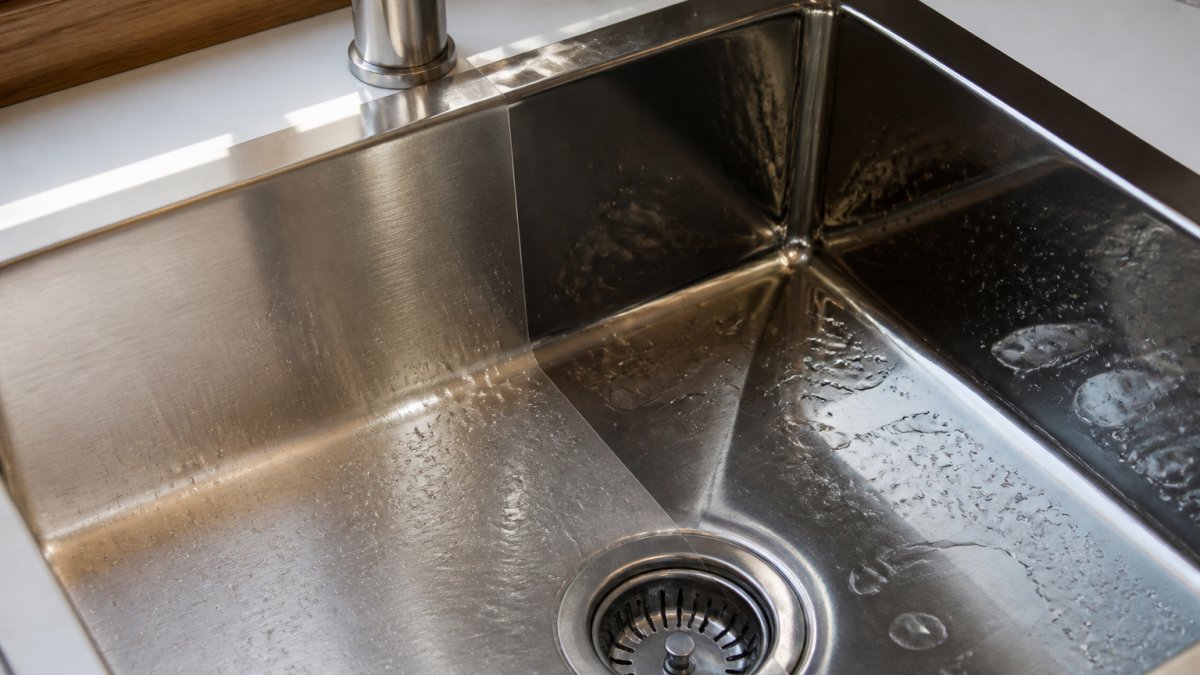
Why water spots form, and which finishes hide them
Water spots are mineral residue: when water evaporates, dissolved calcium and magnesium carbonate remain as a chalky film. The harder the water, the more residue per drop. The U.S. Geological Survey classifies water above roughly 7 grains per gallon (120 mg/L) as hard, and much of the Midwest, Southwest, and parts of the Northeast exceed that. There, finish choice matters more than in soft-water areas.
How each finish handles spotting:
- Brushed stainless: The grain scatters light and mutes spots; a weekly wipe with damp cloth and dish soap keeps it presentable.
- Polished stainless: The mirror surface reflects every mineral ring, so hard-water homes must dry it after each use.
- Matte black (PVD or powder coat): The low-sheen surface hides spots almost completely, its biggest practical advantage in hard-water regions.
- Composite granite: The speckled pattern camouflages mineral film; spots are effectively invisible at normal viewing distance.
- Enameled cast iron: Glossy enamel shows spots like polished stainless; matte versions hide them better.
Fingerprints and smudges
Fingerprints are skin oil and salt, showing wherever a surface reflects light coherently:
- Polished stainless and glossy enamel show prints immediately and need frequent wiping.
- Matte black diffuses prints, visible up close, nearly invisible from standing height.
- Brushed stainless hides prints in the grain.
- Composite granite hides prints entirely.
Scratch visibility vs. scratch resistance
These are different properties. A finish can resist scratching yet show every scratch (polished), or scratch easily yet hide damage (speckled composite). For everyday satisfaction, visibility usually matters more than resistance:
- Brushed stainless: Scratches blend into the grain; light re-graining with a non-woven abrasive pad restores the surface.
- Polished stainless: Scratches are highly visible and can't be polished out by hand without specialized equipment.
- Matte black: Scratches are muted by texture, but any that penetrate the coating are permanent.
- Composite granite: Minor scratches disappear into the pattern; deep gouges aren't repairable.
- Enamel: Resists light scratching but chips on impact, and chips are permanent.
How finishes age over five years
A common pattern reported by homeowners and installers:
- Composite granite: Essentially unchanged, color runs through the material, so no surface layer wears away.
- Brushed stainless: Develops a softer, more uniform patina; wear is barely noticeable.
- PVD matte black: Holds color and texture well; may show faint scuffing in the basin bottom.
- Powder-coated matte black: Dulls in high-contact zones; chips at the drain and rim are common.
- Polished stainless: Turns cloudy and hazy from repeated wiping and mineral exposure.
- Enameled cast iron: Gloss may dull slightly; any chip is a permanent defect.
A short decision framework
Match the finish to the household, not the showroom:
- Hard water + low cleaning enthusiasm: Matte black (PVD) or composite granite.
- Hard water + want stainless: Brushed stainless, 16-gauge.
- Soft water + design-forward: Polished stainless, if you'll dry it.
- Heavy cookware, cast iron pans, frequent scrubbing: Brushed stainless or composite granite.
- Rental or resale kitchen: Brushed stainless, broadest appeal, easiest to maintain.
- Aesthetic-first, low-traffic kitchen: Enameled cast iron or polished stainless.
Choosing the Right Finish for Your Kitchen and Lifestyle
Your choice depends on water quality, maintenance commitment, and design preferences.
If you want minimal maintenance: Brushed stainless requires the least effort, occasional wiping and mild soap.
If appearance is your priority: Polished stainless steel and cast iron offer the most distinctive looks.
Most homeowners benefit from brushed stainless steel, which balances durability, appearance, and maintenance.
At SinkElle, we help homeowners organize sink areas with systems designed around the finish they choose.
Choosing the right kitchen sink finish for durability means understanding how materials perform in your environment.
Frequently Asked Questions
Which kitchen sink finish is the most durable?
304-grade stainless steel with a brushed or satin finish offers the best balance of durability and practicality for most households. Brushed finishes hide water spots and fingerprints better than polished options, making them appear more durable over time. Composite granite and cast iron with enamel are equally durable but require more maintenance. The finish you choose depends on your lifestyle, high-traffic kitchens benefit from brushed stainless steel, while those prioritizing aesthetics might prefer polished or matte black finishes.
Do matte or polished kitchen sink finishes show scratches more?
Polished finishes show scratches more noticeably because light reflects off the smooth surface, making imperfections visible. Matte and brushed finishes diffuse light, making scratches blend into the surface texture. If scratch visibility concerns you, choose a brushed, satin, or matte finish. Polished finishes do scratch more easily during daily use with cookware and cleaning tools, so they require more careful handling and frequent polishing to maintain appearance.
How can I prevent water spots and stains on a kitchen sink?
Water spots occur when mineral-rich water dries on the sink surface. To prevent them, dry your sink immediately after use with a soft cloth. Brushed and matte finishes hide water spots better than polished finishes. Use white vinegar or a stainless steel cleaner weekly to remove mineral buildup. For composite granite and cast iron sinks, apply a protective sealant annually. Hard-water areas benefit most from brushed stainless steel or matte black finishes, which mask spotting and require less frequent polishing than shiny surfaces.
What's the difference between easy-to-clean kitchen sink finishes?
Brushed and satin stainless steel finishes are easiest to clean because they hide water spots and fingerprints, requiring only a quick wipe-down. Polished finishes show every mark but clean to a mirror shine. Matte black finishes hide dirt well but can show water streaks. Composite granite requires gentle scrubbing to avoid dulling the surface. Cast iron enamel needs immediate drying to prevent water spots. Choose brushed stainless steel if cleaning speed matters most; choose matte black if you want to minimize visible dirt between cleanings.