


Table of Contents
- Why Expired Cleaning Chemicals Need Special Handling
- Do Expired Cleaning Products Still Work?
- Identifying Household Hazardous Waste in Your Kitchen
- Can You Pour Cleaning Products Down the Drain?
- How to Dispose of Liquid Ammonia and Other Corrosive Cleaners
- Step-by-Step: Preparing Chemicals for Safe Transport
- Finding Local Household Hazardous Waste Collection Programs
- What to Do If a Container Leaks or Spills
- Frequently Asked Questions
Last Updated: October 20, 2026
Why Expired Cleaning Chemicals Need Special Handling
Expired cleaning chemicals deserve careful attention. They're not like old food you toss in the trash. Expired products can become unstable, unpredictable, and dangerous to handle.
Over time, cleaning chemicals break down. The active ingredients lose strength. More importantly, the chemical composition can change in ways that create safety risks.
Pouring them down the drain or throwing them in regular trash harms the environment and violates local regulations. Water treatment plants aren't designed to handle concentrated household chemicals. Landfills can't safely contain them either.
The good news: safe disposal of expired cleaning chemicals is straightforward once you know the steps.
Do Expired Cleaning Products Still Work?
Most expired cleaning products still have some cleaning power, but that's not the real issue. The question is whether they're safe to use or store.
Cleaning products have shelf lives for a reason. Over months or years, the active ingredients degrade. A five-year-old bottle of all-purpose cleaner might clean 60% as well as a fresh one. But the real concern isn't cleaning power, it's stability.
As products age, they can:
- Separate into layers that won't remix
- Build up pressure inside the container
- Become more caustic or corrosive than intended
- Release stronger fumes than the original formula
- Leak or seep through weakened containers
If the label says to use it within a certain timeframe, that date exists for safety, not marketing. Once a product expires, storing it takes up space and poses a risk. The safest choice is to dispose of expired cleaning chemicals rather than use them.
Identifying Household Hazardous Waste in Your Kitchen
Household hazardous waste includes any product that's flammable, corrosive, caustic, or poisonous. Your kitchen likely contains more of it than you realize.
Common household hazardous waste items include:
- Oven cleaners (caustic and corrosive)
- Drain cleaners (highly caustic)
- Window and glass cleaners (flammable)
- Carpet and upholstery cleaners (flammable)
- Laundry products like bleach (corrosive)
- Furniture polish (flammable)
- Air fresheners (flammable)
- Dishwasher rinse aids (toxic)
- Rust removers (corrosive)
Any product with warning labels like "Caustic," "Corrosive," "Flammable," "Toxic," or "Poisonous" is hazardous waste once expired. The label tells you what makes it dangerous.
Reading Product Labels for Disposal Instructions
The product label is your first resource. Manufacturers include disposal guidance because they know how the product behaves.
Look for these label sections:
- Disposal instructions, often found at the bottom
- Warning symbols, indicate the hazard type
- Storage instructions, tell you how it should be kept
- First aid information, shows what happens if exposed
Many labels say "Do not pour down drain" or "Dispose of according to local regulations." That's your signal that this is hazardous waste. If the label is worn or missing, treat the product as hazardous anyway, don't guess.
Write down what the label says. When you call your local hazardous waste program, you'll have the information they need.
Recognizing Signs of Chemical Instability
Sometimes the container itself tells you the product is no longer safe. Look for these warning signs:
- Rust or corrosion on the container (the chemical is eating through the metal)
- Swelling or bulging (pressure building inside)
- Leaks or seeping (the seal has failed)
- Crystallized or hardened contents (the formula has broken down)
- Strong, unusual odors (the chemical composition has changed)
- Separation into distinct layers that won't mix
- Discoloration or cloudiness that wasn't there before
If you see any of these signs, the product is unstable. Don't open it. Don't try to use it. Treat it as hazardous waste immediately. A leaking or swollen container needs extra care during transport.
Can You Pour Cleaning Products Down the Drain?
No. Most cleaning products should never go down the drain, whether they're expired or not.
Pouring cleaning products down the drain causes real problems:
- They reach water treatment plants in concentrations the system can't handle
- They kill beneficial bacteria in septic systems
- They contaminate groundwater and local waterways
- They persist in the environment for years
- They harm aquatic life
Even "biodegradable" cleaners shouldn't go down the drain in large quantities. The disposal instructions on your product almost always say "Do not pour down drain." That's not a suggestion, it's a requirement.
The only exception: small amounts of diluted products during normal use (like rinsing a mop). But expired cleaning chemicals in their concentrated form must go to a hazardous waste collection program.
How to Dispose of Liquid Ammonia and Other Corrosive Cleaners
Corrosive cleaners like ammonia, bleach, and drain cleaners need special care. These products eat through material. They burn skin on contact. They release toxic fumes.
Never mix corrosive cleaners with anything else. Never try to dilute them. Never pour them down the drain. The fumes alone can cause serious injury.
For corrosive cleaners:
- Keep the original container sealed
- Store it away from other products
- Don't open it or transfer it
- Transport it in a sturdy box in your car's trunk (not the passenger area)
- Tell the hazardous waste facility staff exactly what you're dropping off
Ammonia is especially dangerous when mixed with bleach or other cleaners (the CDC). Even the fumes from mixing them can cause respiratory damage.
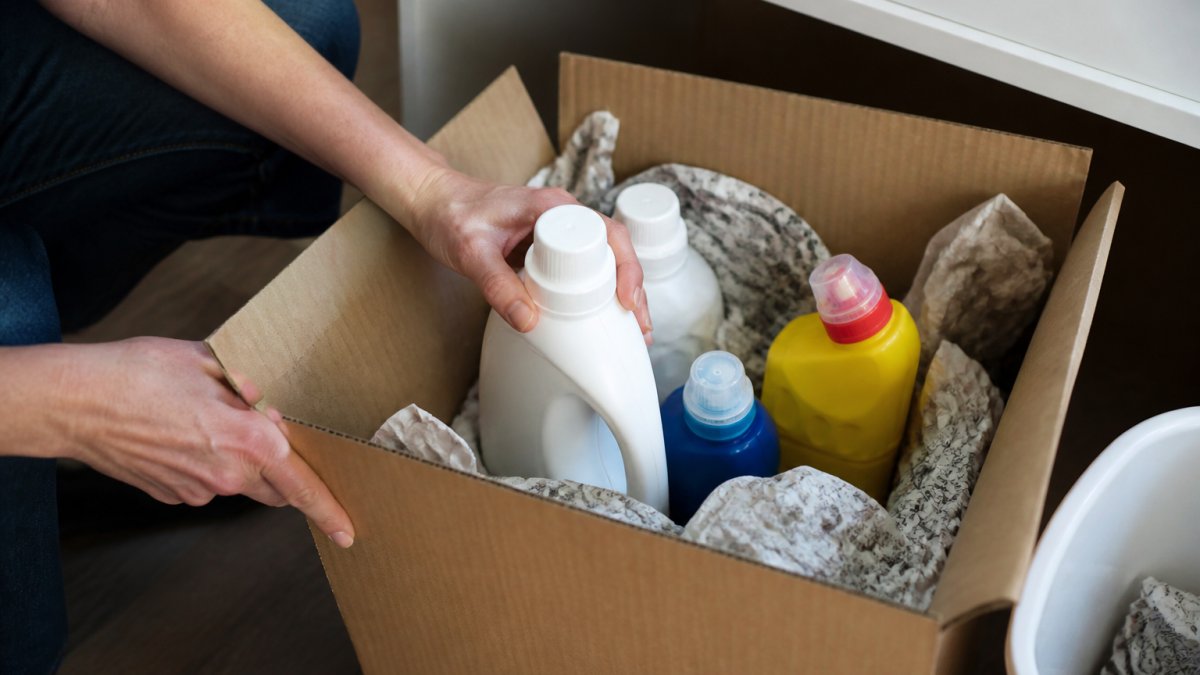
Step-by-Step: Preparing Chemicals for Safe Transport
Before you drive to a hazardous waste collection site, prepare your chemicals correctly.
Step 2: Sort by hazard type. Keep flammable products separate from corrosive ones.
Step 4: Line the box with newspaper. This absorbs small spills and prevents bottles from sliding around.
Step 5: Pack bottles upright. Never lay them on their sides. Upright bottles are less likely to leak.
Step 6: Fill empty space with packing material. Crumpled newspaper, packing peanuts, or towels keep bottles from moving.
Step 7: Seal the box securely. Use strong tape on all seams. Label it clearly: "Hazardous Waste."
Step 8: Keep the box in your car's trunk. Never put it in the passenger area.
Checking Container Integrity
Before packing anything, inspect every container. A leaking bottle ruins the whole box and makes transport dangerous.
Check for these problems:
- Cracks or holes in the plastic or glass
- Rust spots on metal containers
- Loose or cracked lids
- Swelling or bulging
- Any visible leaking or seeping
- Discolored or corroded areas around the cap
If a container is damaged, double-bag it first. Wrap the plastic bag tightly around the bottle, then place it in a second bag. This contains any leak. If the leak is active and visible, call your local hazardous waste facility before transport, they may have special instructions.
Preventing Spills and Leaks During Transport
A spill in your car creates a hazard you can't easily clean up. Prevention is your best strategy.
Keep these practices in mind:
- Never transport hazardous waste in the passenger cabin
- Use your trunk or truck bed only
- Keep the box away from heat sources (don't leave it in direct sunlight)
- Drive carefully, avoid sudden stops and sharp turns
- Don't transport on hot days if possible (heat increases pressure in containers)
- Never leave the car unattended with hazardous waste inside
- If a leak happens during transport, pull over safely, open your trunk, and call your local hazardous waste facility for guidance
Most hazardous waste collection sites are within 10-15 minutes of your home. Keep the trip short and direct.
Finding Local Household Hazardous Waste Collection Programs
Every state has hazardous waste disposal programs. Many counties and cities run collection events or drop-off sites specifically for household chemicals.
Start by searching online for "hazardous waste collection [your county]" or "household chemical disposal [your city]." Most programs are free or very low-cost.
Common ways to dispose of expired cleaning chemicals:
- Permanent drop-off facilities, open year-round, usually run by the county or city
- Collection events, held several times per year, often at community centers or parking lots
- Retail take-back programs, some stores accept products they sell
- Mail-back services, for small quantities (check if your area offers this)
Call ahead before visiting any facility. Ask about:
- Hours of operation
- What products they accept
- Whether you need an appointment
- What information to bring
- Fees (if any)
- How to prepare your chemicals
The EPA's hazardous waste disposal guide provides resources for finding local programs. Your county health department or solid waste management office can also direct you to the nearest collection site.
Bring your product labels with you. If you've lost the labels, describe the product as best you can. The facility staff will know what to do.
What to Do If a Container Leaks or Spills
A leak during storage or transport requires immediate action. Don't panic, but do act quickly.
If the leak is small and contained:
- Move the container to a well-ventilated area outdoors
- Place it in a larger container or on absorbent material (newspaper, towels, or cat litter)
- Open windows and doors to increase air circulation
- Don't try to seal or fix the container
- Call your local hazardous waste facility and ask if you can still bring it in
- Most facilities will still accept leaking containers if they're properly contained
If the leak is large or the fumes are strong:
- Leave the area immediately
- Close windows and doors to contain fumes
- Call your local poison control center or emergency services (911)
- Tell them what product leaked and where
- Don't re-enter until emergency responders say it's safe
- Follow their instructions exactly
If you spill a chemical while transporting it:
- Pull over safely and turn off the engine
- Get out of the car and move upwind (away from fumes)
- Call 911 and describe the spill
- Don't try to clean it up yourself
- Keep other people away from the spill area
- Wait for emergency responders
After a spill is cleaned up:
- Air out your car completely before driving again
- Wash your hands and any exposed skin with soap and water
- If you inhaled fumes, get fresh air and monitor for symptoms
- If symptoms develop (difficulty breathing, dizziness, burning eyes), seek medical attention
A small leak is manageable. A large one is an emergency. When in doubt, call for help.
Keeping your home safe means taking expired cleaning chemicals seriously. Proper disposal protects your family and your community's water supply. At SinkElle, we believe that a well-organized kitchen starts with making smart choices about what stays and what goes. Once you've cleared out expired products, you'll have more space for the cleaning supplies you actually use.
Frequently Asked Questions
Do expired cleaning products still work?
Expired cleaning products may lose potency over time, especially if stored in fluctuating temperatures or direct sunlight. Ammonia-based cleaners and bleach degrade faster than others. More importantly, expired products can become unstable, containers may corrode, seals weaken, and chemical reactions can occur inside the bottle. Even if they still clean, using expired products risks spills, fumes, and environmental contamination. Safe disposal is always the better choice.
Can you pour cleaning products down the drain?
Most cleaning products should never go down the drain. Caustic, corrosive, and flammable cleaners damage pipes, harm water treatment systems, and contaminate waterways. Even diluted products can kill beneficial bacteria in septic systems. Check the product label for disposal instructions, most recommend hazardous-waste collection. If a small amount accidentally spills down the drain, run cold water for several minutes and ventilate the area. Always contact your local environmental protection agency or hazardous-waste program for guidance on specific products.
How do I find a household hazardous waste collection program near me?
Search your local city or county government website for 'hazardous waste collection' or 'household chemical disposal.' Many communities operate drop-off sites or host collection events several times per year. Call your local solid waste management office or environmental protection department for schedules and locations. Earth911.com also maintains a searchable database of collection facilities by zip code. Bring expired products in their original containers, and never mix different chemicals before transport.
What should I do if a cleaning product container leaks or spills?
Immediately open windows and doors to ventilate the area. Do not touch the spill with bare hands. For small spills, place absorbent material (paper towels, cat litter, or absorbent pads) over the liquid to contain it. Wear gloves and carefully transfer the material into a sealed plastic bag. If the spill is large, involves a flammable or highly corrosive product, or you experience difficulty breathing or skin irritation, evacuate the area and call emergency services. Never mix the spilled chemical with other substances. Store the contaminated materials in a secure container and take them to a hazardous-waste collection site.