


Table of Contents
- Why Kitchen Sink Drains Clog and How to Stop It
- What Not to Put Down a Kitchen Sink Drain
- Install a Sink Strainer or Drain Screen
- How to Prevent Grease Buildup in Kitchen Drains
- How to Clean a Kitchen Sink Drain
- Kitchen Sink Drain Maintenance Tips and Schedule
- Keep Your Sink Area Organized to Reduce Clogs
- Frequently Asked Questions
Last Updated: October 10, 2026
Why Kitchen Sink Drains Clog and How to Stop It
Kitchen sink drains clog because grease, food scraps, soap scum, and other debris accumulate inside your pipes over time. Understanding what causes clogs is the first step to prevent kitchen sink drain clogs before they become expensive problems.
Most clogs develop gradually: grease hardens, food particles stick to pipe walls, and soap residue accumulates. Within weeks, water drains slower; within months, you face a complete blockage.
The good news? Many clogs are entirely preventable. Simple daily habits and basic maintenance stop most problems before they start.
What Not to Put Down a Kitchen Sink Drain
Never pour grease, oil, or fat down your drain, they solidify as they cool and trap other debris. Scrape dishes into the trash before washing, as food particles accumulate and create blockages.
Avoid putting these items down the drain:
- Grease and cooking oils
- Coffee grounds
- Eggshells
- Pasta and rice
- Bones and meat scraps
- Fruit and vegetable peels
- Starchy foods like potatoes
- Flour and batter
- Nuts and seeds
- Paper towels or napkins
- Soap scum buildup from dishes
Understanding Your Garbage Disposal
Garbage disposals do not eliminate the need for drain care. They handle soft food scraps only and reduce volume, not risk.
What is safe in a garbage disposal:
- Soft vegetable scraps (lettuce, spinach, cooked vegetables)
- Fruit pulp and soft fruit pieces
- Cooked meat (small pieces only)
- Small amounts of bread or cooked grains
- Dairy products in small quantities
What should never go in a disposal:
- Grease, oil, or fat (even small amounts)
- Bones, shells, or hard pits
- Fibrous vegetables (celery, corn husks, onion skins)
- Pasta, rice, or starchy foods (they expand and jam)
- Coffee grounds
- Nuts or seeds
- Potato peels
- Anything non-food (rubber, plastic, foil)
How to use a garbage disposal safely:
- Always run cold water first. Turn on the water before activating the disposal. Cold water helps solidify grease so it breaks into smaller pieces rather than coating pipes.
- Feed food slowly. Don't overstuff. Drop small amounts in while the disposal runs.
- Keep water running during and after. Run cold water for 15-20 seconds after the disposal stops to flush ground food through the drain.
- Never put your hand in the disposal. Even when off, the blades are sharp and can cause serious injury.
- Avoid chemical drain cleaners. They damage disposal components and can create hazardous reactions.
Maintenance to prevent clogs:
- Run the disposal weekly, even if you don't have food to grind. This keeps internal parts from rusting and prevents odors.
- Once a month, grind ice cubes and a handful of salt. The ice sharpens the blades; the salt scours the chamber walls.
- Clean the disposal splash guard (the rubber ring) weekly with a brush to prevent buildup.
- If the disposal smells, grind a few lemon slices or pour baking soda down the drain and let it sit for 30 minutes before flushing with cold water.
A garbage disposal does not prevent clogs downstream. Treat it as a convenience for soft scraps, not a solution to drain care.
Install a Sink Strainer or Drain Screen
A drain screen or sink strainer is the simplest way to prevent kitchen sink drain clogs. Choose stainless steel (lasts longer than plastic) with fine mesh that drains quickly. Installation takes seconds, just drop it into your drain opening.
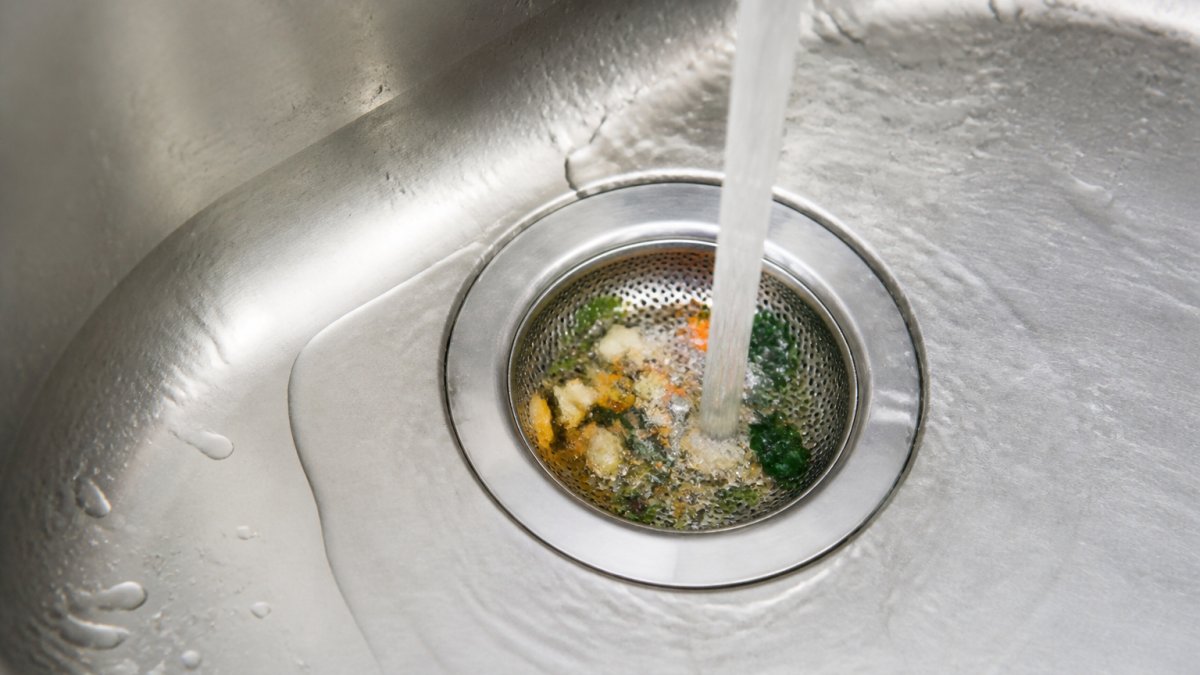
Clean your strainer daily and empty debris into the trash, not down the drain. A clogged strainer defeats its purpose and causes water to back up.
Replace your strainer every 6-12 months. Metal mesh wears out. Holes enlarge. When water starts draining slowly despite regular cleaning, get a new one.
How to Prevent Grease Buildup in Kitchen Drains
Grease is the leading cause of residential drain clogs. Never pour hot grease down the drain, it solidifies as it cools and traps debris. Instead, let grease cool in the pan, pour it into a container, and throw it in the trash once hardened.
Wipe oily dishes with a paper towel before washing. Flush your drain with hot water for 30-60 seconds after washing greasy dishes. Weekly hot water flushes help maintain clear drains.
For stubborn grease buildup, pour half a cup of baking soda down the drain, follow with half a cup of white vinegar, cover the drain for 15-30 minutes, then flush with hot water.
How to Clean a Kitchen Sink Drain
Regular cleaning prevents most clogs using simple household items that are safer than harsh chemicals.
Understanding Hot Water vs. Boiling Water
Not all hot water is the same, and the difference matters for your pipes.
Hot tap water (120-140°F) is safe for all pipe materials and septic systems. Run for 30-60 seconds after washing dishes and weekly as preventive maintenance. Boiling water (212°F) can damage PVC pipes and should be used sparingly (no more than once monthly) only if your pipes are copper or galvanized steel. Always confirm your pipe material before using boiling water.
Baking Soda and Vinegar Method
Baking soda and vinegar create a fizzing reaction that breaks up debris without damaging pipes or septic systems. Remove standing water, pour half a cup of baking soda down the drain, follow with one cup of white vinegar, cover for 15-30 minutes, then flush with hot tap water for 30-60 seconds.
This method works best on slow drains and minor buildup. It does not dissolve solid objects or clear completely clogged drains, call a plumber if water won't drain at all.
Monthly Drain Cleaning Routine
Start with a drain screen to catch visible debris. Remove and empty it completely into the trash.
For routine maintenance on a slow drain:
- Flush with hot tap water for 30-60 seconds.
- Once weekly, repeat the hot water flush.
- Once monthly, use the baking soda and vinegar method.
For deeper cleaning on a drain that's draining noticeably slower:
Sinkelle HookNest Kitchen Sponge Holder →
- Use baking soda and vinegar as described above.
- Wait 24 hours before using the sink heavily.
- If drainage improves, return to weekly hot water flushes.
- If drainage does not improve, call a plumber. You may have a partial blockage that requires professional removal.
When to Avoid DIY Cleaning Methods
- Completely clogged drain (no water drains at all): Do not force water down. Call a plumber. Pressure can damage pipes or push the blockage deeper.
- Recurring clogs within 2-3 weeks: This suggests a deeper problem (tree roots, pipe damage, or a blockage beyond the trap). Professional inspection is needed.
- Foul odors that persist after cleaning: This may indicate bacterial growth or a vent pipe issue. A plumber can diagnose and fix the root cause.
- Gurgling sounds from other drains: This points to a vent pipe blockage or a problem in the main drain line. DIY methods won't help.
- Old or cast-iron pipes: If your home was built before 1970, your drain pipes may be cast iron or galvanized steel. Avoid boiling water and chemical cleaners; use only hot tap water and baking soda/vinegar.
Avoid Commercial Drain Cleaners
Harsh chemical drain cleaners corrode pipes, harm septic systems, pose safety hazards, and are often less effective than simple methods. If hot water and baking soda/vinegar don't work, call a plumber for drain snake or hydro-jetting services.
Kitchen Sink Drain Maintenance Tips and Schedule
A maintenance schedule keeps your drains clear year-round. Consistency matters more than occasional deep cleaning.
Daily: Empty your drain screen and rinse it. This takes 10 seconds and prevents debris from accumulating.
Weekly: Flush your drain with hot water for 30-60 seconds after washing dishes. This keeps pipes clear.
Monthly: Use the baking soda and vinegar cleaning method. This dissolves buildup before it becomes a problem.
Quarterly: Do a deeper cleaning with hot water and vinegar. Pour one cup of vinegar down the drain, wait one hour, then flush with boiling water.
Annually: Have a professional plumber inspect your drain if you notice slow drainage or recurring clogs. Early detection prevents expensive repairs.
Watch for warning signs. Slow drainage is the first indicator. Water pools around the drain while washing dishes. Gurgling sounds come from the drain when you use other fixtures. Unpleasant odors rise from the sink.
Address slow drainage immediately. Most clogs take weeks to develop. Catching them early means simple fixes work. Waiting means expensive plumbing calls.
Keep a maintenance log. Write down when you clean your drain. Note any slow drainage or problems. This helps you spot patterns and adjust your routine.
Keep Your Sink Area Organized to Reduce Clogs
Organization prevents clogs by making good habits easier to maintain. When everything has a place, you're more likely to follow drain-safe practices consistently.
Store dish soap, sponges, and cleaning supplies near the sink. When tools are within reach, you use them more often. You're more likely to rinse dishes properly and wipe grease before it goes down the drain.
Keep a small trash bin under the sink or nearby. When you have a convenient place to dispose of food scraps, you won't dump them down the drain. This is the single biggest behavior change that prevents clogs.
Use the SinkElle FlowRack Pro Caddy to organize your sink essentials. Its wall-mounted design keeps supplies off your countertop while keeping them accessible. When your sink area looks clean and organized, you're motivated to maintain it.

The SinkElle ExtendDry Retractable Sink Rack provides a dedicated space for rinsing produce and draining dishes. By using this rack, you keep food particles out of the drain and contained in one area. Empty it regularly into the trash.
Label your storage containers. Everyone in your household should know where things go. When people know the system, they maintain it.
Clean your sink area weekly. Wipe down surfaces. Empty trash. Organize supplies. A clean space encourages clean habits.
The SinkElle AquaShield Faucet Guard prevents water splashes and drips from spreading across your counter. A dry, clean sink area is easier to keep organized and makes drain maintenance feel effortless.
| Maintenance Task | Frequency | Time Required | Impact on Drain Health |
|---|---|---|---|
| Empty drain screen | Daily | 1-2 minutes | Prevents immediate blockages |
| Hot water flush | Weekly | 2-3 minutes | Dissolves soap and residue |
| Baking soda & vinegar cleaning | Monthly | 30 minutes | Breaks up buildup |
| Professional inspection | Annually | 30-60 minutes | Catches problems early |
| Organize sink area | Weekly | 10 minutes | Reinforces good habits |
Kitchen sink drain clogs are preventable. Most clogs result from poor habits and inconsistent maintenance, not defective plumbing. By keeping grease and food scraps out of your drain, using a strainer consistently, and following a simple monthly maintenance schedule, you'll keep water flowing freely for years.
The SinkElle product line makes drain maintenance easier by keeping your sink area organized and functional. Our waterproof, minimalist organization systems help you maintain good habits without the clutter.
Frequently Asked Questions
What should you never put down a kitchen sink drain?
Never pour grease, oil, or fat down your drain, they solidify and cause blockages. Avoid coffee grounds, eggshells, rice, pasta, bones, and fibrous vegetables like celery. These items don't break down easily and accumulate in your pipes. Starchy foods absorb water and expand, worsening clogs. Keep a small compost bin or trash container near your sink to dispose of these items properly.
How can I prevent grease from clogging my kitchen sink?
Let grease cool and solidify in a container, then throw it in the trash. Never pour hot oil or cooking grease directly down the drain. Wipe greasy pans with a paper towel before washing. Use a drain screen to catch any grease particles. Flush your drain weekly with hot water to dissolve minor grease buildup before it accumulates.
How often should I clean my kitchen sink drain?
Flush your drain with hot water weekly to prevent buildup. Once a month, use baking soda and vinegar or a natural drain cleaner for deeper cleaning. If you notice slow drainage or odors, clean immediately rather than waiting. Homes with multiple people or frequent cooking benefit from twice-weekly hot water flushes to stay ahead of clogs.
Does running hot water prevent kitchen sink drain clogs?
Yes, hot water helps dissolve grease and soap residue before they solidify in your pipes. Run hot water for 30 seconds after washing dishes to flush debris down the drain. Weekly hot water flushes are an effective, low-cost prevention method. However, hot water alone won't prevent clogs from food solids or hair, it works best combined with a drain screen and proper disposal habits. For stubborn buildup, combine hot water with baking soda and vinegar for better results.