


Last Updated: October 24, 2026
Quick Summary
Luxury kitchen sink materials balance aesthetic appeal with durability and functionality, resisting scratches, stains, and heat while complementing high-end countertops and cabinetry. Top options include stainless steel for versatility, fireclay for traditional elegance, quartz composite for modern durability, and granite composite for stone-like appearance with improved reliability. Choose based on your lifestyle, maintenance preferences, and design vision rather than price alone.
- Stainless steel is the most popular luxury sink material, versatile and affordable compared to specialty options, though it shows water spots and fingerprints easily.
- Fireclay sinks offer traditional elegance but require gentle handling, as the glazed surface can chip and chips cannot be easily repaired.
- Quartz and granite composite sinks resist scratches and heat, hide water spots with speckled finishes, and require only mild soap and water maintenance.
- The kitchen sinks market was valued at $3.9 billion in 2025 and is projected to reach $5.3 billion by 2033, reflecting growing investment in premium materials.
- With proper care, stainless steel and quality composite sinks typically last 15-25 years, while fireclay can last decades but is vulnerable to impact damage.
Table of Contents
- What Makes a Kitchen Sink Material Luxurious
- Stainless Steel Kitchen Sink Pros and Cons
- Fireclay vs Quartz Composite Sink: Which Suits Your Kitchen
- Granite Composite Kitchen Sink Durability and Performance
- Kitchen Sink Material Maintenance: What You Actually Need to Do
- Matching Your Sink Material to Countertops and Kitchen Style
- Making Your Final Choice: Cost, Lifestyle, and Long-Term Value
- Frequently Asked Questions
What Makes a Kitchen Sink Material Luxurious
A luxury kitchen sink material balances aesthetic appeal with durability and functionality, it must perform beautifully for years while elevating your kitchen's design.
Luxury sink materials resist scratches, stains, and heat damage, maintain their finish under daily use, complement high-end countertops and cabinetry, and feel like a deliberate design choice.
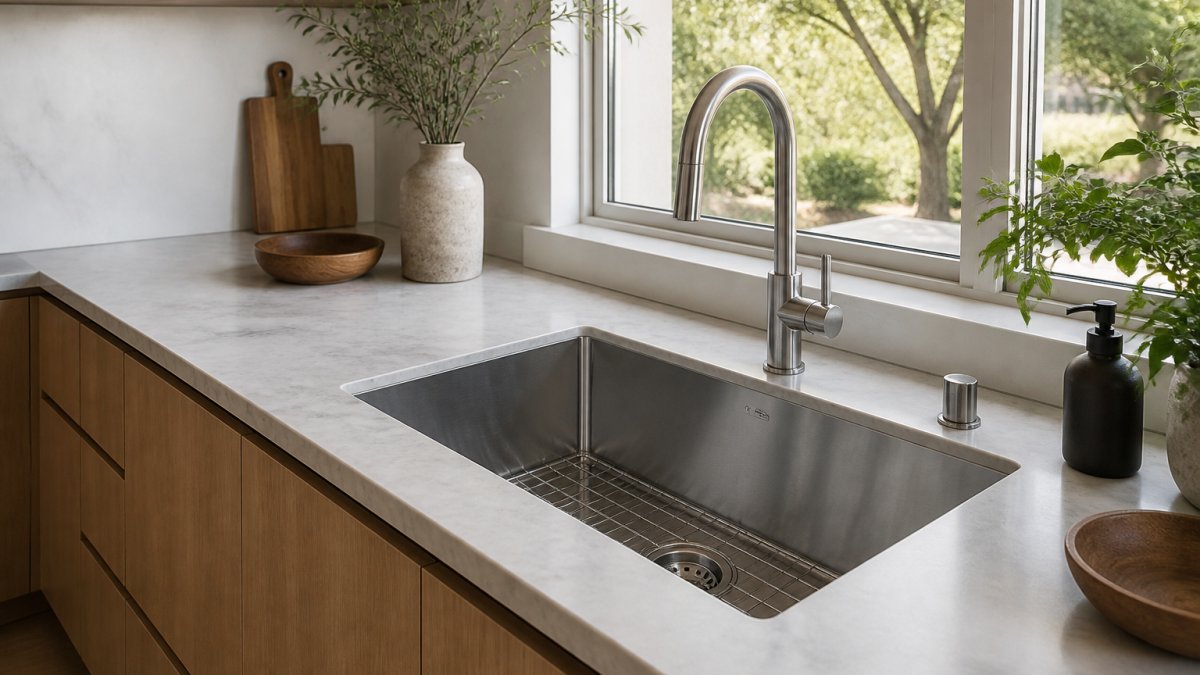
The market for quality kitchen fixtures continues to grow. According to Grand View Research's kitchen sinks market analysis, the kitchen sinks market was valued at $3.9 billion in 2025 and is projected to reach $5.3 billion by 2033. This expansion reflects homeowners' growing investment in premium kitchen materials.
Choosing luxury kitchen sink materials that match your lifestyle is a decision that affects not just your kitchen's look, but how you use your sink every day.
Stainless Steel Kitchen Sink Pros and Cons
Stainless steel remains the most popular luxury sink material: versatile, durable, and compatible with nearly any kitchen style, with a sleek, timeless aesthetic.
Pros of stainless steel sinks:
- Resists corrosion and rust when properly maintained
- Easy to clean with standard household products
- Works with any countertop material
- Affordable compared to specialty materials
- Reflects light, making kitchens feel larger
- Handles hot cookware without damage
Cons of stainless steel sinks:
- Shows water spots and fingerprints easily
- Can scratch with abrasive scrubbing
- Loud when water hits the basin
- May require regular polishing to maintain shine
- Fingerprints visible on brushed finishes
Finish matters: polished stainless steel gleams but needs frequent wiping, while brushed finishes hide spots better but show scratches more. Consider your actual cleaning habits before deciding.
Most homeowners find stainless steel strikes the right balance between luxury appearance and practical maintenance.
Fireclay vs Quartz Composite Sink: Which Suits Your Kitchen
These two materials represent different luxury approaches: fireclay offers traditional elegance, quartz composite delivers modern durability. Your choice depends on your kitchen's style and lifestyle.
Fireclay sinks are ceramic-based and fired at extremely high temperatures. They create a smooth, glossy finish that feels premium.
Fireclay strengths include its smooth, elegant surface and better-than-expected stain resistance. It feels substantial and luxurious, but installation requires proper support because fireclay is heavy.
Fireclay weaknesses matter too: the glazed surface can chip if you drop heavy cookware, acidic foods can dull the finish, and chips can't be easily repaired. It requires gentle handling.
Quartz composite sinks blend crushed quartz with resin. They're engineered for durability. These sinks come in colors ranging from solid blacks to speckled patterns that hide dirt well.
Quartz composite strengths include excellent scratch resistance and heat tolerance. You can set hot pans directly in the sink. The material doesn't chip easily. Repairs are simpler than fireclay.
Quartz composite weaknesses include potential discoloration from certain cleaners and potential staining if left wet for extended periods. Some people find the engineered look less luxurious than natural materials.
Choose fireclay if you value traditional elegance and don't mind gentle care. Choose quartz composite if you prioritize durability and want a low-maintenance luxury sink.
Granite Composite Kitchen Sink Durability and Performance
Granite composite sinks combine crushed granite stone with resin binder, delivering the luxury look of natural stone with improved durability. They've become increasingly popular for high-end kitchen renovations.
Durability characteristics of granite composite include excellent heat resistance, hot cookware can go directly in the basin. It resists scratches, doesn't chip easily like ceramic, and maintains its appearance through years of heavy use.
Performance in real kitchens is consistent: the speckled finish hides water spots and minor wear, colors range from solid blacks to multicolored granite patterns, and most homeowners report satisfaction with how it holds up.
Maintenance requirements are straightforward: clean with mild soap and water, avoid abrasive scrubbers that dull the finish, dry after use to prevent water spots. Unlike natural stone, granite composite doesn't require sealing.
Potential concerns include resin degradation from repeated extreme heat and slight discoloration over many years. It isn't quite as luxurious-feeling as solid granite, though most people can't tell visually.
Granite composite offers reliability in busy kitchens and bridges the gap between affordability and luxury appearance.
Kitchen Sink Material Maintenance: What You Actually Need to Do
Different materials require different care approaches. Understanding your material's needs prevents premature wear and keeps your sink looking new.
Stainless steel maintenance starts with regular cleaning. Wipe down after each use. Use a soft cloth and mild dish soap. Dry thoroughly to prevent water spots. Weekly, clean with a stainless steel cleaner to restore shine. Avoid bleach and harsh chemicals that can pit the surface.
Fireclay maintenance requires gentleness: hand wash with soft cloths, avoid dropping heavy items, skip abrasive pads, and wipe dry after use. Rinse acidic foods like lemon juice promptly, since they can dull the glaze.
Quartz composite maintenance is relatively simple: clean with mild soap and water, avoid bleach-based cleaners that can discolor the surface, don't leave wet cloths sitting in the sink, and dry after use. It's forgiving compared to fireclay.
Granite composite maintenance mirrors quartz composite care: mild cleaners, no abrasive scrubbing, dry after use. The speckled finish is more forgiving of water spots than solid-color materials.
Explore how different finishes affect durability and care requirements to understand which maintenance level matches your lifestyle.
Matching Your Sink Material to Countertops and Kitchen Style
A sink and countertop are a structural and fabrication partnership, not just a color pairing. The material determines how the sink mounts, how much the countertop must support, how the edge is finished, and whether your cabinets can handle the load.
Weight and countertop support. Fireclay and enameled cast iron are the heavyweights, a large farmhouse fireclay sink can weigh well over 100 pounds empty. Composite sinks are lighter, and stainless steel is lightest for its size.
Mounting style and edge details. Drop-in sinks need only a simple cutout with a finished rim.
Countertop material pairings that work structurally and visually. Stainless steel is the most forgiving partner: it pairs with marble, granite, quartz, and butcher block without structural concerns.
Renovation constraints to check before you buy. Measure the interior cabinet width, a 33-inch sink will not fit a 30-inch cabinet base. Confirm sink depth against your cabinet and plumbing, since deeper basins leave less room for the drain and disposal.
Style matching that respects the structure. Minimalist and Scandinavian kitchens suit stainless steel or solid-color composite with clean undermount edges. Traditional and farmhouse kitchens suit fireclay with a coordinating stone top and reinforced cabinetry. Modern kitchens suit quartz composite with quartz or solid-surface tops.
Discover luxury sink accessories that complement your material choice to complete your design vision, and confirm mounting and support requirements with your fabricator before finalizing the material.
Making Your Final Choice: Cost, Lifestyle, and Long-Term Value
Luxury sink decisions are rarely lost on the showroom floor, they're lost three years later when a chip can't be repaired, a finish has dulled, or a replacement requires cutting the countertop. Compare materials by total cost of ownership across the sink's expected service life, not sticker price.
Upfront cost ranges. For a single-bowl luxury sink in a standard 30- to 33-inch width, pricing depends on quantity, dates, and delivery. Undermount installation, farmhouse apron fronts, custom cutouts, and reinforced cabinet framing add labor and fabrication cost on top.
Installation cost by mounting style. A drop-in sink is least expensive to install because the rim covers the cutout edge. An undermount requires polished cutout edges, precise template work, and often added countertop fabrication.
Maintenance cost over time. Stainless steel is cheapest to maintain: mild soap, a soft cloth, and an occasional stainless cleaner. Quartz and granite composite are similarly low-cost but may need manufacturer-approved cleaners to avoid dulling.
Repair and replacement economics. Composite sinks can often be repaired with color-matched epoxy kits. Stainless steel can be blended or refinished by a specialist.
Service life expectations. With proper care, stainless steel and quality composite sinks commonly last 15-25 years; fireclay can last decades but is vulnerable to impact damage; copper can last generations but requires patina management.
Resale and design longevity. Neutral stainless steel and white fireclay appeal to the broadest buyer pool. Bold composite colors and specialty metals can be a selling point or a liability depending on the buyer.
| Material | Typical Upfront Range (Sink Only) | Added Install Cost vs. Drop-In | Repair Difficulty | Expected Service Life |
|---|---|---|---|---|
| Stainless Steel | $400-$1,200 | Low-Moderate | Low | 15-25 years |
| Quartz Composite | $500-$1,400 | Low-Moderate | Low-Moderate | 15-20 years |
| Granite Composite | $600-$1,500 | Low-Moderate | Low-Moderate | 15-20 years |
| Fireclay | $700-$2,000 | Moderate-High | High | 20+ years (impact risk) |
| Copper / Specialty | $1,200-$3,500+ | Moderate-High | Moderate | 30+ years (patina care) |
SinkElle's organization and care accessories can help protect your investment. The goal is not the lowest price, it is the lowest cost per year of beautiful, reliable use.
Frequently Asked Questions
What is the best material for a luxury kitchen sink?
The best luxury kitchen sink material depends on your lifestyle and kitchen design. Fireclay and quartz composite offer a luxurious aesthetic with excellent durability. Stainless steel provides modern sophistication and durability. Granite composite delivers natural stone appearance with practical performance. Consider your cooking habits, maintenance preferences, and how the material complements your countertops and cabinetry when making your choice.
What are the key differences between fireclay and quartz composite sinks?
Fireclay sinks feature a glazed ceramic finish with a farmhouse or traditional aesthetic, offering excellent heat resistance and a warm, luxurious look. Quartz composite sinks blend crushed quartz with resin, creating a contemporary appearance with superior scratch and stain resistance. Fireclay requires more careful maintenance to avoid glaze chips, while quartz composite is more forgiving and easier to clean.
How should I match a kitchen sink material to my countertop and kitchen style?
Consider your countertop material first. Granite or quartz countertops pair beautifully with granite composite or quartz composite sinks for a cohesive luxury look. Marble or natural stone countertops complement fireclay or copper sinks. Stainless steel sinks work with modern, minimalist designs and pair well with white or gray countertops. Ensure your sink finish (matte, polished, or textured) and color coordinate with your overall kitchen aesthetic and cabinetry style for a unified design.
Which kitchen sink material is easiest to maintain?
Quartz composite and stainless steel sinks are the easiest to maintain. Both resist staining, require simple daily cleaning with mild soap and water, and don't need special treatments. Granite composite is similarly low-maintenance. Fireclay sinks demand more care to protect the glaze from chips and require gentle cleaning to maintain their finish. Copper sinks develop a natural patina and need regular polishing if you prefer a bright appearance.
