


Table of Contents
- Why Counter Space Disappears (And How to Get It Back)
- Quick Comparison: Best Kitchen Counter Organizers for 2026
- How to Maximize Kitchen Counter Space With Vertical Storage
- Minimalist Kitchen Sink Organization That Actually Stays Tidy
- Small Kitchen Storage Solutions for Apartments and Rentals
- How to Choose the Right Counter Organizer for Your Kitchen
- Maintenance Routines That Keep Counters Clutter-Free
- Conclusion
- Frequently Asked Questions
Last Updated: September 12, 2026
Why Counter Space Disappears (And How to Get It Back)
The average kitchen counter loses usable surface area faster than most homeowners expect, and the culprit is rarely one big item, it's the slow accumulation of small ones (PubMed). This guide from SinkElle breaks down the best space saving kitchen counter organizers 2026 has to offer, and explains why most countertops fail long before they run out of square footage.
The real problem is counter creep: small objects migrate outward from the sink, stove, and coffee station until every flat surface is occupied. Prep space shrinks, cleaning takes longer, and the kitchen feels smaller than it is.
Quick Comparison: Best Kitchen Counter Organizers for 2026
The best counter organizer removes more clutter than it adds. Every product below lifts items off the surface, groups them by task, and keeps the sink zone dry.
| Organizer | Price | Best For | Footprint |
|---|---|---|---|
| Sinkelle FlowRack Pro | $46.99 | Sink-side sponge and brush storage | Over-sink, near zero |
| Sinkelle CounterRise 2-Tier Shelf | $34.99 | Coffee stations and mugs | Two tiers, one base |
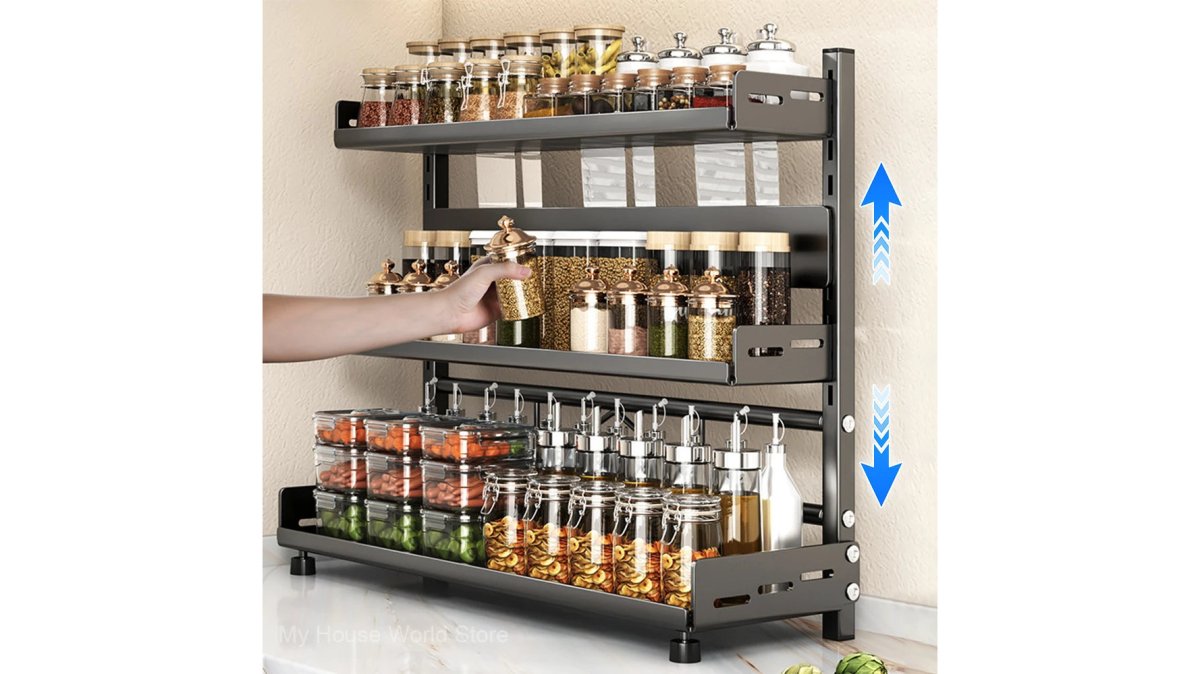
| Sinkelle SpiceRise 3-Tier Organizer | $58.99 | Spices and cooking essentials | Vertical, adjustable |
| Sinkelle DryFlow Dish Rack | $61.99 | Daily dish drying | Sink-adjacent |
| Sinkelle 2-Tier Pantry Storage Rack | $71.99 | Pantry overflow and jars | Adjustable bamboo |
| Sinkelle FlowCart Storage Rack | $30.99 | Narrow gaps and rentals | Slim, rolling |
Each pick solves a different failure point rather than duplicating the same shelf in a new finish.
How to Maximize Kitchen Counter Space With Vertical Storage
Vertical storage is the highest-return move in a small kitchen because it uses airspace you already own. A countertop has one usable plane; a tiered shelf turns it into two or three without expanding the footprint.
The mistake most people make is buying a wide, flat organizer that spreads clutter sideways. Height is free; width is not. But height only helps if you place it where your hands already travel, so start with workflow, not shelving.
Map Your Workflow Before You Buy Anything
Most guides skip this step, which is why so many organizers end up abandoned in a cabinet. Before buying a single rack, trace the three tasks you do most often: prepping food, making coffee or tea, and cleaning up. Those define your kitchen's work triangle, the path between sink, stove, and refrigerator.
The goal is to keep every item within one arm's reach of the task it serves. In practice, that means:
- Primary reach zone (0-18 inches from the task center): daily-use items only. Coffee mugs, the sponge, the knife you actually use, cooking oil, salt.
- Secondary reach zone (18-36 inches): items used a few times a week. The spice rack, the blender, the cutting boards.
- Storage zone (above 36 inches or below counter height): everything else. Holiday platters, the stand mixer, backup pantry stock.
A common pattern: people buy a beautiful tiered shelf and load it with storage-zone items, the bread machine, the rarely used wok, because those were cluttering the counter. It looks organized for a week, then becomes a permanent home for things you never touch. Load the shelf with primary-zone items first and send storage-zone items back into a cabinet.
Tiered Shelves That Double Your Surface Area
A two-tier shelf doubles the working surface of whatever it sits on (hgtv.com). The Sinkelle CounterRise 2-Tier Shelf is rust-resistant metal and works beside a coffee station, on an open counter, or inside a cabinet. Elevated tiers keep mugs and condiments visible instead of hidden behind the front row.

Two placement rules make tiered shelves earn their footprint:
- Put the shelf against a wall or backsplash, never in the middle of the counter. A freestanding shelf in the center of the work surface eats prep space and forces you to reach around it. Against a wall, it uses dead airspace.
- Keep the top tier at or below eye level when you are standing at the counter. Anything higher forces you to reach up, which is the movement people avoid most. If a shelf is taller than your natural sightline, the top tier becomes decorative storage, pretty, but unused.
For cooking zones, the Sinkelle SpiceRise 3-Tier Organizer adds an adjustable third level plus a built-in drawer. Adjustability matters: jar heights vary, and a fixed rack forces you to buy around it. Adjustable shelves fit a tall olive oil bottle on the bottom and short spice jars on top.
Wall-Mounted and Over-Sink Options for Renters
Renters face a specific constraint: no drilling, no permanent changes, no damage deposit at risk. Over-sink racks and freestanding tiered shelves solve this without touching a wall.
The Sinkelle FlowRack Pro rests over the divider or edge of most standard sinks with no assembly. It holds sponges, brushes, dish soap, and a hanging dishcloth bar in one footprint, keeping the counter beside the sink clear.
If you can mount something, a wall rail above the backsplash clears the counter entirely and puts daily tools at eye level. But for renters, the freestanding and over-sink route delivers most of the benefit with none of the risk.
Minimalist Kitchen Sink Organization That Actually Stays Tidy
Minimalist kitchen sink organization means keeping only daily-use items within arm's reach of the sink, stored so they drain and dry without pooling water. The goal isn't an empty counter, it's a counter where everything present has a reason to be there.

Corralling Sponges, Brushes, and Dish Soap
The sink zone collects more small objects than any other part of the kitchen, and they're the hardest to keep tidy because they're used wet. One dedicated holder beats three scattered ones every time.
Keeping the Sink Zone Dry and Mold-Free
Water turns a tidy sink area grimy. Sponges sitting in a puddle stay wet for days, start to smell, and leave rings on the counter (PubMed).
Two small additions change this. The Sinkelle DryFlow Splash Mat channels water back into the sink instead of letting it spread. The Sinkelle AquaShield Faucet Guard catches drips and splashes at the faucet base. Neither is dramatic alone, but together they keep the zone dry enough that mold and water stains stop being a recurring chore.

Small Kitchen Storage Solutions for Apartments and Rentals
Small kitchen storage solutions work best when they add capacity without a single hole in a wall or cabinet. In apartments, the constraint is rarely budget, it's permission, and the fear of losing a deposit over a patched hole.
Most guides treat renters as an afterthought, recommending rails and adhesive hooks that require drilling or fail under real weight. Every solution here is non-permanent, damage-free, and removable in under a minute when you move out.
No-Drill, No-Damage Installation Ideas
Freestanding and over-sink designs are the safest route for renters. They rely on weight and contact points rather than fasteners, so nothing needs patching when you move out. Over-sink racks, tiered countertop shelves, and rolling carts all qualify.
A few concrete rules keep these systems stable:
- Distribute weight low and centered. A freestanding shelf loaded top-heavy will tip the first time you bump it. Put the heaviest items on the bottom tier.
- Use the sink itself as an anchor. Over-sink racks that rest on the sink's rim or divider are far more stable than countertop-only designs because the sink edge resists lateral movement.
- Test the gap before you buy a cart. Measure the space between your refrigerator and counter, then subtract at least half an inch for the wheels and any wall trim. A cart that fits with zero clearance will scrape every time you pull it out.
Slim Carts and Gap Storage
The gap between the refrigerator and counter is dead space in most apartments. A slim rolling cart reclaims it. The Sinkelle FlowCart Storage Rack is a multi-tier design built to slide into narrow gaps between appliances and cabinets, with smooth-rolling wheels so you pull the whole unit out rather than reaching into a void.
That's the difference between storage you use and storage you forget exists. If you can't see the back of a shelf without moving something, you'll stop using it within a month. A rolling cart brings the back of the shelf to you.
The Reset Habit That Keeps Rentals Livable
Non-permanent storage has one weakness permanent storage doesn't: it can drift. A rolling cart gets pushed out of its gap and left in the walkway. A freestanding shelf gets loaded with mail and keys until it stops being a kitchen organizer.
The fix is a weekly two-minute reset, not a daily one. Roll the cart back into its gap, clear anything that doesn't belong on the freestanding shelf, and wipe the contact points where the rack meets the counter. That last step matters, grit trapped under a freestanding rack scratches a countertop over months, and a scratched counter is the one damage a landlord will actually charge for.
Renters who keep counters clear long-term share one trait: they treat storage as a system with a home for every item, not a collection of racks. The racks are just hardware; the habit makes them work.
How to Choose the Right Counter Organizer for Your Kitchen
Choosing the right organizer comes down to three questions: what task does it serve, how much footprint can you spare, and will it survive daily water contact. Answer those before you look at finishes.
Material Matters: Metal, Bamboo, Silicone, and Diatomite
Material decides how long an organizer lasts in a wet kitchen.
- Rust-resistant metal: Best for tiered shelves and sink racks. Holds weight, wipes clean, and does not absorb water.
- Bamboo: Warm, natural look for pantry and dry-goods storage. Keep it away from standing water.
- Silicone: Ideal for splash mats and faucet guards. Flexible, waterproof, and quick to rinse.
- Diatomite: Ultra-absorbent surface for drying mats. The Sinkelle DryStone Quick-Dry Kitchen Mat uses it to pull moisture off cups and dishes within seconds.
A common mistake is buying a beautiful bamboo rack for the sink area and watching it warp within a season. Match the material to the moisture level, not the mood board.
Budget-Friendly DIY vs. Commercial Products
DIY organizers cost less up front and more later. A repurposed box or stack of plastic bins can corral items, but it rarely drains, stacks cleanly, or survives a year of daily water exposure.
Commercial organizers are worth the difference when they solve a specific problem: draining, adjustability, or fitting a tight footprint. A $20 plastic bin does the same job as a $30 purpose-built rack, right up until the bin gets moldy and the rack doesn't.
Maintenance Routines That Keep Counters Clutter-Free
A counter stays clear when clearing it takes under a minute. That's the principle behind a maintenance routine, and why most organization systems collapse within a month.
Three habits do most of the work:
- Reset the sink zone nightly. Sponges and brushes back in the rack, dishcloth hung to dry, surface wiped. Sixty seconds.
- Rinse splash mats and faucet guards weekly. Silicone and diatomite surfaces lose absorbency when they stay grimy. A quick rinse restores them.
- Do a monthly purge. Anything on the counter that has not been used in thirty days goes into a cabinet or out of the kitchen.
Conclusion
Counter creep wins by default. It only loses when the items on your counter have a defined home that's faster to use than the alternative, the whole argument for choosing organizers by task and material rather than looks alone.
SinkElle builds exactly that kind of system: minimalist Scandinavian-inspired organizers with waterproof materials, no-tool installation, and designs shaped around the sink area where clutter starts. For a counter that stays clear without a daily fight, start with the pieces that remove the most footprint for the least effort.
Get started with SinkElle and turn your sink area into the most functional square meter in your kitchen.
Frequently Asked Questions
What are some ways to increase kitchen counter space without remodeling?
You can add usable surface area by using tiered shelves, stackable racks, and over-sink organizers that lift items off the counter. Grouping essentials by task, such as a coffee station or a prep zone, frees up space because you stop spreading items across the whole counter. Slide-out carts that fit narrow gaps also move storage off the countertop entirely. Sinkelle's CounterRise 2-Tier Shelf ($34.99) and FlowCart Storage Rack ($30.99) are two examples that add vertical or gap storage without any permanent changes.
Are minimalist sink organizers effective for small kitchens?
Yes. Minimalist kitchen sink organization works well in small kitchens because the goal is to reduce visual noise and keep only daily-use items within reach. Products like the Sinkelle FlowRack Pro ($46.99) hold sponges, brushes, and dish soap in one compact footprint while draining water back into the sink. The Sinkelle DryFlow Splash Mat ($19.99) and AquaShield Faucet Guard ($17.99) keep the surrounding counter dry, which prevents the puddles and stains that make a small kitchen feel messy.
How do I choose the right material for kitchen counter organizers?
Match the material to the job. Stainless steel and rust-resistant metal work best near the sink where water is constant. Bamboo suits dry areas like pantries and coffee stations, though it needs occasional oiling. Silicone is ideal for splash guards and mats because it flexes and dries fast. Diatomite mats absorb drips quickly and work well under dish racks or coffee machines. Check that any organizer near the sink is labeled rust-resistant or waterproof, since cheaper finishes can warp or discolor within months.
How can I organize my kitchen counters without looking cluttered?
Start by removing anything you do not use daily. Store small appliances out of sight and keep only one or two functional pieces on the counter, such as a tiered shelf or a dish rack. Choose organizers in a single finish or color family to reduce visual noise. Use trays or mats to corral accessories so loose items read as one unit instead of many. A clutter-free look comes from fewer items, not more containers. A quick weekly reset keeps the surface from drifting back to clutter.
What are the top kitchen organization trends for 2026?
Three trends stand out. First, modular tiered organizers that stack vertically to free counter space, like the Sinkelle SpiceRise 3-Tier Organizer ($58.99). Second, waterproof sink-area systems that keep sponges and brushes dry, such as the FlowRack Pro ($46.99). Third, natural materials like bamboo, seen in the Sinkelle 2-Tier Pantry Storage Rack ($71.99), which blend function with a minimalist aesthetic. Renters are also driving demand for tool-free, damage-free installation across all three categories.