


Table of Contents
- Why Bulky Drawer Organizers Fall Short
- Minimalist Kitchen Drawer Organization Ideas That Work
- DIY Adjustable Drawer Dividers: Custom Solutions Without the Cost
- How to Declutter Kitchen Drawers: A Practical Framework
- Stackable and Modular Storage Systems for Deep Drawers
- Vertical and Under-Cabinet Solutions for Small Spaces
- Material Durability and Maintenance Across Storage Options
- Accessibility-Focused Organization for Everyone
- Frequently Asked Questions
Last Updated: September 2, 2026
Why Bulky Drawer Organizers Fall Short
Traditional kitchen drawer organizers promise organization but deliver frustration instead. Most bulky systems are rigid, difficult to customize, and consume precious drawer space. They're designed for average layouts and rarely fit odd angles, plumbing obstacles, or unconventional drawer depths that real kitchens have.
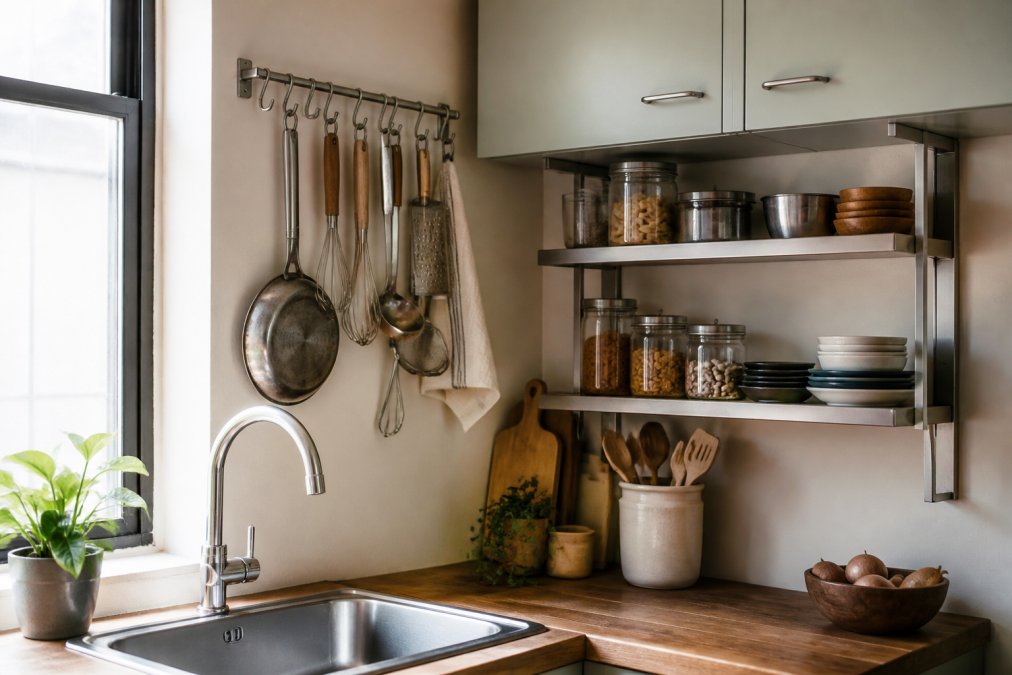
The most effective alternatives prioritize flexibility, space optimization, and acknowledge that no two kitchens are identical. Bulky organizers also trap crumbs, require constant repositioning, and become visual clutter themselves. Systems that actually improve kitchen workflow complement your natural habits rather than fighting against them.
Minimalist Kitchen Drawer Organization Ideas That Work
Minimalist kitchen drawer organization starts with one principle: fewer items, better access. This addresses the root cause of clutter, too much stuff, rather than trying to contain an overflowing drawer with dividers.
The minimalist method involves three core tactics. First, ruthlessly remove items you don't use regularly. Second, group items by function rather than by type. Third, use vertical space above your drawers with hanging organizers or wall-mounted racks for frequently used items.
Open shelving and visible organization create visual calm, which reinforces the minimalist mindset. When your kitchen looks organized, you're more likely to maintain that organization. One practical technique is the "one-in-one-out" rule: when you bring a new kitchen tool home, remove one you're not using. This keeps drawer contents stable and prevents gradual accumulation.
The real advantage of minimalist organization is speed. You spend less time searching for items because there are fewer items to search through.
DIY Adjustable Drawer Dividers: Custom Solutions Without the Cost
DIY drawer dividers give you complete control over compartment size and placement, which is impossible with fixed organizers. You customize the layout to match your actual utensils, not someone else's guess about what a "standard" kitchen needs.
Materials for DIY Dividers
Bamboo is the most popular choice because it's durable, naturally water-resistant, and looks elegant. It can be cut to custom sizes and stacked to create compartments of any height. Bamboo is also eco-friendly.
Stainless steel dividers offer superior durability and a modern aesthetic. They resist moisture better than bamboo and won't warp or splinter, though they cost more and are harder to customize.
Acrylic or polycarbonate dividers are budget-friendly and lightweight. They won't warp from moisture and are transparent, so you can see contents at a glance. However, they scratch easily and feel less substantial than natural materials.
Installation Without Tools
The best DIY dividers require zero tools to install. Simple stacking creates compartments without any installation. Cut your chosen material into strips, arrange them vertically in your drawer, and they'll stay in place through friction and the weight of items resting against them.
Friction-fit dividers use tension to stay in place. They're slightly wider than the drawer depth, so when inserted, they press against both the front and back of the drawer. This approach works reliably and can be adjusted or removed in seconds.
Adhesive-backed dividers use strong contact strips to attach to the drawer bottom. This is semi-permanent and won't shift once installed, but repositioning requires removing the old divider and installing a new one.
How to Declutter Kitchen Drawers: A Practical Framework
Decluttering is the foundation of any successful organization system. This framework takes most people 30-45 minutes and produces lasting results.
Start by removing everything from the drawer and laying items on your counter. This visual inventory reveals duplicates, broken items, and things you forgot existed.
Next, sort into three categories: keep, donate, and discard. The "keep" category should only include items you use at least once a month. Specialty tools used once a year belong in separate storage. Broken items go directly to discard. Duplicate utensils go to donate.
Be honest about what "using" means. If you haven't used something in a year, you're not going to use it. Once you've reduced contents, arrange them by frequency of use. Items you use daily go in the most accessible spots. Weekly items get secondary placement. Monthly items can go toward the back.
Many people discover that after decluttering, they don't need any organizer. The drawer simply isn't crowded anymore.
Stackable and Modular Storage Systems for Deep Drawers
Deep drawers create a specific problem: items disappear into the back, and you end up with wasted vertical space. Stackable and modular systems solve this by creating layers that maximize depth without losing accessibility.
Stackable trays are shallow containers that stack on top of each other, creating multiple accessible layers within a single drawer. You can pull out the top tray to access items below without disturbing everything. This works exceptionally well for utensils.
Modular systems consist of individual compartment boxes that can be arranged however you want. You can create a custom grid by combining different-sized modules. If your needs change, you reconfigure the layout rather than buying a new organizer. This adaptability appeals to people who rearrange their kitchens frequently or who have non-standard drawer dimensions.
For deep drawers specifically, consider tiered organizers that create elevation within the drawer. Items in the back are elevated and visible from above. You can see everything without reaching deep into the drawer.
The real benefit of stackable systems is that they force compartmentalization. Each layer has its own space, which naturally prevents items from mixing and makes maintenance easier.
Vertical and Under-Cabinet Solutions for Small Spaces
Small apartments and compact kitchens can't afford to use drawer space for organization. The solution is vertical storage and under-cabinet systems that use walls and unused spaces instead.
Wall-mounted hanging organizers keep frequently used items visible and accessible without consuming any counter or drawer space. Hanging racks work for utensils, cutting boards, pot lids, and even foil or plastic wrap dispensers. Open storage makes a small kitchen feel larger because you're not hiding clutter in cabinets.
Under-cabinet organizers mount directly beneath your existing cabinets, creating a storage layer between the cabinet bottom and your countertop. These are perfect for paper towels, dishcloths, small appliances, or kitchen essentials you use daily. They're particularly valuable in kitchens where under-sink storage is compromised by plumbing.
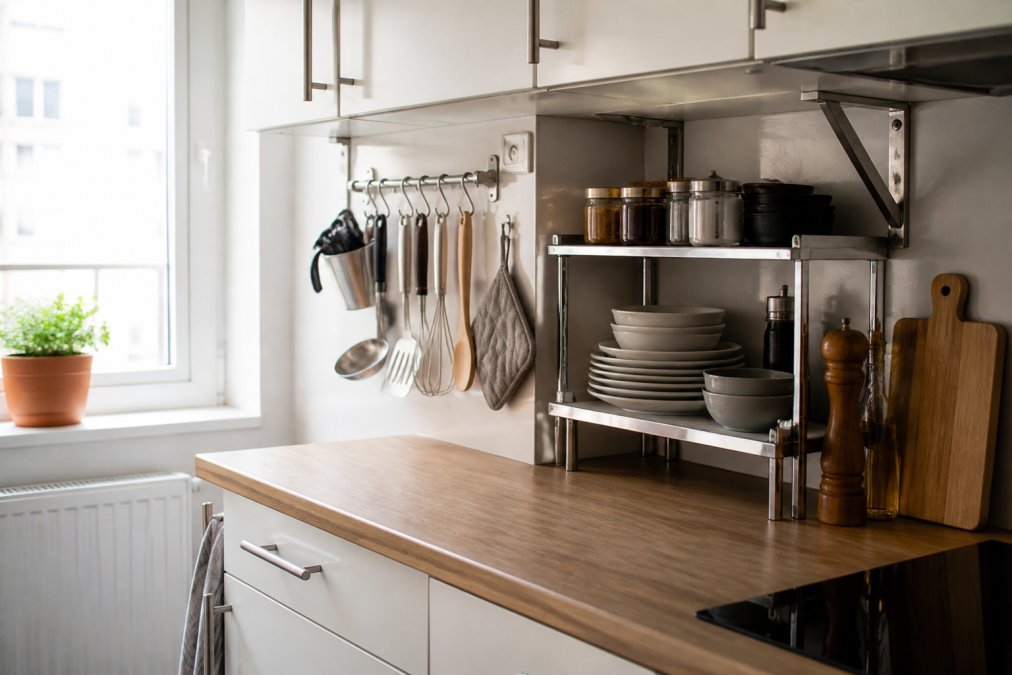
Rolling carts fit into narrow gaps between appliances or cabinets, creating mobile storage that can be tucked away when not in use. The SinkElle FlowCart Storage Rack is designed specifically for this, sliding into tight spaces and holding pantry items, cleaning supplies, or kitchen essentials on multiple tiers.

The key to vertical storage in small spaces is maintaining visual balance. Choose a few key pieces and keep them minimal and cohesive in design.
Material Durability and Maintenance Across Storage Options
Not all organizer materials perform equally in a kitchen environment. Moisture, heat, and daily use create conditions that break down inferior materials quickly.
Bamboo is naturally water-resistant but not waterproof. In humid kitchens or near sinks, it can eventually absorb moisture and warp. Bamboo dividers typically last 3-5 years in active use before showing signs of wear (peer-reviewed research).
Stainless steel is the most durable option. It won't rust, warp, or absorb moisture. Maintenance is minimal, just wipe it dry after exposure to water. Stainless steel organizers can last indefinitely if not damaged.
Plastic and acrylic dividers are budget-friendly but fragile. They scratch easily, can become brittle in direct sunlight, and may warp near heat sources. They're appropriate for temporary solutions or low-humidity kitchens.
Metal organizers with non-stainless finishes can rust if exposed to prolonged moisture. Powder-coated metal is more durable than painted metal. The best organizer is one you'll actually clean. Simple materials that you can wipe clean and let air dry are more sustainable long-term than high-maintenance options.
Consider your kitchen's humidity level and proximity to water sources when choosing materials. A drawer far from the sink can use less water-resistant materials. A drawer next to the sink or in a humid climate demands stainless steel or well-maintained bamboo.
Accessibility-Focused Organization for Everyone
Kitchen organization often overlooks accessibility, designing systems for people of average height and mobility. Accessibility-focused organization benefits everyone because it prioritizes ease of use.
Keep frequently used items between hip and eye level (the CDC). This eliminates reaching overhead or bending low. Vertical storage with pull-out mechanisms is more accessible than deep drawers. Pull-out organizers bring items to you rather than requiring you to reach into the drawer. The SinkElle 2 SlideNest Organizer uses a smooth pull-out system specifically designed to reduce the reaching and bending required to access items.
Lighting matters significantly. Drawers without adequate lighting make it difficult to see contents. If you're using under-cabinet organizers, ensure the area is well-lit. Consider adding small LED strip lights under cabinets to improve visibility.
Handle design affects accessibility significantly. Organizers with easy-grip handles are more accessible than those requiring pinching or twisting. Smooth-gliding systems require less force than friction-fit dividers, which is important for people with limited hand strength.
Labeling is valuable for accessibility. Clear labels help people find items quickly without extensive searching.
When you're ready to upgrade your kitchen organization, the best alternatives to bulky drawer organizers share a common thread: they adapt to your space rather than forcing you to adapt to them. Whether you choose DIY dividers, modular systems, or vertical storage, select solutions that match your actual kitchen layout and your real habits.
SinkElle's modular organizers, like the PanNest Adjustable Pot Organizer and the CabinetFlow Hanging Organizer, are designed with this flexibility in mind. They work in drawers, under cabinets, and on countertops, giving you options rather than constraints. The minimalist Scandinavian design means they look as good as they function.

Start with decluttering, then choose your system. The results will be a kitchen that's not just organized, but genuinely easier to use every single day.
| Organization Method | Best For | Installation | Cost Range |
|---|---|---|---|
| DIY Dividers | Customizable layouts, renters | Tool-free friction fit | $15-40 |
| Stackable Trays | Deep drawers, utensils | No installation | $20-60 |
| Modular Systems | Flexible reconfiguration | Simple assembly | $40-150 |
| Vertical/Hanging | Small spaces, wall use | Minimal hardware | $25-80 |
| Under-Cabinet Organizers | Space-saving, accessibility | Simple mounting | $35-120 |
Shop Now and transform your kitchen with SinkElle's sophisticated, minimalist organization solutions designed for real kitchens and real life.
Frequently Asked Questions
What can I use instead of bulky plastic drawer organizers?
Bamboo dividers, custom cardboard inserts, tension rods, and tiered metal shelves offer lighter, more elegant alternatives to bulky plastic organizers. DIY solutions using wood strips or foam board let you customize compartments without the visual bulk. For deep drawers, stackable trays and modular systems provide flexibility without fixed plastic frames. The Sinkelle 2 SlideNest Organizer ($55.99) uses a minimalist metal design that maximizes space while maintaining a clean aesthetic, perfect for renters seeking tool-free installation.
How do I organize kitchen drawers without using pre-made inserts?
Start by decluttering: remove items you don't use regularly. Group similar utensils together (knives, forks, spoons). Use simple dividers made from foam board, wood, or tension rods to create sections. Small bowls, jars, or containers can separate specialty items. Drawer liners prevent sliding and protect the base. For non-utensil items like foil and plastic wrap, vertical file organizers work well. This approach gives you complete control over compartmentalization and costs far less than pre-made systems.
Are DIY drawer dividers better than store-bought organizers?
DIY dividers offer customization and cost savings, but store-bought options provide durability and time efficiency. DIY works best for odd-shaped drawers or specific utensil layouts where commercial products don't fit. Store-bought organizers like the Sinkelle PanNest ($38.99) handle heavy cookware better and last longer. The best choice depends on your drawer configuration, budget, and how much time you want to invest. Many people combine both: DIY dividers for utensils and commercial organizers for pots and pans.
What's the best way to organize a kitchen drawer in a small apartment?
Measure your drawer depth and width first. Use vertical stackable solutions to maximize space: tiered trays, pull-out organizers, or hanging systems under cabinets. The Sinkelle CabinetFlow Hanging Organizer ($44.99) frees up drawer space entirely by utilizing wall area. Choose slim, modular designs that don't consume the entire drawer footprint. Focus on frequently used items only; store seasonal tools elsewhere. For garbage disposals and plumbing obstacles, work around them with flexible containers rather than rigid frames.
How do I maintain waterproof and eco-friendly drawer organizers?
Bamboo organizers need occasional wiping with a damp cloth and should air-dry immediately to prevent warping. Metal organizers resist moisture but benefit from periodic drying after spills. Avoid prolonged water exposure for any material. For eco-friendly options, check manufacturer care instructions: some bamboo products require light oil treatment annually. Store organizers in dry conditions when not in use. Quality materials like stainless steel and premium bamboo hold up better than cheap plastic over years of daily use and moisture exposure.
This article was written using GrandRanker