


Last Updated: October 25, 2026
Quick Summary
Sink grids protect your basin from scratches, dents, and heavy cookware impact while lifting dishes so water drains and air flows underneath. They also quiet the clatter of pots and pans. The trade-off is that you must lift the grid to clean underneath it, and it reduces usable basin depth.
- Most sink grids use 304-grade stainless steel for rust and corrosion resistance in wet environments.
- Measure the basin floor, not the rim, since most sinks taper inward by a half inch or more.
- Grid feet add roughly a quarter inch to an inch of height, reducing depth for tall pots.
- Lift the grid, rinse with warm water and mild dish soap, and avoid steel wool and abrasive pads.
- A correctly fitted grid sits flat, clears the drain, and lifts out with two fingers.
Table of Contents
- What a Sink Grid Actually Does in Your Basin
- Sink Grid Pros and Cons You Should Weigh First
- Why a Stainless Steel Sink Protector Beats the Alternatives
- Sink Grid Sizing: How to Measure Before You Order
- How to Clean a Stainless Steel Sink Grid Without Scratching It
- Where Sink Grids Fall Short: Protection Limits and Hygiene
- Matching a Grid to Your Kitchen and Sink Setup
- Choosing Your Sink Grid and Sink Area Setup
- Frequently Asked Questions
What a Sink Grid Actually Does in Your Basin
The mechanics are straightforward. Small feet or bumpers hold the grid slightly above the basin floor, so water flows underneath rather than pooling around your dishes.
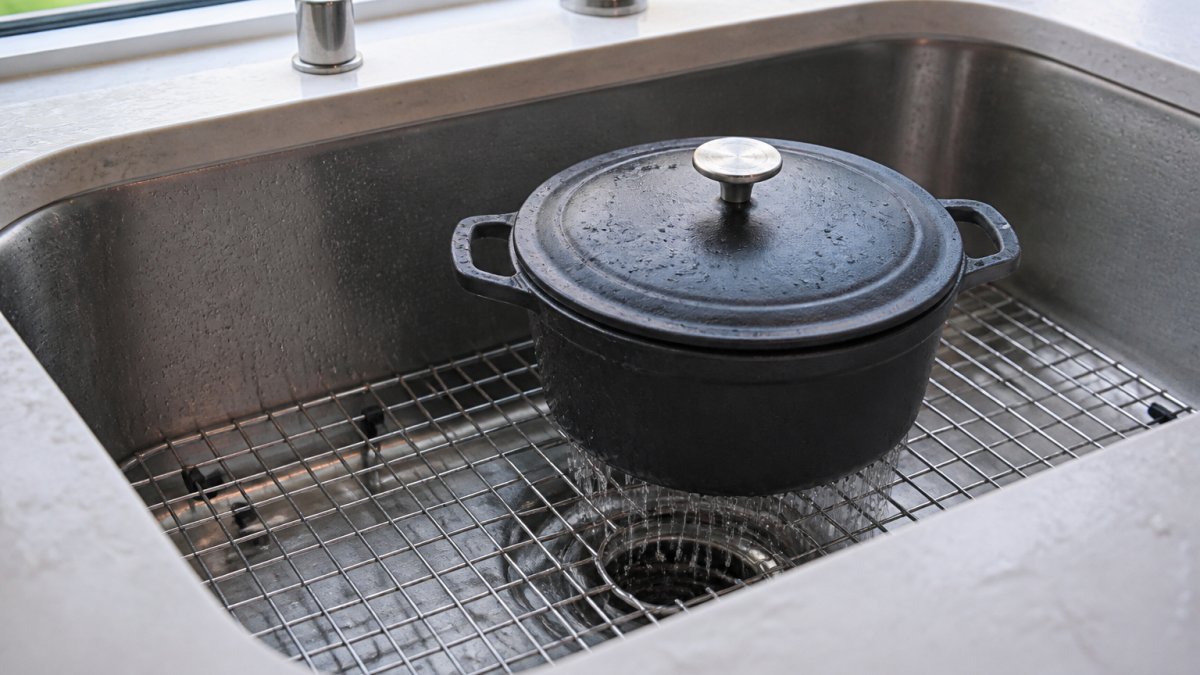
Where it earns its keep is in the day-to-day grind. Cast iron skillets, sheet pans, and heavy stockpots all land somewhere.
What it does not do is clean the sink for you. That distinction matters more than most buying guides admit, and we will get to it.
Sink Grid Pros and Cons You Should Weigh First
The honest answer is that a sink grid solves some problems and creates a smaller set of new ones. Weigh both before you order.
The Case for a Grid: Protection, Drainage, and Quiet
The strongest argument for a stainless steel sink protector is surface protection.
Drainage and airflow come next. Because items sit elevated, water moves away from dishes instead of sitting in a puddle around them.
Noise is the underrated benefit. A heavy pot set down on a bare stainless steel sink rings out. On a grid, it thuds.
The Case Against: Cleaning Friction and Lost Depth
Here is where we part ways with the glossy product pages. The Kitchn makes this point directly in its reporting on kitchen sink grid drawbacks, noting that grids protect the sink but can obstruct wiping and take real effort to clean.
You also lose basin depth. A grid sits an inch or so above the floor, so a deep pot that used to fit flat now sits higher. For small sinks, that clearance matters.
Why a Stainless Steel Sink Protector Beats the Alternatives
Silicone mats, plastic inserts, and coated wire racks are the usual alternatives, and the differences matter more than the marketing suggests. Here is how they actually compare on the things that decide whether you keep using the insert a year from now.
Stainless steel grids
Most sink grids are built from 304-grade stainless steel, the same austenitic alloy used in many kitchen sinks and food-service equipment because of its resistance to rust and corrosion in wet, soapy environments.
Trade-offs: heavier to lift for cleaning, higher upfront cost than silicone or plastic, and metal-on-metal contact with the sink rim if the bumpers wear out.
Silicone mats and inserts
Silicone is flexible, quiet, and inexpensive, and it will not scratch a basin. The problems are moisture and staining. Silicone traps water against the sink floor, and repeated contact with tomato sauce, turmeric, coffee, and hard water leaves discoloration that dish soap will not lift. Silicone also softens and can deform under a hot pan straight off the stove.
Plastic and coated-metal inserts
Plastic inserts crack at stress points and can yellow with heat and UV exposure. Coated-metal racks, usually steel with a vinyl or powder-coat finish, combine rigidity with a softer contact surface, but the coating chips at weld points and exposed steel rusts underneath. Once a coating fails, the insert is on borrowed time.
What the comparison comes down to
| Factor | Stainless grid | Silicone mat | Plastic / coated metal |
|---|---|---|---|
| Corrosion resistance | High (304 grade) | High | Low once coating chips |
| Scratch protection for sink | High | High | Medium |
| Rigidity under heavy cookware | High | Low | Medium |
| Drainage and airflow | High (elevated) | Low (flat) | Medium |
| Cleaning effort | Moderate (lift to clean under) | Moderate (stains) | Moderate |
| Lifespan | Years | 1-3 years typical | 1-3 years typical |
For anyone who cooks often and wants a protective insert that lasts, stainless steel is the durable choice. The trade-off is weight and cost, and the honest caveat is that a grid still needs to be lifted and rinsed, it is not a maintenance-free surface.
If a fixed grid feels like too much commitment, a retractable option solves a different problem. The Sinkelle ExtendDry Retractable Sink Rack adjusts across different sink sizes and lifts out when you want the full basin back, which suits renters and small kitchens where flexibility beats permanence.

Sink Grid Sizing: How to Measure Before You Order
Sink grid sizing is where most returns happen, and the reason is almost always the same: people measure the top of the sink instead of the bottom. Most basins taper inward, so the floor is smaller than the rim by a half inch or more on each side. A grid sized to the rim will not sit flat.
Step 1: Measure the basin floor, not the rim
Use a tape measure or a rigid ruler and record three numbers at the bottom of the basin:
- Length and width at the floor, front-to-back and side-to-side.
- Corner radius, the curve where the side walls meet the floor. A grid with square corners will not seat in a basin with rounded corners, and vice versa. Many manufacturers list a corner radius in inches; if yours does not, trace the corner on paper and compare.
- Depth from floor to rim, so you can calculate how much usable depth you lose once the grid and its feet are in place.
Step 2: Locate the drain precisely
The drain opening is the single most common fit failure. Measure from the back wall of the basin to the center of the drain, and from the side wall to the center. A grid with a cutout in the wrong spot will rock on the drain flange or block it entirely. If your drain is offset, common in workstation sinks and some undermount models, confirm the grid's cutout matches that offset, not a centered drain.
Sinkelle ExtendDry Retractable Sink Rack →
Step 3: Check faucet and disposal clearance
At the back of the basin, the faucet base and any soap dispenser or air switch occupy space above the rim. A grid with a raised back rail or a tall rear bumper can interfere with the faucet's swing or prevent the grid from sitting flush. Under the sink, a garbage disposal changes the drain geometry; confirm the grid's feet do not rest on or near the disposal flange, which can cause rocking and stress on the seal.
Step 4: Account for feet and bumpers
Grid feet add roughly a quarter inch to an inch of height, depending on the model. That height is what creates the drainage gap, but it also reduces the depth available for tall pots. Measure your tallest stockpot or sheet pan and subtract the grid height before you commit. Adjustable feet or protective bumpers help a grid sit level on a sloped basin floor, which many sinks have to encourage drainage.
Step 5: Leave room to lift
A correctly fitted grid leaves a small gap, roughly an eighth to a quarter inch, around the perimeter so you can get your fingers under it. Too tight and it wedges in; too loose and it slides when you set a pot down. If the grid has no finger notch, that perimeter gap is your only lift point.
A grid that fits correctly should sit flat, not rock, clear the drain, and lift out with two fingers. If any of those fail, the grid is the wrong size, not a defective product.
How to Clean a Stainless Steel Sink Grid Without Scratching It
Learning how to clean a stainless steel sink grid is simpler than most people expect, and it protects both the grid and the sink.
For residue buildup between the bars, a soft-bristled brush gets into the gaps without scratching. Dry the grid before setting it back so water does not sit underneath.
Clean the basin while the grid is out. For a fuller routine, our guide on how to clean stainless steel sink organizers walks through the steps without damaging the finish.
Where Sink Grids Fall Short: Protection Limits and Hygiene
A grid protects against impact and scratches. It does not protect against everything, and it is not a hygiene solution on its own.
That trapped moisture is the real concern. If you never lift the grid, residue buildup and standing water collect in a place you cannot see.
If moisture around your sink area is the bigger problem, drainage-focused setups help. Our article on keeping your kitchen sink area dry without bulky racks covers space-saving approaches that address water where it actually collects.
Matching a Grid to Your Kitchen and Sink Setup
Fit is not just dimensions. It is how the grid works with everything else around your sink.
Consider what you actually do at the sink. If you wash a lot of produce, an open drainage design matters.
Watch out: buying a grid and a rack that both claim the same sink real estate is the most common setup mistake we see.
Choosing Your Sink Grid and Sink Area Setup
Start with the decision that matters most: fixed grid or flexible rack. A fixed stainless steel grid suits a dedicated home cook with a standard sink and the discipline to lift it for cleaning. A retractable rack suits renters, small kitchens, and anyone who wants the basin back on demand.
Then check the details that drive satisfaction:
- Material and finish: stainless steel construction for corrosion resistance
- Fit: measured at the basin bottom, with clearance for the drain
- Feet and bumpers: protective bumpers that grip without scratching
Frequently Asked Questions
Can a sink grid prevent scratches in a stainless steel sink?
A grid keeps pots, pans, and utensils from resting directly on the basin floor, which is where most scratches and dings happen. The grid feet and protective bumpers absorb contact instead of the sink surface. It is not a guarantee: dropped knives or heavy cast iron can still mark the sink, and grit trapped under the grid can cause wear. Rinse the basin and grid regularly so abrasive food debris does not sit between them.
Do stainless steel sink grids rust?
Quality stainless steel grids resist corrosion, but they are not rust-proof in every condition. Standing water, acidic food residue, and harsh cleaners left on the metal can cause spotting over time. Rubber or silicone feet also trap moisture if the grid never comes out. Remove the grid weekly, dry the basin, and avoid chlorine bleach soaks. A grid that stays wet and dirty for months is the most common reason people report rust-like stains.
How do you choose the right size sink grid?
Measure the inside of the basin at the bottom, not the top rim, since most sinks taper. Note the length, width, and depth, then check where your drain opening sits. The grid should sit flat with its feet on the basin floor and leave the drain clear. Sink grid sizing varies by manufacturer, so match the grid to your sink model where possible. A grid that shifts or rocks will not protect the surface evenly.
Can you leave a sink grid in the sink all the time?
You can leave it in for daily use, and most people do. The trade-off is hygiene: food debris and residue buildup collect underneath, out of sight. Pull the grid out at least once a week, wipe the basin, and rinse the grid. If you are cleaning the sink itself, take the grid out first so you can reach the whole surface. A grid that never moves is the one most likely to develop odors or water spots.
The challenge with any sink accessory is that it has to earn its space every day, not just look good in a photo. We built SinkElle around that idea: minimalist Scandinavian-inspired design, waterproof materials, and tool-free installation, so your sink area stays organized without permanent changes. Explore our space-optimized sink solutions and see how a retractable rack fits a small kitchen. Get started with SinkElle and reclaim your counter space.
