


Table of Contents
- Why Waterproof Kitchen Cabinet Storage Matters
- Waterproof vs. Water-Resistant: What the Labels Actually Mean
- 1. Under-Sink Organizers That Keep Supplies Off the Cabinet Floor
- 2. Waterproof Under-Sink Storage Bins for Cleaning Supplies
- 3. Under-Sink Leak Protection Mats: The Layer Most Kitchens Skip
- 4. Waterproof Cabinet Liners for Every Shelf and Drawer
- 5. Roll-Out Trays and Pull-Out Shelves That Survive Moisture
- 6. Pantry, Fridge, and Countertop Storage That Stays Dry
- The Bottom Line on Waterproof Cabinet Storage
- Frequently Asked Questions
Last Updated: October 17, 2026
Why Waterproof Kitchen Cabinet Storage Matters
Water damage in kitchen cabinets rarely announces itself. It builds quietly under the sink, behind the disposal, and along the back panel where condensation collects.
A cabinet does not need a flood to fail. A slow drip from a supply line, a sweating pipe, or a leaking bottle of cleaner is enough to ruin particleboard shelving.
Below, we break down seven solutions by cabinet location, explain what the labels really mean, and show you how to measure before you buy, plus material choice for wet zones and ventilation that prevents mildew.
Waterproof vs. Water-Resistant: What the Labels Actually Mean
Waterproof cabinet storage means liquid water cannot pass through the material, even under sustained contact. Water-resistant means the material slows moisture down but will eventually absorb it.
Most plastic bins sold as "water-resistant" are fine for a pantry shelf but a poor choice under a sink. The label describes a coating, not the core material, and a scratch or seam can open a path for water.
What the labels do and do not promise
- "Waterproof" on a storage product usually means the body is a single molded piece of plastic or a sealed metal shell with no seams at the base. Water beads on the surface and cannot wick into the material.
- "Water-resistant" usually means a coating, laminate, or finish that repels splashes for a limited time. Prolonged contact, standing water, or a scratched surface defeats it.
- "Moisture-resistant" is the weakest claim and often describes sealed wood or coated particleboard that can still swell at cut edges and seams.
A practical test: fill the bin with an inch of water and set it on a paper towel for an hour. If the towel stays dry, the body is genuinely waterproof; if it wicks at a seam, treat it as water-resistant only.
Material comparison for wet cabinet zones
| Material | Behavior under moisture | Corrosion or swelling risk | Maintenance | Best cabinet zone |
|---|---|---|---|---|
| Solid molded plastic (polypropylene, polyethylene) | Does not absorb water; beads on surface | None at room temperature | Wipe clean; check for cracks at stress points | Under-sink, sink-adjacent, any wet zone |
| Stainless steel | Waterproof body; joints and welds are the weak point | Rust at scratches and low-grade alloys | Dry after contact; inspect welds | Under-sink frames, pull-out trays |
| Coated or powder-coated metal | Coating blocks water until chipped | Rust spreads from chips and scratches | Touch up chips; keep coating intact | Roll-out trays, racks near sink |
| Sealed wood (lacquered or polyurethane) | Resists splashes; swells at cut edges and seams | Swelling and delamination once water reaches raw wood | Re-seal annually; dry immediately | Dry shelves only |
| Bamboo | Absorbs humidity; can warp and grow mildew | High in sustained humidity | Keep dry; oil occasionally | Pantry and dry shelves, never under sink |
| Unsealed particleboard or MDF | Swells permanently once wet; loses strength | Irreversible | None effective | Never in a wet zone |
The failure modes that matter most
- Seams and joints are where water-resistant products fail first. A molded plastic bin with a seam at the base is not the same as a seamless one.
- Cut edges on sealed wood and coated board expose raw material. Even a small nick near a sink can wick water into the core.
- Chips in coated metal let rust start under the coating, where you cannot see it until it stains the shelf.
According to the EPA's guidance on indoor moisture and mold, controlling moisture at the source is the most effective way to prevent mold growth indoors.
1. Under-Sink Organizers That Keep Supplies Off the Cabinet Floor
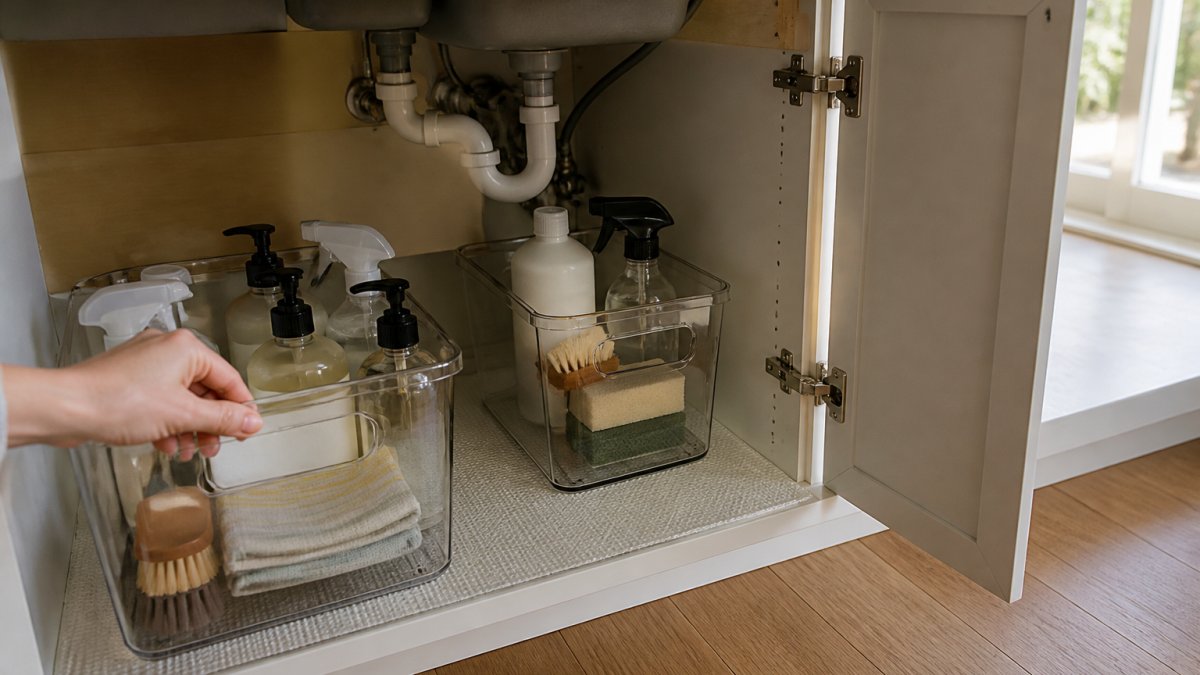
The most effective move in a wet cabinet zone is getting stored items off the cabinet floor.
Our pick is the Sinkelle 2 SlideNest Organizer ($55.99): a durable metal frame with a two-tier pull-out system, and a compact footprint that fits around the awkward plumbing angles that make most under-sink cabinets unusable.

What most people miss: the value is not the shelving, it is the clearance. Even 2-3 inches of lift keeps paper products, boxes, and bottles out of standing water.
2. Waterproof Under-Sink Storage Bins for Cleaning Supplies
Waterproof under-sink storage bins solve containment. If a bottle of bleach tips over, a solid-sided bin keeps the spill in one small area instead of spreading across the cabinet floor.
Choose bins with these traits:
- Solid, seamless sides with no seams at the base
- Smooth interiors that wipe clean in seconds
- A height that clears your lowest pipe
Skip woven baskets and fabric-lined bins for this zone. They hold moisture against the cabinet floor and are difficult to dry completely.
3. Under-Sink Leak Protection Mats: The Layer Most Kitchens Skip
Under-sink leak protection mats are the cheapest insurance in the kitchen: a mat catches drips and gives early warning before water reaches the wood. But a mat alone is not a system. Cabinets that survive real leaks combine four layers: a mat, raised storage, leak detection, and airflow.
Layer 1: The mat or liner
Look for a mat with a raised lip, which turns a drip into a contained puddle rather than a slow spread across the shelf. A flat liner protects the surface but lets water run to the cabinet edges and into the seams.
- Raised-lip mats suit the floor directly under the sink and disposal.
- Flat waterproof liners suit shelves above the mat, where splashes are lighter.
- Avoid adhesive liners under a sink. They trap moisture against the cabinet floor and are hard to lift for drying.
Layer 2: Raised storage
Even 2-3 inches of lift keeps paper products, boxes, and bottles out of standing water. A metal frame with sliding drawers, a wire riser, or a stackable shelf works, the point is that a leak passes underneath instead of soaking in.
Layer 3: Leak detection
A dry mat tells you the plumbing is holding; a damp one tells you to check the supply lines and disposal connection before damage spreads. Two low-cost habits catch most leaks early:
- Check the mat monthly and after any plumbing work.
- Place a paper towel or a piece of tissue under the P-trap and disposal housing; a damp spot after a day points to a slow drip.
Battery-powered water alarms for cabinets sound when moisture reaches their sensors, not a substitute for checking, but useful in cabinets you rarely open.
Layer 4: Ventilation and drying
A closed cabinet with a damp mat stays humid. Leave a gap behind stored items so air can move, and leave the doors open for a few hours after any spill or repair. If it smells musty, pull the mat and liner out to dry completely.
Sinkelle PanNest Adjustable Pot Organizer →
What to do when you find a leak
- Remove the mat, liner, and stored items from the cabinet.
- Dry the cabinet floor completely, including the seams at the back and sides.
- Find the source before replacing anything: supply lines, the P-trap, the disposal connection, and the dishwasher line are the usual suspects.
- Replace swollen or soft particleboard rather than covering it with a new mat.
- Put the mat and raised storage back only after the cabinet is dry and the leak is fixed.
A mat is the layer most kitchens skip, but it works only under raised storage, checked regularly, with air to dry. Treat it as one part of a system, not a single purchase.
4. Waterproof Cabinet Liners for Every Shelf and Drawer
Waterproof cabinet liners protect the surfaces you cannot replace easily. When a liner gets dirty or damp, you lift it out, wipe it, and put it back.
Non-adhesive liners suit renters because they lift out without leaving residue.
Our measurement guidance: cut the liner 1/4 inch smaller than the shelf on each side. A tight fit buckles and traps moisture underneath.
| Cabinet Zone | Best Protection | Why |
|---|---|---|
| Directly under sink | Leak mat with raised lip | Contains drips and shows warning early |
| Sink cabinet shelves | Solid waterproof liner | Wipes clean, lifts out for drying |
| Drawers near sink | Textured non-adhesive liner | Stops sliding, easy to remove |
| Pantry shelves | Water-resistant liner | Dry zone, lighter protection is enough |
| Cookware cabinets | Coated metal rack | Airflow around pans, no water pooling |
5. Roll-Out Trays and Pull-Out Shelves That Survive Moisture
Roll-out trays and pull-out shelves improve accessibility, which matters more in a wet cabinet than most people realize: pulling the whole shelf toward you stops blind reaching into the back corner where leaks hide.
For moisture resistance, favor coated metal over wood. Wood pull-outs are common and attractive, but in a cabinet that sees humidity they need sealing and re-sealing to stay sound.
The Sinkelle CabinetFlow Hanging Organizer ($44.99) takes a different approach to the same goal.

6. Pantry, Fridge, and Countertop Storage That Stays Dry
Dry zones still need the right materials, just less armor. The goal shifts from blocking water to blocking humidity and keeping food sealed.
For pantry shelves, the Sinkelle FreshSeal Pantry Storage Canister ($39.99) uses an airtight silicone ring to protect dry foods from moisture, dust, and humidity.

For countertop organization, the Sinkelle SpiceRise 3-Tier Organizer ($58.99) is a metal rack with an adjustable three-tier layout and a built-in drawer for small items.
In the fridge, stackable clear containers keep shelves dry and visible.
The Bottom Line on Waterproof Cabinet Storage
Every wet cabinet needs three layers: a leak mat on the floor, a liner on the shelf, and an organizer that lifts supplies off the surface. Add ventilation with a gap behind stored items, and check the mat monthly.
SinkElle builds storage for exactly this problem. Our systems use waterproof materials, install without tools, and are designed to fit the tight, awkward spaces under real sinks.
Frequently Asked Questions
What is the best way to organize a cabinet under the kitchen sink?
Start by emptying the cabinet and checking the plumbing for drips. Group supplies by task, then lift everything off the cabinet floor using a two-tier pull-out organizer so you can reach the back without kneeling. Keep the highest-moisture items, like sponges and wet cloths, in a separate bin. Add a leak protection mat under the pipes and a waterproof cabinet liner on the shelf. The goal is airflow around the pipes plus a barrier between stored items and any water that appears.
How can I protect kitchen cabinets from water damage?
Three layers do most of the work: a waterproof cabinet liner on the shelf surface, an under-sink leak protection mat directly beneath the pipes and disposal, and storage that keeps items off the cabinet floor. Check under the sink monthly for soft spots, swelling, or a musty smell, and fix slow drips at the trap connection before they soak into particleboard. Cabinets rarely fail from one flood; they fail from a small leak nobody noticed for six months.
Are waterproof bins good for under-sink storage?
Yes, if they are genuinely waterproof rather than water-resistant. Waterproof under-sink storage bins keep spilled cleaner, a slow drip, or a burst bottle contained instead of soaking into the cabinet base. Look for solid molded construction with no seams or cardboard cores, and choose bins you can lift out and rinse. Pair them with a leak mat so any water that escapes the bin still lands on a removable surface rather than the cabinet floor.
What should I put under the kitchen sink to catch leaks?
A dedicated under-sink leak protection mat with a raised lip is the practical choice. It sits beneath the trap, supply lines, and disposal, catching drips before they reach the cabinet base and making small leaks visible early. Avoid towels or cardboard, which hide the problem and hold moisture against the wood. Check the mat every few weeks, dry it out, and investigate any standing water rather than simply wiping it away.
How do I keep under-sink storage dry and easy to clean?
Leave the area around the pipes open so air can move, avoid packing the cabinet to the ceiling, and use organizers that lift off the floor for airflow. Wipe surfaces monthly with a mild cleaner and let them dry fully before restocking. If you notice condensation on cold pipes, insulate them. A small battery-powered humidity sensor costs little and warns you before mildew takes hold, which is far easier than removing a musty smell later.
Most kitchen cabinets fail slowly, from moisture nobody noticed until the shelf swelled. SinkElle designs minimalist, Scandinavian-inspired organizers with waterproof materials and tool-free installation, so you can lift supplies off the cabinet floor in minutes without drilling or permanent changes. Shop the 2 SlideNest Organizer, the CabinetFlow Hanging Organizer, and the FreshSeal Canister line to build a kitchen that stays dry, organized, and easy to maintain.