


Table of Contents
- Under-Sink Storage vs. Pantry Organization: Key Differences
- Best Under-Sink Organizers for Tight Spaces
- Kitchen Pantry Organization Ideas That Work
- Under-Sink Cabinet Decluttering Guide
- Maximizing Vertical Space in Both Areas
- Sustainability and Material Longevity
- Which Storage Solution Should You Choose?
- Conclusion
Last Updated: August 28, 2026
Under-Sink Storage vs. Pantry Organization: Key Differences
Your under-sink cabinet and pantry serve fundamentally different purposes. The under-sink area is a high-moisture environment designed for cleaning supplies, dish soap, sponges, and items you need quick access to while standing at the sink. Your pantry is a dry storage zone built for dry goods, non-perishable food items, and kitchen essentials you use regularly but don't need every few minutes. Understanding this distinction changes everything about how you approach organization in each space.
Most people try to use their under-sink space like a pantry, which leads to moisture damage, mold, and wasted storage potential. The same mistake happens in reverse: people cram cleaning supplies into their pantry, making them harder to access when they need them most. At SinkElle, we help homeowners transform cluttered kitchens into functional spaces by clarifying exactly where different items belong and how to store them efficiently.
Best Under-Sink Organizers for Tight Spaces
The ideal under-sink organizer works around plumbing obstacles while maximizing the vertical space you actually have available. Pull-out drawers and stackable bins are the foundation of effective under-sink storage.
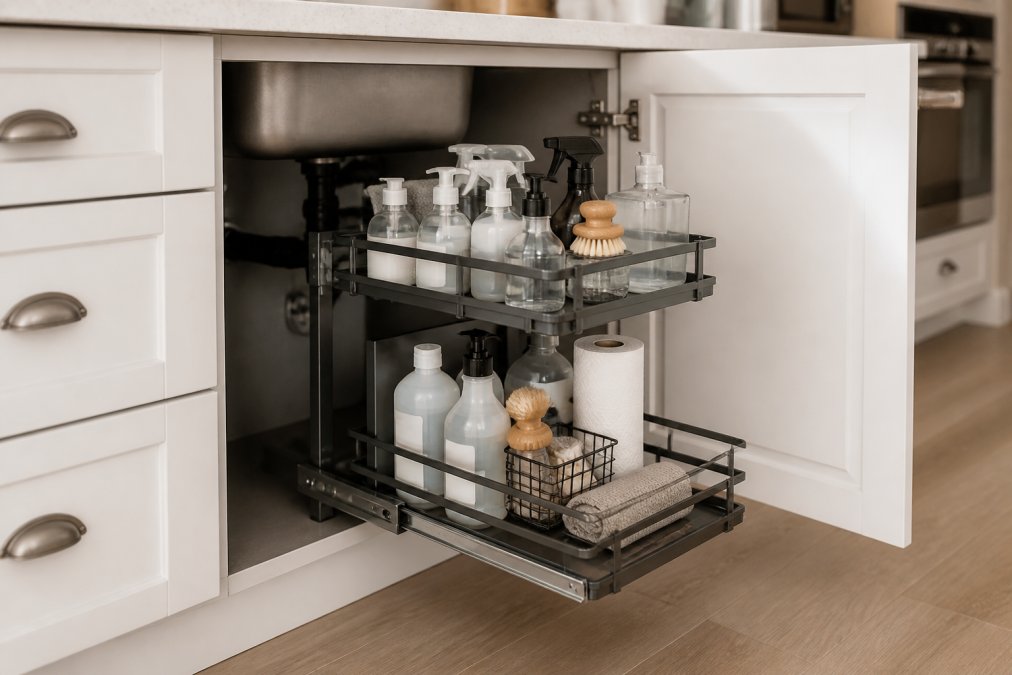
Look for organizers with adjustable shelving and smooth sliding mechanisms. The Sinkelle 2 SlideNest Organizer is specifically designed for this challenge, featuring a durable metal frame with pull-out sliding drawers that let you access items in the back without reaching past everything in front. At $55.99, it eliminates the frustration of fishing around under the sink.

For tight spaces where plumbing makes standard shelving impossible, hanging organizers offer a smart alternative. The Sinkelle CabinetFlow Hanging Organizer ($44.99) mounts beneath your cabinet doors, creating additional storage without competing with pipes. This approach works particularly well for paper towels, dishcloths, and small bottles.
The key to under-sink organization is accessibility. Your cleaning supplies need to be within arm's reach, visible, and easy to grab when you're standing at the sink with wet hands. Turntables and lazy susans work well because they let you rotate items to the front without moving everything else. Heavy-duty, moisture-resistant materials matter here; cheap plastic warps and discolors when exposed to the humidity that accumulates in every under-sink cabinet.
Handling Plumbing Obstacles
Plumbing is the real constraint in under-sink organization. Most cabinets have a P-trap directly beneath the sink, often with additional supply lines running along the sides. Standard shelving units simply don't fit.
Measure your cabinet depth and the exact location of your plumbing before buying any organizer. The space between the front of the cabinet and the P-trap is often only 6-8 inches, enough for a shallow pull-out drawer but not a standard shelf. Take photos of the plumbing from different angles to guide your organizer selection.
The Sinkelle 2 SlideNest Organizer works because it's designed with plumbing in mind. Its compact footprint and pull-out mechanism mean you're not trying to reach around pipes to access items at the back. For garbage disposals and complex plumbing angles, consider vertical hanging solutions instead of shelving. The CabinetFlow Hanging Organizer mounts on the cabinet door itself, completely avoiding plumbing interference.
Kitchen Pantry Organization Ideas That Work
Pantry organization is fundamentally different from under-sink storage because you're working with a dry environment where you can use stackable containers, vertical shelving, and multi-tier storage without worrying about moisture damage.
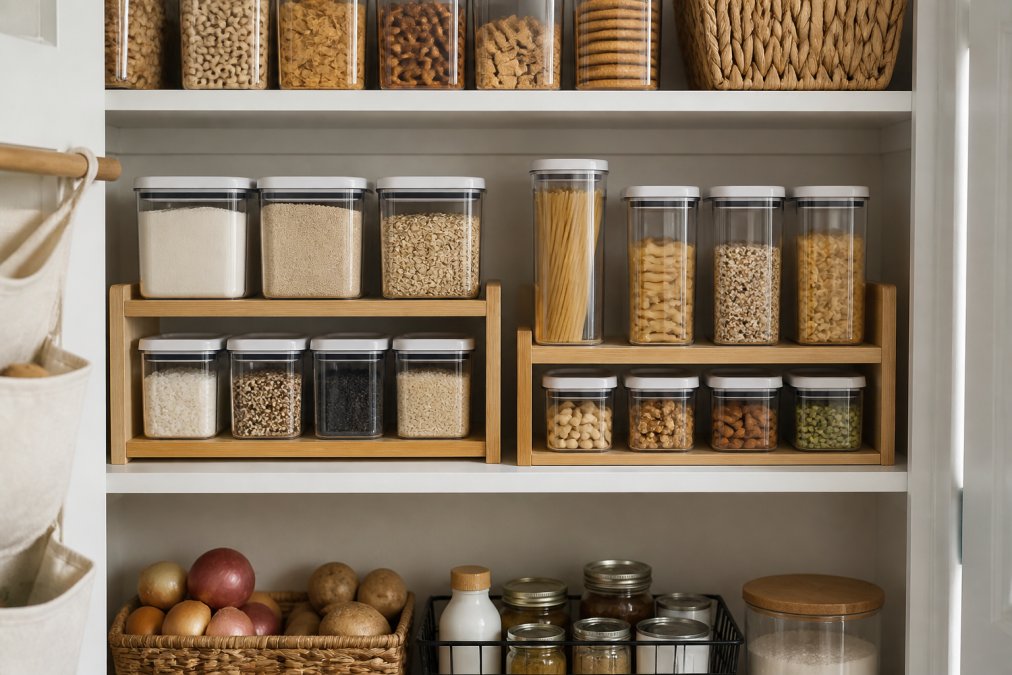
Start by auditing what you actually store in your pantry. Dry goods like rice, pasta, flour, and cereal should be in airtight containers, not in their original boxes. The Sinkelle FreshSeal Pantry Storage Canister ($39.99) uses airtight silicone seals to protect dry foods while maximizing shelf space. These containers stack, making efficient use of vertical real estate.
For items you use frequently, the Sinkelle 2-Tier Pantry Storage Rack ($71.99) is a game-changer. Built from eco-friendly bamboo, it expands your usable shelf space instantly without requiring installation. You place it on an existing shelf and suddenly you have two levels of storage where you had one.
Vertical storage is the pantry's greatest advantage. Most people arrange items in a single layer across each shelf, wasting the height above them. Use expandable shelves, stackable bins, and multi-tier organizers to create layers. Keep frequently used items at eye level and reserve higher shelves for occasional-use items.
Visibility matters in a pantry more than anywhere else. When you can't see what you have, you buy duplicates and create waste. Use clear storage containers so you can see contents at a glance. Label everything to save time and reduce decision fatigue when you're cooking.
Under-Sink Cabinet Decluttering Guide
Before you organize anything, you need to declutter. Most under-sink cabinets accumulate expired cleaning products, duplicate bottles, and forgotten items.
Step-by-Step Decluttering Process
Pull everything out of your under-sink cabinet and place it on your counter. Sort items into three categories: keep, donate, and discard. Expired cleaning products should go directly in the trash. If you haven't used something in six months and you don't have a specific reason to keep it, donate it.
Check expiration dates on cleaning products. Many people don't realize that bleach, disinfectants, and other cleaning chemicals have shelf lives. Old products lose effectiveness and can become unsafe. If the label is faded or illegible, throw it out.
Once you've reduced your inventory to items you actually use, wipe down the cabinet interior. A quick clean prevents mold from taking hold once you've reorganized.
Now measure your space carefully. Note exactly where your plumbing sits, as the P-trap location is critical. Take photos of the plumbing from different angles. These measurements and photos will guide your organizer selection.
Organizing Cleaning Supplies Efficiently
Group similar items together: all-purpose cleaners in one area, disinfectants in another, scrubbing tools in a third section. This reduces the time you spend hunting for what you need.
Use drawer liners or shelf liners to protect your cabinet from spills and moisture. Waterproof materials are essential; paper liners absorb moisture and create mold. Rubber or plastic liners are more durable and easier to clean.
Store liquid bottles upright and grouped together to contain potential spills. The pull-out sliding system in the Sinkelle 2 SlideNest Organizer creates natural compartments that prevent spills from spreading.
Keep frequently used items at eye level and within arm's reach. Dish soap, sponges, and hand soap should be immediately accessible. Reserve lower shelves for heavier items like large bottles of cleaner.
Label everything, even if it seems obvious. When you're in a hurry, clear labeling saves time and prevents grabbing the wrong product. This is especially important for toxic cleaning products.
Maximizing Vertical Space in Both Areas
Vertical space is your greatest untapped resource in both under-sink cabinets and pantries. Most people organize horizontally, which wastes the height available above items.
In your under-sink cabinet, pull-out organizers with multiple tiers maximize vertical space while keeping everything accessible. In your pantry, expandable shelves instantly double your storage capacity. The Sinkelle 2-Tier Pantry Storage Rack does this with style; the natural bamboo construction looks intentional and elegant.
Hanging organizers also use vertical space that would otherwise sit empty. The Sinkelle CabinetFlow Hanging Organizer mounts on cabinet doors, using space that typically goes unused.

Stackable containers are essential for vertical organization. Clear containers let you see what's inside without opening them. Stack them efficiently and you can fit three or four layers in the space that previously held one.
The difference between a cluttered kitchen and an organized one often comes down to using vertical space. A kitchen that looks spacious isn't necessarily bigger; it's just organized in three dimensions instead of one.
Sustainability and Material Longevity
The organizers you choose should last for years, not months. Cheap plastic warps, discolors, and breaks. Quality materials justify their cost through durability and reliability.
The Sinkelle 2 SlideNest Organizer uses durable metal construction that resists corrosion and moisture damage. Metal doesn't warp in humid environments the way plastic does. The smooth sliding mechanism uses quality hardware that won't jam or stick after months of use.
For pantry storage, the Sinkelle 2-Tier Pantry Storage Rack is built from premium bamboo, which is both sustainable and durable. Bamboo is harder than many hardwoods, resists warping, and looks better over time than plastic alternatives.

The Sinkelle FreshSeal Pantry Storage Canister uses food-grade materials and silicone seals that maintain their integrity year after year. These containers stack securely without tipping or collapsing.
When you buy quality organizers, you're not replacing them every year; you're investing in a solution that works for a decade.
Which Storage Solution Should You Choose?
The answer depends on your specific kitchen layout and how you actually use each space. If your under-sink cabinet has complex plumbing, a hanging organizer might be your best option. If your pantry is small, a multi-tier rack becomes essential.
For most kitchens, the Sinkelle 2 SlideNest Organizer solves the under-sink problem. It's affordable, durable, and designed specifically for the constraints you're actually facing. For pantry organization, the Sinkelle 2-Tier Pantry Storage Rack is the most versatile solution. Pair it with the Sinkelle FreshSeal Pantry Storage Canister for dry goods and you've solved both the vertical space problem and the visibility problem.
If you have a garbage disposal or extremely tight plumbing, the Sinkelle CabinetFlow Hanging Organizer eliminates the problem entirely by moving storage off the cabinet floor. At $44.99, it's an inexpensive way to add significant storage without fighting with pipes.
The key is choosing solutions designed for the actual constraints in your kitchen. Purpose-built solutions work because they're designed for real kitchens, not theoretical ones.
According to the National Association of Home Builders, kitchen organization is among the top priorities for homeowners renovating or upgrading their spaces. Research from the Kitchen Cabinet Manufacturers Association shows that organized kitchens improve both functionality and perceived home value. The American Cleaning Institute emphasizes that proper storage of cleaning supplies reduces accidents and improves household safety.
Organizing your kitchen doesn't require a complete renovation or expensive custom cabinetry. The right organizers, ones designed specifically for under-sink and pantry challenges, transform these spaces into functional, clutter-free zones. SinkElle's collection of storage solutions, from the pull-out SlideNest Organizer to the bamboo pantry rack, gives you the tools to maximize every inch of your kitchen. Start with the area causing you the most frustration, implement a solution designed for your specific constraints, and you'll immediately see the difference. Shop Now and reclaim your kitchen space.
| Storage Solution | Best For | Price | Key Feature |
|---|---|---|---|
| Sinkelle 2 SlideNest Organizer | Under-sink storage with plumbing | $55.99 | Pull-out sliding drawers |
| Sinkelle 2-Tier Pantry Storage Rack | Pantry vertical expansion | $71.99 | Bamboo construction, stackable |
| Sinkelle CabinetFlow Hanging Organizer | Tight plumbing situations | $44.99 | Door-mounted, avoids pipes |
| Sinkelle FreshSeal Pantry Storage Canister | Dry goods protection | $39.99 | Airtight silicone seal |
| Sinkelle PanNest Adjustable Pot Organizer | Cookware organization | $38.99 | Adjustable, carbon steel |
Frequently Asked Questions
What is the best pullout organizer for under sinks?
The Sinkelle 2 SlideNest Organizer ($55.99) features smooth pull-out drawers that maximize under-sink storage with a durable 2-tier metal frame. Its sliding system provides quick access to cleaning supplies and household essentials without requiring you to reach to the back of the cabinet. This design works well in tight spaces and accommodates various cabinet depths, making it ideal for apartments and compact kitchens.
How do storage requirements differ between a pantry and an under-sink cabinet?
Pantries require moisture-resistant containers for dry goods and prioritize visibility and accessibility for frequent use. Under-sink areas demand waterproof, durable materials because of moisture from plumbing and potential leaks. Pantries benefit from vertical stacking and open shelving for quick inventory checks, while under-sink storage needs to work around fixed plumbing obstacles. The Sinkelle 2-Tier Pantry Storage Rack ($71.99) uses eco-friendly bamboo for pantries, while the SlideNest Organizer uses metal for under-sink durability.
What are common mistakes to avoid when organizing under-sink storage?
Don't ignore plumbing obstacles or assume items won't get wet; always use waterproof, heavy-duty organizers. Avoid overcrowding, which blocks access and hides leaks. Don't store items you don't regularly use under the sink, pantries are better for that. Skip flimsy plastic bins that warp from moisture; choose metal or moisture-resistant materials instead. Finally, don't forget to declutter regularly; under-sink areas accumulate expired cleaning products and forgotten items quickly.
Should I prioritize pantry organization or under-sink storage for a small kitchen?
Prioritize under-sink storage first because it's a fixed, often-wasted space that directly impacts your working kitchen layout. Once under-sink storage is optimized with tools like the Sinkelle 2 SlideNest Organizer, move to pantry organization if you have pantry space available. If your kitchen lacks a pantry, use vertical storage solutions like the Sinkelle 2-Tier Pantry Storage Rack on countertops or shelves. Both areas matter, but under-sink optimization typically yields faster, more visible improvements in small kitchens.
How can I organize everything under my sink without damaging my rental apartment?
Use tool-free, non-permanent organizers like the Sinkelle 2 SlideNest Organizer, which sits inside the cabinet without drilling or fastening to walls or plumbing. Avoid adhesive shelf liners that leave residue; use removable, non-slip mats instead. Don't modify plumbing or drill holes for hanging organizers. Keep the Sinkelle CabinetFlow Hanging Organizer ($44.99) lightweight and ensure it hangs from existing cabinet structure without permanent attachment. When you move, simply remove the organizers and restore the cabinet to its original state.
This article was written using GrandRanker