


Table of Contents
- Assess Your Space and Plan Before You Buy
- Small Kitchen Storage Ideas That Work in Confined Spaces
- How to Organize Kitchen Cabinets Efficiently
- Small Kitchen Cabinet Organizers for Maximum Impact
- Under-Sink Kitchen Storage Ideas for Awkward Spaces
- Rental-Friendly Solutions: No Drilling, No Damage
- Maintain Your Organized Tiny Kitchen Long-Term
- Frequently Asked Questions
Last Updated: October 15, 2026
Assess Your Space and Plan Before You Buy
The biggest mistake when you maximize storage tiny kitchen is buying solutions before measuring. You end up with organizers that don't fit, shelves that block cabinets, or racks that hit plumbing. Smart planning saves money and frustration.
Your kitchen layout determines which storage solutions work, how much you can store, and whether you'll maintain the system long-term.
Measure Your Kitchen Layout
Pull out a tape measure and write down exact dimensions:
- Cabinet width and depth, measure the inside space, not the outside
- Wall space above counters, from counter to the bottom of upper cabinets
- Vertical clearance, height from counter to ceiling or soffit
- Counter depth, how much space you have between the edge and the backsplash
Photograph your sink area and surrounding cabinets. Note where the garbage disposal sits and any awkward angles where pipes stick out, these details matter when fitting organizers around them.
Write down appliance footprints too. Knowing what stays permanent shows where you can actually add storage.
Identify Dead Zones and Tight Corners
Every tiny kitchen has wasted space. Your job is to find it.
Look for these common dead zones:
- Above cabinets, often empty, dusty space that's perfect for lightweight storage
- Inside cabinet doors, ideal for hooks, small racks, or thin organizers
- Under the sink, usually cluttered with pipes and old bottles, but workable with the right bins
- Gaps between appliances, narrow spaces where a slim rolling cart fits perfectly
- Wall space beside the sink, prime real estate for a wall-mounted organizer or magnetic shelf
- Corners of upper cabinets, hard to reach but great for seasonal items
Measure these zones carefully. A gap that looks big might only be 6 inches wide. A corner that seems useless might hold exactly what you need.
Sketch a simple overhead view and mark the dead zones in color. This visual reveals opportunities you'd otherwise miss, so you'll know exactly what size and style of organizer fits.
Small Kitchen Storage Ideas That Work in Confined Spaces
Once you've mapped your space, choose solutions that work. The best tiny-kitchen storage ideas share one trait: they use vertical space instead of horizontal space.
Vertical Storage and Wall Space
Wall space is your best friend in a small kitchen, free real estate most people ignore.
Install floating shelves in the space between your counter and upper cabinets.
Wall-mounted racks hold more than you'd expect. A magnetic refrigerator shelf like the Sinkelle Magnetic Refrigerator Storage Shelf uses your fridge's side panel to store small containers, spices, or cleaning supplies without taking up cabinet or counter room.

Hooks are underrated. Mount them on walls, inside cabinet doors, or under shelves to hang utensils, pot lids, towels, and measuring cups, you see what you have and save drawer space.
Keep vertical storage visible and organized, cluttered walls look worse than cluttered cabinets. Display items that look good and group them by purpose.
Above-Cabinet and Under-Shelf Organizers
The space above your upper cabinets is usually wasted, but it's perfect for lightweight storage.
Store seasonal or rarely used items here, holiday baking supplies, extra serving dishes, backup pantry goods. Use labeled clear boxes, and avoid anything you'd eat directly from since dust gathers fast.
Under-shelf organizers double cabinet capacity without using floor space.
The Sinkelle CabinetFlow Hanging Organizer hangs beneath cabinets and holds paper towels, cutting boards, pot lids, and kitchen accessories.

They work in any cabinet but are most effective in upper cabinets; lower cabinets benefit more from dividers and pull-out baskets.
How to Organize Kitchen Cabinets Efficiently
Cabinet organization makes or breaks a tiny kitchen: a well-organized cabinet feels twice as big, a messy one half as big.
The goal is simple: group similar items, use vertical space, and make everything visible at a glance.
Drawer Dividers and Shelf Inserts
Drawers are prime real estate, use dividers to create zones for different items.
Utensils in one section, cooking tools in another, gadgets in a third.
Shelf inserts create multiple levels within one shelf: stack plates on the bottom, add an insert above for bowls or smaller dishes, and you've doubled that cabinet's capacity.
Tiered shelf risers do the same for canned goods, jars, or small containers, you see everything without moving things around.
The rule: if you can't see it easily, you won't use it. Every item should be visible without moving others.
Stack and Nest Cookware Strategically
Nest pans inside each other. Lids go in a separate bin or on a wall-mounted rack. This cuts your cookware footprint in half.
The Sinkelle PanNest Adjustable Pot Organizer organizes pots, pans, lids, and baking trays in a compact footprint.
Only keep cookware you actually use. If you haven't cooked with a pan in six months, donate it.
Store most-used pans at eye level and specialty or backup pieces higher or lower to keep your daily workflow smooth.
Small Kitchen Cabinet Organizers for Maximum Impact
The right organizers transform a chaotic cabinet into a functional system. But not all organizers work in tiny spaces.
Choose slim, stackable designs. Avoid bulky organizers that take up more space than they save. Look for clear containers so you see what's inside without opening them. Waterproof materials matter, especially under the sink where moisture is constant.
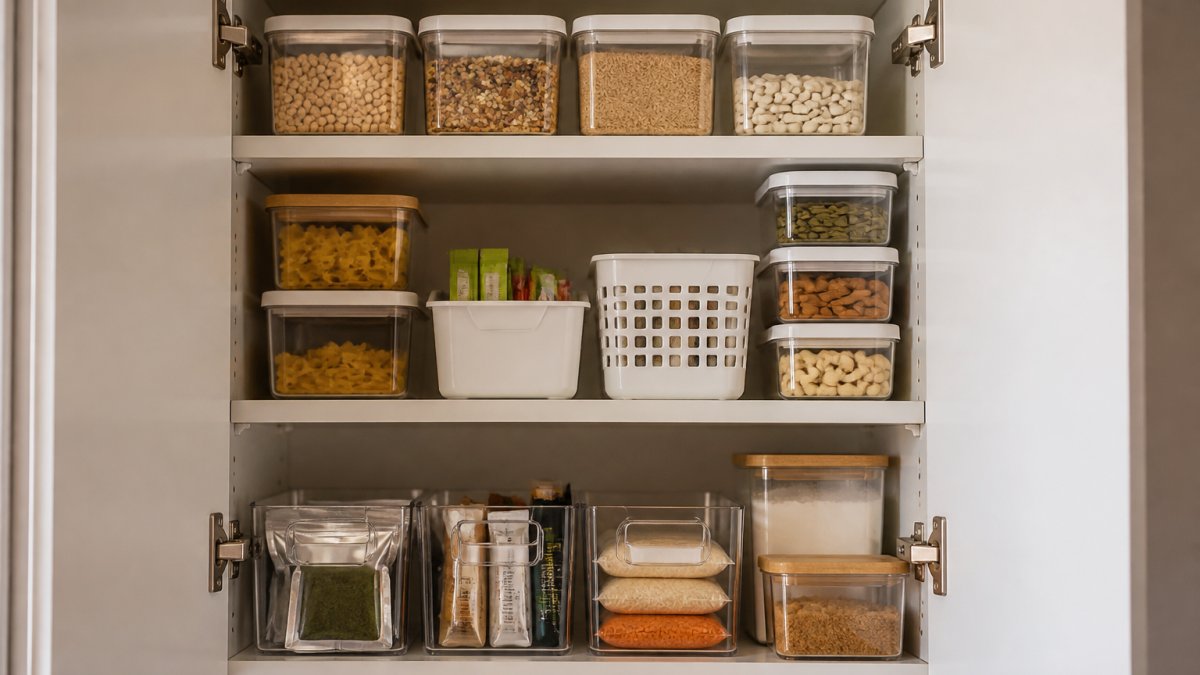
Adjustable Pot Racks and Sliding Baskets
Pot racks free up cabinet space and keep cookware organized. An adjustable pot rack fits different pan sizes and sits inside your cabinet. You pull out the entire rack to grab what you need.
Sliding baskets work the same way. They glide in and out smoothly, so you don't have to reach into the back of a deep cabinet. Label each basket by contents. One for baking supplies. One for canned goods.
Sinkelle Magnetic Refrigerator Storage Shelf →
These organizers work best in lower cabinets where you have more vertical space. They're less useful in shallow upper cabinets where you can already see everything.
Spice Racks and Small-Item Containers
Spices take up space and get lost easily. A dedicated spice rack keeps them organized and visible.
Mount a spice rack on a wall, inside a cabinet door, or on a shelf. Spices should be alphabetical or grouped by cuisine type.
Small-item containers hold everything else: tea bags, instant coffee, sweeteners, condiments. Use drawer dividers or small bins to keep these items from scattering. Label everything.
The Sinkelle FlowCart Storage Rack is a slim rolling cart that fits between appliances or in a corner. Its multi-tier design holds pantry items, spices, canned goods, and small containers.

Under-Sink Kitchen Storage Ideas for Awkward Spaces
The space under your sink is awkward. Pipes run everywhere. Your garbage disposal might be in the way. But it's still valuable storage if you work around the obstacles.
Most under-sink cabinets are wasted space because people don't know how to organize them. You can change that.
Work Around Plumbing and Garbage Disposals
First, understand what you're working with. Measure the actual usable space after accounting for pipes, the P-trap, and your garbage disposal.
Store cleaning supplies under the sink. They're toxic and need to be hidden anyway. Keep them in a waterproof bin so spills don't damage your cabinets.
Use vertical space. Hang a small shelf or rod from the underside of the cabinet above the pipes. This creates storage that doesn't interfere with plumbing.
Pull-out organizers slide in and out smoothly. They fit around pipes and create accessible storage without forcing you to reach into the back of a dark cabinet.
Waterproof Bins and Pull-Out Organizers
Waterproof bins are non-negotiable under the sink. Waterproof materials resist moisture and last years longer.
Choose clear bins so you see what's inside. Label them. One bin for dish soap and sponges. One for cleaning sprays. One for paper towels and trash bags. Everything has a home.
Pull-out organizers let you access items without moving everything else. They slide smoothly and keep items organized as they go in and out.
Measure your under-sink space carefully before buying organizers. An organizer that's one inch too wide won't fit. Tight spaces require custom solutions or slim, flexible organizers that adjust to fit.
Rental-Friendly Solutions: No Drilling, No Damage
If you rent, you can't drill holes or mount permanent shelves. But you can still maximize storage in your tiny apartment kitchen.
Adhesive hooks hold weight better than you'd expect. Use them on walls, cabinet doors, and inside cabinets.
Tension rods fit between cabinet walls and hold items in place. They're adjustable and damage-free.
Over-the-door organizers hang on cabinet doors without drilling. They hold small containers, spice jars, or cleaning supplies.
Freestanding shelves and rolling carts don't require installation. They sit in corners or between appliances. Move them anytime without leaving a trace.
Magnetic organizers stick to your refrigerator or any metal surface. The Sinkelle Magnetic Refrigerator Storage Shelf uses this approach to add storage without touching your walls or cabinets.
Maintain Your Organized Tiny Kitchen Long-Term
Organization systems fail when people don't maintain them. A great system falls apart in weeks if you don't stick to it.
The difference between an organized kitchen that stays organized and one that becomes chaotic again is simple: habits and regular maintenance.
Create Zones for Different Item Types
Assign a specific zone for each category. Baking supplies go in one cabinet. Canned goods in another. Spices on their own shelf. Cooking utensils in one drawer.
When everything has a zone, cleanup is automatic. You don't think about where things go. You just put them back in their zone. This removes the decision-making that causes clutter.
Label every zone. Use small labels or write directly on containers. Labeling takes five minutes but saves hours of searching and reorganizing.
Regular Decluttering and Inventory Checks
Schedule a monthly check of your kitchen storage. Spend 15 minutes opening each cabinet and asking: Do I use this? Is it expired? Does it belong here?
Remove items you haven't used in three months. Donate them or throw them away. A tiny kitchen can't afford space for things you don't use.
Check expiration dates on spices, condiments, and packaged goods. Old items take up space and aren't safe to eat. Clear them out.
Rearrange if something isn't working. If you never use a spice rack because it's in an inconvenient spot, move it.
When you maximize storage tiny kitchen, it doesn't have to feel cramped. SinkElle's waterproof, minimalist-designed organizers like the CabinetFlow Hanging Organizer and PanNest Adjustable Pot Organizer help you maximize every inch without compromising on style or function.
Frequently Asked Questions
How can I maximize storage in a tiny apartment kitchen without remodeling?
Focus on vertical space and underutilized areas. Install wall shelves above counters, use magnetic organizers on refrigerator sides, add hanging racks under cabinets, and install drawer dividers. These changes maximize storage in tiny kitchens without permanent construction. Products like the Sinkelle CabinetFlow Hanging Organizer ($44.99) add storage beneath cabinets, while the Sinkelle Magnetic Refrigerator Storage Shelf ($34.99) converts unused fridge wall space into accessible storage.
What's the best way to organize kitchen cabinets in a small space?
Use vertical stacking for pots and pans, install shelf dividers to prevent sliding, and group similar items together. The Sinkelle PanNest Adjustable Pot Organizer ($38.99) lets you customize cabinet layouts for different cookware sizes. Place frequently used items at eye level, heavier items on lower shelves, and reserve upper cabinets for occasional-use pieces. Drawer dividers keep utensils and small tools from creating clutter.
How do I organize under-sink storage when I have a garbage disposal and plumbing?
Work around fixtures by using pull-out bins that fit between pipes and the cabinet walls. Waterproof storage containers protect cleaning supplies and prevent mold. Avoid blocking access to shut-off valves or drain lines. If space is extremely tight, move non-essential items to other storage zones and reserve under-sink space only for items that must stay there for convenience or safety.
Can I use these storage solutions if I rent and can't drill holes?
Yes. Magnetic mounting systems, adhesive hooks, and hanging organizers require no drilling. The Sinkelle Magnetic Refrigerator Storage Shelf uses magnetic mounting on compatible metal surfaces, and the Sinkelle FlowCart Storage Rack ($30.99) rolls into tight spaces without installation. Over-the-door racks and tension rods also work in rental kitchens. Always check your lease before installing anything, and use damage-free methods like removable adhesive strips.