


Table of Contents
- What Causes Hard Water Stains and Mineral Buildup
- How to Remove Hard Water Stains From Your Sink Basin
- How to Remove Hard Water Stains From a Faucet
- How to Remove Hard Water Stains From Stainless Steel Sinks
- Best Hard Water Stain Remover and Safe Cleaner Combinations
- How to Prevent Hard Water Stains From Returning
- When to Call a Professional
- Conclusion
- Frequently Asked Questions
Last Updated: October 19, 2026
What Causes Hard Water Stains and Mineral Buildup
Hard water stains form when tap water's dissolved minerals, mainly calcium and magnesium, leave white, chalky residue as water evaporates. Buildup is fastest where water sits or drips, like the faucet and basin rim.
Each use leaves a tiny mineral layer; over weeks these become stubborn, crusty stains. Regular white, powdery stains mean you likely have hard water, but they're cosmetic and easy to remove with the right approach.
How to Remove Hard Water Stains From Your Sink Basin
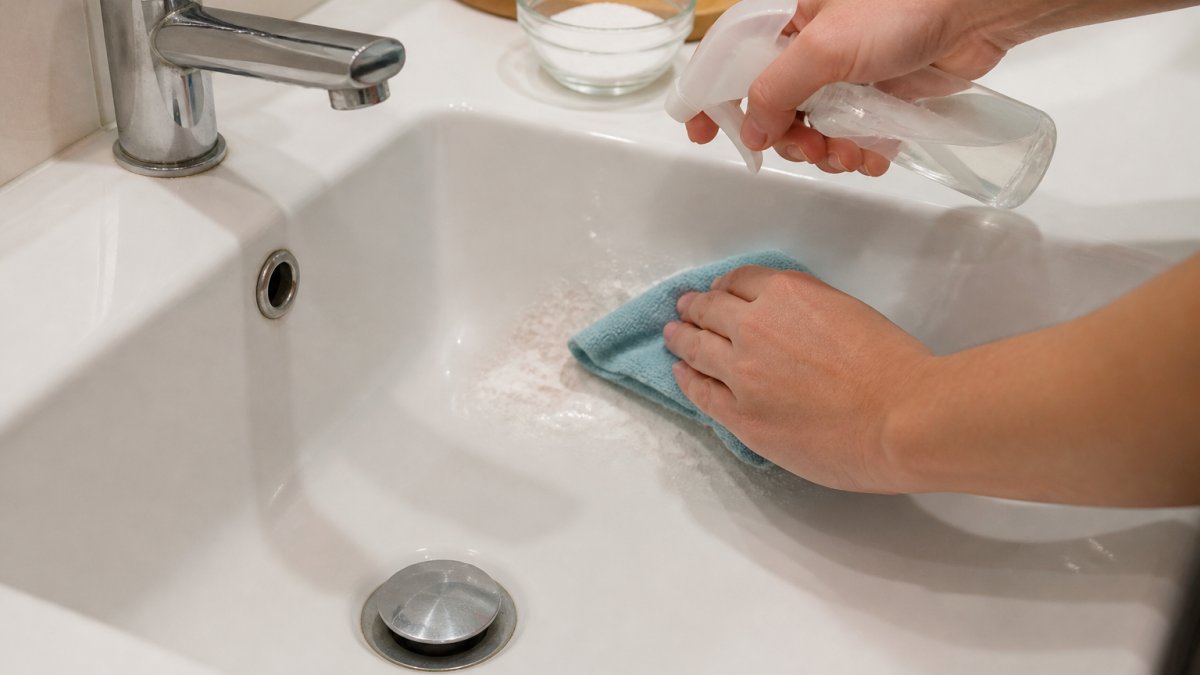
Removing hard water stains from your sink is a four-step process: diagnose the stain, match the method to the sink material, allow enough dwell time, then scrub and rinse without damaging the finish. Below are the specifics most guides skip: dwell times, tool choices, and failure modes.
Step 1: Identify the Stain Type
Before reaching for a cleaner, confirm what you're looking at. Hard water deposits are white to off-white, chalky, and crusty, crumbling slightly under a fingernail. Rust stains are reddish-brown and slick; soap scum is dull, cloudy, and greasy; etching changes the finish itself and responds to no cleaner.
Quick field test: apply a few drops of white vinegar to an inconspicuous spot and wait two minutes. If it softens or fizzes, it's mineral scale and an acid-based method will work; if nothing happens, switch to a non-acid approach. Misdiagnosing is the most common reason people scrub repeatedly with the wrong product and still see white residue.
Step 2: Choose Your Cleaning Method by Material
The biggest cause of damage during hard water removal is using an acid or abrasive on a surface that cannot take it. Use the surface-by-surface guidance below.
Porcelain and ceramic (enameled cast iron included): These tolerate mild acids well. Spray undiluted white vinegar, let it dwell 10 minutes, then scrub with a non-scratch sponge.
Stainless steel: Acid attacks the finish, not the metal.
Composite and solid-surface sinks (quartz, acrylic, and quartz-composite blends): These are acid- and scratch-sensitive. Skip vinegar and lemon juice entirely. Use a baking soda paste with a soft cloth, dwell 10 minutes, and rinse thoroughly.
Natural stone (granite, marble, travertine, soapstone): Acid etches stone permanently, so vinegar, lemon juice, and most commercial descalers are off-limits.
Step 3: Apply and Let It Sit
Dwell time does most of the work; the right time depends on method and severity.
- White vinegar spray: 10 minutes for light film, up to 30 minutes for visible crust. Re-spray if it dries out.
- Baking soda paste: 10-15 minutes. Apply about 1/8 inch thick so it stays moist.
- Vinegar-soaked cloth or paper towel: 20-30 minutes for vertical surfaces where spray runs off.
- Lemon juice: 5-10 minutes; citric acid is milder than acetic acid and needs less contact time to avoid dulling.
Never let acid dry on the surface: it concentrates, is harder to rinse, and is more likely to mark stainless steel and stone. For heavy deposits, plan two or three shorter treatments rather than one long soak.
Step 4: Scrub and Rinse
Use a soft cloth, non-scratch sponge, or soft-bristle brush such as an old toothbrush for seams and around the drain. Apply light to medium pressure and let the softened deposit come away rather than forcing it. Rinse until the surface feels slick, not chalky, then dry immediately: leftover water evaporates and leaves a fresh mineral ring within hours.
If white residue remains after the first pass, repeat the dwell-and-scrub cycle once. If it remains after two cycles, the mark may be etching rather than deposit, and further scrubbing will only damage the finish. Stop and consult the manufacturer's care guide before trying anything stronger.
How to Remove Hard Water Stains From a Faucet
Faucets collect hard water stains because water drips and pools around the base, accumulating quickly on chrome, nickel, and stainless steel.
Wrap a cloth soaked in vinegar around the faucet base and spout, secure it with a rubber band, and let it sit 30 minutes to an hour; for heavy deposits, leave it overnight.
After soaking, wipe away softened deposits with a soft cloth; for stubborn spots, use a baking soda paste and soft brush. Rinse completely and dry with a clean cloth to restore shine.
For faucet aerators (the screen at the faucet tip), unscrew and soak in vinegar for several hours. Scrub away deposits with an old toothbrush, then rinse and reinstall. Clean aerators improve water flow and reduce splashing.
How to Remove Hard Water Stains From Stainless Steel Sinks
Stainless steel needs extra care: acidic cleaners can leave water spots and dull the finish, and the material shows streaks easily.
Baking soda paste is your best friend for stainless steel.
After scrubbing, rinse thoroughly and dry immediately with a microfiber cloth to prevent water spots. For extra shine, wipe with a cloth dampened in mineral oil or stainless steel polish.
Avoid vinegar on stainless steel if possible. If you must use it, dilute it heavily and dry the sink immediately; never let it sit, as it can create permanent water marks.
Best Hard Water Stain Remover and Safe Cleaner Combinations
The most effective hard water stain removers use simple household ingredients that are affordable, safe, and widely available.
Sinkelle AquaShield Faucet Guard →
White Vinegar and Baking Soda Paste
This combination works on nearly every sink material: vinegar dissolves mineral deposits while baking soda provides gentle abrasive action.
Mix white vinegar and baking soda into a paste (it will fizz slightly, which is normal). Apply to stained areas, let sit 10-15 minutes, scrub gently with a soft cloth or non-scratch sponge, then rinse thoroughly.
This method works well for porcelain sinks, ceramic basins, chrome faucets, and tile around sink areas.
Lemon Juice for Natural Mineral Removal
Lemon juice contains citric acid, which dissolves hard water deposits naturally, leaves a fresh scent, and requires no mixing.
Cut a lemon in half and rub it directly on stained areas. Let the juice sit 5-10 minutes, scrub with a soft cloth, rinse well, and dry. For heavy deposits, squeeze fresh lemon juice into a spray bottle and apply generously.
Lemon juice works best on light to moderate stains, porcelain and ceramic surfaces, and faucets and fixtures.
Household Cleaners and Safety Warnings
Commercial hard water stain removers exist but are unnecessary for most situations. If you use them, follow these safety guidelines:
- Read labels carefully and follow all instructions
- Never mix cleaners (especially vinegar with bleach, this creates toxic gas)
- Ensure good ventilation when using any chemical cleaner
- Wear gloves to protect your skin
- Test on a hidden area first to check for damage
- Keep cleaners away from children and pets
Vinegar and baking soda work just as well and eliminate chemical exposure risks.
How to Prevent Hard Water Stains From Returning
Prevention comes down to one principle: keep dissolved minerals from evaporating on the surface.
After every use (10 seconds): Wipe the basin, rim, and faucet base dry with a microfiber cloth.
Daily (1 minute): Wipe the faucet and the area around the drain, where water pools most.
Weekly (5 minutes): Do a short dwell treatment before the deposit becomes visible.
Monthly (15 minutes): Descale the faucet aerator by unscrewing it and soaking it in vinegar for 30 minutes, then scrubbing with an old toothbrush.
Seasonally: Inspect the whole fixture for drips. A slow drip is a continuous mineral source, and fixing a worn washer or cartridge is cheaper than repeated descaling.
When DIY prevention is not enough: If deposits return within a week, the surface feels rough even after cleaning, or you see etching, pitting, or rust that does not respond to a baking soda paste, stop treating it as a cleaning problem. Use a purpose-made descaler matched to your sink material, consult the manufacturer's care instructions, or have a plumber check for leaks and water hardness. Replacing a damaged natural stone or composite sink costs far more than a professional assessment.
When to Call a Professional
Most hard water stains can be removed at home with basic supplies. However, some situations warrant professional help.
Call a professional if:
- Stains have etched into the sink surface (creating permanent damage)
- Your sink material is expensive natural stone and you're unsure how to clean it safely
- Stains keep returning immediately after cleaning (indicating a deeper plumbing issue)
- You notice rust stains that don't respond to standard cleaning methods
A plumber can assess whether your hard water problem requires a water softener or other treatment. Professional cleaning services exist for stubborn stains, though they're rarely necessary for typical mineral buildup.
Conclusion
Hard water stains are a common frustration but entirely manageable with the right approach. Identify your stain type, choose a method suited to your sink material, and use gentle techniques that protect your surfaces. White vinegar, baking soda, and lemon juice handle most situations effectively and safely.
Prevention is your best long-term strategy. Dry your sink after each use, and you'll prevent most deposits from forming. For ongoing organization and maintenance, keeping your sink area clean and clutter-free makes regular care easier. At SinkElle, we design products that support this lifestyle, like the Sinkelle AquaShield Faucet Guard, which prevents water splashes and moisture buildup, and the Sinkelle FlowRack Pro Caddy, which keeps your cleaning supplies organized and accessible.
| Method | Best For | Dwell Time | Effort Level |
|---|---|---|---|
| White vinegar + baking soda | Most sink types | 10-15 minutes | Low |
| Lemon juice | Light stains, porcelain | 5-10 minutes | Very low |
| Baking soda paste alone | Stainless steel | 10-15 minutes | Low |
| Commercial hard water remover | Heavy buildup | Varies by product | Low |
| Water softener installation | Prevention long-term | N/A | High (one-time) |
Frequently Asked Questions
Can vinegar remove hard water stains from a sink?
Yes. White vinegar is an acidic cleaner that dissolves calcium deposits and mineral buildup effectively. Spray undiluted vinegar directly onto the stains, let it sit for 15-30 minutes, then scrub with a soft cloth and rinse. For stubborn stains, make a paste with baking soda and vinegar, apply it to the affected area before scrubbing. Vinegar works best on porcelain and ceramic sinks but should be tested on natural stone first.
How do I remove hard water stains from my faucet?
Wrap a cloth soaked in white vinegar around the faucet base and aerator, securing it with a rubber band. Leave it for 30 minutes to 2 hours, depending on buildup severity. For the faucet head, soak it in a bowl of vinegar if removable. Scrub gently with a soft brush or cloth, rinse thoroughly, and dry to prevent new stains. For chrome or brushed finishes, avoid abrasive scrubbers that can scratch. The Sinkelle AquaShield Faucet Guard prevents splashes and moisture buildup that lead to stains.
What is the best hard water stain remover for stainless steel sinks?
For stainless steel, use white vinegar or lemon juice rather than abrasive powders that can scratch the finish. Spray the solution onto the stain, let it sit for 10-20 minutes, then wipe with a soft cloth in the direction of the grain. Baking soda paste works but use it sparingly and always rub with the grain. Always dry the sink completely after cleaning to prevent water spots and new mineral deposits.
How can I prevent hard water stains from coming back?
Dry your sink and fixtures with a soft cloth immediately after use to prevent mineral deposits from forming. Use a water softener or install a point-of-use filter to reduce mineral content in tap water. The Sinkelle DryFlow Splash Mat channels water back into the sink and prevents puddles where stains develop. Clean your sink weekly with vinegar to dissolve early mineral buildup before it hardens. Store cleaning tools in the Sinkelle HookNest Kitchen Sponge Holder to keep your sink organized and accessible for quick maintenance.