


Table of Contents
- Assess Your Corner Space and Measure Carefully
- Best Corner Cabinet Organizers for Small Kitchens
- Blind Corner Cabinet Storage Solutions
- DIY Corner Cabinet Hacks and Budget-Friendly Options
- Maximize Vertical Storage and Lighting
- Organize Large Appliances and Rarely Used Items
- Maintain Your Organized Kitchen Corner
- Conclusion
Last Updated: August 10, 2026
Assess Your Corner Space and Measure Carefully
The first step in organizing a tight kitchen corner is understanding exactly what you're working with. Many homeowners skip this phase and jump straight to buying organizers, only to discover their purchases don't fit or don't solve the actual problem. Measure your corner space in three dimensions: width, depth, and height. Note where plumbing, electrical outlets, or appliance edges create constraints. Take photos from multiple angles, these become invaluable when shopping for solutions.
Pay special attention to the dead space where two cabinet sides meet at a 90-degree angle. This is where most kitchen corner organization fails. The deeper you go into the corner, the harder items become to reach. A cabinet that's 24 inches deep might only give you 12 inches of genuinely usable storage before items disappear into inaccessible territory. Understanding this limitation upfront changes how you approach the entire organization strategy.
Document the height of your cabinet opening and the vertical space available inside. Some tight corners have low ceilings or upper cabinets that restrict vertical storage options. Others have plenty of headroom but very shallow depth. These constraints determine which organizers will actually work for your space. Write down all measurements, width, depth, height, and any obstructions, before moving to the next step.
Best Corner Cabinet Organizers for Small Kitchens
Corner cabinet organizers come in several distinct categories, each solving different access and storage problems. The right choice depends on your corner's dimensions, what you're storing, and how often you need to access those items.
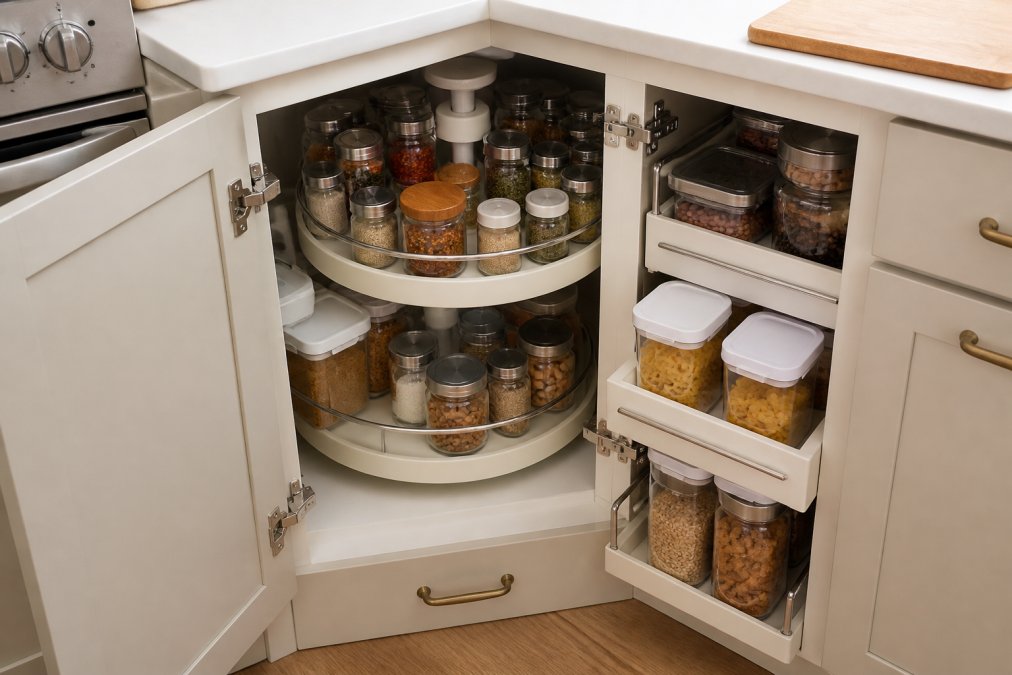
Lazy Susan Turntables for Easy Access
A lazy susan turntable transforms a blind corner cabinet from a dead zone into accessible storage. The rotating mechanism brings items to the front without requiring you to reach deep into the corner. This works particularly well for spices, oils, condiments, and small jars that you use regularly.
The key advantage is ergonomics. Instead of reaching blindly into a corner, you simply rotate the turntable until what you need faces forward. Most lazy susan organizers range from 12 to 20 inches in diameter, fitting neatly into standard corner cabinets. Look for models with raised edges to prevent items from sliding during rotation.
A turntable works best when paired with containers that won't slide, stackable bins or jars with stable bases prevent items from shifting as the turntable spins.
Pull-Out Shelf Solutions
Pull-out shelves extend the entire usable depth of your corner cabinet, bringing back items forward without forcing you to reach. These are among the most effective solutions for deep cabinets where dead space is a real problem. A pull-out shelf that slides smoothly makes even the back corner accessible.
Installing pull-out shelves typically requires some hardware knowledge, though many modern versions use a no-tool installation system. The shelf glides on ball-bearing tracks, supporting significant weight while maintaining smooth operation. This matters if you're storing heavy items like cast iron, mixers, or bulk pantry goods.
Weight capacity varies by model. Quality pull-out shelves support 50 to 75 pounds, enough for most kitchen storage needs. However, check your cabinet's structural integrity before loading heavily, weak or damaged cabinet sides may not support the stress of a loaded, extended shelf.
Shelf Risers and Vertical Stacking
Shelf risers double your vertical storage capacity by creating a second tier within your existing cabinet space. These simple organizers sit on your cabinet shelf and support another shelf above, instantly giving you room for twice as many items in the same footprint.
Vertical stacking works especially well for plates, bowls, and similar flat items that benefit from organization by frequency of use. Keep everyday dishes on the lower tier and special occasion pieces above. This approach also improves visibility, you can see what you have without digging through a single deep stack.
Material matters here. Metal or bamboo risers provide better support than plastic and integrate more naturally with a minimalist kitchen aesthetic. They're also easier to clean and more durable long-term. When selecting risers, verify they're tall enough to create meaningful vertical space, at least 6 to 8 inches, while leaving room above for your hand to access items on the upper tier.
Blind Corner Cabinet Storage Solutions
Blind corner cabinets, where two cabinet sides meet at a right angle and one side has no door, create some of the most challenging storage situations in kitchens. The corner itself is nearly unreachable, and traditional shelving wastes enormous amounts of space.
Accessing Deep Storage Safely
Accessing items stored deep in a blind corner requires a systematic approach. Never reach blindly into the back. Instead, use a pull-out shelf or turntable to bring items to you, or organize items in a way that makes reaching unnecessary.

For cabinets without any organizer, consider storing only rarely used items in the deep corner, seasonal baking equipment, special serving dishes, or bulk pantry items you access infrequently. Keep everyday items in the front or middle portion where you can reach them comfortably. This simple categorization prevents the frustration of constantly hunting for items buried in the back.
Some people install a small LED light strip inside the corner cabinet. This dramatically improves visibility and makes it easier to see what's stored where, reducing the time you spend searching. Lighting also helps you avoid accidentally knocking items over when reaching into dark spaces.
Weight Capacity and Structural Integrity
Before installing any organizer that holds significant weight, assess your cabinet's structural condition. Inspect the sides, bottom, and back for signs of damage, warping, or soft spots. Weak cabinet construction can't safely support heavy pull-out shelves or fully loaded turntables.
Weight distribution matters as much as total weight capacity. A pull-out shelf concentrates weight at specific points where it connects to the cabinet frame. If those connection points are weak, the shelf will sag or fail regardless of the hardware's rated capacity. Test the cabinet by applying downward pressure to different areas and feeling for flex or movement.
For cabinets with questionable structural integrity, stick to lighter organizers like lazy susans with small items, shelf risers for lightweight dishes, or simple stackable bins. These distribute weight more evenly and place less stress on cabinet joints. If you're renting and concerned about damage, this approach also minimizes the risk of leaving marks or requiring repairs when you move.
DIY Corner Cabinet Hacks and Budget-Friendly Options
Professional organizers and pre-made systems solve corner storage problems, but DIY approaches often work just as well at a fraction of the cost. Many effective solutions use items you already have or inexpensive materials from hardware stores.
Installing Cabinet Inserts Without Tools
The simplest corner cabinet hack requires no tools or installation. Stackable bins in various sizes let you create custom storage configurations that fit your specific corner dimensions. Choose bins that complement your kitchen aesthetic, clear containers for visibility, or solid colors for a minimalist look.
Arrange bins by category: baking supplies in one, oils and vinegars in another, canned goods in a third. Label each bin clearly so you and others in your household know where to find things. This system works particularly well for items you access occasionally rather than daily.
Another no-tool approach uses tension rods installed horizontally across the corner cabinet opening. These rods support hanging organizers, small baskets, or even lightweight cookbooks. Tension rods adjust to fit different widths and require no drilling or permanent installation, perfect for renters or anyone hesitant about modifying their kitchen.

Categorizing Items by Frequency of Use
The most overlooked aspect of corner cabinet organization is categorizing what you store there. Not all items belong in tight corners. Reserve corner cabinets for things you use less frequently, specialty equipment, seasonal items, or backup supplies.
Create three categories: daily use, weekly use, and occasional use. Daily items belong in the most accessible locations, front of the cabinet, eye level, or on your counter. Weekly items can go in secondary locations that require minor reaching. Occasional items can occupy the deep corner spaces that are harder to access.
This categorization system prevents the common problem where you're constantly frustrated trying to reach something you use daily from a difficult location. It also forces you to be honest about what you actually use, which often leads to clearing out items that should be donated or discarded.
Maximize Vertical Storage and Lighting
Most kitchen corners waste significant vertical space. Cabinets typically have 12 to 18 inches of height, but many people use only the bottom portion, leaving the upper area empty or storing items they never access.
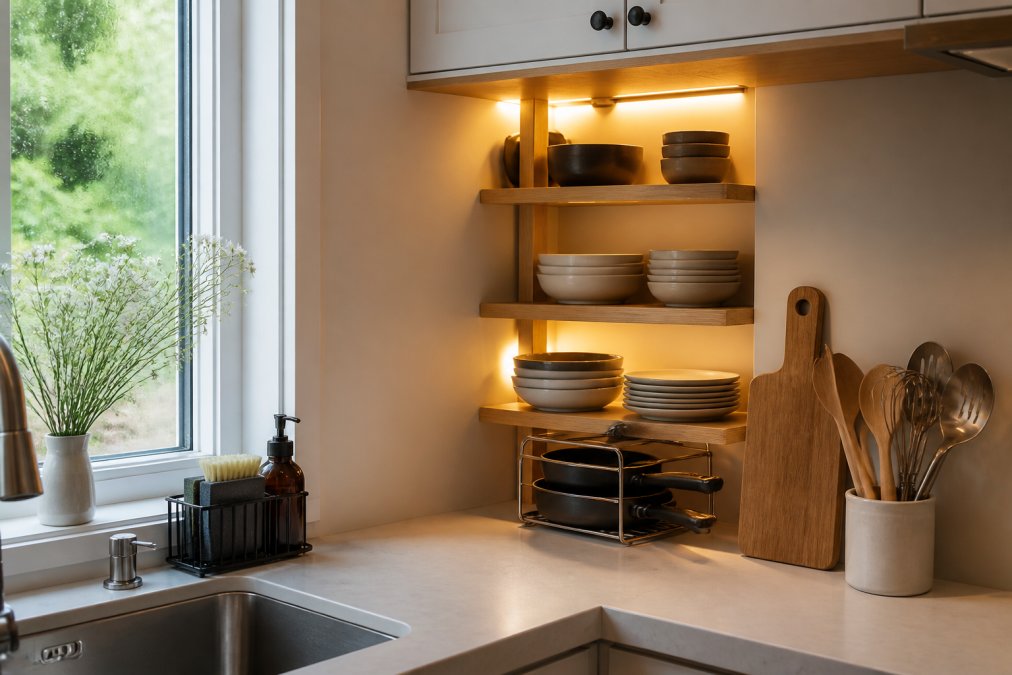
Adding Lighting to Dark Corners
Dark corners make organization nearly impossible. You can't see what's stored there, you're afraid of reaching in blindly, and items get forgotten. A simple LED light strip solves this problem completely.
Self-adhesive LED strips install without tools or wiring. Stick them to the underside of a shelf or the top inside edge of your cabinet, and they instantly illuminate the corner. Battery-powered options avoid any electrical work. Solar-powered strips are also available, though they're less reliable in enclosed cabinet spaces.
Proper lighting also makes your organized corner more functional. You'll actually use items stored there because you can see them. You'll maintain the organization longer because you can see when things are getting messy. It's a small investment that dramatically improves both functionality and the likelihood that your organization system will stick.
Organize Large Appliances and Rarely Used Items
Corner cabinets often become dumping grounds for large appliances and equipment you rarely use, food processors, bread makers, specialty blenders, or holiday serving pieces. These items take up enormous space and create clutter.
Assess whether you actually use these items. If you haven't used a bread maker in two years, it's taking up valuable real estate. Consider donating items you don't use regularly. For items you do use occasionally, store them outside your primary kitchen zone, in a pantry, basement, or dining room cabinet, and bring them out only when needed.
For appliances you keep in your corner cabinet, organize them by size and weight. Heavier items go on lower shelves. Smaller items stack on upper shelves or on shelf risers. Keep the most frequently used appliance in the most accessible spot, and arrange others by how often you actually use them.

Maintain Your Organized Kitchen Corner
Organization systems fail when maintenance isn't part of the plan. Set a monthly reminder to reassess your corner cabinet. Check that items are still in their designated spots, that nothing has shifted, and that the system still makes sense for how you actually use your kitchen.
Seasonal changes often require reorganization. Winter cooking might emphasize different items than summer grilling season. Adjust your corner cabinet organization to match your current cooking patterns rather than trying to maintain a system designed for a different time of year.
Involve other household members in maintaining the system. If they don't understand why items are organized a particular way, they'll put things back randomly. Label everything clearly and explain the logic behind your organization. This shared understanding makes it much more likely the system will persist.
Regular decluttering prevents corner cabinets from becoming cluttered again. Every few months, remove items you haven't used and evaluate whether they deserve cabinet space. This practice keeps your corner functional and prevents dead space from accumulating again.
Tight kitchen corners challenge every homeowner, but the right combination of assessment, organizers, and maintenance transforms them into functional storage. Start by measuring your space and understanding its constraints. Then choose organizers that match your specific corner dimensions and how you actually use your kitchen.
SinkElle's minimalist, tool-free organization solutions are designed specifically for kitchens where space is precious and aesthetics matter. The brand's waterproof materials and Scandinavian-inspired design mean your corner storage looks intentional and elegant, not like a storage crisis. With the right approach, your tight kitchen corner becomes an asset rather than a frustration, organized, accessible, and efficient.
Frequently Asked Questions
What is the best way to organize a corner cabinet in a tight kitchen?
Start by measuring your corner space precisely, then declutter items you rarely use. Install a lazy susan turntable for easy access to items in the back, add pull-out shelves to eliminate dead space, and use shelf risers to create vertical storage. The Sinkelle CabinetFlow Hanging Organizer works well for under-sink corners, while the Sinkelle 2 SlideNest Organizer maximizes cabinet depth with two tiers. Group similar items together and place frequently used items at eye level for efficient kitchen workflow.
Are lazy susans good for blind corner cabinets?
Yes, lazy susan turntables are excellent for blind corner cabinets because they rotate to bring items stored at the back within easy reach. This eliminates the frustration of reaching into deep storage and forgetting what you have. A quality turntable with adequate weight capacity (typically 20-30 pounds) keeps your cabinet accessible without requiring drilling or permanent installation. They work especially well for spices, condiments, and small appliances you use regularly but don't need constant access to.
How can I organize a kitchen corner without damaging walls or plumbing?
Choose tool-free, non-permanent solutions like the Sinkelle FlowCart Storage Rack ($30.99) or the Sinkelle 2-Tier Pantry Storage Rack ($71.99), which require no drilling or wall anchors. These cabinet inserts sit inside your existing cabinets and work around garbage disposals and plumbing angles. Measure twice to ensure the organizer fits your specific corner layout. If you rent, tool-free options give you flexibility to remove everything when you move without leaving marks or requiring landlord approval.
What materials should I look for in corner cabinet organizers to prevent mold and warping?
Look for waterproof, moisture-resistant materials like stainless steel, bamboo with water-resistant finishes, or high-grade plastic rated for kitchen use. The Sinkelle product line uses durable, waterproof materials specifically designed for sink-area storage where moisture is common. Ensure any organizer has proper ventilation to prevent mold growth, especially in blind corners where air circulation is limited. Check product reviews for long-term durability claims and avoid cheap plastic bins that can warp or absorb moisture over time.
This article was written using GrandRanker