


Table of Contents
- Step 1: Find the Odor Source Before You Treat It
- Step 2: Ventilate During and After Cooking
- Step 3: How to Get Rid of Cooking Smells in a Small Apartment
- Step 4: Use Kitchen Odor Absorbers That Actually Work
- Step 5: How to Remove Odors from a Kitchen Sink Drain
- Step 6: How to Clean a Smelly Garbage Disposal
- Step 7: Degrease Surfaces Where Odors Linger
- Prevent Odors in Small Kitchens Before They Start
- Frequently Asked Questions
Last Updated: October 17, 2026
Step 1: Find the Odor Source Before You Treat It
You cannot eliminate odors in small kitchens by spraying air freshener. That masks the smell for an hour and leaves the source untouched.
So start with your nose and a flashlight, not a bottle.
Cooking smells in a small space have four common sources:
- Grease film on cabinets, backsplash, and the hood filter
- The sink drain or garbage disposal, where food residue sits
- The trash bin and sponges, which hold moisture and bacteria
Sniff each zone separately. Grease smells warm and stale. Drain smells are sharp and sulfur-like. Bin and sponge odors are sour. That difference tells you which step below matters most.
Step 2: Ventilate During and After Cooking
Ventilation is the fastest way to clear airborne odors, and most people stop too early. Turn the range hood on before you start cooking, not halfway through.
If you have an extractor fan, check the filter monthly. A grease-clogged filter moves less air and just recirculates the smell.
No hood? Open a window on the far side of the kitchen and another in the next room.
- Start the fan before cooking
- Cook with lids on to cut steam and smoke
- Run the hood 10 to 15 minutes after you finish
- Clean or replace the filter on a schedule
Step 3: How to Get Rid of Cooking Smells in a Small Apartment
To get rid of cooking smells in a small apartment, combine ventilation with source removal and an odor absorber. Airflow alone rarely wins in a compact space, because odors soak into soft surfaces and settle back down once the fan stops.
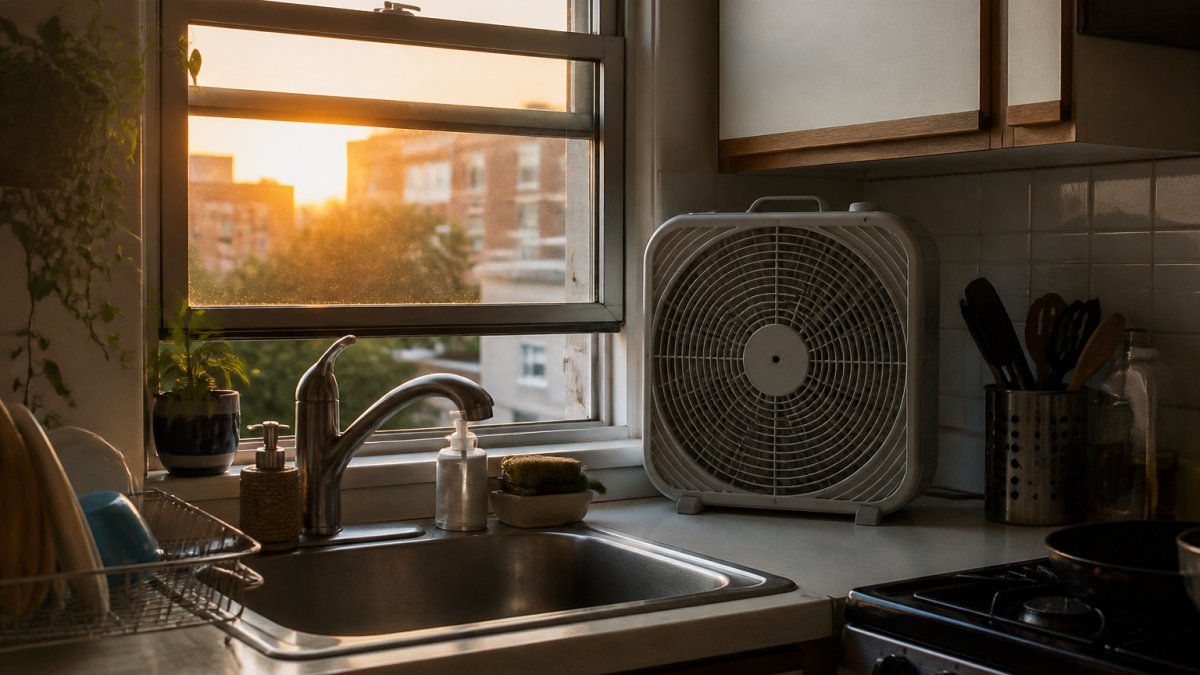
Here is what actually works, in order:
- Ventilate during cooking and for 15 minutes after.
- Wipe down the stove and nearby counters while they are still warm.
- Set out an odor absorber near the cooking zone.
- Wash or replace sponges and cloths the same day.
A common mistake is closing the kitchen door to "contain" the smell. That traps moisture and grease vapor in the smallest room in the house. Keep the door open and move air toward a window instead.
When Windows and a Range Hood Aren't an Option
Rental kitchens and interior apartments sometimes have neither. In that case, lean on three things: a portable air purifier with a carbon filter, a bowl of odor absorber placed near the stove, and fast surface cleanup.
Carbon filters capture odor molecules rather than just moving air around. Place the purifier between the stove and the rest of the room. Run it on low during cooking and on high afterward.
Step 4: Use Kitchen Odor Absorbers That Actually Work
Kitchen odor absorbers pull smell out of the air and surfaces. Masking sprays do the opposite, so skip them for anything stubborn. The reliable options are simple and cheap, but they work for different reasons and have real limits.
- Baking soda: chemically neutralizes many acidic and sulfurous odor molecules on contact. Leave an open bowl in the fridge, freezer, or on a shelf. Replace it monthly, and stir it once a week so fresh surface is exposed.
- Activated charcoal: adsorbs odor molecules onto its huge internal surface area. Place a few bowls around the kitchen. It works for weeks, but it saturates silently, so replace it every one to two months or refresh it according to the package directions.
- Coffee grounds: dry them first, then set them in a shallow dish. They absorb some odors and add a pleasant scent, but they are a weak absorber compared with charcoal and should be treated as a supplement.
- White vinegar: a small bowl left out overnight neutralizes many food odors. It works by reacting with alkaline odor compounds, and the vinegar smell itself dissipates as it dries.
For a stronger fix, simmer a pot of water with a splash of white vinegar or a few citrus peels on low heat. This adds moisture and pushes a clean scent through the room.
What These Remedies Can and Cannot Do
Absorbers are best for airborne odors and for enclosed spaces like the fridge, a cabinet, or a closet. They are poor at removing grease film, drain biofilm, or odors soaked into textiles.
Placement matters in a small kitchen. Put charcoal or baking soda between the cooking zone and the rest of the room, not in a corner where air barely moves.
Step 5: How to Remove Odors from a Kitchen Sink Drain
To remove odors from a kitchen sink drain, kill the biofilm that coats the inside of the pipe. That slimy layer is where food residue collects and bacteria multiply, and it is the source of most sink smells.
The fix takes about 10 minutes:
- Pour half a cup of baking soda down the drain.
- Follow with one cup of white vinegar.
- Let it foam for 10 minutes.
- Flush with a pot of hot water.
- Repeat weekly if the smell returns.
Skip chemical drain cleaners for routine maintenance. They are harsh on pipes and don't remove the biofilm that causes the smell. A drain stopper that catches food before it goes down saves you this job entirely.
Step 6: How to Clean a Smelly Garbage Disposal
A smelly garbage disposal usually means food residue is stuck under the splash guard or on the grinding ring.
Follow these steps:
- Turn off the power at the switch
- Lift the rubber splash guard and scrub underneath with a brush and dish soap
- Drop in a handful of ice cubes and a cup of coarse salt, then run cold water and the disposal for 30 seconds
- Flush with hot water and a little dish soap
The splash guard is the part most people miss. It traps food and moisture on its underside, and that is often the real source of a persistent smell.
Also check the drain connection under the sink. A loose fitting or a dirty trap can send odor back up.
Step 7: Degrease Surfaces Where Odors Linger
Grease buildup is the quiet cause of lingering odors. It coats hard surfaces, traps food particles, and slowly turns rancid. Wiping with a damp cloth spreads it around, so use a degreaser.
A surfactant-based degreaser lifts grease so you can wipe it away. Work in this order:
- Range hood and filter
- Backsplash and the wall behind the stove
- Cabinet fronts, especially above and beside the cooktop
- Countertops and the stovetop drip pans
Warm, soapy water handles light film. For heavy buildup, let the degreaser sit for a few minutes before scrubbing. Rinse with clean water and dry the surface so no residue is left behind.
Cooking oil is another hidden source. Leftover frying oil sitting in a pan goes stale fast and throws off a heavy smell. Strain and store it in a sealed container instead of leaving it out. Our Sinkelle OilKeep Filter Pot has a built-in filter that catches food particles as you pour, so used oil stays contained and out of your countertop air.

Prevent Odors in Small Kitchens Before They Start
Prevention beats every remedy on this list, and in a small kitchen it takes very little effort. Small kitchens concentrate odors because there is less air volume to dilute them. A timed routine is more useful than a pile of disconnected tips, so build these habits around when you cook.
Before Cooking
- Clear the sink of dishes and food scraps so odors do not have a wet place to start.
- Check that the range hood filter is clean and that the hood actually moves air.
- Take the trash out if it is more than half full, and rinse the bin if it smells.
- Wipe the stovetop and the counter beside it with a damp cloth so fresh grease does not build up.
During Cooking
- Turn the hood on before the first burner, not halfway through.
- Cook with lids on to cut steam and smoke.
- Keep a small bowl of baking soda or charcoal near the cooking zone if airflow is weak.
- Crack a window on the far side of the kitchen if you have one.
After Cooking
- Leave the hood running for 10 to 15 minutes after the burners go off.
- Wipe the stove, backsplash, and nearby counters while they are still warm.
- Wash or replace sponges and cloths the same day, and let them dry where water can drain away.
- Run the disposal with cold water and a little dish soap, then flush the drain weekly.
Weekly and Monthly Checks
- Empty the trash bin daily and rinse it weekly.
- Replace sponges every week or two.
- Check the drain and disposal weekly for sour or sulfur smells.
- Replace baking soda and charcoal monthly.
Sponges and dish cloths deserve special attention. The Sinkelle FlowRack Pro Caddy has a built-in spout that sends water straight back into the sink, so your sponge and brushes actually dry between uses.

For pantry items, airtight storage keeps dry goods from absorbing kitchen smells. The Sinkelle FreshSeal Pantry Storage Canister uses a silicone seal to keep moisture and odors out, and the clear stackable design makes the pantry easier to scan.

One last check: if a smell persists after all seven steps, look beyond the kitchen. Trash bins in adjoining rooms, drains in a nearby bathroom, and even a dirty HVAC filter can push odors into a small apartment.
Frequently Asked Questions
Why does my kitchen still smell after I clean it?
The smell usually isn't on the counter, it's in a place you didn't wipe: the drain, the garbage disposal, the trash bin, the sponge, or the grease film on cabinet fronts above the stove. Work through each source in order rather than re-cleaning the same surfaces. A drain that gurgles or a disposal that smells sour after every use points to food residue trapped below the strainer. Once you clean the actual source, the room smell drops within a day.
What are the best kitchen odor absorbers for a small space?
Baking soda and activated charcoal are the two most reliable kitchen odor absorbers because they pull odors from the air instead of covering them. Set an open box or bowl of baking soda on a shelf, or place a small mesh bag of activated charcoal near the trash bin. Both work passively and need replacing every one to three months. Coffee grounds help briefly but go stale and moldy if left damp, so dry them first or skip them.
How do I get rid of cooking smells in a small apartment without a range hood?
Run a box fan or portable air purifier with a carbon filter during cooking, and keep it running 20 to 30 minutes after you finish. Crack two windows on opposite sides of the kitchen to create cross-flow if you have them. Simmer a pot of water with a splash of white vinegar for 10 minutes to neutralize airborne food odors. Wipe greasy surfaces while they're still warm, since cooled grease holds smell longer.
How often should I clean a smelly garbage disposal?
Clean it weekly if you cook most days. Drop a handful of ice cubes and a quarter cup of coarse salt into the running disposal for 30 seconds to knock food residue off the blades, then flush with cold water. Once a month, pour half a cup of baking soda followed by one cup of white vinegar down the drain, let it sit 10 minutes, and rinse with hot water. Skip bleach, which masks the smell and can damage the seals.
Small kitchens leave no room for lingering odors, and the fix starts with a cleaner, better-organized sink area. SinkElle builds minimalist Scandinavian-inspired organizers that install without tools and hold up to daily use. Our waterproof sink systems, draining caddies, and airtight canisters help you cut clutter and keep the whole space fresher. Get started with SinkElle and turn your sink area into the cleanest corner of your kitchen.