


Table of Contents
- 1. Stack Vertically to Maximize Kitchen Counter Space
- 2. Install Tension Rods for Vertical Storage Ideas for Apartments
- 3. Use Magnetic Spice Racks to Declutter Countertops
- 4. Master Under-Sink Storage Hacks for Maximum Space
- 5. Deploy Over-the-Door and Wall-Mounted Storage
- 6. Organize with Stackable Containers and Drawer Dividers
- 7. Choose Rental-Friendly, Damage-Free Solutions
- Conclusion
Last Updated: August 25, 2026
1. Stack Vertically to Maximize Kitchen Counter Space
The most effective way to reclaim precious kitchen real estate in a studio apartment is to build upward instead of outward. Vertical storage transforms dead space into functional organization, essential when working with limited square footage.
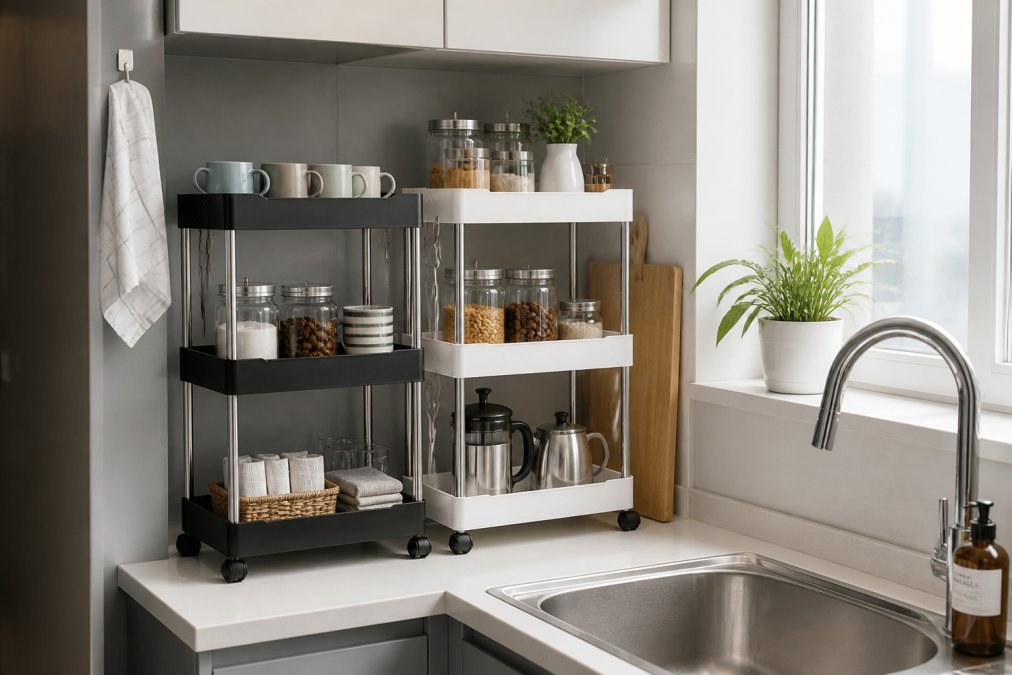
The Sinkelle CounterRise 2-Tier Shelf ($34.99) exemplifies this principle with its rust-resistant metal construction that holds coffee essentials, mugs, condiments, and spices without consuming additional floor space. Start by auditing what actually lives on your counter and stack items by frequency of use: daily essentials on the lower tier, occasional items on top.

The key insight most people miss is that vertical storage only works if you choose the right base. Flimsy shelves that wobble undermine the entire system. Look for metal construction with a weight capacity rated for your actual needs.
:::\tip Measure your counter depth before buying. Most vertical storage racks run 10-14 inches deep, shallow enough to preserve counter workspace for actual cooking (nkba.org). :::
2. Install Tension Rods for Vertical Storage Ideas for Apartments
Tension rods are the renter's best friend because they require zero permanent installation and cost under $10 each. This simple hack creates instant vertical storage inside cabinets, under sinks, and between shelves, consuming no floor or counter space.
Tension rods wedge horizontally between two surfaces under spring pressure, holding surprisingly substantial weight (the FDA). Under-cabinet tension rods work particularly well for hanging spray bottles, cleaning cloths, or small baskets. Inside a cabinet, horizontal rods can support hanging pots, pans, or measuring cups from S-hooks.
Install tension rods at varying heights inside cabinets to maximize vertical zones. This layered approach can triple your usable cabinet volume without any structural changes.
:::\warning Tension rods work only on smooth, flat surfaces. Textured walls, uneven cabinet interiors, or surfaces with trim won't grip properly. Test the fit before loading heavy items. :::
3. Use Magnetic Spice Racks to Declutter Countertops
Magnetic spice racks solve two problems simultaneously: they remove clutter from counters and make spices visible and organized. The Sinkelle SpiceRise 3-Tier Organizer ($58.99) keeps spices organized by frequency, with daily staples on the most accessible tier and specialty seasonings stored below.

Magnetic spice storage works best when you standardize your spice jar sizes. Small glass jars with metal lids are ideal, they're affordable, uniform, and the metal lids attach reliably to magnetic surfaces. Label each jar clearly with the spice name and purchase date.
Mount your magnetic spice rack at eye level on a kitchen wall or the side of a refrigerator. For renters, adhesive-backed magnetic strips work better than wall-mounted racks, they're temporary, damage-free, and move easily if your layout changes.
:::\tip Use spice jars with flat metal lids rather than rounded ones. Flat surfaces provide better magnetic contact and prevent the jar from slowly rotating and eventually falling. :::
4. Master Under-Sink Storage Hacks for Maximum Space
The area under your kitchen sink represents wasted potential in most apartments. With the right approach, under-sink storage can hold cleaning supplies, extra pantry items, or household essentials, freeing up valuable cabinet and counter space elsewhere.
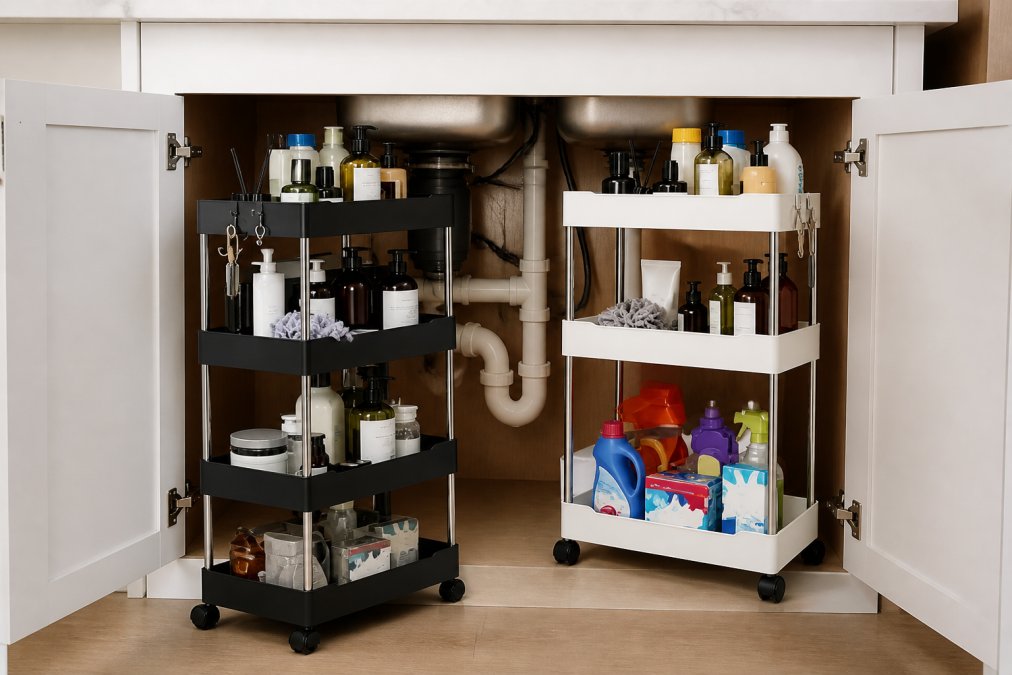
The first step is acknowledging the plumbing reality. Most under-sink areas have a P-trap, water supply lines, and possibly a garbage disposal. The Sinkelle 2 SlideNest Organizer ($55.99) solves this with its 2-tier pull-out design that slides smoothly around existing plumbing without requiring modification or drilling.
Measure your under-sink space precisely: width, depth, and height. Account for the P-trap's protrusion and any garbage disposal mounted on one side. Pull-out drawers or sliding shelves work better than static shelves because they give you access to the entire depth of the cabinet.
Store only items that can tolerate occasional moisture and temperature fluctuations (the CDC). Cleaning supplies, paper products, and sealed pantry items work well. Avoid storing electronics, important documents, or anything moisture-sensitive.
:::\warning Never store anything directly against plumbing pipes. Pipes conduct cold and can cause condensation, which drips onto stored items. Use shelf liners or place items in containers that sit slightly away from pipes to prevent water damage. :::
5. Deploy Over-the-Door and Wall-Mounted Storage
Walls and doors represent the most underutilized storage real estate in studio apartments. Over-the-door organizers and wall-mounted racks create storage without consuming any floor or counter space.
The Sinkelle DoorNest 5-Tier Hanging Organizer ($65.99) demonstrates this principle with its five spacious storage pockets that hang over any standard door. It requires no drilling, no wall damage, and installs in seconds. Over-the-door storage works best for lightweight, frequently accessed items like plastic bags, paper towels, cleaning cloths, and measuring cups.

Wall-mounted storage requires more planning but offers greater capacity. The Sinkelle CabinetFlow Hanging Organizer ($44.99) mounts under cabinets to hold paper towels, dishcloths, cutting boards, and pot lids, turning wasted space into functional storage.
For renters, adhesive-backed wall organizers and damage-free mounting systems are essential. Command strips, adhesive hooks, and magnetic strips work on most kitchen walls without leaving permanent marks. Create zones based on workflow: food prep items near the stove, cleaning supplies near the sink, and frequently used tools at eye level.
:::\bestfor Renters and anyone in a lease-restricted apartment who needs storage solutions that don't require drilling, wall anchors, or permanent installation. :::
6. Organize with Stackable Containers and Drawer Dividers
Stackable containers and drawer dividers transform chaotic cabinet and drawer space into organized zones. By grouping similar items and creating clear boundaries, you make everything easier to find and prevent visual clutter.
The Sinkelle FreshSeal Pantry Storage Canister ($39.99) exemplifies this with its airtight silicone seal that keeps dry foods fresh while the stackable design maximizes pantry space. Choose containers with clear walls so you can see contents at a glance. Label each container with contents and purchase date.
Drawer dividers prevent the "junk drawer" problem by creating separate zones for utensils, measuring spoons, and kitchen gadgets. Stack containers strategically: heavier items on lower shelves, lighter items on top. For studio kitchens, consider using the same container brand and style throughout for visual consistency.
:::\tip Measure your cabinet shelves before buying containers. A container that's slightly too tall will prevent the shelf above from closing properly. :::
7. Choose Rental-Friendly, Damage-Free Solutions
Renters face unique constraints: no drilling, no wall anchors, no permanent installations. Damage-free organization solutions offer sophisticated storage without compromising your security deposit.
The defining characteristic of rental-friendly solutions is reversibility. Adhesive strips, tension rods, magnetic surfaces, and over-the-door organizers can all be installed and removed without leaving marks or requiring repairs.
Adhesive-backed products require clean, dry surfaces to work effectively. Wipe mounting surfaces with a damp cloth and let them dry completely before applying adhesive strips or hooks. Test adhesive products in inconspicuous areas first, as some wall finishes don't work well with certain adhesive products.
Weight limits matter more with damage-free solutions because they rely on adhesive rather than structural anchors. Most adhesive strips are rated for 3-5 pounds per strip. Calculate the total weight of items you're hanging and use multiple strips to distribute the load.
Document everything before installation. Take photos of your kitchen in its original state to protect you if your landlord disputes damage. Keep receipts for all organization products, proving you're using temporary solutions.
:::\warning Never use permanent solutions in a rental apartment. Drilling holes, using heavy-duty wall anchors, or painting walls voids your security deposit protection. :::
The Sinkelle FlowCart Storage Rack ($30.99) represents the ideal rental solution: a mobile storage cart that requires zero installation and moves easily when you relocate.
Studio apartment kitchens demand creativity, but they don't require expensive renovations or permanent installations. By combining vertical storage, tension rods, magnetic solutions, and damage-free organizers, you can transform a cramped kitchen into a functional, organized space.
The most effective approach combines multiple strategies: stack vertically to reclaim counter space, use tension rods and wall-mounted storage to maximize hidden areas, and invest in quality containers to organize what you store. SinkElle's range of minimalist, Scandinavian-inspired organizers makes this integration seamless. Each product installs without tools, uses waterproof materials, and maintains the clean aesthetic that makes small spaces feel intentional rather than cramped. Start with one or two solutions that address your biggest pain points, then build from there.
Frequently Asked Questions
Q: What are some clever kitchen organization hacks for tiny studio apartments?
A: The most effective hacks focus on vertical storage and multi-functional furniture. Use tension rods inside cabinets to create additional shelving, install magnetic spice racks on the side of your refrigerator, and add over-the-door organizers for pantry items. Stackable containers and tiered shelves transform wasted vertical space into usable storage. The Sinkelle FlowCart Storage Rack ($30.99) is ideal for fitting into narrow gaps between appliances, while the CounterRise 2-Tier Shelf ($34.99) doubles your countertop capacity without requiring extra floor space.
Q: How can I effectively organize a studio apartment kitchen without renovations?
A: Rental-friendly solutions work best because they require no permanent installation. Focus on pull-out organizers, adhesive-backed shelving, and hanging systems that attach to cabinet undersides. The Sinkelle CabinetFlow Hanging Organizer ($44.99) hangs beneath cabinets without drilling, creating instant storage for cutting boards and pot lids. Use stackable containers to maximize cabinet depth, install tension rods horizontally for hanging pans, and place a rolling utility cart in unused corner spaces. These approaches maintain your security deposit while dramatically improving organization.
Q: What are the best inexpensive ways to add storage to a small kitchen?
A: Budget-friendly strategies include repurposing existing vertical space, using stackable containers, and investing in multi-functional pieces. Wall-mounted pegboards hold dozens of items. Tension rods create extra shelving inside cabinets. The Sinkelle 2 SlideNest Organizer ($55.99) maximizes under-sink space with pull-out drawers. Magnetic spice racks free up cabinet real estate. Over-the-door organizers use wasted space without permanent installation. Combining several low-cost solutions costs less than one premium system while solving multiple storage problems.
Q: How do I organize under-sink storage when I have a garbage disposal and awkward plumbing?
A: Work around your plumbing by using tiered organizers that sit on the cabinet floor rather than shelving that blocks pipes. The Sinkelle 2 SlideNest Organizer ($55.99) has a low profile and pull-out design that accommodates most under-sink configurations. Measure your space first, noting pipe locations and disposal placement. Use shallow, pull-out containers for cleaning supplies rather than deep bins that trap moisture. Keep frequently used items in front where they're accessible, and avoid storing anything that could damage if water leaks occur.
This article was written using GrandRanker