


Table of Contents
- Why Material Matters for Rental Kitchen Sink Organizers
- Waterproof Kitchen Sink Organizer Materials: Silicone vs. Steel vs. ABS
- Rust-Resistant Sink Caddy Options for Damp Environments
- How to Organize Under the Kitchen Sink Without Permanent Installation
- Rental Kitchen Storage Ideas That Protect Your Deposit
- Mold, Mildew, and Hygiene: Which Materials Perform Best
- Fit, Compatibility, and Long-Term Value
- Conclusion
- Frequently Asked Questions
Last Updated: October 16, 2026
Why Material Matters for Rental Kitchen Sink Organizers
When you're renting, every organizing decision carries stakes. Mount something permanently and risk losing your deposit. At SinkElle, we've learned that rental kitchen sink organizers succeed or fail based on one thing: material selection.
The material you pick determines whether your organizer survives moisture, adapts to tight spaces, and comes off cleanly when you move. It's the difference between a system that lasts years and one that becomes another clutter problem.
Three materials dominate the rental kitchen space: silicone, coated steel, and ABS plastic. Each handles water differently. Each installs without permanent damage. Each carries real tradeoffs that matter when your landlord's approval matters more than aesthetics.
This guide breaks down which materials actually perform in damp sink environments, which ones resist rust and mold, and which fit the constraints of rental layouts. We'll also cover the damage-free installation methods that let you reclaim your deposit.
Waterproof Kitchen Sink Organizer Materials: Silicone vs. Steel vs. ABS
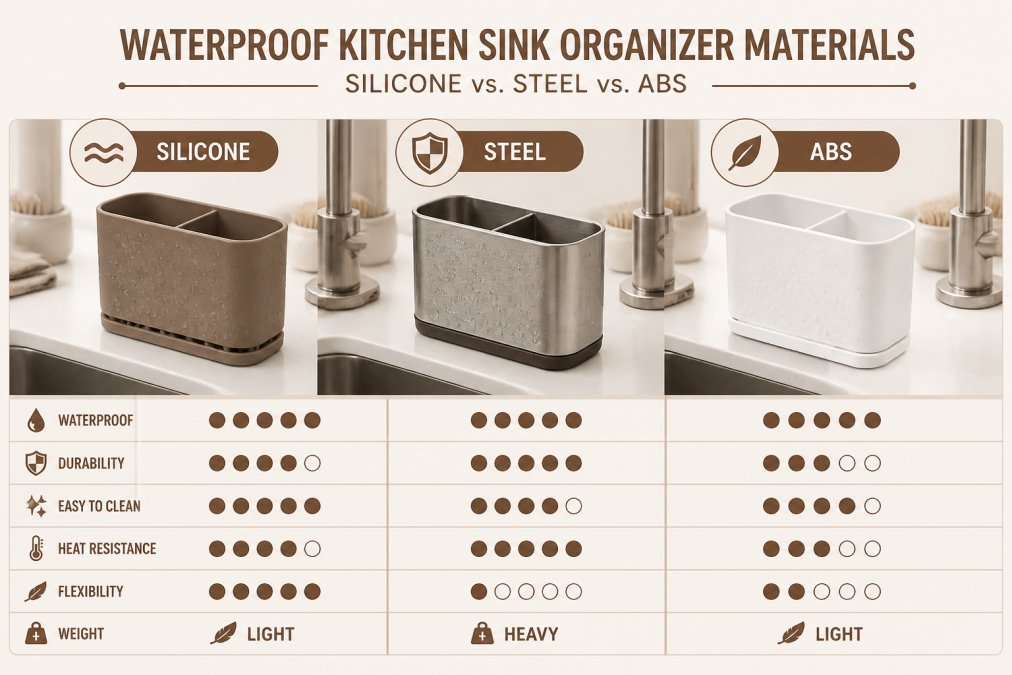
The best waterproof kitchen sink organizer material depends on where water pools in your sink area and how long you're staying. Silicone excels at flexibility and complete water resistance. Steel offers durability but requires coating to prevent rust. ABS plastic balances cost and function but lacks the longevity of the other two.
Premium Silicone: Flexibility and Water Resistance
Silicone is waterproof by design. It doesn't absorb moisture, doesn't degrade under constant dripping, and flexes to fit awkward spaces under cabinets or around odd plumbing angles.
The Sinkelle AquaShield Faucet Guard and Sinkelle DryFlow Splash Mat both use premium flexible silicone. Silicone resists mold and mildew naturally because it doesn't provide the porous surface bacteria need to grow. When water sits on silicone, it beads and drains. When it sits on porous plastic, it breeds problems.
Silicone's weakness is heat. Extended exposure to hot water or steam can soften it over time. For a rental kitchen where you're not running commercial dishwashing cycles, this rarely matters. The real cost of silicone is upfront price, typically higher than plastic alternatives.
Coated Carbon Steel: Durability Without Rust
Steel is stronger than plastic or silicone. It won't flex or deform under weight. A sink caddy made from coated carbon steel can hold heavy brushes, bottles, and cloths without sagging.
The catch: bare steel rusts. Coated steel, steel with a protective layer applied, resists rust as long as the coating stays intact. The Sinkelle FlowRack Pro Caddy uses coated carbon steel. The coating protects against water exposure. If the coating chips, rust begins underneath.
For renters, coated steel is ideal if your sink area stays relatively dry between uses. The suction-cup installation means no drilling, so removal leaves zero marks. Steel's weight makes it stable on countertops and less likely to tip if you bump it.
Steel requires more maintenance than silicone. Wipe it dry after heavy use to prevent water from pooling on the surface. In a humid rental kitchen, this becomes a daily habit.
ABS Plastic: Lightweight and Budget-Friendly
ABS plastic is durable, lightweight, and inexpensive. The Sinkelle HookNest Kitchen Sponge Holder uses ABS. It won't rust, won't flex excessively, and costs less than silicone or steel alternatives.

ABS's weakness is porosity. Over time, porous plastics absorb moisture and become breeding grounds for mold. In a sink organizer, where water exposure is constant, this matters. A plastic holder that sits near the faucet or above the drain will eventually show mold spots, especially in poorly ventilated rental kitchens.
ABS works best for organizers that don't touch water directly. A sponge holder mounted on a wall away from splashes can stay clean for years. A caddy sitting on the counter next to the sink will develop problems faster.
| Material | Water Resistance | Rust Risk | Mold Resistance | Installation | Best For |
|---|---|---|---|---|---|
| Silicone | Excellent | None | Excellent | Adhesive/suction | Wet sink areas, tight spaces |
| Coated Steel | Good | Low (if coating intact) | Good | Suction cup | Heavy-duty, stable storage |
| ABS Plastic | Fair | None | Poor | Adhesive/suction | Wall-mounted, dry areas |
Rust-Resistant Sink Caddy Options for Damp Environments
A rust-resistant sink caddy isn't just about the material, it's about how the material is treated and where it sits in your sink area. Even rust-resistant materials fail in the wrong environment.
Coated steel caddies resist rust because of their protective coating, not the steel itself. That coating is your only defense. If water pools on the caddy and sits there for hours, the coating weakens faster. If you wipe it dry after use, the coating lasts years.
Silicone and ABS don't rust because they're not metal. They fail differently: silicone stays intact but can soften; ABS absorbs water and grows mold. Neither is perfect in a damp rental kitchen. Neither is useless either.
The real rust risk in a rental kitchen isn't the caddy itself, it's the metal parts underneath. The Sinkelle FlowRack Pro Caddy's built-in drain spout channels water back into the sink instead of letting it pool around metal fixtures.

How to Organize Under the Kitchen Sink Without Permanent Installation
Under-sink storage terrifies renters. One wrong move, drilling holes, mounting shelves, using permanent adhesive, and your landlord charges you for repairs.
Damage-free installation is possible. It requires the right organizer design and realistic expectations about what you can store below the sink.
Start with what's already there: the cabinet floor. Most rental kitchens have empty space under the sink once you remove the trash bin. That space can hold pull-out bins, stackable containers, or low-profile organizers that sit directly on the floor.
For vertical space, tension rods work without drilling. Mount them between cabinet walls to hang spray bottles or cleaning cloths. Adhesive hooks rated for the weight you're hanging work on cabinet doors and walls.
The Sinkelle products avoid under-sink installation entirely. They sit on the countertop next to your sink, where they're visible, easy to access, and removable in seconds.
If you must use the under-sink cabinet, follow these rules:
Sinkelle HookNest Kitchen Sponge Holder →
- Use removable bins, not built-in shelving
- Keep weight light, heavy organizers damage cabinet floors
- Leave space for water to flow if pipes leak
- Don't block access to shut-off valves
Rental Kitchen Storage Ideas That Protect Your Deposit
Protecting your deposit means organizing without leaving evidence. Every organizer you install should be removable and leave zero marks.
Wall-mounted organizers are risky in rentals. Adhesive strips eventually fail or leave residue. Command strips (damage-free adhesive) work for light items but not for heavy caddies holding multiple bottles and brushes.
Countertop organizers are safer. They sit on the counter, hold your essentials, and pack away when you move. No installation means no damage risk.
For under-sink storage, use bins that slide in and out. Avoid anything that bolts or screws to cabinet walls. When you move, the cabinet should look exactly as it did when you arrived.
Consider the visual impact too. Rental kitchens often have limited counter space. A cluttered sink area makes a small kitchen feel smaller. Organized, minimal organizers, especially ones designed with minimalist aesthetics, improve the space without overwhelming it.
Mold, Mildew, and Hygiene: Which Materials Perform Best
Mold and mildew thrive in warm, damp, dark spaces. A kitchen sink organizer sits in all three conditions.
Silicone resists mold because it's non-porous. Bacteria and mold need a porous surface to colonize. Silicone doesn't provide one. Even if water sits on silicone for hours, mold won't grow.
Coated steel resists mold as long as the coating is intact and you wipe it dry. Water sitting on steel breeds mold faster than on silicone.
ABS plastic is porous. Over time, it absorbs water molecules into its structure (The Influence of Moisture Absorption and Desorption by the ABS Filament on the Properties...).
In a rental kitchen with poor ventilation, common in older buildings, mold risk is real. Choose silicone for areas that stay wet.
Ventilation matters more than material. A poorly ventilated sink area will grow mold on any organizer. Improve airflow by opening windows, running the exhaust fan, or wiping organizers dry after use.
Fit, Compatibility, and Long-Term Value
Not every organizer fits every sink. Rental kitchens vary wildly: some have tight corners, others have open countertops. Some have garbage disposals that block under-sink space.
Before buying, measure your space. Know the distance from your faucet to the edge of the counter. Know the depth of your cabinet.
The Sinkelle FlowRack Pro Caddy measures 9.25 × 6.42 × 4.53 inches. It sits on the counter next to your sink with the spout over the basin.
Compatibility also means fitting your routine. If you use three cleaning brushes and two sponges daily, you need capacity.
Long-term value in a rental kitchen means durability. A $30 organizer that lasts three years costs $10 per year.
Consider replacement costs too. If you move every two years and take your organizers with you, durability matters less. If you're staying put, invest in materials that won't degrade.
Conclusion
The best material for your rental kitchen sink organizer balances three demands: water resistance, damage-free installation, and durability. Silicone excels at resisting mold and moisture. Coated steel offers strength and stability. ABS plastic works for dry storage areas but requires careful placement in humid kitchens.
At SinkElle, we recommend starting with a silicone splash mat like the DryFlow Splash Mat ($19.99) to protect your countertop, then adding a steel caddy like the FlowRack Pro Caddy ($46.99) for heavy-duty storage. Together, they handle moisture, install without tools, and leave zero marks when you move. For lightweight sponge and brush storage, the ABS HookNest ($29.99) works well on walls away from direct water exposure.

Get started with SinkElle and transform your rental kitchen into an organized, damage-free space that protects your deposit while maximizing every inch of counter real estate.
Frequently Asked Questions
What materials are best for a waterproof sink organizer in a rental kitchen?
Premium silicone, coated carbon steel, and ABS plastic are the top choices for rental kitchens. Silicone offers flexibility and superior water resistance, coated carbon steel provides durability without rust concerns, and ABS plastic is lightweight and affordable. The Sinkelle FlowRack Pro Caddy ($46.99) uses coated carbon steel with ABS parts, combining durability with corrosion resistance. Choose based on your under-sink layout and how much water exposure the organizer will face.
Can I use a rust-resistant sink caddy in a tight corner next to my stove?
Yes, but verify dimensions first. The Sinkelle FlowRack Pro Caddy measures 9.25 × 6.42 × 4.53 inches and sits on the counter beside your sink with the drain spout over the basin, so it works in compact spaces. Steel caddies with coated finishes resist rust even in humid corner areas. Measure your available space and confirm the caddy's footprint fits your layout before purchasing, especially if plumbing angles are tight.
How do I organize under the kitchen sink without drilling or damaging walls?
Use suction-cup installation systems like the Sinkelle FlowRack Pro Caddy, which requires no tools or drilling. For under-sink storage, avoid adhesive hooks on rental cabinet interiors; instead, use removable shelf risers or stackable bins that sit directly on the cabinet floor. Keep items away from plumbing pipes and garbage disposals. This damage-free approach protects your security deposit while maximizing storage in tight spaces.
Do silicone and steel sink organizers really resist mold and mildew?
Silicone and coated steel both resist mold growth better than uncoated materials because they don't absorb moisture. The Sinkelle DryFlow Splash Mat ($19.99) uses premium waterproof silicone with a sloped design that channels water back into the sink, preventing puddles where mold thrives. Steel caddies with drainage spouts (like the FlowRack Pro) also minimize standing water. Regular wiping and air circulation are still essential for long-term hygiene.
Why should I invest in a premium organizer instead of cheap plastic bins from a discount store?
Premium materials last longer, resist warping and mold, and drain properly to keep your sponges and tools dry. Cheap plastic bins trap water, causing odors and deterioration within months. The Sinkelle HookNest ($29.99) uses durable ABS that holds its shape, while the FlowRack Pro ($46.99) combines steel durability with a built-in drain spout, features that justify the investment through years of reliable use and reduced replacement costs.