


Table of Contents
- Why Drainage Matters in Kitchen Sink Caddies
- Material Durability and Rust Resistance for Long-Term Use
- Self-Draining Sponge Holder Design and Performance
- How to Clean Kitchen Sink Caddy Properly
- Minimalist Sink Organization Ideas for Small Spaces
- Top Drainage Solutions Compared
- Installation and Compatibility Considerations
- Frequently Asked Questions
Last Updated: October 3, 2026
Why Drainage Matters in Kitchen Sink Caddies
Water pooling around cleaning tools creates a hygiene problem: bacteria and mold thrive in stagnant water, turning your caddy into a breeding ground for germs.
The best drainage solutions for kitchen sink caddies prevent water accumulation by design, channeling moisture away from stored items and allowing air to circulate freely. SinkElle's sink organizers are engineered around this principle because a truly functional caddy keeps supplies sanitary, not just stored.

Proper drainage directly impacts longevity: trapped water causes rust on metal and brittleness in plastic. A caddy with excellent drainage lasts years longer.
The difference between a caddy that merely holds items and one that protects them comes down to water management. This guide covers drainage mechanisms that work, maintenance, and solutions for different kitchen layouts.
Material Durability and Rust Resistance for Long-Term Use
Stainless steel remains the gold standard for kitchen sink accessories because its chromium layer prevents oxidation in wet environments, unlike standard steel or iron.
Grade 304 stainless steel handles typical kitchen moisture well; Grade 316 offers superior resistance but is overkill for most home kitchens.
Plastic alternatives like PET and ABS don't rust, making them ideal for renters. PET is lightweight and easy to clean; ABS is more rigid for heavier items. Both shed moisture naturally without absorbing it.
The real durability test is how well the design prevents water from sitting on or inside it. Material choice matters less than drainage design.
Self-Draining Sponge Holder Design and Performance
A self-draining sponge holder prevents water from collecting where sponges rest using sloped surfaces or perforated bases that force water downward and away.

Look for drainage holes at the lowest point so water exits rather than pools. Vertical designs work better than horizontal ones because gravity continuously moves water downward.
Drainage hole spacing matters: holes spaced every inch prevent water accumulation. Perforated designs with holes covering most of the bottom surface offer the most thorough drainage.
Ventilation is equally important: open-sided holders allow air circulation around items. Enclosed designs trap moisture and heat, creating conditions bacteria love. The best designs maximize airflow with minimal material.
How to Clean Kitchen Sink Caddy Properly
Regular cleaning prevents buildup that blocks drainage holes. Most caddies need weekly rinsing and monthly deep cleaning.
For weekly maintenance, rinse your caddy under running water and clear debris from drainage holes with your fingers or a soft brush. In hard water areas, weekly rinsing is critical to prevent mineral buildup.
For monthly deep cleaning, soak the caddy in equal parts white vinegar and water for 15 minutes to dissolve mineral deposits. Scrub drainage holes with an old toothbrush, rinse thoroughly, and air dry completely.
For stainless steel caddies, avoid abrasive scrubbers that create rust-prone scratches. Use soft cloths or non-scratch sponges and dry completely after cleaning to prevent water spotting.
Plastic caddies tolerate harsher scrubbing but shouldn't be exposed to extreme heat. Hand-wash silicone components to preserve flexibility.
| Cleaning Task | Frequency | Method | Time |
|---|---|---|---|
| Rinse and clear debris | Weekly | Running water + soft brush | 2 minutes |
| Vinegar soak and scrub | Monthly | 15-min vinegar soak + toothbrush | 20 minutes |
| Dry completely | After each cleaning | Air dry or cloth dry | 5-10 minutes |
| Deep sanitize | Quarterly | Vinegar soak + thorough scrubbing | 30 minutes |
Minimalist Sink Organization Ideas for Small Spaces
Compact kitchens force hard choices about counter space. The minimalist approach prioritizes function over quantity, storing only what you use daily.
Assess your real needs: most people use one sponge, one brush, one soap dispenser at a time. A minimalist caddy holds only active tools, not backups.
Vertical organization saves the most space: wall-mounted racks and over-sink designs multiply storage without consuming countertop real estate. Retractable designs collapse when not in use.
Monochromatic designs in black, white, or stainless steel blend into backgrounds. Open frameworks look less cluttered than solid containers. A single unified caddy looks cleaner than multiple organizers.
A well-designed caddy creates obvious spots for each item, preventing clutter accumulation and encouraging items to be returned after use.
Top Drainage Solutions Compared
The products below address different drainage and organization priorities, from compact storage to splash prevention.
Sinkelle FlexiDrain Sink Caddy: Compact Multi-Purpose Storage
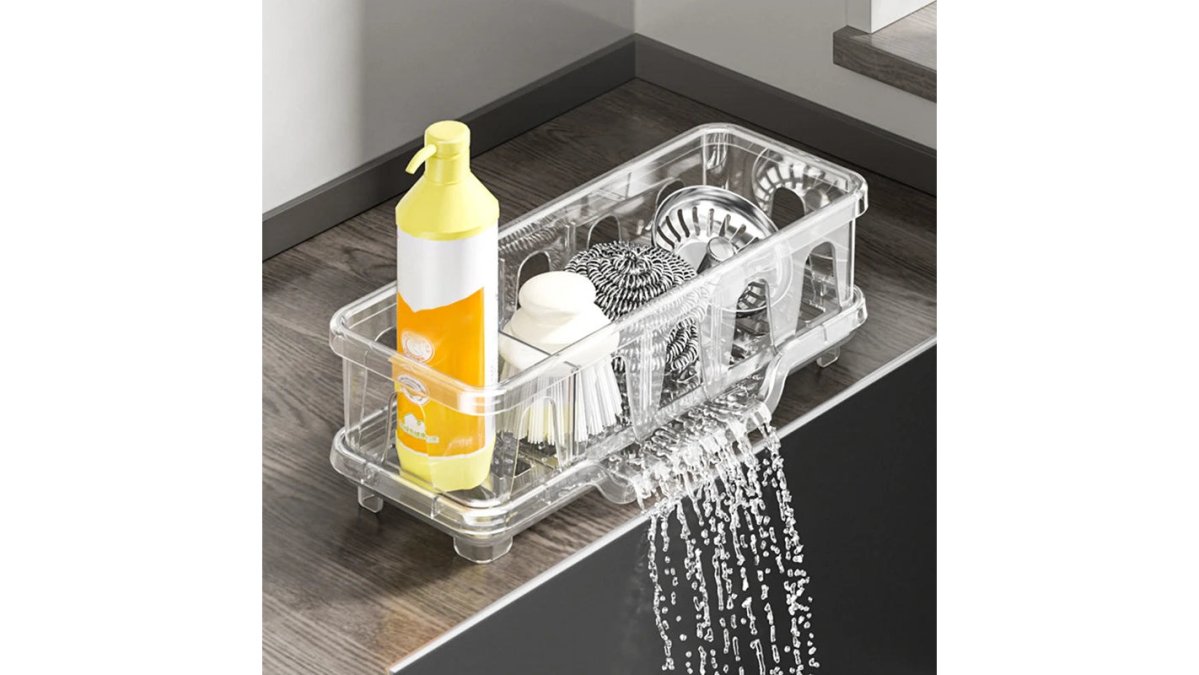
The FlexiDrain prioritizes space efficiency without sacrificing drainage, fitting neatly into tight corners at 24 × 9.8 × 7.2 cm while holding sponges, scrubbers, and soap.
The open PET plastic frame allows water to flow straight through without pooling. Minimal material means water can't get trapped anywhere, making it ideal for kitchens where counter space is at a premium.
The compact size is both its strength and limitation. It won't accommodate larger brushes or multiple items. If you need serious storage capacity, this isn't your solution. But for someone with a small sink area who wants one reliable place for daily cleaning tools, the FlexiDrain delivers exactly what matters: drainage, organization, and minimal footprint.
Sinkelle FlexiDrain Sink Caddy →
At $24.99, it's the most affordable option in the lineup, making it ideal for renters testing whether a dedicated caddy actually changes their kitchen routine.
Sinkelle HookNest Kitchen Sponge Holder: Vertical Organization
The HookNest takes a different approach: vertical storage with integrated hanging capability. Made from durable ABS plastic, it holds sponges, scrubbers, and dish cloths while the integrated hook provides additional hanging space.
What sets it apart is the multi-use design. The main caddy stores items inside, while the hook handles cloths and lightweight accessories. This two-level system maximizes storage without expanding the footprint. For kitchens where you need to keep more items accessible, the HookNest works harder than the FlexiDrain.
The drainage design uses the same open-frame principle, water flows through rather than pooling. The vertical orientation helps because gravity naturally pulls water downward and away from stored items. ABS plastic resists moisture and won't degrade in humid environments.
At $29.99, it costs slightly more than the FlexiDrain but offers greater versatility. It's best for households that store multiple cleaning tools and want everything within arm's reach of the sink.
Sinkelle ExtendDry Retractable Sink Rack: Adjustable Drying Space
The ExtendDry solves a different problem entirely: it creates drying space directly over your sink. Made from stainless steel, it extends to fit different sink widths, giving you a ventilated surface for dishes, produce, or kitchen items that need to drain.
This is the solution when your issue isn't storing cleaning supplies, it's managing dishes and produce after washing. The open stainless steel design allows water to drain through into the sink below. The ventilated structure promotes airflow, speeding drying times.
The retractable design means you don't sacrifice counter space. When not in use, remove or reposition the rack. It's perfect for small kitchens where flexibility matters more than permanent storage.
At $24.99, it matches the FlexiDrain's price but serves a completely different purpose. Choose this if you need drying space more than caddy storage.
Sinkelle DryFlow Splash Mat: Countertop Water Management
The DryFlow addresses a problem most caddies don't solve: splash and water runoff around the faucet. Made from premium waterproof silicone, it features a sloped surface that channels water directly back into the sink.
This isn't a caddy, it's a protective layer that keeps your countertop dry. The advanced slope design is the key feature. Water naturally flows downward and away from your counter instead of spreading across the surface. The extra-wide coverage protects a large area around your faucet.
The minimalist black finish blends seamlessly into modern kitchens. It's flexible, easy to clean, and durable enough for daily use. For anyone frustrated by wet countertops and water stains, this solves the root problem.
At $19.99, it's the most affordable option. Use it alongside a caddy for complete sink-area organization, or alone if your main issue is faucet splash.
Sinkelle AquaShield Faucet Guard: Splash Prevention
The AquaShield takes a more targeted approach: preventing splashes before they happen. Built to fit around your faucet, this flexible silicone guard catches water that would normally spray across your counter.
The smart drainage design channels captured water back into the sink rather than letting it pool on the guard. Premium flexible silicone means it won't crack or become brittle over time. Installation is simple, no tools required.
This works best as part of a complete system. Pair it with a caddy for storage and a splash mat for broader protection. At $17.99, it's an affordable add-on that meaningfully reduces daily mess around your sink.
| Product | Price | Best For | Key Feature | Material |
|---|---|---|---|---|
| FlexiDrain Sink Caddy | $24.99 | Compact storage in tight spaces | Space-saving design with open drainage | PET plastic |
| HookNest Sponge Holder | $29.99 | Multi-item storage with hanging space | Vertical organization + hook storage | ABS plastic |
| ExtendDry Retractable Rack | $24.99 | Drying dishes and produce | Adjustable size, stainless steel frame | Stainless steel |
| DryFlow Splash Mat | $19.99 | Preventing faucet splash and water runoff | Sloped surface channels water | Silicone |
| AquaShield Faucet Guard | $17.99 | Targeted splash prevention | Smart drainage around faucet base | Silicone |
Installation and Compatibility Considerations
Tool-free installation matters for renters and anyone who doesn't want permanent modifications. All SinkElle products install without drilling, mounting hardware, or adhesives that damage walls or plumbing.
The FlexiDrain and HookNest sit freely on your counter, just place them where you want them. They work with any sink style because they don't attach to anything.
The DryFlow and AquaShield use suction cups or rest flat on your counter, making them equally temporary. If your landlord restricts modifications, these products work perfectly.
Compatibility with specific sink types matters. If you have a garbage disposal, an under-sink caddy won't work, your space is blocked.
Faucet type affects splash guard placement. Wall-mounted faucets spray differently than deck-mounted ones. The AquaShield works with both, but positioning changes how effectively it catches water. Test placement before committing.
The real compatibility question is this: Does your sink setup allow for the storage approach you want? If not, choose a different solution. SinkElle's range covers most scenarios, but the right choice depends on your specific kitchen layout.
The best drainage solutions for kitchen sink caddies aren't just about water flow, they're about maintaining a cleaner, more hygienic sink area with minimal effort. SinkElle's product range approaches this challenge from multiple angles: compact storage with excellent drainage, vertical organization, drying space, and splash prevention.

Frequently Asked Questions
What is the best kitchen sink caddy drainage design?
The best drainage design features open construction with ventilation holes that allow water to flow freely and air to circulate around stored items. Stainless steel and PET plastic materials resist rust and mold growth. The Sinkelle FlexiDrain Sink Caddy uses an open-frame design with drainage holes that prevent water from pooling, reducing bacterial growth and extending the life of your sponges and cleaning tools.
How often should you clean your kitchen sink caddy?
Clean your sink caddy weekly to prevent mold and bacteria buildup. Rinse it thoroughly under warm running water and wipe dry with a cloth. For deeper cleaning, use warm soapy water and a soft brush to remove debris from drainage holes. If you notice discoloration or odor, soak it in a vinegar solution for 15 minutes, then scrub and rinse completely. Regular maintenance keeps your organizer hygienic and extends its durability.
Are self-draining sponge holders worth the investment?
Yes. Self-draining sponge holders significantly reduce moisture retention that causes mold and mildew. By allowing water to drain away between uses, they keep sponges fresher longer and prevent the bacterial growth that occurs in wet environments. The Sinkelle HookNest Kitchen Sponge Holder's design promotes airflow while organizing your cleaning essentials, making it a worthwhile upgrade that improves hygiene and reduces replacement frequency.
What materials work best for kitchen sink caddy drainage?
Stainless steel and food-grade PET plastic are the most reliable materials for drainage solutions. Stainless steel, used in the Sinkelle ExtendDry Retractable Sink Rack, resists rust and corrosion while maintaining strength. PET plastic, like in the FlexiDrain Caddy, is lightweight, durable, and naturally resistant to water damage. Both materials feature open designs that facilitate water flow and prevent stagnant moisture that leads to mold.